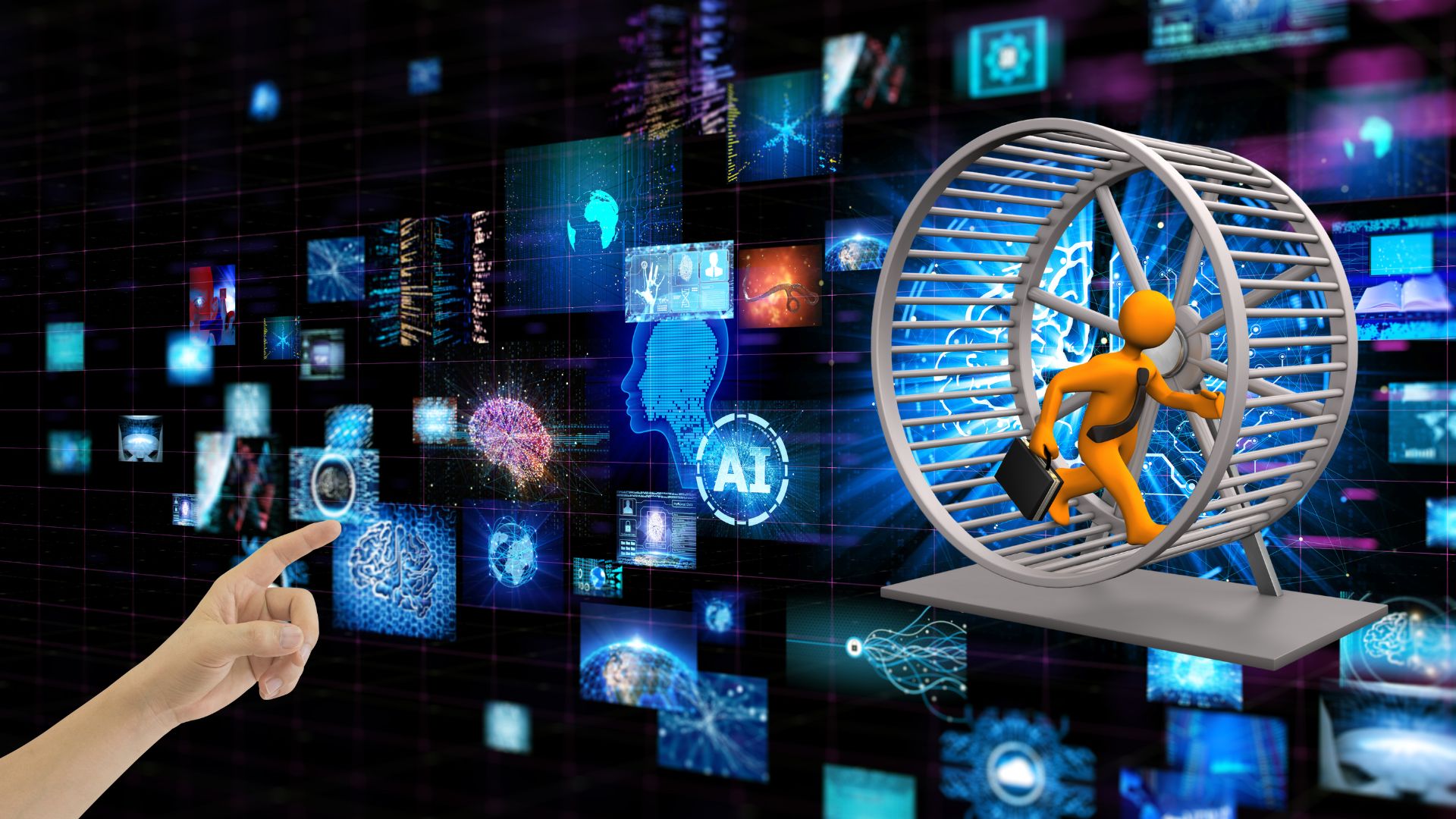
The Age of Digital Exhaustion: How to Create Without Being Consumed
In a time when content is king, creators are quietly burning out. Between algorithms that never sleep, inboxes that never empty, and audiences that never stop scrolling, the modern knowledge worker is asked to perform endlessly. The result? Digital exhaustion.
This is more than screen fatigue. It’s the emotional, cognitive, and creative toll of being in a constant state of output, and never quite feeling caught up. If we don’t address this, the people shaping the digital landscape will be the first to collapse beneath it
“Create like you mean it. Rest like you deserve it. Share only when it helps.”
Creating content shouldn’t mean erasing yourself. There is a way to build and share without burning out. It starts with one fundamental shift: sustainability over scale.
What Is Digital Exhaustion?
Digital exhaustion happens when constant creation, online presence, and digital interactions erode your energy, clarity, and well-being. It’s not just long hours on a laptop, it’s the psychic load of staying relevant in a system that rewards volume over value.
According to research by Microsoft, our digital intensity defined by the number of meetings, chats, and emails, has increased by over 250% since 2020. Yet productivity has not risen in tandem.
The rise of the “content hamster wheel” is a prime culprit. Creators, marketers, and thought leaders are pressured to post, respond, and react constantly. The cost isn’t just time, depth of presence, and peace of mind

[“The Hidden Toll of Constant Output” – Image on Canva]
The Hidden Toll of Constant Output
Creativity Becomes Currency
In an age of personal branding, every thought becomes content, that clever comment on a podcast? Clip it. That journal scribble? Tweet it. That client conversation? Turn it into a carousel.
But the commodification of insight has consequences. When every experience must become shareable, we begin to live for the algorithm, not for ourselves.
Author and professor Arthur C. Brooks warns of this in his Atlantic column, “How to Want Less: Happiness comes not from having more, but from wanting less.” The same applies to content. More doesn’t always equal better.
Constant Visibility—Diminished Vitality
There’s a difference between visible and valuable, but digital platforms often conflate the two. What is the result? Professionals chase presence instead of purpose.
This leads to:
- Shallow output cycles
- Emotional depletion
- Impostor syndrome
- Compulsive metrics-checking
When you’re always online, your nervous system never gets a break. Neuroscientist Paul Zak, known for his work on trust and oxytocin, notes that “chronic stimulation erodes empathy and clarity.” Without rest, your best thinking never surfaces.
A New Model: Sustainable Content Ecosystems
So, how do you create consistently without being consumed?
The answer is shifting from linear content production (one post, one output) to sustainable content ecosystems. Instead of feeding the algorithm daily, you design systems that:
- Reuse high-quality core ideas
- Align with your natural energy cycles
- Respect your audience’s attention
- Honor depth over frequency
The “Core Content Flywheel”
Instead of starting from scratch each week, develop one deep piece of content monthly: a blog post, podcast episode, or keynote.
From this, spin out:
- 3–5 short posts
- 1 email
- 1 long-form article
- Quotes and insights for future reuse
This is the model behind many of today’s leading newsletters and educational platforms (see Tiago Forte’s Building a Second Brain, or Jay Clouse’s Creator Science).
Align with Natural Cadence
Brené Brown famously took a break from social media while writing Atlas of the Heart. She knew that real depth demands retreat. The creative brain is not a machine but a muscle needing recovery.
If your energy peaks in the morning, write then. Suppose your ideas flow after walks, block time for them. The goal isn’t to beat the algorithm; it’s to build content that resonates longer than a scroll.
Why Audiences Trust Thoughtful Creators
Today’s readers are overwhelmed. What they want isn’t more content, they want better signal. Audiences notice when creators slow down, refine and return with intention.
The Return of Longform
Platforms like Substack, Medium, and Ghost are thriving not because they pump content out fast, but because they reward:
- Thoughtfulness
- Voice
- Context
This is the era of deep resonance; the top newsletters aren’t chasing likes, but building trust.
Emotional Integrity in Creation
People can sense when you’re producing under pressure. They feel it in the tone, the pacing, the energy.
As Dr. Brené Brown says in her TED Talk on vulnerability: “People don’t care how polished you are. They care how real you are.“
Sustainable creators don’t hide behind hustle; they lead with honesty. They post less, but say more.
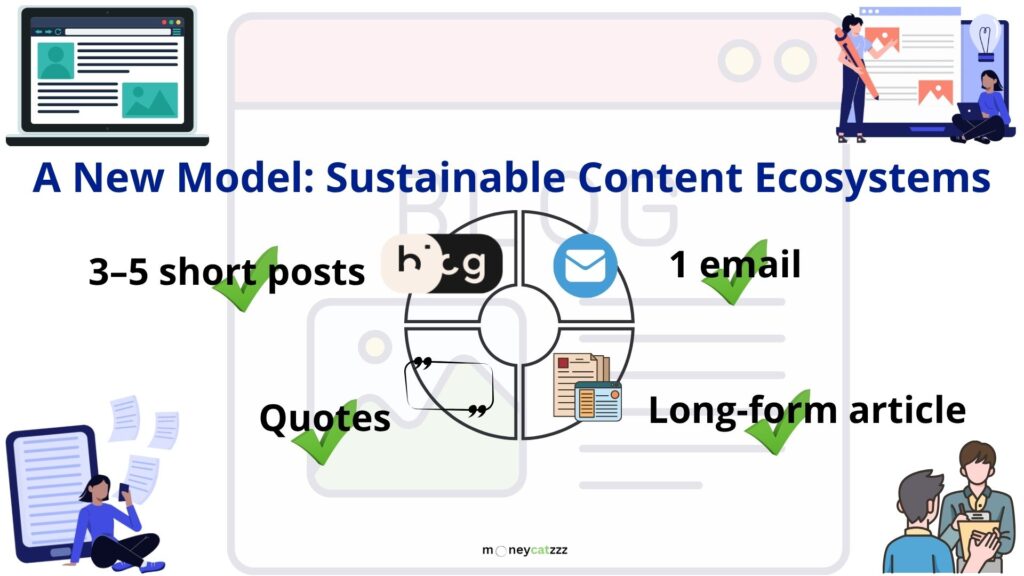
[“One Deep Piece of Content” – Image by moneycatzzz.com on Canva]
Tools for Sustainable Content Creation
Digital Boundaries
- Freedom.to: Block distracting apps and websites during focus hours.
- Sunsama: Plan your day with intentional time blocking that prevents overload.
Content Infrastructure
- Notion: Central hub for your idea bank, publishing calendar, and flywheel system.
- Readwise: Collect and resurface highlights from books and articles to feed your content.
Energy & Mindset
- Insight Timer: Meditation and mental reset for creators.
- Analog Journal: Sometimes the best ideas start away from the screen.
Content Is a Marathon, Not a Slot Machine
The biggest myth in digital work is that you must post daily to stay relevant but relevance isn’t just visibility, it’s resonance. It’s not how often you show up, it’s how clearly you’re remembered.
You reclaim creative control by building systems that honor your energy, organize your insights, and serve with intention. You can:
- Work with consistency, not urgency
- Share deeply, not constantly
- Lead without losing yourself
Because the most trusted creators aren’t chasing volume, they’re building longevity.
They understand: slow is smooth. Smooth is fast. Sustainability is powerful.
Final Reflection: Create, Don’t Consume Yourself
Digital exhaustion is real. But it’s not inevitable.
The future of work belongs to those who can sustain their voice, not just amplify it, and who can create meaningfully without erasing their bandwidth.
So take the break. Build the system. Go deep instead of wide. Because in the age of noise, your greatest asset isn’t output.
It’s clarity.
Resources to help you shift from a state of digital exhaustion to one of intentional creation.
Recommended Reading & Watching
- Microsoft Work Trend Index: For a data-driven look at the state of digital work and its impact on employee well-being.
- Arthur C. Brooks, How to Want Less: Explore the profound link between contentment and happiness in this insightful article from The Atlantic.
- Brené Brown’s TED Talk on Vulnerability: A foundational watch for understanding the emotional courage required to create and connect authentically.
Tools for a Sustainable Workflow
- Freedom.to: An app that helps you build digital boundaries by blocking distracting apps and websites during your focused work periods.
- Notion: A flexible workspace for building a sustainable content ecosystem, from your initial idea bank to your publishing calendar.
- Tiago Forte’s Building a Second Brain: Learn a proven system for organizing your knowledge and insights, so you can stop chasing ideas and start reusing them.
- Insight Timer: A powerful tool for mental recovery, offering guided meditations and breathing exercises to help you reset and regain clarity.
Disclaimer: The information is provided for general information only – moneycatzzz.com makes no representations or warranties in relation to the information, including but not limited to any representation or warranty as to the fitness for any particular purpose of the information to the fullest extent permitted by law. While every effort has been made to ensure that the information provided in this article is accurate, reliable, and complete as of the time of writing, the information provided in this article should not be relied upon to make any financial, investment, real estate or legal decisions. Additionally, the information should not substitute advice from a trained professional who can take into account your personal facts and circumstances, and we accept no liability if you use the information to form decisions.
Disclosure: This post may contain affiliate links. We only recommend products we believe in, and We may receive a commission at no cost to you! Thank you for your support!
Acknowledgement: Photo by Nothing Ahead