
 Reading Time: 8 mins #
 This post may contain affiliate links.
In today’s high-performance, high-stress world, your mindset isn’t just a nice-to-have—it’s a career accelerator. While tools, tactics, and networks matter, the strategic advantage of positive thinking is increasingly recognized as a competitive differentiator in professional and personal domains. Research from the Mayo Clinic and Harvard Health confirms that optimism isn’t just correlated with better health and longer life spans—it’s also a predictor of greater achievement.
But this isn’t about unquestioning optimism or feel-good slogans. This is about leveraging mindset—a structured, repeatable, high-ROI approach to increasing resilience, performance, and long-term success.
“Attitude is a little thing that makes a big difference.” – Winston Churchill.
The Neuroscience Behind Optimism
Barbara Fredrickson’s broaden-and-build theory demonstrates that positive emotions expand cognitive capacity. They make you more creative, agile, and resilient under pressure. That matters when navigating economic uncertainty, career pivots, or high-stakes negotiations.
Moreover, thanks to neuroplasticity—positive thinking can rewire your brain. Optimism trains your prefrontal cortex to seek opportunity over threat—leading to more strategic decision-making. Repeated positive mental habits reprogram stress responses and support higher-level thinking.
“Positive thinking is not about ignoring problems. It’s about approaching them from a more empowered stance.”
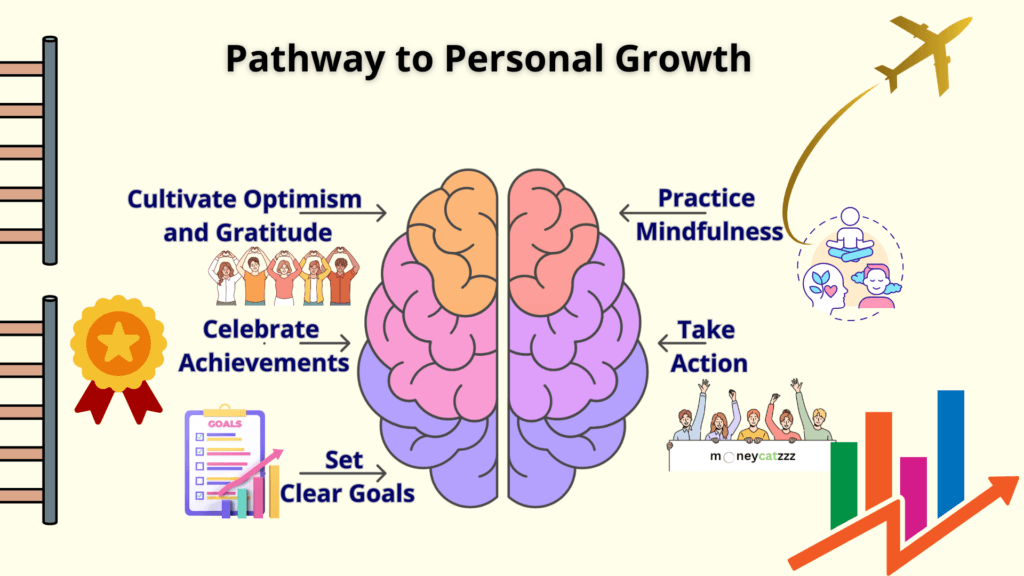
Positive Thinking as a Catalyst for Personal Growth
Every growth curve starts with belief. If you don’t think improvement is possible, you won’t invest in it.
In The Power of Now, Eckhart Tolle articulates the trap of cyclical, fear-driven thoughts. Positive thinking isn’t about naivety but breaking the default loop. It’s a return to agency—when you believe change is possible, your psychology shifts from passive to proactive.
Tactical Application:
- Morning rituals with micro-affirmations can set a forward-leaning tone.
- Gratitude lists recalibrate the mind to see abundance rather than lack.
- Success visualization activates neural pathways linked to performance.
Case Study: Reframing Failure Into Fuel
Walt Disney was fired early in his career for “lacking imagination.” Rejected by investors and misunderstood by studios, his early years were filled with setbacks. But Disney maintained what Angela Duckworth would later term grit —a combination of passion and perseverance.
What differentiated Disney wasn’t just talent. It was his mindset. He reframed rejection as information, not identity. That perspective created an empire.
The takeaway: A growth-oriented, positive mindset turns career losses into leverage.

[“Rise Above: The Power of Positive Thinking” – Image by Daniel Reche from Pixabay]
The Tangible ROI Across Performance Domains
Academic Gains:
- Increased focus and problem-solving under pressure.
- Enhanced resilience after academic setbacks.
Athletic Performance:
- Visualization is linked to improved execution.
- Faster recovery and greater mental toughness.
Creative Output:
- Higher levels of divergent thinking.
- More innovative problem framing.
Financial Decisions:
- Reduced panic responses in downturns.
- Precise risk assessment through emotional regulation.
These aren’t anecdotes—they’re measurable results driven by mental leverage.
Professional Success: Culture, Leadership, and Leverage
The workplace rewards mindset. According to Think and Grow Rich by Napoleon Hill, belief precedes breakthrough. Whether pitching an idea or leading a team, your energy becomes the emotional tone-setter.
Google, for example, built its culture on psychological safety and optimism. That ethos enables bold innovation and risk-taking at scale. It’s not luck—it’s intentional mindset architecture.
Learn more about Google’s cultural playbook here.
Leaders who win:
- Model optimistic framing in the face of ambiguity.
- Default to solution-seeking dialogue.
- Use encouragement as a tool for accountability.
Emotional Resilience: Why It Starts With Thought Hygiene
Positive thinking isn’t a performance hack—it’s an emotional stabilizer. Life will deliver curveballs. What matters is your internal orientation.
Michael Singer’s The Untethered Soul explores how we can release mental scripts that keep us stuck. By consciously choosing positive interpretation, we create emotional breathing room. That space allows strategy and creativity to return.
High-ROI Emotional Habits:
- Meditation: Builds meta-awareness of thought patterns.
- Reframing: Turns setbacks into training reps.
- Environment: Curate inputs and relationships that reinforce optimism.
J.K. Rowling and the Power of Belief
Unemployed. Broke—a single mother writing in cafes. J.K. Rowling submitted her manuscript to 12 publishers before anyone said yes. But her mindset never quit. She believed in the value of the story, and that belief sustained the effort.
Read her transformation story here.
Today, Rowling’s story is a global emblem of resilience fueled by vision. It’s proof: Positive thinking doesn’t prevent failure. It powers your return from it.
[“The Power of Positive Thinking” – moneycatzzz.com]
Tactical Execution: From Thoughts to Results
A mindset without motion is just fantasy. Here’s how to operationalize optimism:
- Set Specific Goals: What does success look, feel, and require?
- Micro-Steps: Break goals into atomic actions. The action builds belief.
- Track Wins: Momentum compounds when you log progress.
James Clear’s Atomic Habits highlights how micro-behaviors, aligned with identity, create macro results. Positive thought aligns with that identity work.
Professional Success: Positive Thinking as a Catalyst
The workplace often feels like a battlefield, with deadlines, competition, and stress testing our limits. But positivity can be a game-changer, a powerful force that can motivate and determine our success.
In Think and Grow Rich by Napoleon Hill, he highlights the power of belief and persistence. Hill’s research shows that maintaining a positive outlook attracts opportunities and builds the tenacity to overcome obstacles.

[“Cultivate a Positive Mindset” – Photo by Binti Malu]
The Ripple Effect: Relationships, Teams, Communities
Optimism is contagious. A 2006 Journal of Personality and Social Psychology study showed that optimistic individuals experience better relationship satisfaction, deeper intimacy, and higher mutual trust.
Want to lead better? Start with your thoughts.
Carnegie’s How to Win Friends and Influence People reminds us that energy shapes outcomes. A genuine compliment or sincere smile still goes further than any negotiation tactic.
Apply it today:
- Give one piece of sincere, positive feedback.
- Start meetings with gratitude.
- Reframe a conflict through a lens of shared potential.
Final Reflection: Mindset as Leverage
Your thoughts are your operating system. If you upgrade your internal software, every external result eventually improves.
This isn’t about fake positivity or ignoring hardship. It’s about choosing a posture of possibility in the face of it.
So, if you want to stagnate, do nothing. Stick with old narratives. Let the default script run. But if you’re going to grow—intellectually, professionally, financially—start with a thought. That’s the root system of every tree that bears fruit.
What’s one area in your life where a positive mindset could be the missing multiplier?
Choose wisely. Your future is listening.
Recommended Resources to Go Deeper
Want to transform knowledge into leverage? These resources provide the data, structure, and inspiration for the next step—no fluff—just tools with impact.
Reputable Resources
- Pew Research – The Reading Habits of Ultra-Successful People: Discover how leaders like Warren Buffett and Bill Gates use reading as a core growth strategy.
- Harvard Business Review – For Those Who Want to Lead, Read: Explore eye-opening statistics on U.S. reading habits and what they reveal about opportunity and mindset gaps.
Books That Build Mental Leverage
These titles aren’t just books—they’re operating systems for your brain. If you’re ready to challenge your defaults, start here:
- Think and Grow Rich by Napoleon Hill: Unlock the blueprint behind ambition, belief, and financial mastery.
- Atomic Habits by James Clear: Build better behaviors daily—without burnout or unrealistic goals.
- The 7 Habits of Highly Effective People by Stephen R. Covey: Reclaim your time, priorities, and purpose through principle-centered living.
- Rich Dad Poor Dad by Robert Kiyosaki: Shift from paycheck dependency to long-term wealth creation through mindset and assets.
Tools to Accelerate Your Growth
- Readwise: Supercharge your book highlights and turn fleeting inspiration into permanent wisdom.
- Shortform: Get in-depth book summaries and analysis to absorb key insights faster and deeper.
- Zettelkasten Note-Taking Method: A knowledge management system prolific thinkers use to connect ideas and fuel long-term creativity.
Your Growth Is One Page Away
Every book you read and every idea you integrate moves you out of autopilot and into intention. So ask yourself:
What’s the next book that will make you dangerous to your limitations?
Disclosure: This post may contain affiliate links. We only recommend products we believe in, and We may receive a commission at no cost to you! Thank you for your support!
Acknowledgement: Cover Image by Gerd Altmann from Pixabay
Disclaimer: The information is provided for general information only. moneycatzzz.com makes no representations or warranties in relation to the information, including but not limited to any representation or warranty as to the fitness for any particular purpose of the information to the fullest extent permitted by law. While every effort has been made to ensure that the information provided in this article is accurate, reliable, and complete as of the time of writing, the information provided in this article should not be relied upon to make any financial, investment, real estate or legal decisions. Additionally, the information should not substitute advice from a trained professional who can take into account your personal facts and circumstances, and we accept no liability if you use the information to form decisions.