Reading Time: 8 mins #
This post may contain affiliate links.

The applause was enthusiastic, and the meeting closed with the usual promise. Everyone stood, gathered their things, and filed out. The project was a success; the client was satisfied. The team was relieved.
Â
I stayed seated, my hands anchored to the table, my face a calculated veneer of calm. I had delivered the presentation without a single stumble, answering every question with clinical precision and clarity. My voice was steadfast, unwavering.
Â
The room remained oblivious to the fact that I had barely slept or that I had spent my morning unraveling in the car. They saw only steady hands; a synthetic layer that masked the tremor beneath. I was not calm; I was merely projecting calm.
Â
Composure is an expensive state: it’s a currency I’ve been spending my entire adult life, and I’m only now realizing I’ve been going broke in the process.
The Control Room I Built
There’s this image in my subconscious that I cannot shake. A small, windowless room lined with screens. Each one monitors a different part of my life. Work. Relationships. Finances. Health. My life has become a collection of endless to-do lists, mounting expectations, and deadlines that pile up like dirty dishes.
Â
I am sitting in the center, constantly scanning, adjusting, re-calibrating.
Â
The control room runs smoothly; no one sees the gears behind. They only see the output: the composed woman who has all the answers, the person who never breaks, the steady hands on the table.
They do not see me switching between monitors at 3 a.m., making minute adjustments so that by morning, everything looks effortless. They do not see the exhaustion of holding it all together.
I have spent so much time in this control room that I forgot I was the one who built it. Monitoring became automatic, and adjustments so instinctive that, eventually, the act of maintaining composure stopped being a choice and became my entire identity.
The System Baseline
I was twelve when I first realized that being the calm one made things easier.
Â
My parents were fighting; one of those conflicts where voices carry through walls, and you can feel the house holding its breath. My younger sister came into my room crying. I remember putting down my book, sitting her on my bed, and braiding her hair while I told her a story about an imaginary trip to Disney World.
Â
She stopped crying and fell asleep. I went back to my book.
Â
The next morning, my mom hugged me and said, “Thank you for being so strong last night.”
I did not feel strong. I was twelve, and I felt scared. But I learned a critical system baseline: when you are the one holding it together, people rely on you. People trust the system. The silence around struggle starts the moment you are labeled “the strong one.”
Â
Composure became currency, which I spent freely. I earned it back in reliability, in being the one people called, in being indispensable. The system worked.
Â
What I didn’t realize then, and wouldn’t realize for another twenty years, was that the silence around struggle starts the moment you’re labeled “the strong one.”
[Overcommitment and the Physical Toll of Hidden Emotional Exhaustion | moneycatzzz.com]
The Protocol That Became My Identity
For years, I maintained this routine of reliability. I traded my internal reality for the external security of being indispensable. I operated under the assumption that without that mandate, my system would have no output.
Â
I simulated composure because I had learned it was the price of utility. The strong one does not get to be weak, fall apart, or admit to an inability to manage the load. I became a virtuoso of that maintenance. I was so precise, so devoid of cracks, that no one dared to ask if I was failing. Eventually, the silence became absolute. I stopped asking, too.
Â
My precision was my undoing. By scrubbing away the cracks, I ensured that when the collapse finally came, it would be total.
The Structural Audit: “Counting the Cost”
The cost of being the strong one is not just energy or the lost nights I traded for silence; it is the isolation inherent in being assumed bulletproof.
Â
The Internal Ledger
I calculated this toll not in currency, but in the wreckage of buried human moments. I swallowed sobs until they became stones and retracted my hand from those who reached for me to keep the mask in place. This silence, which I built to protect my own fragility, became the heaviest glass skyscraper  I ever had to inhabit.
The Mechanism of Failure
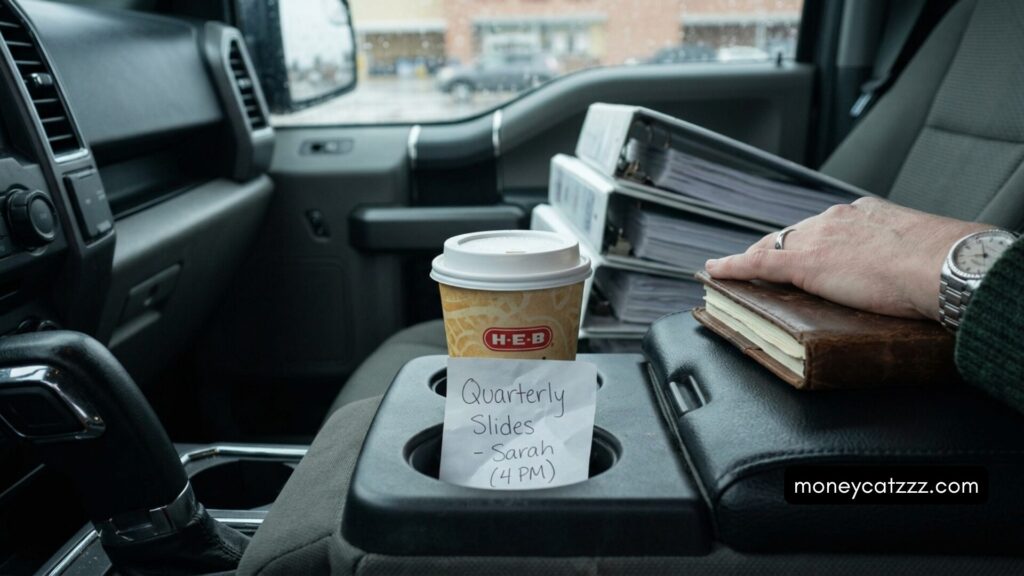
Twenty minutes before the meeting, the car became a pressure chamber. The urge to cry was visceral, yet I systematically suppressed it to maintain the exterior. I walked in, smiled, and delivered the presentation while holding the debris of my composure together.
The Performance Protocol
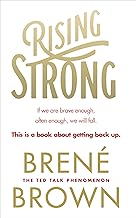
I read Brené Brown’s Rising Strong twice. The first pass was academic; I treated her work as a manual for better impression management. The second read was more diagnostic. It forced me to acknowledge that my composure was not a personality trait; it was a high-maintenance operational output.
Â
I had spent twenty years optimizing for an impossible standard: conflating my utility with my worth, engineering a persona that looked effortless. At the same time, it burned through my resources in the background. My isolation was not an accident; it was the direct result of the framework I built. I convinced myself that others valued the performance, so I doubled down on surveillance, control, and screens.
Â
I wasn’t keeping it together. Far from it, I was hiding the structural rot behind a load-bearing wall of synthetic composure.
[Practicing Emotional Honesty and Slowing Down the Composure Performance | moneycatzzz.com]
Learning to Stop (Sort Of)
I have not stopped the output of composure entirely. To claim otherwise would be a fabrication, and I am in the business of auditing my own reality, not decorating it.
Â
The control room remains active. The screens are live. I am still monitoring, adjusting, and re-calibrating, often more than necessary. The difference is that I no longer pretend I am not there; I have stopped claiming that the efficiency is innate.
Â
Stopping the masquerade is not about a total system shutdown; it is about manual overrides in small, tactical moments. It is a conversation in which the response is not “fine” but an acknowledgment of the actual load. It is the deliberate introduction of a crack in the façade; an acknowledgment of the exhaustion currently running the system.
Â
Last week, a colleague queried my status. My default protocol is the “fine” loop. This time, I hit the override. “Honestly? I am overwhelmed. This project is currently exceeding my operational capacity.”
She looked startled, then visibly relieved. “Thank god. I thought it was just me.”
Â
That is the hidden cost of the composure routine: it forces everyone else to carry their burden in silence, believing their struggle is a unique failure.
The Maintenance Log: Exit Strategy
Composure is not a strength. It is a fabrication, and that fabrication is exhaustion.
Â
I am learning to power down the machine. It is a slow, mechanical process, stripping away the armor I spent two decades forging. I am reviewing the cost of isolation, that corrosive, structural loneliness that emerges when you become the person everyone assumes is indestructible.
Â
The system I engineered is robust, but it is a closed loop of exhaustion. True relief is not found in higher efficiency or a more refined performance. It is found in a total, deliberate abandonment of the control room.
Stop the simulation. Drop the composure. The goal is not to perform “honesty” for an audience; it is to reclaim the energy you’ve been wasting on the foundation of a lie. You don’t need the world’s validation to justify your breakdown or your exit. You only need to acknowledge that the system you built is currently burning down your own house.
Â
The exit is not a moment; it is a permanent recalibration.
____________________________________________________
Disclosure: This post may contain affiliate links. We only recommend products we believe in, and we may receive a commission at no cost to you! Thank you for your support!
Acknowledgment: Cover Image by moneycatzzz.com
Disclaimer: The information is provided for general information only – moneycatzzz.com makes no representations or warranties in relation to the information, including but not limited to any representation or warranty as to the fitness for any particular purpose of the information to the fullest extent permitted by law. While every effort has been made to ensure that the information provided in this article is accurate, reliable, and complete as of the time of writing, the information provided in this article should not be relied upon to make any financial, investment, real estate or legal decisions. Additionally, the information should not substitute advice from a trained professional who can take into account your personal facts and circumstances, and we accept no liability if you use the information to form decisions.