 Reading Time: 8 mins #
 This post may contain affiliate links.
The Temple That Should Have Fixed Me
I climbed a wooden double-helix temple in Japan and felt absolutely nothing.
That should have been the warning.
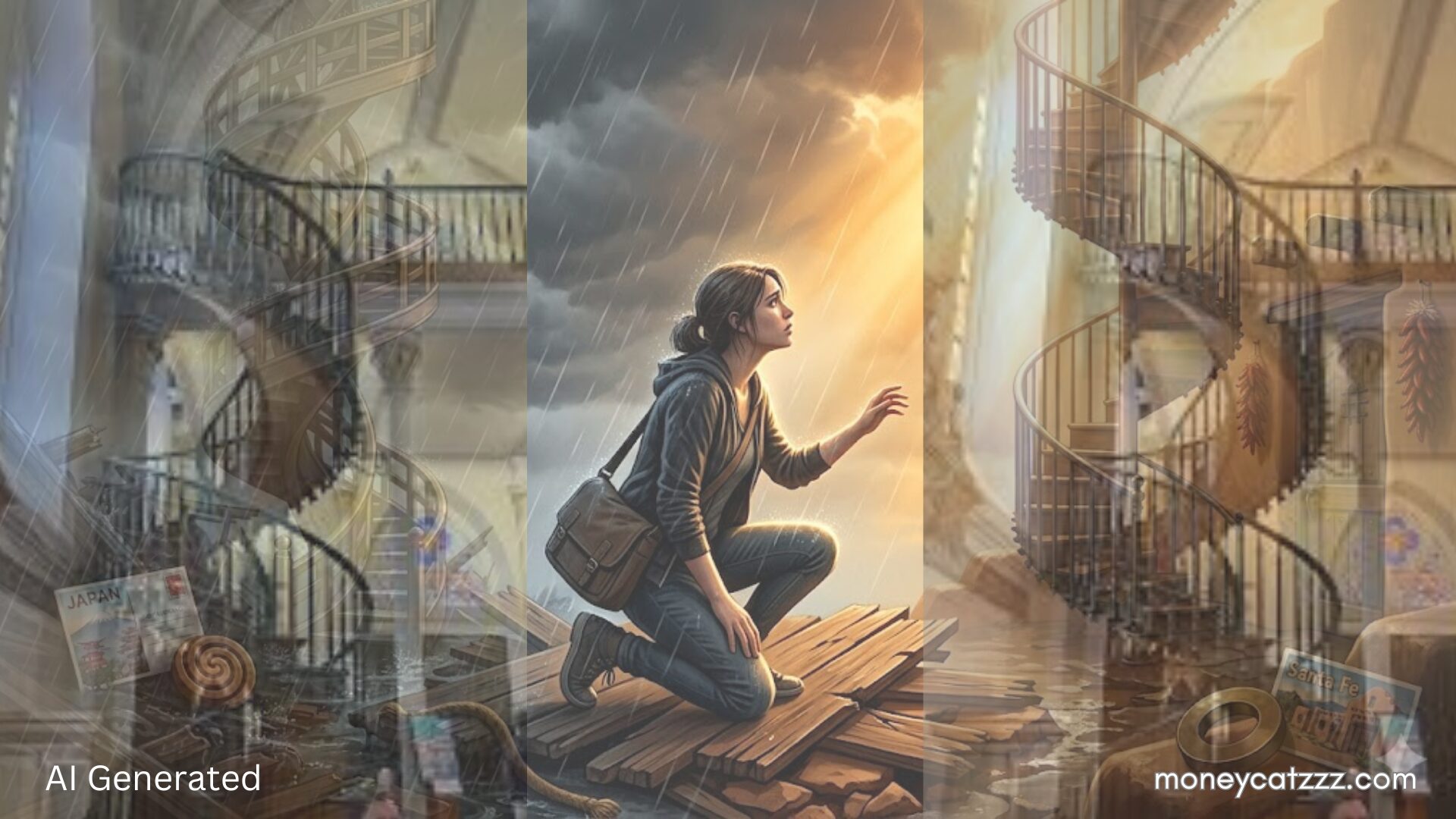
The Aizu Sazaedo in Fukushima was built in 1796 without a single nail. Sixteen meters of old-growth timber, twisted into a spiral so precise that visitors ascending never cross paths with those descending. Two separate ramps sharing one structure, never intersecting. A Möbius strip made from cedar and prayer.
A young novice tried to explain the geometry in careful, halting English. ‘You go up and down but never meet,’ she said. ‘Like life.’She spoke as if she didn’t fully believe the miracle of the words.
I nodded. Purchased an overpriced postcard, which I never mailed.
A photographer was there that morning, shooting for a regional tourism publication. He asked me to step aside. Clear the frame. Remove the human interference from his composition.
I stepped aside. Of course I did.
Months later, I found his photograph online. Beautiful. Perfect.
Completely disconnected from anything I had experienced inside that structure.
This is the digital nomad’s particular pathology. You witness a miracle at 9 AM and pack it into a suitcase by noon. You become fluent in the language of awe while forgetting how actually to feel it. The Sazaedo should have broken something open in me. I needed a miracle.
Instead, I photographed it, posted it digitally, and moved on.

The Prescription I Resented
Back in Texas for a funeral, a friend delivered the verdict with the irritating certainty of a doctor handing you a prescription. “Go to Santa Fe. There’s a staircase you need to see.”
I found her confidence annoying enough that I eventually got in the car.
The Chapel That Doesn’t Know It’s Small
Loretto Chapel sits on the Old Santa Fe Trail, looking slightly surprised to be still standing.
The adobe walls were that color of earth you only get after a thousand rains and a thousand dryings. The smell hit you first, the moment the heavy door was pushed. Candle wax. Cold stone. You sensed something older, something intangible and historic, a kind of silence that only comes from places where people have been praying for decades.
Stained glass throws blue and gold across empty wooden pews.
[Behind the Rope: The Emotional Realization | moneycatzzz.com]
The desert air outside is thin and dry, carrying pinon smoke from somewhere nearby and the distant, hollow sound of a train. A sound that has always meant departure.
The miracle is at the back of the nave.
I heard it before I saw it, which should be impossible since timber doesn’t generate acoustics without foot traffic. But there’s a particular atmospheric density around the woodwork, like standing near something that has been thought about very hard for a very long time.
Then I saw the rope.
The Rope That Lives in Your Head
Two complete spiral revolutions. Thirty-three steps. No central pole. No visible means of staying upright.
For over a century, architects and engineers have argued about how this is possible. The wood itself has never been taxonomically identified. The carpenter appeared in 1877, precisely when the Sisters of Loretto had given up hope. He finished the work. Refused payment. Vanished without leaving a name.
The Loretto Chapel’s own historical record acknowledges what nobody can explain.
The miracle should not work.
It stands anyway.
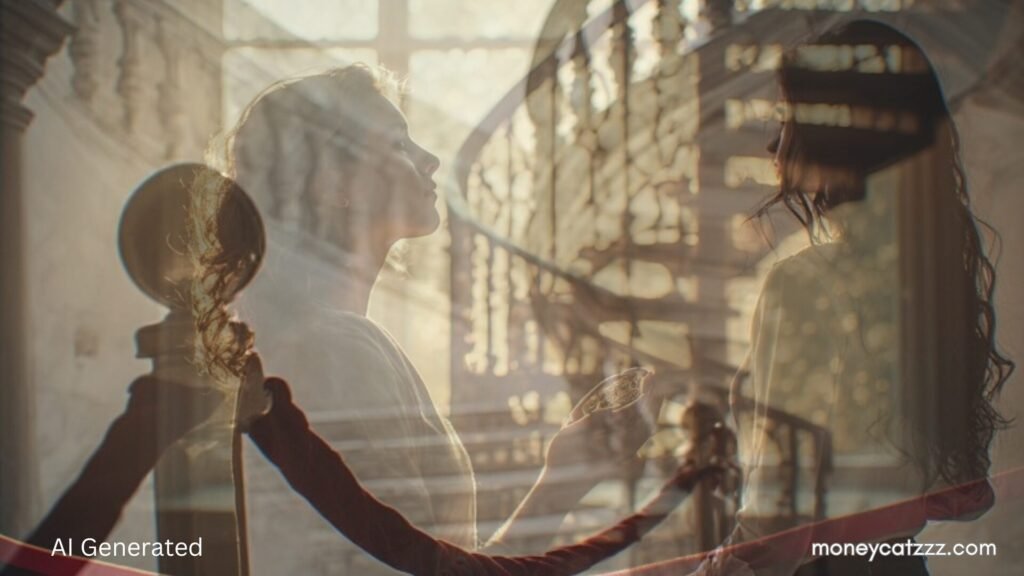
Standing behind the velvet security rope produces a specific psychological friction. The staircase is right there. Handrail worn smooth. Spiral turning upward into golden light. And I’m on the wrong side of the barrier like someone who didn’t make the guest list to their own life.
A student docent gave a halting explanation of the architecture. She stumbled over the word “miraculous” as if she wasn’t quite sure she believed it herself. A sense of ‘deja vu’ passed through me suddenly.
I recognized that immediately.
I bought a postcard and a brass magnet replica. The magnet eventually joined the Sazaedo postcard on my refrigerator. Two impossible spirals, side by side, holding up nothing more consequential than takeout menus.
But before I left, I stood there.
And I understood something.
This rope was my entire life in miniature—the self-imposed boundaries. The permission I kept waiting for that nobody was going to give me.
Every time I’d stopped short of something because the unverified fear was louder than the possible hope. Where was my miracle?
The Sazaedo was supposed to fix that. It didn’t. Perhaps it was meant to be.
Faith Without Proof
Barbara Brown Taylor writes in Learning to Walk in the Dark that faith without proof is not the certainty that things will work out.
I am not entirely sold on that.
It is the willingness to keep walking when you cannot see where you’re going. That is the miracle of trust.
I read that sentence years ago on a transit line. It lodged in the back of my mind like a pebble in a shoe. Standing at the velvet perimeter of this thing that shouldn’t exist, it finally demanded its application.
The Sisters of Loretto had no guarantee that anyone would come. They prayed. They commissioned the architectural drawings. They committed to a solution before they had anyone to build it.
That is not passive hope.
That is faith that works.
I had spent my adult life executing the exact opposite strategy. Waiting for absolute predictability before moving. Treating trust like a consumer purchase, requiring validated reviews before buying. This strategy worked well until I climbed a double helix in Fukushima and felt nothing. Maybe it was the anticipation of expectations that ruined it for me.
That was the moment I understood. The reviews were never going to be sufficient.
The Invisible Carpenter
I found Richard Rohr’s The Universal Christ in a small bookstore on Guadalupe Street.
Rohr is a Franciscan friar based in New Mexico. I needed text that would not compound my internal noise. He writes about encountering the sacred in ordinary materials, such as common timber. Ambient light. Mundane moments executing extraordinary functions.
He suggests the miracle is less about the carpenter’s identity than about the community’s willingness to commit to a solution before the evidence materializes.
They believed first.
Then the wood appeared.
I sat with that sentence for hours in my hotel room, watching car headlights trace patterns across the ceiling. I swear a staircase was projected on the ceiling in one fleeting moment. I, however, had no proof.
The invisible support was never absent. It was always about how the parts related to each other.
The Imagined Ascent
In the absence of physical access, the mind climbs anyway.
I closed my eyes behind the rope.
The miracle begins.
First step. The wood feels dense under my foot, shaped by everyone who touched it before the barrier went up. Warm where the light has been.
Second step. The spiral-as-metaphor turns me away from my familiar view of the floor. Orients me toward an altitude I cannot yet see.
This is the defining characteristic of a spiral.
You can’t see the top from the bottom. You can’t see the bottom from the top. You exist permanently in the middle of a transition, where origin and conclusion both live outside your visual field.
That’s zero comfort for someone who requires absolute predictability before agreeing to move.

Seventh step. Fifteenth.
In my mind, the staircase creaks. The acoustic signature of material that has absorbed decades of silence, footsteps, and whispered requests. By the fifteenth step, the starting point has vanished.
The invisible support holding everything up starts to feel like feedback rather than absence. It wasn’t terrifying, just the sensation of how it holds.
Some frameworks hold weight without showing you how.
Thirty-third step.
The top platform.
No revelation. No angel. No voice from somewhere above the choir loft.
Just a clear view back down to the floor where I’d been standing with my eyes open, behind the rope, photographing instead of trusting.
The 33 Steps I Thought I Wasted
Thirty-three steps.
Approximately the number of years I had spent accumulating the specific combination of failures that brought me here. I noticed the number. Parallels? Maybe, who knows. That is all.
I am never big on research, but there’s one on resilience and invisible support that shows how belief in something larger than what can be immediately verified directly correlates with recovery after significant loss. No supernatural mechanism required. It just permits the next step without demanding proof of the destination.
The brain doesn’t need certainty to act.
It needs sufficient possibility to override the paralysis of fear.
The Sazaedo taught me nothing while I walked its interior ramp. On the contrary, the rope at Loretto taught me everything I needed to know when I was denied entry. The imagined ascent restored a truth I’d somehow misplaced: that I remained capable of navigating unverified territory.
That capacity hadn’t gone anywhere. It never did.
It was just buried under years of demanding guarantees before moving.
[The Print in the Hallway | moneycatzzz.com]
The Photograph in My Hallway
A professional photographer was working at Loretto that morning, too. Large-format camera. Heavy tripod. She sighed audibly when my shadow entered her frame.
I apologized and moved.
Later, I found her work online. Her version of the stairs looked holy. My mobile captures looked like proof of attendance.
The Sazaedo photographer had done the same to me. I am consistently the figure standing in the way of a better image.
I like to think there’s something in that.
The rope is still there. I can never cross it, physically.
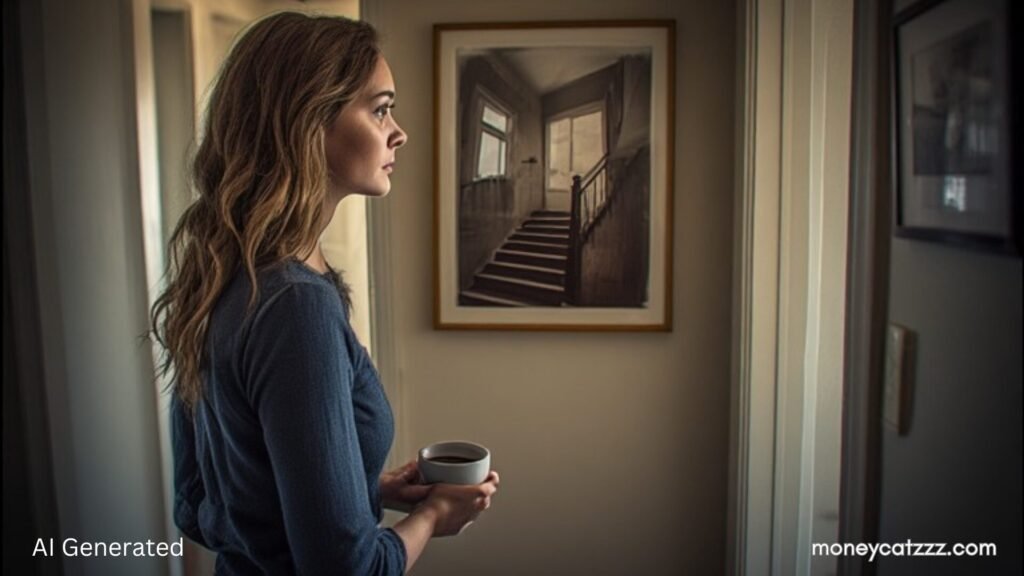
I looked at the miracle from a safe distance. Took photographs I didn’t need. Bought a small print from the gift shop that now hangs in my Dallas hallway, between a plaster crack I keep meaning to fix and a light switch that has never worked.
I look at it when I forget that invisible support exists.
The carpenter never came back. But the miracle was never about him.
My faith in easy certainties hasn’t returned either.
But the climb continues regardless, in my mind, wherever I am.
The miracle is not the stairs.
It is the willingness to step.
Books I Enjoyed But Didn’t Fix Me (and That’s Okay)
Learning to Walk in the Dark

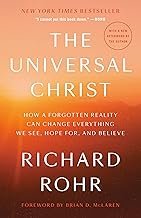
The Universal Christ
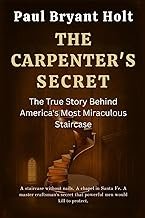
The Carpenter’s Secret
Disclosure: This post may contain affiliate links. We only recommend products we believe in, and we may receive a commission at no cost to you! Thank you for your support!
Acknowledgment: Cover Image by moneycatzzz.com
Disclaimer: The information is provided for general information only – moneycatzzz.com makes no representations or warranties in relation to the information, including but not limited to any representation or warranty as to the fitness for any particular purpose of the information to the fullest extent permitted by law. While every effort has been made to ensure that the information provided in this article is accurate, reliable, and complete as of the time of writing, the information provided in this article should not be relied upon to make any financial, investment, real estate or legal decisions. Additionally, the information should not substitute advice from a trained professional who can take into account your personal facts and circumstances, and we accept no liability if you use the information to form decisions.