uncertainty cover

Uncertainty: How the Path Appears Only When You Walk

imagesReading Time: 8 mins #

disclosure line icon vector This post may contain affiliate links.

You’re standing at the edge of something you can’t see. The path isn’t visible. You’ve been standing here for weeks, maybe months, waiting for the fog to lift. It hasn’t.


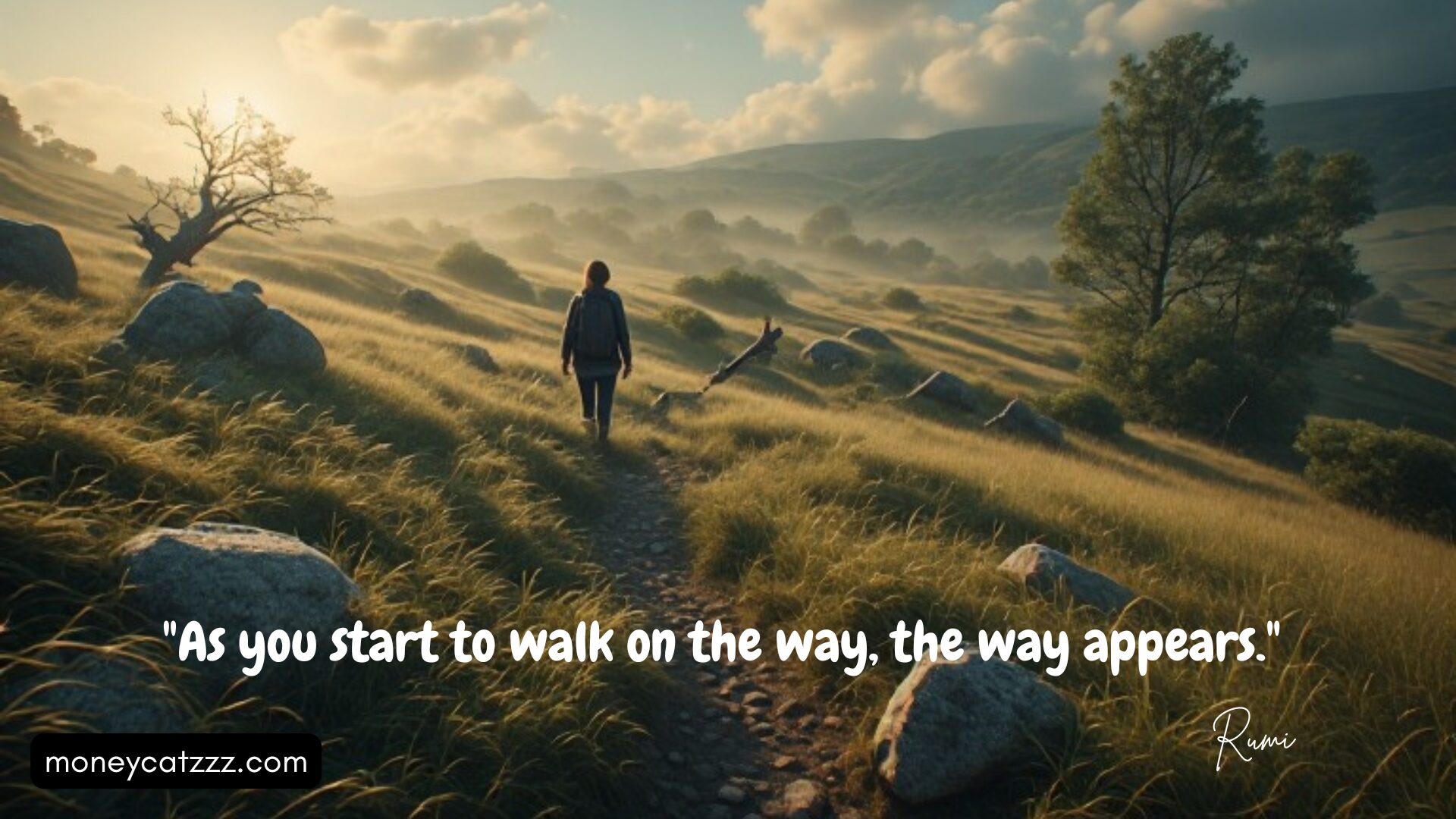
Rumi said, “As you start to walk on the way, the way appears.” How do you walk when you can’t see where you’re going? This is the uncertainty no one prepared you for.


I stood in that fog for two years. Notebook open. Pen in hand. Waiting for the story to reveal itself before I write the first sentence. The fog didn’t lift. It got thicker with my breath.

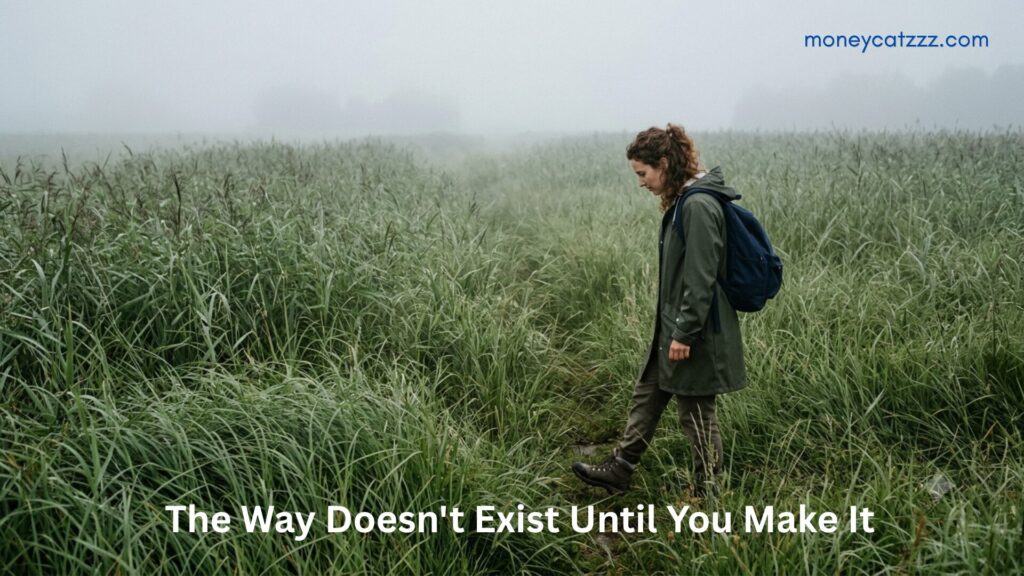
The Way Doesn’t Exist Until You Make It

Picture a field of tall grass. Taller than your waist. There’s no visible trail. No worn dirt path where others have walked before you. Just grass, moving in the wind, going somewhere you can’t see.


What Rumi understood was that the path forward doesn’t pre-exist — you make it. As you start, the grass bends. Your body creates the trail as you move through it. By the time you look back, there’s a path. You didn’t see it ahead because it wasn’t there yet.


This isn’t a poetic lesson about faith. This is how reality works when you’re doing something that matters — the way appears as you walk.

I didn’t believe this two years ago. Careful people waited for clarity before committing. I was careful, smart, and responsible, and I was completely stuck. Taking action felt reckless when I couldn’t see past the first step.


Standing still revealed nothing. The fog doesn’t lift for people who wait.

What We’re Really Waiting For

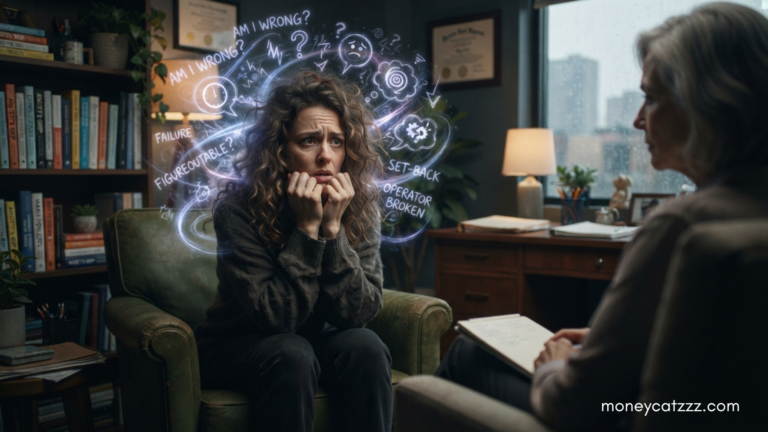
I wasn’t waiting for clarity. I was waiting for a guarantee, specifically, a binding promise that five years of absolute silence hadn’t permanently dried up my ability to finish a single page, leaving me to realize a year of solitary work was just a waste of breath.


No one could give me that guarantee. So I kept waiting. I told myself I was being thoughtful. I was scared.


Research on decision-making under uncertainty shows that humans consistently overestimate the amount of information they need before acting. We need 90% certainty. We usually need about 40%. The rest is noise we’re using to delay the fear of the unknown.


I called it discernment. I was discerning whether this was the right time. Whether I was ready. I wasn’t discerning anything. I was negotiating with my fear, and fear never says yes.


The permission I was waiting for never came. Your future self can’t reach you until you start walking toward them. The only way to meet the person you’re trying to become is to move in their direction without knowing if they’re real.

uncertainty - The Way Doesn't Exist
[What We’re Really Waiting For | moneycatzzz.com]

In The Artist’s Way, Julia Cameron calls it creative faith. You show up. You do the work. The vision is clarified through the practice. Morning pages aren’t about having something to say —they’re about training yourself to move through uncertainty without waiting for inspiration to permit you.


I started morning pages because standing still had stopped working. That’s exhaustion, dressed up as a decision.

The First Step Is Smaller and Stranger Than You Think

The first thing I wrote after two years of silence was terrible: a paragraph about my coffee maker that went nowhere and meant nothing. I forced it out at 6 a.m. inside a drafty traveler’s inn in Denver, listening to a cold November rain beat against the window while my freezing hands struggled to match the absolute misery of the prose.


I wrote another terrible paragraph, the next morning, then another. By the end of the week, I had seven terrible paragraphs about nothing in particular. By the end of the month, one of them was almost good.


Little progress creates motivation, according to Teresa Amabile’s research on the Progress Principle. You don’t wait to feel motivated before acting. You act small, and the action generates enough motivation to act again. Taking action doesn’t require courage. It requires making the action small enough that courage isn’t necessary.

My opening move was stripped of any grand ambition:

“Write one bad paragraph before breakfast, then stop.”

I required absolute, non-negotiable permission for the prose to be completely unreadable; a structural loophole that allowed me to clear the baseline half-asleep. Some mornings it was a thoroughly ugly shuffle, but the threshold stayed low — I kept stepping.


This isn’t the hero’s journey — it’s the anti-hero’s shuffle. You force one miserable block of prose after another onto the page until the collective weight finally creates a shape you never could have anticipated from the edge of the field.

Walking Through Tall Grass

Month three, the landscape shifted. I looked back at the accumulation of pages and caught a shape; the grass had finally bent behind me, leaving a trail I hadn’t realized I was making.


This is where the secondary weight of Rumi’s line actually lands: “As you start to walk on the way, the way appears.” It doesn’t drop a map in your lap; it merely exposes the immediate patch of grass ahead. The disclosure is frustratingly incremental, the uncertainty never actually dissipates, and you simply become more practiced at moving through it.


The difference between being lost and being on a pathless path is that the fear of the unknown makes them feel identical from the inside. Toko-pa Turner insists that the person on a pathless path is still walking. The lost person has stopped moving and is waiting to be rescued.

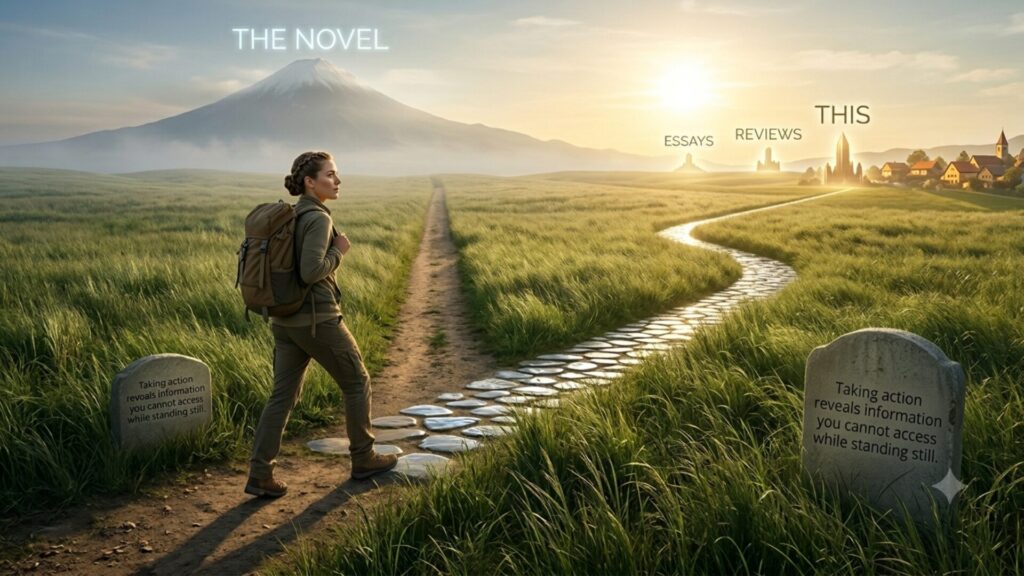
Paths don’t care about blueprints. I spent five years mapping out a novel, absolutely convinced that breaking my silence meant typing chapter one. It didn’t. The writing just dragged me sideways, first into sporadic essays, then into random reviews, and eventually, right here to this exact sentence. The novel is still sitting in my notes app, completely untouched, but I am still writing. The trail bent, and I followed it simply because my feet were already moving.


You can’t outsmart the fog by staring at it. You only find out what you actually want to say by making a total mess on the page, and you only figure out what fits your life by watching what falls apart when you try to carry it. The grass doesn’t clear a view for you while you’re standing on the edge, guessing — it only bends when you finally risk your weight on the next step.

uncertainty - Path Is Not The Obstacle
[The Path Is Not The Obstacle | moneycatzzz.com]

When the Path Forks

Month seven, I hit a patch where the grass simply refused to give. The essays had been going somewhere real, and then, overnight, they just died on the page. I kept shoving forward anyway, but no trail opened up, just the same grinding resistance week after week — a total standstill.


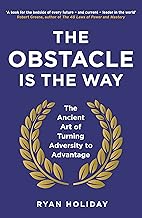
Clearly, the obstacle is the path. Ryan Holiday would advise me to turn the resistance into work. That’s useful when you’re already moving and hit friction, but sometimes, friction tells you to stop walking in this direction and try another.


Some paths are clearly dead-end. I stopped writing essays for three weeks. I tried writing reviews. The grass bent again. The path forward reappeared, twenty feet to the left of where I’d been walking.


Trust the process means you trust that walking will show you when to turn. Standing still shows you nothing.

The Cost of Standing Still

Research on regret shows that, over time, people regret inaction more than they do action. The things we didn’t try haunt us longer than the things we tried and failed at. The fear of the unknown feels enormous when you’re standing at the edge of the field. Ten years later, the fear has faded. The regret for not walking hasn’t.


Rumi didn’t say, “Stand at the edge, and the way will appear.” He said, “As you start to walk.” Walking is the condition. The way appears because you walk.

As You Start to Walk

I’m still walking. I can still only see a few feet ahead. The book I thought I’d write isn’t the book I’m writing. The path I thought I’d take isn’t the path the grass has shown me. I’ve stopped waiting for the fog to lift.


Uncertainty doesn’t resolve before you start. It resolves while you’re moving. The way doesn’t appear as a finished trail — it appears as one bent section of grass at a time, and only after you’ve walked through the section before it.


Forget the full map. You don’t need a green light from some future version of yourself who hasn’t even been built yet. The only actual job right now is shrinking that first move until it’s so ridiculously small your anxiety can’t find a loophole to argue with, and then dropping your weight onto it.


Rumi promised the way would appear — he just left out the part where the terrain might look completely wrong or make you miserable. There was never a deal stating the path had to match the blueprint in your head. The only guarantee is that it shows up.


It will.

____________________________________________

How to Navigate Uncertainty When You Can’t See the Path Ahead


The Progress Principle

by Teresa Amabile

Amazon Button

713kd5KWXIL. AC UY218


Belonging 

by Toko-pa Turner

Amazon Button

81aRj4UCGSL. AC UY218


The Obstacle Is the Way

by Ryan Holiday

Amazon Button

Disclosure: This post may contain affiliate links. We only recommend products we believe in, and we may receive a commission at no cost to you! Thank you for your support!
Acknowledgment: Cover Image by moneycatzzz.com

Disclaimer: The information is provided for general information only – moneycatzzz.com makes no representations or warranties in relation to the information, including but not limited to any representation or warranty as to the fitness for any particular purpose of the information to the fullest extent permitted by law. While every effort has been made to ensure that the information provided in this article is accurate, reliable, and complete as of the time of writing, the information provided in this article should not be relied upon to make any financial, investment, real estate or legal decisions. Additionally, the information should not substitute advice from a trained professional who can take into account your personal facts and circumstances, and we accept no liability if you use the information to form decisions.

Signup to our Newsletter for regular updates:

Lizabeth Johns

Lizabeth Johns is a New Age enthusiast with a unique perspective. A digital nomad traversing around the globe, she has seen it all. She offers clarity and vision, and her vast experience in guiding and mentoring, along with her blogging background, translates into informative and engaging reads. She writes about life matters relevant to today's online fauna and her blog explores life experiences relevant to people navigating the online world.