 Reading Time: 8 mins #
 This post may contain affiliate links.
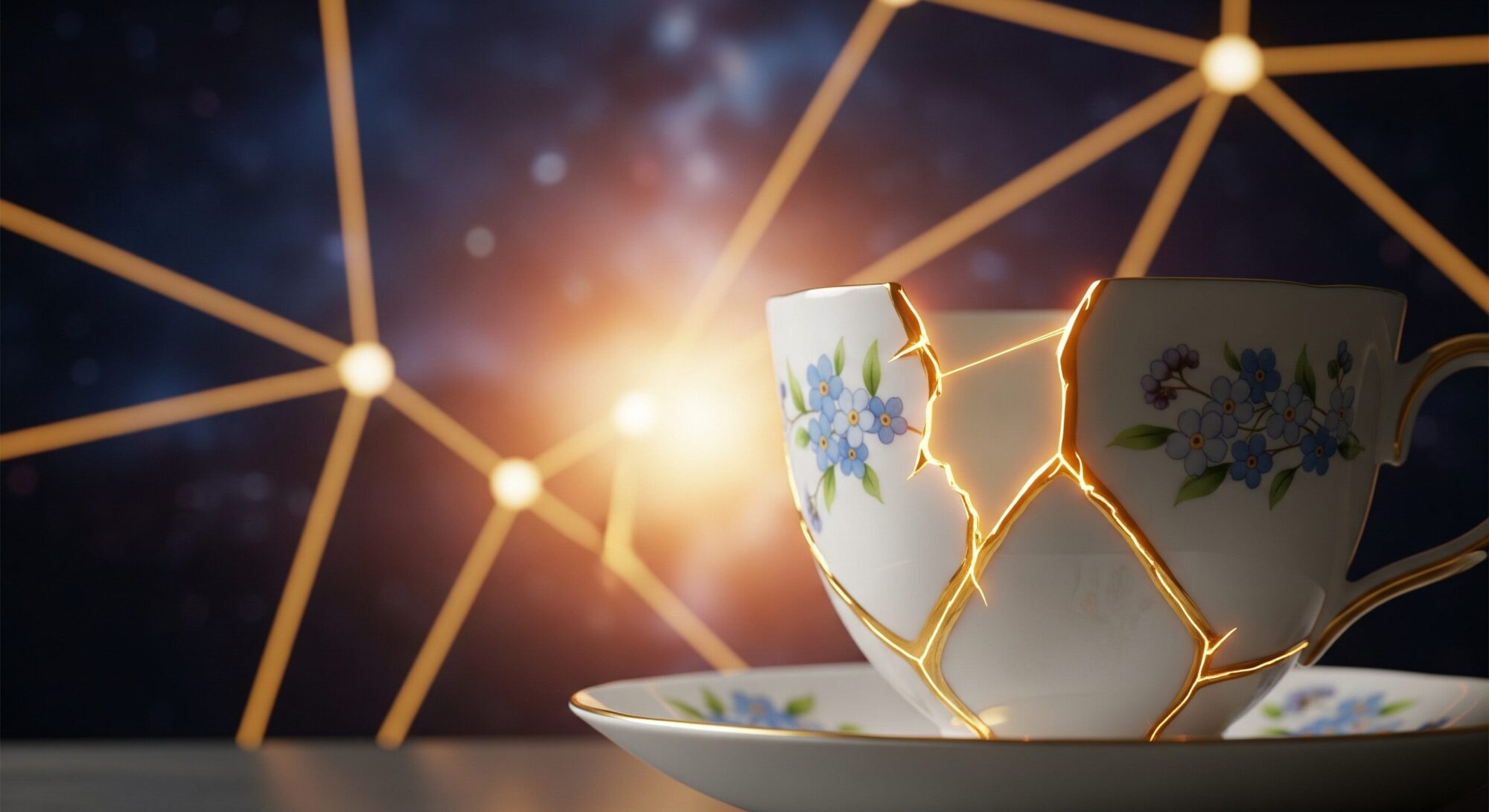
The teacup shattered against the marble floor of my Prague apartment with a sound like a bell being unrung. Not just any teacup — my grandmother’s last gift, carried through three continents, wrapped in silk scarves and anxiety. Royal Albert bone china, painted with forget-me-nots that she said matched my eyes when I was seven.
I stood there, barefoot, the shards forming a constellation of loss around my feet. My marriage had ended that morning via text message. My freelance contract had been terminated the night before. And now this — the last physical anchor to the woman who raised me, in pieces.
That’s when I remembered Pema Chödrön‘s words, dog-eared in a book I’d been avoiding: “Things falling apart is a kind of testing and also a kind of healing.“
I laughed. The kind of laugh that comes from the edge of tears, bitter as burnt coffee. Testing? I was failing. Healing? I was hemorrhaging.
But sometimes, the teacher appears in the space between the breaking and the sweeping up.
The Monastery Where Nothing Holds Still
Six weeks later, I found myself at Gampo Abbey in Nova Scotia, where Pema Chödrön had once served as director. November wind cut through my California bones like accusations. I’d come seeking solid ground, some Buddhist secret for putting life back together.
Instead, I met Sister Palma, a former Wall Street trader who’d exchanged her Hermès for robes after what she called “a spiritual margin call.”
“You came here to learn how to fix things,” she said, handing me tea in a cup with a visible crack down its side, deliberately repaired with gold.
“But Buddhist psychology teaches the opposite. We learn to stay present with the breaking.”
The tea was butter tea: salty, oily, nothing like what I expected, another disappointment in a season of them.
“Disappointed?” she asked, reading my face. “Good. Disappointment is just life removing your expectations. When Things Fall Apart, we discover what remains.”
Groundlessness as Geography
Pema Chödrön writes about groundlessness, that vertiginous moment when all your reference points dissolve. Most of us spend our lives building elaborate scaffolding to avoid this feeling. We create routines, relationships, and identities like load-bearing walls. Then life brings the wrecking ball.
In the meditation hall, sitting on a cushion that smelled of decades of other people’s searching, I learned the Tibetan word shenpa; that sticky feeling of being hooked by our reactions. My shenpa was thick as honey. Every time I closed my eyes for meditation during difficult times, I saw my ex-husband’s text: “I can’t do this anymore.” Eight years compressed into six words.
The Tonglen Reversal
Sister Palma introduced me to tonglen, a Buddhist psychology practice that involves taking and giving. “Breathe in the pain,” she instructed. “Not just yours. Everyone who’s ever had their heart broken via text message. Every person standing in their kitchen, staring at something shattered.”
This seemed masochistic. I was already drowning; why invite more water?
“Because,” she said, as if reading my mind, “suffering isolated is suffering doubled. Suffering shared is suffering transformed.”
Radical acceptance isn’t passive resignation. It’s the opposite; actively opening to what is, without the exhausting effort of resistance.
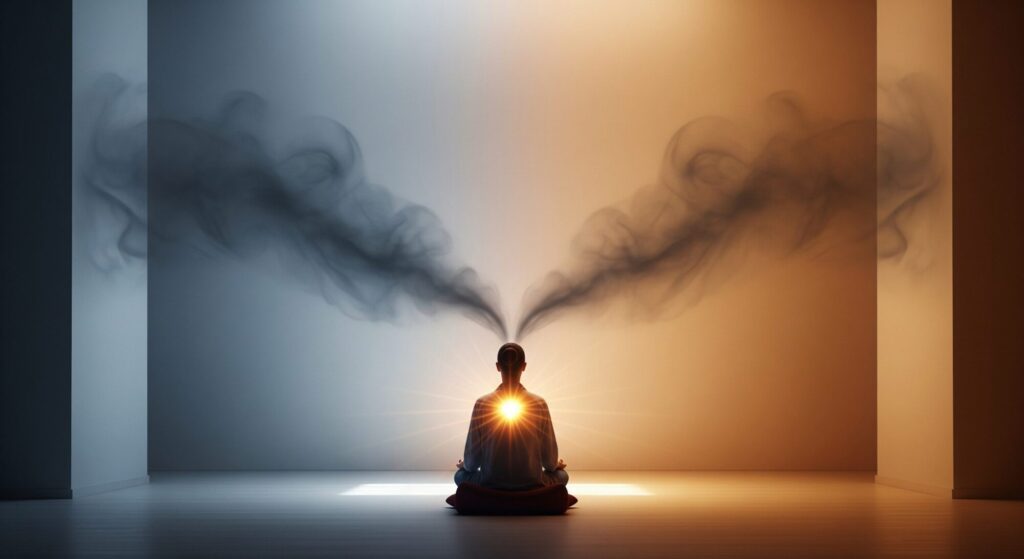
[“The Tonglen Reversal: Breathing in Pain, Breathing Out Peace” – Image by moneycatzzz.com]
The Wisdom of No Escape
There’s a bench behind the abbey where the Atlantic crashes against rocks with a violence that feels personal. I sat there every afternoon, practicing what Pema Chödrön calls “the wisdom of no escape,” staying present with discomfort without rushing to fix, numb, or flee.
A local fisherman, with a Portuguese accent as thick as fog, would pass by daily. One afternoon, he stopped.
“You watch the waves like they owe you money,” he said.
I laughed, first genuine laugh in weeks. “They keep coming.”
“That’s their job. Yours is to stop taking it personally.”
He was paraphrasing Pema Chödrön without knowing it: “You are the sky. Everything else is just the weather.”
The Befriending Experiment
Dealing with uncertainty became my full-time curriculum. Each morning, I’d practice what Sister Palma called “befriending the dragons,” sitting with fear, anxiety, and grief as if they were difficult houseguests rather than enemies.
Fear arrived at 3 a.m., wearing the face of financial ruin.
Anxiety showed up during meals, whispering about dying alone.
Grief sat beside me in meditation, heavy as wet wool.
“Hello, fear,” I’d say, following Pema Chödrön‘s instructions. “I see you. You can stay, but you can’t drive.”
It felt ridiculous at first, like negotiating with the weather. However, something shifted when I stopped treating my emotions as problems to be solved. They became information, energy, temporary visitors in the guesthouse of consciousness.
The Crack Where Light Enters
One morning, the meditation bell wouldn’t ring properly, it had cracked due to temperature changes. Instead of its clear tone, it made a sound like a question mark. The visiting teacher, a woman from Thailand with hands that moved like water, smiled.
“Perfect,” she said. “Now it sounds honest.”
This is radical acceptance; not pretending things aren’t broken, but finding beauty in the breaking. Rumi knew it: “The wound is the place where the Light enters you.” Pema Chödrön teaches it: “The most fundamental aggression to ourselves… is to remain ignorant by not having the courage and the respect to look at ourselves honestly and gently.”
The Teacup Ceremony
My last evening at the abbey, Sister Palma held a ceremony. Not a formal one, just tea in the kitchen after evening prayers. She brought out a collection of cups, each one damaged and repaired with gold, silver, or copper: Kintsugi, the Japanese art of embracing flaws.
“Choose one,” she said.
I picked a cup with so many repair lines it looked like a map of rivers. As I lifted it, she told its story; dropped by a novice nun who thought her clumsiness meant she didn’t belong, stepped on by someone rushing to meditation. Knocked off a shelf during an argument about who should wash dishes.
“This cup has been broken seven times,” Sister Palma said. “Each breaking brought more gold. Now it’s our most valuable piece, not despite its damage, but because of it.”
Practical Magic for Impossible Times
The only thing more exhausting than dealing with chaos is resisting it. When things feel like they are dissolving: in life, at work, or in relationships — we don’t need a map; we need a method for simply staying present.
- When Things Fall Apart isn’t a problem to solve, it’s a doorway to walk through. Here’s what Buddhist psychology taught me about dealing with uncertainty:
- Start Where You Are: Not where you wish you were. Not where you should be. Right here, in the mess.
- Breathe Into the Broken Places (Tonglen): Breathe in pain, breathe out relief. Start with your own, expand to others.
- Make Friends with Groundlessness: That free-fall feeling? It’s not falling, it’s flying without a net. There’s strange freedom in having nothing left to protect.
- Let Difficult Emotions Visit: They’re guests, not residents. Offer them tea, but don’t give them your bed.
The Return to Prague
I arrived back at my apartment a different person, not healed, as that would suggest returning to a previous state, but somewhat transformed. The shards of grandmother’s teacup were still in a box, waiting. But now I saw them differently, not as something broken, but as something becoming.
I arranged the pieces on my kitchen table in a mandala-like formation. Some fragments were as tiny as tears, while others were large enough to hold a memory. The forget-me-nots were fractured but still blue. In the most significant piece, I could see half of my grandmother’s favorite Bible verse, written in gold on the rim: “All things work together…”
The rest was missing, but I knew how it ended: “…for good.”
Not good as in comfortable. Good as in honest. Good as in real.
The Geography of Falling Apart
Six months later, I was teaching English in Vietnam when a student asked me about the gold-veined cup on my desk; grandmother’s teacup, reassembled with amateur kintsugi, more glue than gold, but mine.
“Teacher, why do you keep a broken cup?”
How to explain radical acceptance to a sixteen-year-old who’d never heard of Pema Chödrön? How to say that meditation for difficult times has taught me that breaking isn’t the opposite of wholeness , it’s a different kind of complete?
“Because,” I said finally, “it holds tea better now. The cracks let the light through.”
She looked skeptical, the way teenagers do when adults get metaphorical. But after class, she lingered.
“My parents divorced last month,” she said quietly. “I feel like… broken cup too.”
I poured her tea from my cracked pot into my golden-veined cup. We sat in silence that wasn’t empty but full of understanding, of company in groundlessness, of the radical acceptance that comes when you stop trying to escape what is.

[“The Wisdom of No Escape: Befriending Groundlessness” – Image by moneycatzzz.com]
When Things Fall Apart, We Discover What Remains
Pema Chödrön says, “The most difficult times for many of us are the ones we give ourselves.” The suffering isn’t in the falling apart, it’s in our desperate grasping for solid ground that was never solid to begin with.
That teacup taught me what Buddhist psychology has known for centuries: everything breaks. Everything ends. Everything transforms. The question isn’t how to prevent the breaking but how to be present for it, how to find the beauty in the pattern of the shards, how to let the light through the cracks.
Dealing with uncertainty isn’t about finding certainty elsewhere. It’s about becoming comfortable in the not-knowing, finding peace in the groundlessness, discovering that you can fall forever, and still be held by something larger than your fear.
The Invitation in the Breaking
Every morning now, I drink coffee from that gold-veined cup. Each sip is a reminder: I survived the falling apart. More than survived; I discovered that destruction and creation are the same energy, just moving in different directions.
When Things Fall Apart, we’re not being punished. We’re being invited into a larger conversation with life. Radical acceptance is simply saying yes to that invitation, even when, especially when, we don’t know where it leads.
The teacup still leaks a little. I’ve learned to put a saucer underneath to catch what spills. This too is practice; making space for the overflow, for what can’t be contained, for the mess that comes with being beautifully, impossibly alive.
What has fallen apart in your life that taught you about wholeness? Share your story of breaking and becoming in the comments — I’ll bring the glue, you be the gold.
Resources for the Journey
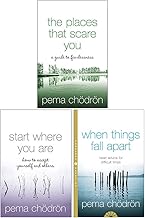
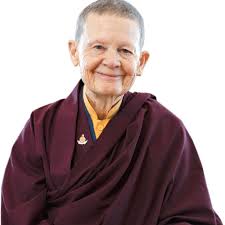
Wisdom by Pema Chödrön
- When Things Fall Apart
- The Places That Scare You
- Start Where You Are

Disclosure: This post may contain affiliate links. We only recommend products we believe in, and we may receive a commission at no cost to you! Thank you for your support!
Acknowledgment: Cover Image by moneycatzzz.com
Disclaimer: The information is provided for general information only – moneycatzzz.com makes no representations or warranties in relation to the information, including but not limited to any representation or warranty as to the fitness for any particular purpose of the information to the fullest extent permitted by law. While every effort has been made to ensure that the information provided in this article is accurate, reliable, and complete as of the time of writing, the information provided in this article should not be relied upon to make any financial, investment, real estate or legal decisions. Additionally, the information should not substitute advice from a trained professional who can take into account your personal facts and circumstances, and we accept no liability if you use the information to form decisions.