
 Reading Time: 8 mins #
 This post may contain affiliate links.
I did not set out to find it. It found me, a low house at the edge of town with a porch light that refused to quit, a hospice for old selves. Moths worked the little halo. Someone had rubbed lemon oil into the rail, and the whole place smelled like clean wood and rain. Even the windows seemed to breathe. The floor answered my steps with the creak you hear in old knees.
I arrived at the hour when day stops pretending to be brave. I was hauling a version of me I had finally outgrown, the scheduler who tried to outpace hunger by filling every square, the smile that made my jaw ache, and the comfort of strangers. We did not argue on the steps. We were both tired.
Inside, a small desk waited with a chipped bell. A clipboard. A blunt pencil. A plastic bracelet curled at the edges like a fern. I printed her first name, her last, the years she kept us alive. Reason for admission: exhaustion. Under “next of kin,” I started to write my own name, then crossed it out and wrote “future me.” It felt like telling the truth.
If you are new to this, the hospice for old selves is not a drama. It is a practice of grief and tenderness. You sit with who you have been, thank her for what she carried, and let renewal come in on quiet feet.
Letting Go of Old Identities: A Hospice, Not a Battle
In the hospice, love stops insisting on a cure. No pep talks. No “try harder.” We do not shock the heart of a self that wants to stop. We bring blankets. We dim the lights. We sit beside the bed and say thank you with both hands, for how she stitched the roof when the winter would not end, for the nights she kept me company with lists and perfection when I did not know how to ask for help. Some do not need a second chance; they need a soft landing. In this place, identity grief is met with comfort, not correction.
The Intake Desk
They handed me a clipboard with a pen that did not scratch. I listed what kept her alive: brisk walks with clenched fists and a calendar full of “Yes” so she could make a story shimmer even when she was starving. In the end, I also wrote what her body whispered: I am tired of being admirable. I want to be true.
Honoring Past Selves With Naming
Before leaving the desk, I did one more thing: what her work made possible. “She protected the house,” I wrote. “She learned to open doors. She taught me to smile in the rain.” Naming is a mercy. It lets you love someone without letting her drive. This is how honoring past selves becomes a kindness instead of a chain.
Do-Not-Resuscitate
On another clipboard, the nurse slid me a form. “We do not force what is meant to end,” she said, as if she had seen my kind before. I filled it out like a vow: I will not resuscitate overwork. I will not shock awake the habit of shrinking so others feel big. I will not revive performative calm when I need to fall apart.
Gentle Boundaries for Letting Go
A DNR is a boundary that remembers your own pulse. I slid the form into her folder and felt something loosen, like unhooking wires I had learned to sleep inside. I sat there a moment with my hands still. Saying no can sound harsh; here it felt like care. I set the clipboard back on the counter, breathed, and let the room settle around us.

The Comfort Cart
When there was finally a little space, the nurse came by with a cart. Chamomile steaming. Lotion that smelled like clean cotton. A woven blanket with the kind of weight that says stay. I chose the blanket and tucked it over my knees while I kept watch. Tending without fixing is a courage I am still learning. When the urge to rescue rose, I held her hand instead. When the urge to explain arrived, I hummed the old song she taught me.
This is where I learned the difference between keeping and clutching. Keeping is stewardship. Clutching is fear. One leaves a light on. The other boards the windows.
Visiting Hours
In the hospice for old selves, grief asks for witnesses. The hospice offered two plastic visitor badges that read “Friend” and “Future.” I wore both. I texted the people who knew her, those who benefited from her shine, and those who saw the exhaustion’s price. “What did she carry for us?” I asked.
They spoke softly. She brought the room together. She finished the impossible. She paid the toll for our comfort. Their words did not absolve me; they absolved her. I cried the kind that leaves you lighter.
Before I left the room, I did one more thing. I whispered in her ear, “You can rest now. I will take it from here.”
The Memory Box
Not everything belongs in the ground. Some things belong in our pockets. The hospice kept a shelf of small boxes, balsa wood, ribbon, and a slot for a note. I chose three keeps:
- A skill: her discipline, but without the meanness
- A sentence: “You are allowed to arrive as you are.”
- An object: the old brass key from a door she learned to open
Grief Rituals That Keep What Matters
Everything else I folded into a soft goodbye. The box fits in my palm. Enough to carry, not sufficient to anchor me to a dock that had already splintered. These small grief rituals help me practice release and renewal without pretending it is easy.
The Chapel of Regret
A pew in the corner smells like polish and second chances. The stained glass spills color on whoever sits there. If you are grieving your past self, this is a place to tell the unglamorous truth out loud. I used people’s awe as a shield. I hid my needs behind usefulness. I wore my competence like armor and called it love. Then I wrote an apology and one amendment I could make by noon, call the friend I ghosted when I felt unworthy. Tell the whole truth. Bring banana bread.
Regret is not a punishment. In the chapel, it is a way to be in the same room as your life.
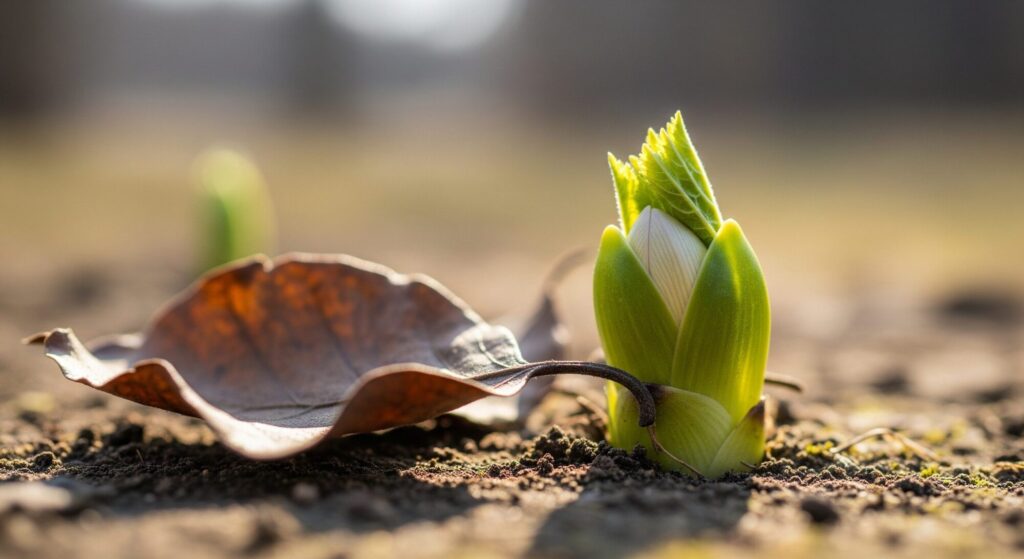
[“The Gentle Unfurling of Self” – Image by moneycatzzz.com]
Organ Donation
Even in death, she gives. The hospice has simple forms for this. I signed where her gifts would go:
- Her stamina now feeds my rest. I stop before the cliff
- Her courage moves to my “no,” not just my “yes”
- Her sparkle enters the home like a candle, not a floodlight
I am not disowning her. I am discharging her with honors. Nothing wasted. Nothing shamed.
The Garden Out Back
Out back, the garden did not need language to explain itself. A neat bed of compost steamed in the cool air. The nurse handed me a trowel and a small packet of seeds. “Bury what you are done clutching,” she said. “Plant what you are ready to keep.”
I wrote one line on a scrap of paper, “I release the need to be palatable,” and pressed it under dark soil. Besides it, I planted “honest laughter,” “slow mornings,” and “enough.” Dirt under my nails felt like a password I had forgotten. Endings return to earth. New growth is paid for by what we release.
Release and Renewal in Practice
This, to me, is personal transformation done softly. Not a reinvention by decree, but a return to soil and a patient green shoot.
I walked home lighter, not empty. She is not coming with me, but she is coming through me.
Some days, I still reach for her, the one who could outrun hunger with a calendar. I do not scold myself. I glance toward the small house at the edge of town, where the porch light burns, and I remember we said goodbye on purpose. Grief is the tax we pay on a self that kept us alive. Gratitude pays the tip.
When ready, write one line on a wristband, “Admitted with honor.” Then take your own hand. There is a room prepared for every version of you that got you this far. There is a garden out back. There is a path home.
Recommended Reading for Identity and Change
To deepen your understanding of why we cling to old selves and how to navigate change with grace, consider these foundational works:
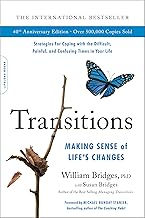
- Transitions: Making Sense of Life’s Changes by William Bridges: This book provides the definitive framework for understanding the three-stage process of any major change: ending, neutral zone, and new beginning. It offers a humane map for the often-messy emotional experience of letting go.
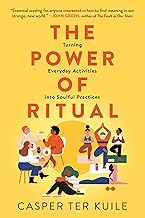
- The Power of Ritual by Casper Ter Kuile: This work explores how small, intentional daily rituals—like those practiced in the “hospice for old selves”—can help structure meaning, provide comfort during uncertainty, and anchor new identities.
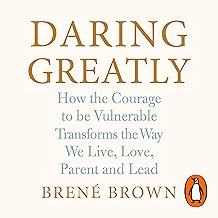
- Daring Greatly by Brené Brown: This book is essential for exploring the role of vulnerability and shame in holding onto exhausted identities. It provides the necessary courage and compassion to face the truth about who you were and step into who you want to be.
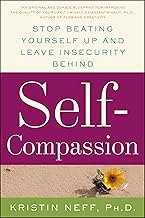
- Self-Compassion: The Proven Power of Being Kind to Yourself by Dr. Kristin Neff: This foundational text argues that self-compassion—treating yourself with the same kindness you’d offer a friend—is a more effective path to well-being than self-esteem. It provides the emotional blueprint for the tenderness required to let go of an exhausted old self without judgment.
Disclosure: This post may contain affiliate links. We only recommend products we believe in, and We may receive a commission at no cost to you! Thank you for your support!
Acknowledgement: Cover Image by moneycatzzz.com
Disclaimer: The information is provided for general information only – moneycatzzz.com makes no representations or warranties in relation to the information, including but not limited to any representation or warranty as to the fitness for any particular purpose of the information to the fullest extent permitted by law. While every effort has been made to ensure that the information provided in this article is accurate, reliable, and complete as of the time of writing, the information provided in this article should not be relied upon to make any financial, investment, real estate or legal decisions. Additionally, the information should not substitute advice from a trained professional who can take into account your personal facts and circumstances, and we accept no liability if you use the information to form decisions.