
 Reading Time: 8 mins #
 This post may contain affiliate links.
That voice in your head never stops. Right now, it’s probably commenting on this very sentence. Michael Singer’s Untethered Soul begins with this simple observation, one that opens a doorway to profound inner freedom.
In our Sunday sanctuary, The Slow Scroll, we explore books that not only inform but also transform. Singer’s work stands apart because it addresses the most intimate relationship you’ll ever have: the one with your own consciousness.
This isn’t another self-help promise of fixing what’s broken. Instead, The Untethered Soul invites you to step back and witness the part of you that was never broken to begin with. It’s about discovering the observer behind the thoughts, the awareness beyond the emotions.
The Voice Inside Your Head: Your Uninvited Roommate
Michael Singer asks us to imagine something startling: what if that internal voice were an actual roommate? “Good morning! Here’s everything wrong with your life. By the way, remember that embarrassing thing from 2009?” You’d evict them immediately. Yet we live with this mental commentary 24/7, rarely questioning its authority.
The Untethered Soul reveals a liberating truth: you are not that voice. You’re the consciousness aware of it. This distinction isn’t philosophical wordplay; it’s the key to inner freedom.
Consider Singer’s airplane analogy: You’re seated next to someone narrating everything to you. “Look, clouds. We’re flying. I wonder if we’ll crash. That person looks suspicious.” After hours of this, you’d realize this person has serious issues. That’s precisely what your mind does, yet we mistake this neurotic narrator for ourselves.
“There is nothing more important to true growth than realizing that you are not the voice of the mind, you are the one who hears it.”
Set a timer for thirty minutes. Notice the voice without engaging. Just observe. Most people are shocked by the sheer volume and randomness of their mental chatter. This awareness alone marks the beginning of the journey toward spiritual growth.
The Architecture of Inner Freedom
To understand inner freedom, Michael Singer offers a profound model: consciousness as the witness. Imagine your awareness as the sky, and thoughts and emotions as weather passing through. The sky remains unchanged, whether hosting sunshine or storms.
Singer uses the metaphor of a house where thoughts and emotions are temporary guests. Some guests are pleasant, others demanding, but you, the host, remain distinct from them all. This perspective shift changes everything about how we experience life.
The Untethered Soul identifies three levels where we mistakenly place our identity: body, mind, and soul. Most of us are stuck in the first two, believing we are our physical sensations or mental narratives. But consciousness itself; pure awareness, exists beyond both.
This understanding aligns beautifully with research from MIT’s McGovern Institute, which demonstrates how meditation physically alters brain structure, increasing gray matter in areas associated with self-awareness. The science confirms what Singer intuited: we can step back from our automatic patterns.
The practice of letting go begins with this stepping back. It’s not about forcing thoughts away or trying to achieve a blank mind. Instead, it’s about changing your relationship with mental activity. When you stop fighting with your thoughts, they lose their power over you.

[“The Voice Inside Your Head: Your Uninvited Roommate” – Image by moneycatzzz.com]
Energy Centers and Emotional Freedom
Where Eckhart Tolle’s The Power of Now focuses on presence, Singer’s approach in the Untethered Soul explores how emotions get stuck in our energy system. He makes the esoteric concept of chakras accessible to Western minds, with a particular focus on the heart center.
Singer explains how experiences create energetic impressions, what yogis refer to as samskaras. These impressions are like psychological scar tissue. When triggered, they release their stored energy, flooding us with old emotions and reactions. We then either suppress this energy (pushing it back down) or express it outwardly (often in an inappropriate manner).
But there’s a third option: letting go. When disturbing energy arises, Singer teaches us to relax and release. Don’t push it down. Don’t act it out. Just let it pass through your consciousness like weather through the sky.
The heart, Singer explains, is our spiritual center; it naturally wants to stay open. But we close it to protect ourselves from pain. Ironically, this closing causes more suffering than the original hurt. Emotional freedom comes from keeping the heart open, even when it feels vulnerable.
You might also like:
Disengage Without Detaching: How to Reclaim Mental Clarity and Emotional Freedom
The Practice of Letting Go
The Untethered Soul presents letting go not as a concept but as a practical, moment-by-moment choice. Singer’s technique is deceptively simple: When you feel disturbance, relax and release. This differs from suppression (pushing down) or indulgence (getting lost in the story).
David Hawkins, in his book Letting Go: The Pathway of Surrender, explores similar territory with his map of consciousness. Both authors agree: resistance creates suffering. What we resist persists. The path to inner freedom requires allowing energy to flow through us without obstruction.
Here’s Singer’s three-step process for working with disturbance:
- Notice the disturbance: Awareness is always the first step
- Relax and lean away: Create space between you and the feeling
- Let the energy pass through: Don’t grab it, analyze it, or push it away
I witnessed this in action during a high-pressure board meeting. As criticism mounted, instead of defending or deflecting, our CEO noticed her defensive energy rising; she relaxed her shoulders and let the charge pass through. Her subsequent response came from clarity, not reactivity. The entire room’s energy shifted.
This is mindfulness practice at its most practical. According to research from Harvard Medical School, regular mindfulness practice can reduce anxiety by 58%. But Singer takes it further; this isn’t just stress reduction; it’s a path to complete psychological freedom.
Beyond the Edges of Self
The Untethered Soul challenges our most basic survival instinct: the desire to control our experience. We expend enormous energy trying to orchestrate our lives to match our preferences. Singer calls this “the cage of our psyche,” and we become prisoners of our own likes and dislikes.
Spiritual growth means consciously expanding beyond these edges. Not through force, but through willingness to experience what is. Singer suggests an experiment: For one week, say “yes” to experiences you’d generally avoid (within reason and safety). Notice how the anticipation is usually worse than the reality.
This expansion of consciousness isn’t about becoming a doormat. It’s about choosing your responses from awareness rather than conditioning. When preferences do not dictate your choices, you have genuine freedom. This is true inner freedom.
Singer’s own story, detailed in The Surrender Experiment, demonstrates this principle lived out over the course of decades. By saying “yes” to life’s flow, he went from living in the woods to running a billion-dollar company, not through ambition, but through surrender.
The Stanford Center for Compassion and Altruism Research has documented how this open-hearted approach to life correlates with increased happiness, improved relationships, and even better physical health. The science continues to confirm what mystics have long known: letting go is the path to receiving.

[“The Practice of Letting Go: The Sky and the Weather” – Image by moneycatzzz.com]
Living the Untethered Life
How can we integrate these teachings into our daily lives?
The Untethered Soul isn’t meant for mountain-top contemplation but for Monday morning meetings and Thursday traffic jams. Singer demonstrates how consciousness works to enhance, rather than escape, practical life.
Start with a morning check-in: Before checking your phone, take a moment to assess your inner state. Notice any resistance or tightness. Breathe and release. This simple mindfulness practice sets the tone for conscious living throughout the day.
In relationships, practice watching your reactions without immediately expressing them. That pause between the trigger and the response is where emotional freedom resides. You’ll find yourself responding from wisdom rather than wounds.
For leaders and creators, working from an untethered place means accessing flow states more readily. When you’re not fighting with yourself, your energy is available for innovation and connection. Spiritual growth directly translates to professional development.
The Choice to Be Free
The most radical thing about Michael Singer’s message isn’t its complexity; it is its simplicity. You can choose, at any moment, to stop fighting with reality. You can decide to let life flow through you rather than getting stuck in you.
This Sunday, as you sit with these ideas, notice the part of you that’s reading. Notice the awareness behind your eyes. That’s the untethered soul Singer points toward — the you that’s always been free.
The question isn’t whether inner freedom is possible; it’s whether it is attainable. It’s whether you’re willing to let go of what keeps you tethered, Singer reminds us, the cage door has always been open. We need to stop holding onto the bars.
In the company of transformative works like The Power of Now, Letting Go, and Singer’s own The Surrender Experiment, the Untethered Soul offers a practical mysticism for our times. It bridges the gap between ancient wisdom and modern psychology, showing us that consciousness isn’t just something we have; it’s what we are.
Will you remain identified with the voice in your head, or will you discover the vast consciousness that you truly are? This choice, renewed moment by moment, is the essence of the untethered life.
The Transformation Collectives
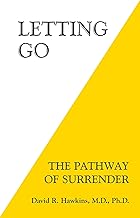
Letting Go

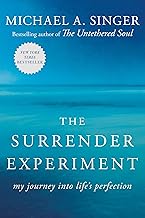
The Surrender Experiment
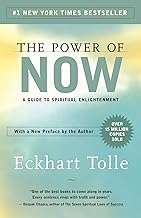
The Power Of Now
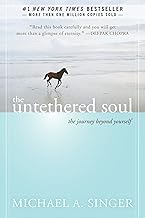
 The Untethered Soul
 The Untethered Soul
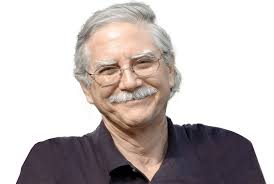
Micheal A Singer
Disclosure: This post may contain affiliate links. We only recommend products we believe in, and we may receive a commission at no cost to you! Thank you for your support!
Acknowledgment: Cover Image by moneycatzzz.com
Disclaimer: The information is provided for general information only – moneycatzzz.com makes no representations or warranties in relation to the information, including but not limited to any representation or warranty as to the fitness for any particular purpose of the information to the fullest extent permitted by law. While every effort has been made to ensure that the information provided in this article is accurate, reliable, and complete as of the time of writing, the information provided in this article should not be relied upon to make any financial, investment, real estate or legal decisions. Additionally, the information should not substitute advice from a trained professional who can take into account your personal facts and circumstances, and we accept no liability if you use the information to form decisions.