 Reading Time: 8 mins #
 This post may contain affiliate links.
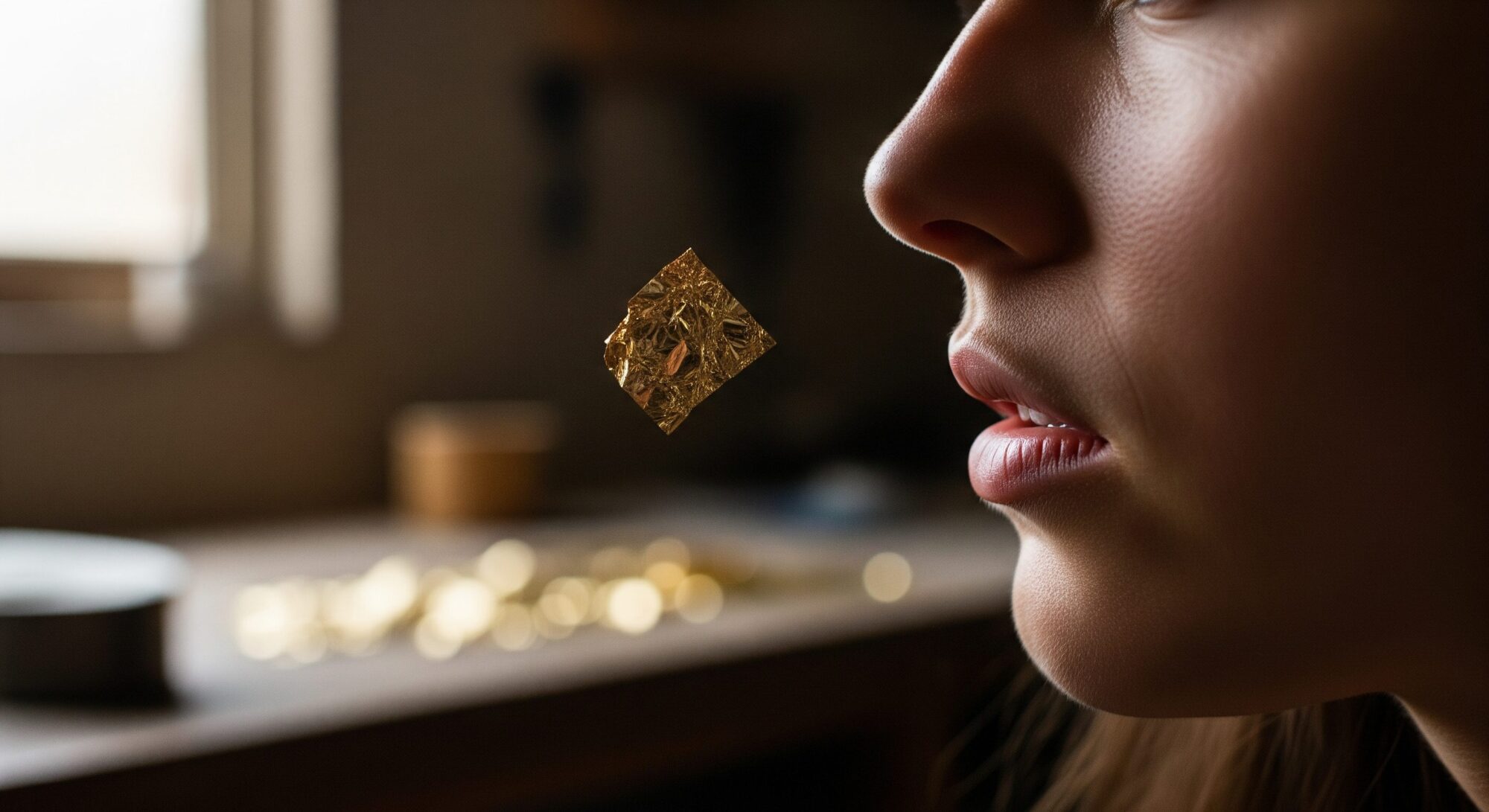
The gold was impossibly thin between my fingers, so delicate that my pulse made it flutter. In a Venetian workshop tucked behind Campo San Stefano, I was learning the ancient art of battiloro, or gold beating, when I finally understood why I’d been losing myself slowly over the past three years of constant travel. The master, Giuseppe, wouldn’t let me breathe near the gold leaf. “One sigh,” he warned in accented English, “and your work flies away. Into nothing.”
Standing there, holding my breath, I recognized myself in that trembling sheet of gold: spread so thin I could see through myself, so light that any disturbance might make me disappear entirely. Losing oneself can be devastating, yet it can also be a profoundly rewarding experience.
The Science of Spreading Thin
Giuseppe’s family had been gold beaters for six generations. He showed me the process, starting with a nugget of gold the size of a child’s tooth. “We hammer,” he said, demonstrating with rhythmic strikes that made the shop windows vibrate. “Four hours of hitting. The gold spreads and spreads until one ounce covers one hundred square feet.”
I watched the gold transform from something substantial into something that barely existed. By the end, it was 0.1 microns thick, visible only when it caught light at the right angle. “Bellissimo,” Giuseppe said, “but fragile. So fragile.”
This was my life exactly. I’d spread myself across continents, time zones, and identities until I had the coverage of success but no density. I was everywhere, which meant I was nowhere in particular, the shimmer without the substance.
According to the Museo del Vetro in Venice, the art of gold beating requires an understanding that maximum beauty comes at the cost of structural integrity. The thinner the gold, the more light it transmits, but also the more likely it is to tear at the slightest touch.
When Breathing Becomes Dangerous
Giuseppe taught me about what he called “il respiro del doratore,” the gilder’s breath. Because gold leaf is three thousand times thinner than human hair, even exhaling near it can destroy hours of work. Master gilders learn to work in a state of suspended breath, moving between normal breathing only when safely away from their work.
“This is why we get dizzy,” he laughed, but his eyes were serious. “Too much holding. Not enough living.”
I thought about my own held breath over the past years. The careful way I’d learned to exist without disturbing anything. No deep connections because I’d be leaving soon. No real commitments, as I needed to stay light, mobile, and ready. I’d been living in a constant state of the gilder’s breath, afraid that one deep exhale might scatter the carefully constructed image I’d built.
The Breaking Point
Reading in my Venetian apartment that night, Pema Chödrön‘s words about groundlessness felt especially relevant. She writes about how we try to find security by spreading ourselves everywhere, but this actually creates more insecurity. We become dependent on movement to feel alive.
Three weeks into my Venice stay, I had what I now call my “gold leaf moment.” I woke at 3 AM in my rented flat, unable to remember which city I was in. Not just confused, but genuinely blank. For thirty seconds, I was nowhere and no one, losing oneself totally, I’d been doing gradually had suddenly become complete.
I sat on the cold terrazzo floor, cried, and recoiled in shock. Not pretty tears but the ugly kind that come from recognizing you’ve been participating in your own disappearance. I’d been so focused on coverage, on being worldly and experienced, that I’d forgotten about depth. About weight. About being findable, even to myself.
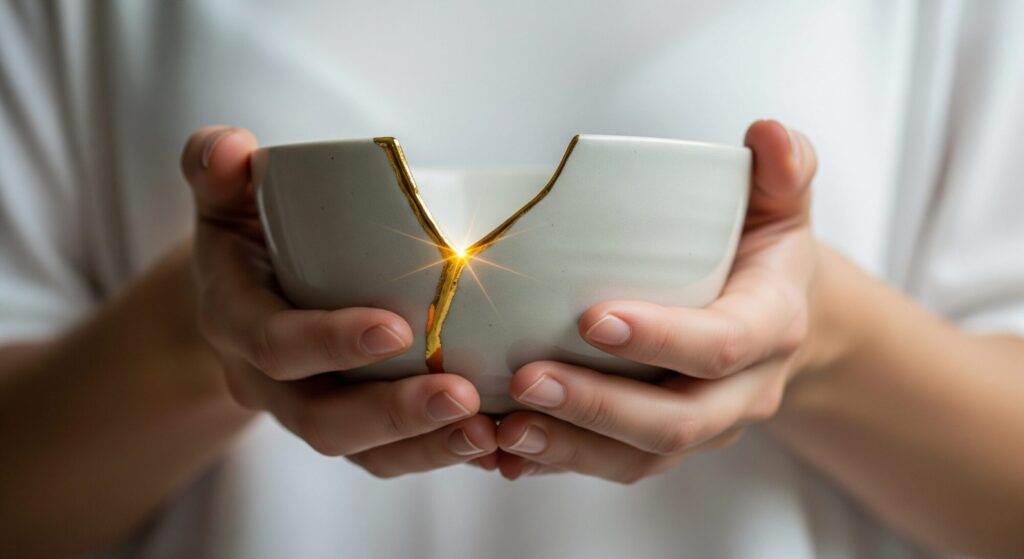
[“Kintsugi – Japanese Healing” – Image by moneycatzzz.com]
Learning from the Broken
The next day, Giuseppe introduced me to his colleague, Akiko, a Japanese artist working with Kintsugi in the Castello district. Where Giuseppe spread gold impossibly thin, Akiko used it to heal breaks. Her studio was full of broken ceramics in various stages of repair, their cracks traced with gold like rivers on a map.
“In Japan,” she explained, smoothing gold paste into a fractured bowl, “we don’t hide the breaking. The breaking is the story. The gold shows where healing happened.”
I held one of her repaired pieces, a tea bowl that had been shattered and rebuilt. It was heavier than before it broke, the gold adding weight to its structure. “This,” Akiko said, “is the opposite of thinning. This is thickening. Adding density through damage.”
The Weight of Recovery
Finding yourself after burnout isn’t about returning to who you were before the burnout; it’s about discovering who you are now. It’s about gathering the scattered pieces and joining them with something precious.
Akiko taught me that authentic self-recovery requires three things:
First, acknowledging the thinness. Admitting that being everywhere has left you hollow. That success has come at the cost of substance. Giuseppe called this “confessare la foglia,” meaning to confess the leaf.
Second, inviting weight back in. This means finding what Akiko called “heavy things”: rituals that anchor, places that hold, people who see through the shimmer to what’s underneath.
Third, using gold to join rather than cover. Instead of trying to re-gild the surface, use the precious material to connect the broken parts and make the fragmentation part of the beauty.
How to Stop Losing Yourself
I started what I called “weight practice“ in Venice. Every morning, before the city was filled with tourists, I’d sit by the canal near Fondamenta delle Zattere with a cappuccino that I drank slowly, without photographing or documenting. Just weight. Just presence.
Research from National Geographic on Venice’s impact on visitors shows that the city’s physical density, its stone and water, actually helps people feel more grounded. The town itself is a weight practice.
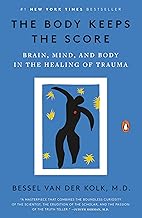
Bessel van der Kolk finally made me realize why I’d felt so dissociated. When we spread ourselves too thin, we literally lose touch with our physical selves. The body becomes just another surface to manage rather than the home we inhabit.
Giuseppe taught me a breathing exercise used by gilders to recover from the held breath. “Respiro profondo,” he said. “Deep breath. But slow. Like you’re pulling your soul back from all the places it’s scattered.”
Identity Fragmentation Healing
The process of identity fragmentation healing isn’t quick. It took months after Venice to stop feeling like I might blow away. But Akiko had given me a framework that helped. She called it “the gathering.”
Every evening, I’d write down where pieces of me had gone that day: into emails, into performances of competence, into careful presentations of success. Then I’d imagine calling them back, like calling cats home at dusk. “Return,” I’d write. “I need you here.”
I found the story of the woman who’d lost her skin in Clarissa Pinkola Estés’s book to be profoundly resonating. She’d given it away piece by piece until she couldn’t return to her true form. The only cure was to stop giving and start gathering.

[“Losing Oneself – Identity Fragmentation Healing” – image by moneycatzzz.com]
The New Weight
Six months after Venice, I’m no longer the gold leaf I was. I’m something more like Akiko’s repaired bowls: visibly mended, heavier than before, holding gold in my cracks rather than spread across my surface.
How to stop losing yourself starts with stopping the spreading. It means saying no to coverage and yes to depth. It means breathing normally, even if it disturbs the perfect surface you’ve created.
The Venice Biennale this year featured an installation about weight and lightness, illustrating how the city itself is slowly sinking due to its own mass. But this sinking, the artist argued, is what gives Venice its beauty. The weight that threatens is also what defines.
Giuseppe sent me a piece of gold leaf pressed between glass, a reminder of thinness. Akiko sent me a small, broken tile repaired with gold, a reminder of recovery. I keep both on my desk, the spectrum of losing oneself and finding oneself again.
The gilder’s breath is no longer how I live. I breathe fully now, even if it disturbs things, even if it reveals the cracks. Because true self-recovery isn’t about returning to an unbroken state; it’s about becoming someone who can hold weight again, who can be found, who chooses density over coverage.
Some days, I miss the lightness of being everywhere and nowhere. But then I remember that morning on the terrazzo floor, when everything was entirely gone, and I chose weight. Choose presence. Choose the beautiful difficulty of being findable, even when that means being breakable too.
The Italians have a phrase, “peso dell’oro,” the weight of gold. It means something precious but heavy. This is what we become when we stop spreading and start gathering: precious, heavy, and impossible to lose.

Women Who Run With ….

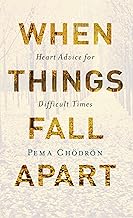
When Things Fall Apart
Disclosure: This post may contain affiliate links. We only recommend products we believe in, and we may receive a commission at no cost to you! Thank you for your support!
Acknowledgment: Cover Image by moneycatzzz.com
Disclaimer: The information is provided for general information only – moneycatzzz.com makes no representations or warranties in relation to the information, including but not limited to any representation or warranty as to the fitness for any particular purpose of the information to the fullest extent permitted by law. While every effort has been made to ensure that the information provided in this article is accurate, reliable, and complete as of the time of writing, the information provided in this article should not be relied upon to make any financial, investment, real estate or legal decisions. Additionally, the information should not substitute advice from a trained professional who can take into account your personal facts and circumstances, and we accept no liability if you use the information to form decisions.