
 Reading Time: 8 mins #
 This post may contain affiliate links.
The bookmark fell out of a water-damaged copy of A Moveable Feast at Powell’s Books in Portland, landing on my shoe like a paper butterfly that had given up flying. Someone had written in careful cursive: “For sale: baby shoes, never worn.” Underneath, in different ink: “Hemingway’s entire novel in six words.”
I was three weeks out from calling off my wedding, standing in the grief section (yes, Powell’s has one), holding a coffee that had gone cold while I pretended to browse but was actually trying to exist in public without crying. Navigating abrupt life changes had brought me to this specific aisle, where I was looking for books on how to explain to 150 guests that the future they’d been invited to witness was canceled.
Those six words knocked the wind out of me. I sat down right there on Powell’s worn carpet, between Self-Help and Philosophy, understanding for the first time that grief isn’t just about what was lost but about what was never going to be. The baby who never wore those shoes. The wedding that never happened. The house we never bought. All the futures were never worn.
A woman stepped over me to reach for Joan Didion, giving me that look of gentle concern reserved for people obviously falling apart in bookstores. I wanted to show her the bookmark, to explain that someone, maybe Hemingway or not, had captured the entire architecture of loss in six words. Instead, I bought the ruined book and the bookmark with it, carrying them home like archaeological evidence of my own collapsed plans.
RETURNED THE DRESS, KEPT THE GRIEF
The wedding dress hung in my closet for eleven months after I called it off, this $3,000 ghost wearing the future I’d planned. Italian lace, pearl buttons, a train that was supposed to sweep across the floors of a venue I’d had to call to cancel, reading from a script I’d written on index cards: “The wedding of Sarah Chen and Michael Torres scheduled for June 15th will not be taking place.”
The venue coordinator had asked, “Would you like to reschedule?” As if this were a dental appointment, not the complete demolition of a life I’d been building for three years.
Navigating abrupt life changes means becoming an expert in cancellation. I had a spreadsheet with 47 rows of vendors to contact. The photographer who’d already edited our engagement photos. The caterer who’d done three tastings with us, watching us feed each other cake like it meant something, the string quartet who’d learned my grandmother’s favorite song.
Each cancellation required an explanation, but how do you explain that one Tuesday morning, over breakfast, Michael had said, “I don’t think I want children anymore,” and the entire future we’d planned just evaporated? Six words that undid three years. Not cruel, not angry, just true in a way that made everything else untrue.
I kept finding wedding debris everywhere. Reply cards are in my glove compartment. The Pinterest board with 247 pins of centerpieces. A Google doc titled “First Dance Options” that I couldn’t delete because deleting felt like admitting it was really over. Sudden life transitions leave this kind of evidence: the archaeological layers of plans that will never come to fruition.
The dress finally left my closet when my sister came over with wine and garbage bags. “We’re not throwing it away,” she said. “We’re relocating it.” We drove it to Goodwill at midnight, leaving it on the donation dock like abandoning a baby at a fire station. Someone else would wear my future. I hoped it fit them better.
COMPANY FOLDED. DREAMS FOLDED WITH IT
Fourteen months later, I was in a different kind of collapse. The startup where I was Creative Director, where I’d worked eighteen-hour days for two years, announced its death via Zoom. Our CEO, looking exhausted from his kitchen in Austin, used corporate euphemisms like “pivot to closure” and “sunset operations,” but we all knew what he meant: we’d failed.
I had 500 business cards in a box under my desk with a logo that would never mean anything to anyone. A LinkedIn profile that stated “Building something amazing” would need to be updated to the past tense. An apartment I’d explicitly rented for its proximity to an office I’d never enter again.
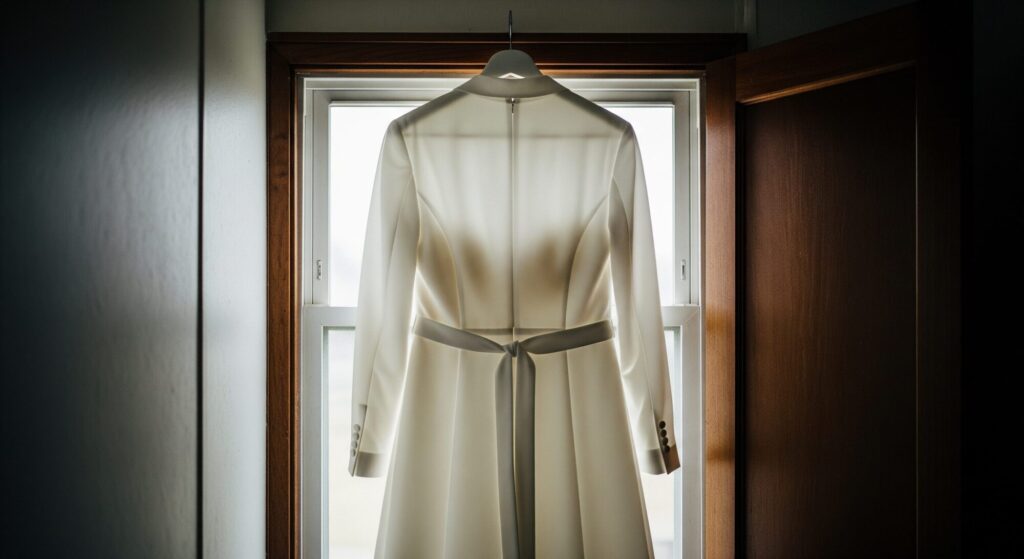
[“The Elegant Ghost of Preparation” – Image by moneycatzzz.com]
Life-altering moments don’t always dramatically announce themselves. Sometimes they come in the form of a Slack notification: “All-hands meeting in 5 minutes.” Sometimes, they’re your laptop dying during the layoff call, like even technology can’t bear to witness your professional death. Sometimes, they’re the janitor asking if you need help carrying your boxes to your car, not knowing you don’t have a car because you sold it to invest in the company.
I found Sheryl Sandberg’s Option B in an airport bookstore two days later, as I flew back to move in with my parents at thirty-two. She writes about resilience after loss, about building a new life when Option A is no longer available. But what she doesn’t say is that sometimes you’re not even sure what Option B looks like because you’d never imagined needing one.
Coping with a sudden loss in your professional life feels different from personal grief. There’s shame mixed in, the peculiar embarrassment of having believed in something that didn’t think back. I had a notebook full of five-year plans for a company that didn’t last two. Marketing strategies for products that would never ship. A team culture document for employees who were all now updating their resumes.
The worst part was the phantom limb sensation of purpose. For two years, I’d introduced myself as “Creative Director at TechStartup” (not its real name, obviously). Without that, I was just Sarah, owner of 500 useless business cards and a LinkedIn profile that needed updating.
SOLD TO OTHERS. MOURNED LIKE DEATH
The house in Northeast Portland had built-in bookshelves, a clawfoot tub, original hardwood floors, and a kitchen window that looked out onto a cherry tree. We’d put in an offer after the second viewing, already planning where the furniture would go, which room would be the office, and how we’d host Thanksgiving.
The call came while I was at Home Depot, literally looking at paint samples. “Another offer came in, all cash, forty thousand over asking,” our realtor said. I stood there, holding “Sage Wisdom” and “Morning Fog,” colors for walls I’d never paint, while she explained that in this market, this was a common occurrence, and there would be other houses.
But there wouldn’t be other Sunday mornings in that specific kitchen, making coffee while watching that particular cherry tree bloom. There wouldn’t be other built-in bookshelves that perfectly fit my grandmother’s encyclopedia set. Navigating abrupt life changes includes mourning things that were never yours.
I drove past that house for months, watching other people’s lives happen in the windows. They put up different curtains. They cut down the cherry tree. They painted the front door a color I would never have chosen. Each change was a minor violation of the future I’d imagined.
Starting over after each loss got more complicated, not easier. The wedding that didn’t happen, the company that went bankrupt, the house that was sold to someone else. Each one was a complete life that existed in detail in my imagination, now filed away in what I came to think of as my Archive of Almosts.
Pema Chödrön’s When Things Fall Apart was a gift from my therapist, who was probably tired of hearing about paint samples and cherry trees. She writes about groundlessness, about how we’re always trying to find solid ground, but the nature of life is that there isn’t any. The unexpected change is actually the only thing we can expect.
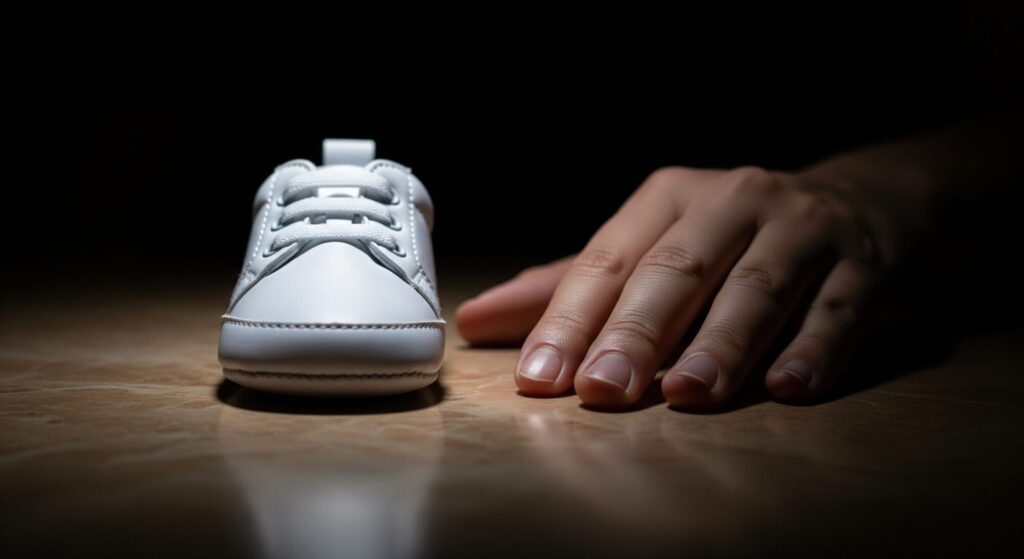
[“The Weight of What Never Was” – Image by moneycatzzz.com]
The Weight of What Never Was
I started writing my own six-word stories in a Moleskine journal, trying to capture each collapsed future:
“Rehearsal dinner. No wedding. Still paid.”
“Five-year plan. Two-year company. Zero options.”
“Measured windows. Bought curtains. Wrong house.”
Each one contained its own universe of grief, its own complete narrative of hope and dissolution. Navigating abrupt life changes became about learning to hold these stories, these futures never worn, without letting them crowd out the life that was actually happening.
Because here’s what Hemingway knew when he wrote (or didn’t write) those six words: the story isn’t really about the shoes. It’s about the gap between preparation and living, buying and wearing, planning and happening. That gap is where we all live, in the space between what we thought would happen and what did.
I kept the bookmark from Powell’s, framed it above my desk in the apartment I ended up renting (no clawfoot tub, no cherry tree, but mine). Below it, I added my own six words: “Futures planned. Life happened. Still here.”
Coping with sudden loss doesn’t mean forgetting the futures we planned. It means learning to hold them lightly, like bookmarks in stories we’ll never finish reading. The wedding dress is somewhere in Portland, maybe being worn, maybe still waiting. The business cards got recycled into someone else’s future. The house with the cherry tree belongs to people who probably don’t know I still dream about their kitchen.
But I’m still here, carrying all my unworn futures like Hemingway’s baby shoes, each one a complete story in six words or less. Life-altering moments teach us that we’re always writing our stories in pencil, that revision is constant, that sometimes the most beautiful passages get cut.
We don’t get to choose which futures come true. We only get to choose how we carry the ones that don’t. With grace, with grief, with the understanding that sudden life transitions are not interruptions to our story but the story itself. The baby shoes were never worn, but they were purchased with hope, with love, with a future imagined in detail.
That counts for something. Maybe everything.
What six words would tell your story of the future that didn’t happen? Share your unworn futures, your own experience navigating abrupt life changes in the comments.
Resources to Rebuild Your Life:
When Things Fall Apart


Joan Didion Collection
Option B
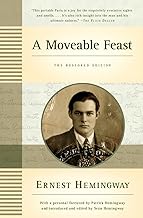
A Moveable Feast
The Collection
Disclosure: This post may contain affiliate links. We only recommend products we believe in, and we may receive a commission at no cost to you! Thank you for your support!
Acknowledgment: Cover Image by moneycatzzz.com
Disclaimer: The information is provided for general information only – moneycatzzz.com makes no representations or warranties in relation to the information, including but not limited to any representation or warranty as to the fitness for any particular purpose of the information to the fullest extent permitted by law. While every effort has been made to ensure that the information provided in this article is accurate, reliable, and complete as of the time of writing, the information provided in this article should not be relied upon to make any financial, investment, real estate or legal decisions. Additionally, the information should not substitute advice from a trained professional who can take into account your personal facts and circumstances, and we accept no liability if you use the information to form decisions.