 Reading Time: 8 mins #
 This post may contain affiliate links.
The restoration artist paused mid-brushstroke on a 500-year-old fresco to check her smartphone, answered in Russian, and then returned to discussing Florentine pigment chemistry in Italian while jazz played from her speaker. “You think this is multitasking,” she said, noting my expression. “But this is the Renaissance approach to work. Leonardo painted while designing machines and studying anatomy. Single focus is a modern invention, and it’s killing your creativity.” I had come to Florence to see art. Instead, I discovered why my expertise in one area was making me stupid in all others.
Her name was Giulia, and her workshop was located in a converted stable behind Santo Spirito, the same neighborhood where Brunelleschi had once experimented with linear perspective. The walls held chemistry equations, musical instruments, architectural drawings, and a partially dissected flower under a microscope.
“You consult, yes?” she asked, not looking up from the fresco. “I can tell. You have the posture of someone who knows one thing very deeply and everything else not at all.”
She was right. Fifteen years of management consulting had turned me into a sophisticated calculator, brilliant at organizational restructuring, useless at everything else.
The Death of the Specialist
Giulia led me through Florence’s artisan quarter, the Oltrarno, where the Renaissance approach to work still survived in pocket workshops. We stopped at a goldsmith who was also a mathematician, a leather worker who taught philosophy at the university, and a furniture maker who played violin in the city orchestra.
“Florence survived the Renaissance because artists weren’t just artists,” Giulia explained over espresso so strong it qualified as infrastructure. “The guild system required what you call creative cross-training. A painter had to understand mathematics for perspective, anatomy for figures, chemistry for pigments, music for harmony, philosophy for meaning.”
She pulled out her phone, showed me a photo of a guild document from 1472. “Leonardo’s certification. See the requirements? Not just painting. Seven disciplines minimum. The guilds knew that specialists became brittle. One change in taste, technique, or patronage, and they were finished.”
I thought about colleagues who’d specialized themselves into obsolescence. Regulation changes destroyed the derivatives expert. The social media strategist was made irrelevant by algorithm updates. The efficiency consultant is replaced by software.
Understanding the Polymath Mindset
The next morning, Giulia took me to the Biblioteca Medicea Laurenziana, the library built by Michelangelo to house the Medici collection. The architecture itself demonstrated the polymath mindset – every surface solving multiple problems simultaneously.
“Cosimo de’ Medici was a banker,” the librarian explained, pulling out ledgers that mixed financial calculations with philosophical notes. “But he also collected texts on everything: military strategy, agriculture, astronomy, and even poetry. You know why?”
I waited while she carefully turned pages that predated my country.
“Because banking is just pattern recognition. And patterns repeat across disciplines. The Medici dominated finance because they studied everything else.”
This was Leonardo’s method of productivity in action, not efficiency through focus but innovation through intersection.
The Bottega System
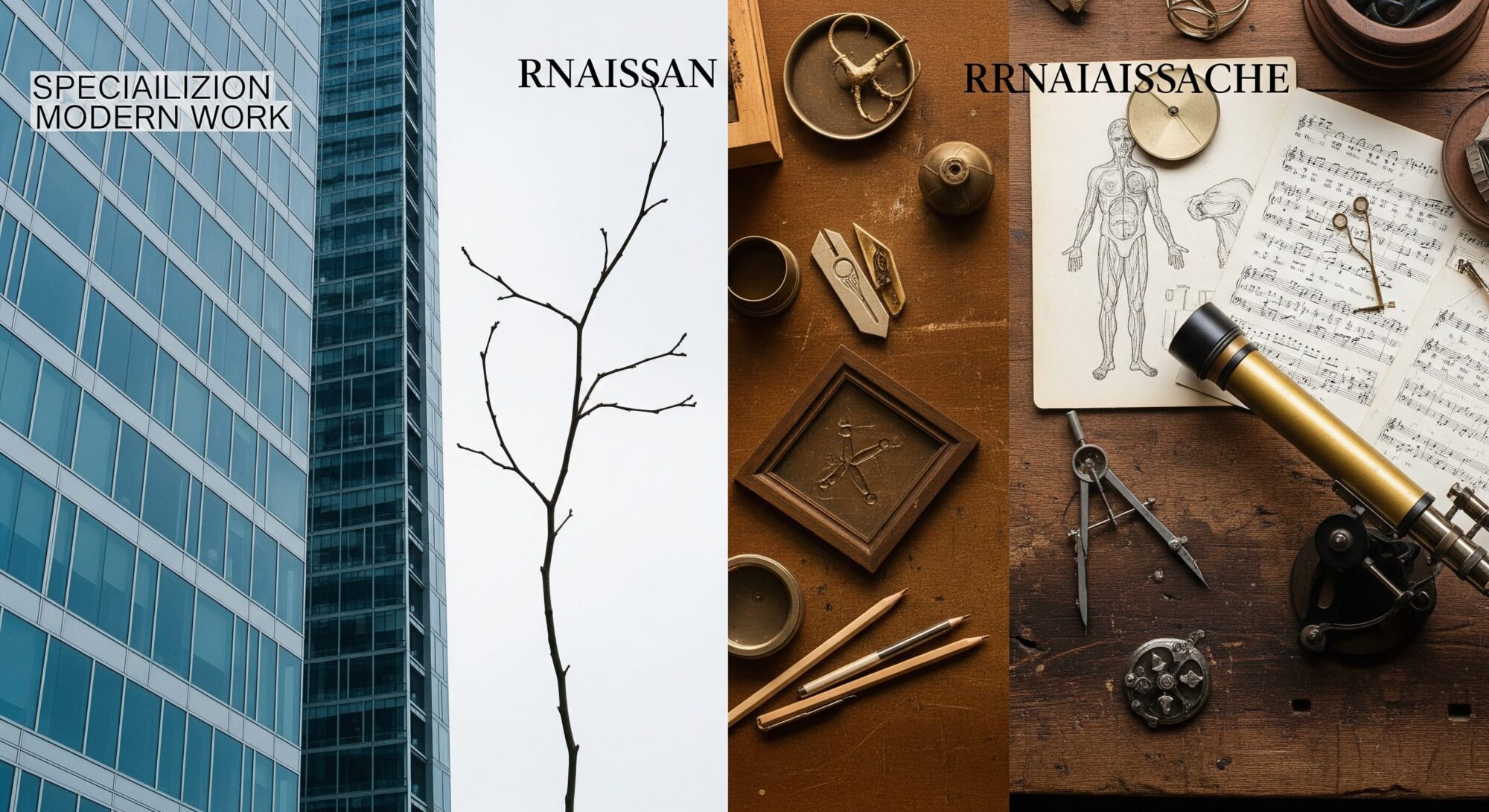
Giulia’s own workshop operated on what she called the bottega model, the Renaissance workshop system where masters worked alongside apprentices on multiple projects simultaneously.
“Look,” she said, gesturing around her workspace. “I restore frescoes in the morning, teach chemistry in the afternoon, and perform jazz in the evening. Not for money, though it pays. For survival. Each discipline feeds the others.”
She showed me how her music training helped her understand the rhythm of brushstrokes, how chemistry informed her color choices, and how teaching forced her to articulate tacit knowledge.
“Your consulting,” she said, “it’s dying because it only eats itself. No new input, no new output. Just optimization of optimization until there’s nothing left to optimize.”

[“The Bottega & Stillness” – Image by moneycatzzz.com]
Creative Cross-Training in Florence
At the Uffizi Gallery, Giulia demonstrated her point. Standing before Botticelli’s Birth of Venus, she explained how the painting encoded mathematical ratios, philosophical arguments, astronomical observations, and musical harmonies.
“Renaissance artists practiced creative cross-training because creativity isn’t generation, it’s connection. New ideas are just old ideas having sex.”
She was describing what modern neuroscience confirms, that innovation happens at the intersection of neural networks, not within them.
The professional diversity benefits weren’t just about backup skills but about primary skill enhancement.
“You know what made Leonardo great?” she asked. “Not that he was good at many things. However, he used each thing to improve the other. His anatomy made his engineering better. His engineering made his art better. His art made his science better.”
You might also like:
Disengage Without Detaching: How to Reclaim Mental Clarity and Emotional Freedom
The Guild Requirements
The Opera del Duomo Museum housed records of the guild system. The archivist, a former McKinsey consultant who’d fled to Florence after burnout, showed me the requirements.
“Mandatory creative cross-training,” he said, pointing to 15th-century documents. “Sculptors had to study music. Architects had to paint. Everyone had to know mathematics and letters. Not suggested. Required.”
“Why so strict?” I asked.
“Because the guilds were economic entities. They knew specialized workers were fragile workers. One war, one plague, one change in fashion, and specialists starved. But the polymath mindset meant always having marketable skills.”
He’d applied this himself, combining his consulting background with art history, archaeology, and archival science. “I make half what I made at McKinsey,” he said. “But I’m twice as alive.
Professional Diversity Benefits
The Galileo Museum showcased the professional diversity benefits more dramatically. Galileo’s telescopes sat beside his artistic drawings, his mathematical proofs, his musical compositions.
“Galileo discovered Jupiter’s moons because he could draw,” the guide explained. “Other astronomers saw the same thing but couldn’t accurately record it. His art training made his science possible.”
This pattern repeated everywhere in Florence. Brunelleschi solved the cathedral dome problem using goldsmith techniques. Michelangelo’s sculpture informed his architecture. Leonardo’s mirror writing came from his left-handed drawing practice.
Leonardo’s method of productivity wasn’t about doing more things but about things multiplying each other’s value.
The Seven-Project Protocol
In Leonardo’s notebooks, reproduced at the Leonardo Museum, I found his work pattern. Seven simultaneous projects, always. Three commissioned works, two experimental studies, one pure investigation, one teaching obligation.
“Never fewer than five, never more than nine,” Giulia explained. “Below five, the mind becomes rigid. Above nine, it becomes scattered. Seven creates optimal creative cross-training.”
She showed me her own notebook, structured identically. Fresco restoration, chemistry research, jazz composition, teaching notes, botanical drawing, a novel in progress, and correspondence with scientists about pigment analysis.
“This is the renaissance approach to work,” she said. “Not balance but rhythm. Not multitasking but multi-thinking.”
Building Your Modern Bottega
Back in Giulia’s workshop, she helped me design what she called a modern bottega — a Renaissance approach to work adapted for contemporary life.
“First, identify your core expertise. This remains primary. For you, consulting. This is your bread, your reputation, your foundation. But it gets only fifty percent of your capacity.”
“Then, three adjacent disciplines. Things that enhance your core. Perhaps behavioral psychology, systems design, or the history of organizations. These get thirty percent.”
“Finally, two wild cards. Completely unrelated. Pottery, tango, astronomy, whatever. These get twenty percent. They seem useless, but they’re the most important. They’re where breakthrough insights originate.”
She pulled out a book, Range by David Epstein, dog-eared and annotated. “Modern research proves what Florence knew. Specialists excel in stable environments. Generalists excel in change. Which world do you live in?”
The Leonardo Method Productivity
On my last day in Florence, Giulia took me to Santa Maria Novella, where Masaccio’s Trinity demonstrates perfect mathematical perspective in religious art.
“Leonardo method productivity isn’t about efficiency,” she said. “It’s about emergence. When you paint while thinking about engineering, solutions emerge. When you study anatomy while composing music, patterns appear.”
She’d structured her days accordingly:
- Morning: Core work (restoration)
- Midday: Adjacent study (chemistry)
- Afternoon: Teaching (forced synthesis)
- Evening: Unrelated art (jazz)
“The transitions are where magic happens. Moving from chemistry to music, your brain makes connections it couldn’t make staying in one domain.”
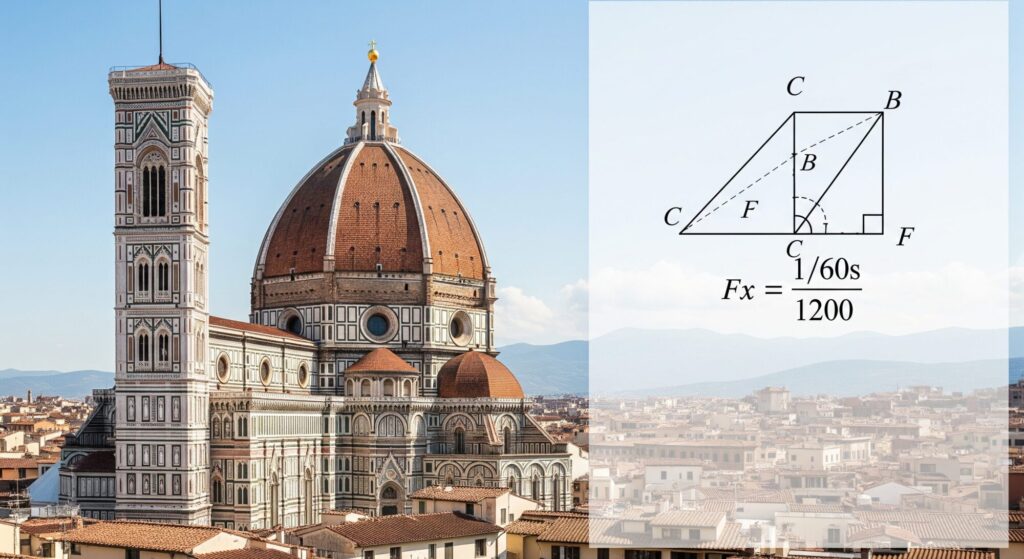
[“The True Cost of Expertise” – Image by moneycatzzz.com]
The Specialist’s Resurrection
Six months after Florence, my consulting practice underwent a transformation. I’d added three adjacent disciplines: complexity science, narrative structure, and organizational anthropology — two wild cards: ceramics and Brazilian jiu-jitsu.
The professional diversity benefits were immediate. Complexity science gave me new frameworks for organizational change. Narrative structure revolutionized my presentations. Anthropology deepened my cultural assessments.
But the wild cards produced the real breakthroughs. Ceramics taught me about irreversible processes, transforming my approach to change management. Jiu-jitsu taught me about leverage and position, revolutionizing my negotiation strategy.
Clients noticed. “Your recommendations are different,” one CEO said. “Less predictable. More creative.”
I was practicing the Renaissance approach to work, not out of historical curiosity, but as a means of survival.
The Bottega Lives
Giulia emailed me a photo last week. A new fresco she’d discovered, hidden for centuries under plaster. The artist is unknown, but the work is clearly Renaissance, exhibiting mathematical precision, anatomical perfection, and chemical sophistication.
“No signature,” her message read. “But the work signs itself. Only someone practicing creative cross-training could paint this. The specialist would have failed in perspective, chemistry, or anatomy. The generalist survives.”
My office now looks different. Engineering texts beside poetry. Musical instruments near whiteboards. Canvas and code sharing space. It looks like chaos. It’s actually the Renaissance approach to work —the polymath mindset — that keeps expertise from becoming extinct.
Florence knew something we forgot: specialization is civilization’s pyramid scheme. You climb higher by getting narrower until you’re standing on a point too small to sustain you.
But the Renaissance model? That’s architecture for instability—multiple foundations, interconnected supports, professional diversity benefits that compound rather than compete.
The door closes on specialization. Opens on synthesis.
Both lead somewhere. Only one leads to resilience.
Leonardo knew this. The Medici funded it. Florence proved it.
Five hundred years later, it remains true: the future belongs not to those who know one thing deeply, but to those who connect everything creatively.
Books for the Renaissance Mind
Giulia’s library mixed centuries, languages, and disciplines. She pulled out essentials for developing a polymath mindset:
Leonardo’s Notebooks

The Medici Effect
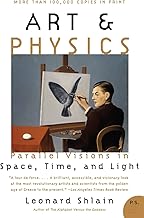
Art and Physics
Disclosure: This post may contain affiliate links. We only recommend products we believe in, and we may receive a commission at no cost to you! Thank you for your support!
Acknowledgment: Cover Image by moneycatzzz.com
Disclaimer: The information is provided for general information only – moneycatzzz.com makes no representations or warranties in relation to the information, including but not limited to any representation or warranty as to the fitness for any particular purpose of the information to the fullest extent permitted by law. While every effort has been made to ensure that the information provided in this article is accurate, reliable, and complete as of the time of writing, the information provided in this article should not be relied upon to make any financial, investment, real estate or legal decisions. Additionally, the information should not substitute advice from a trained professional who can take into account your personal facts and circumstances, and we accept no liability if you use the information to form decisions.