
 Reading Time: 8 mins #
 This post may contain affiliate links.
The Weight of the Impossible
The Lebanese sun was setting behind three stones that shouldn’t exist when I finally understood why my company kept failing at the same problems. Standing in Baalbek’s ancient complex, staring at the Trilithon, three perfectly placed blocks each weighing over 800 tons, I confronted an impossible task completed two thousand years ago with technology we still can’t explain. My guide, Khalil, a former civil engineer turned archaeologist, noticed my calculations on my phone as I tried to compute the physics.
“You’re doing the math wrong,” he said in accented English. “You’re asking how they moved them. The question is why they chose something impossible in the first place.”
Here were stones that required moving, even though driving them was technically impossible. Yet they sit here, level to the millimeter, mocking our modern cranes and our contemporary limitations. This wasn’t just an ancient display of power. This was a strategy made of stone.
The Scale That Breaks Systems
Khalil led me around the massive foundation, each step revealing new impossibilities. “Every management consultant should start here,” he said, knowing my profession before I’d mentioned it. “This place teaches what McKinsey cannot. When you choose an impossible task, you don’t optimize existing systems. You shatter them and build new ones.”
The Trilithon stones didn’t just require better ropes or more workers. They required reimagining everything: the physics of leverage, the sociology of labor organization, the metallurgy of tools. The builders didn’t incrementally improve their methods. They quantum-leaped into new methodologies because the scale of their ambition left no other choice.
I thought about our corporate impossible task back in London: unifying three competing business units that had actively sabotaged each other for a decade. We’d tried team building, restructuring, and incentive alignment, all of which yielded marginal improvements to a fundamentally broken system. We were trying to move 800 tons with better ropes when we needed to invent antigravity.
Peter Senge writes in The Fifth Discipline about the difference between detail complexity and dynamic complexity. The Trilithon represents dynamic complexity at its purest: a challenge so vast it reveals every hidden weakness in your system.
The Abandoned Giant
A mile from the main complex, Khalil showed me something that changed my understanding of strategic failure. The Hajjar al-Hibla, the Stone of the Pregnant Woman, lies abandoned in its quarry, a 1,200-ton block of precisely cut limestone that never made it to the temple.
“This,” Khalil said, running his hand along its smooth surface, “is the most important stone in Baalbek. Not the ones that made it, but the ones that didn’t.”
The stone was abandoned not because of a lack of will, but because the builders hit what I now call a systemic constraint that they couldn’t overcome. Perhaps the bedrock fractured, compromising the base. Possibly their transportation system had reached its absolute limit. Maybe the social organization’s requirements exceeded its governance capacity.

[“The Systemic Constraint: Diagnosing the Failure” – Image by moneycatzzz.com]
“Every great failure,” Khalil explained, “reveals the exact point where your system breaks. This stone is a 1,200-ton diagnostic tool.”
I photographed the abandoned giant from every angle, seeing in it every stalled merger, every failed product launch, every transformation that died halfway. The forgotten stone in the quarry was precisely like the lessons we bury after each corporate failure, too painful to examine, too
The Archive of Failure
That evening in my hotel overlooking the Beqaa Valley, I read Nassim Taleb’s Antifragile, specifically his chapters on the value of stressors. Taleb argues that systems need to gain from disorder, not just survive it. The ROI of failure isn’t just learning what went wrong; it’s becoming stronger at precisely the point of previous weakness.
The builders of Baalbek didn’t abandon their project after the failure of Hajjar al-Hibla. They studied it. They understood precisely why that stone couldn’t move and engineered solutions for slightly smaller, yet still impossible, rocks. Each failure was an investment in capability.
I mapped our own corporate failures against this model. Our failed ERP implementation: we discovered our data architecture couldn’t handle real-time global updates—cost: $15 million. However, once identified, that systemic constraint was blocking $200 million in efficiency gains. The failure was actually a bargain-priced diagnostic.
The Physics of Organizational Gravity
Khalil met me the next morning with coffee strong enough to wake the ancient gods. “You want to know the real secret of the Trilithon?” he asked. “They didn’t fight gravity. They used it.”
He showed me archaeological evidence suggesting the stones were moved during winter, sliding on ice and mud, using the valley’s natural slope. The impossible task wasn’t solved by brute force but by finding the hidden physics of the situation.
“Your business problems,” he said, “you’re probably fighting gravity instead of using it.”
He was right. Our three rival business units fought because we’d structured them to compete for the same resources. The systemic constraint wasn’t their rivalry but our architecture that made rivalry inevitable. We were trying to force collaboration while maintaining competitive incentives, fighting against organizational inertia.
Strategic Failure as Research Grant
The concept of strategic failure as investment rather than loss requires a fundamental reframing. Standing before the Trilithon, I understood that every failed attempt to move those stones generated invaluable data about load limits, material stress points, and human coordination capacity.
I pulled out Good Strategy Bad Strategy by Richard Rumelt, which Khalil had surprisingly read. “Rumelt’s right about the kernel of strategy,” he said. “Diagnosis, guiding policy, coherent action. But he misses something. Sometimes you need to fail strategically to get an accurate diagnosis.”
The ROI of failure isn’t just learning. It’s the cheapest way to discover your actual constraints. A $20 million failed project that reveals a $500 million annual bottleneck is actually a spectacular investment with a 25x return, paid out in organizational capability rather than cash.
The Forgotten Stone Protocol
The tragedy isn’t the abandoned stone in the quarry. The tragedy is forgetting why it was abandoned. Khalil showed me inscriptions near the quarry, ancient attempts to document what went wrong, mostly worn away by time.
“Every failure should leave better records than success,” he said. “Success just proves one way worked. Failure eliminates thousands of ways that don’t.”

[“The ROI of Failure: Leveraging the New Foundation” – Image by moneycatzzz.com]
I developed what I called the Forgotten Stone Protocol:
- Document every constraint encountered
- Map the exact breaking point
- Calculate the force required to overcome it
- Archive the learning publicly
- Make it mandatory reading for the next attempt
Back in London, I implemented this after our subsequent strategic failure, a failed acquisition that revealed our due diligence process couldn’t evaluate cultural compatibility. The failure cost $30 million. The documented learning prevented a $300 million mistake the following year.
The Modern Trilithon
Three months after Baalbek, we finally moved our own 800-ton stone. The three business units merged, not through force, incentives, or team-building efforts. We restructured our organization around customer segments instead of product lines, utilizing the natural flow of our organization rather than fighting against it.
The impossible task taught us something crucial: the point isn’t to accomplish the impossible through heroic effort. It’s about using the impossible as a diagnostic tool that reveals your systemic constraint, then engineering a solution that works around it.
Standing in my office, looking at a photo of the Trilithon, I remember Khalil’s final lesson: “Those stones prove something important. Every impossible task was once impossible until someone made it inevitable.”
The Weight We Choose to Move
The Trilithon Principle isn’t about moving massive stones. It’s about choosing challenges that break your current capabilities, forcing evolution. It’s about treating strategic failure as reconnaissance, investing in the ROI of failure rather than avoiding it.
Modern organizations optimize within constraints instead of discovering them. They improve existing systems rather than breaking them. They avoid impossible tasks, ensuring they never find out what’s truly possible.
But in Baalbek, staring at 800-ton stones placed with millimeter precision by people using technology we can’t fathom, you understand that the impossible is just uninvented. The forgotten stone in the quarry isn’t failure, it’s data. The systemic constraint isn’t permanent; it’s just current.
The Lebanese sun sets behind the Trilithon, these impossible stones catching the light like corporate monuments to the power of attempting what cannot be done. They stand as proof that when you choose an impossible task, you don’t just move stones.
You redefine the concept of ‘possible’ itself.
Essential Resources: Further Reading for the Architect of the Impossible
The Trilithon Principle is grounded in robust systemic and philosophical frameworks. These references provide the necessary intellectual depth to apply the concepts of the Impossible Task and the ROI of Failure within your organization.
Systemic Constraint & Diagnosis
- Journal of Civil Engineering and Ancient History Research: Modeling Pre-Industrial Megalith Transport (Various Papers): Offers a measurable, physical analogy for identifying the absolute frictional and logistical limits—the “bedrock” Systemic Constraint—of any organization before attempting monumental effort.
Risk, Antifragility, and Growth
- Harvard Business Review (HBR) Case Studies on Corporate Turnarounds: Provides modern, empirical evidence demonstrating the quantifiable returns achieved when an organization successfully treats a Strategic Failure as a forced pivot or research grant.
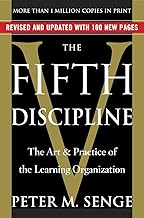
The Fifth Discipline


Antifragile
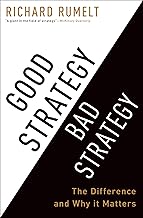
Good Strategy Bad Strategy
Disclosure: This post may contain affiliate links. We only recommend products we believe in, and We may receive a commission at no cost to you! Thank you for your support!
Acknowledgement: Cover Image by moneycatzzz.com
Disclaimer: The information is provided for general information only – moneycatzzz.com makes no representations or warranties in relation to the information, including but not limited to any representation or warranty as to the fitness for any particular purpose of the information to the fullest extent permitted by law. While every effort has been made to ensure that the information provided in this article is accurate, reliable, and complete as of the time of writing, the information provided in this article should not be relied upon to make any financial, investment, real estate or legal decisions. Additionally, the information should not substitute advice from a trained professional who can take into account your personal facts and circumstances, and we accept no liability if you use the information to form decisions.