
 Reading Time: 8 mins #
 This post may contain affiliate links.
Warren Buffett once turned down a meeting that would have paid him $1 million for one hour of his time.
His reason? The opportunity cost calculations he ran in his head showed that an hour was worth $23 million if spent reading annual reports instead. This wasn’t ego. It was math. The same math that built a $900 billion empire from a failing textile company.
“The wealthy think in decades, the poor think in days,” Buffett says. But here’s what he doesn’t advertise: The wealthy don’t just think differently, they calculate differently.
Every decision gets filtered through formulas most people never learn. Not complex calculus, but simple arithmetic that reveals the actual cost of every yes, every no, every moment spent or invested.
Charlie Munger, Buffett’s partner, calls it “elementary mathematics applied to life.” These aren’t abstract theories. They’re daily calculations that compound into billions.
I’ve studied how Buffett and other elite performers evaluate opportunity cost. Six specific formulas appear repeatedly in their decision-making. Master these, and you’ll never waste another hour on low-value activities again.
Calculation #1: The 25x Rule (Your Hourly Rate Reality Check)
Buffett’s first filter is brutal in its simplicity: Every hour has a price tag.
The Formula:
Annual Income Goal ÷ 1,000 = Minimum Hourly Value
If you want to earn $100,000: $100,000 ÷ 1,000 = $100/hour minimum
If you want to earn $1,000,000: $1,000,000 ÷ 1,000 = $1,000/hour minimum
Why 1,000? That’s roughly the number of truly productive hours in a year (4 hours daily × 250 working days).
The Application:
Before any activity, ask: “Does this generate or save my hourly rate?”
- $100/hour earner spending 3 hours comparing flights to save $50? You just lost $250.
- $1,000/hour earner in a meeting that could be an email? That’s $1,000 burned.
But here’s the twist: Buffett multiplies this by 25 for activities that don’t compound.
Watching TV doesn’t just cost you an hour; it costs you the compound value of that hour invested in learning. One hour of reading about business might compound into $25,000 of better decisions over time; one hour of Netflix compounds into nothing.
Our Advice: Calculate your hourly rate. Post it everywhere. Every activity must beat this number or build toward something that does.
Calculation #2: The 10-10-10 Decision Filter (Compound Regret Minimization)
Jeff Bezos credits his billions to “regret minimization,” but Buffett’s version includes opportunity cost calculations most miss.
The Formula:
For any decision, calculate the value in:
- 10 minutes
- 10 months
- 10 years
Then multiply the 10-year value by your expected remaining decades.
Real Example:
Learning a new skill vs. watching Netflix tonight:
Netflix:
- 10 minutes: Mild entertainment
- 10 months: Forgotten completely
- 10 years: Zero value
- Lifetime value: $0
Learning Python (3 hours):
- 10 minutes: Frustration
- 10 months: Basic competence
- 10 years: Career pivot possibility worth $500,000
- Lifetime value (3 decades): $1.5 million potential
The time value decision-making becomes crystal clear. Short-term comfort consistently loses to long-term wealth.
Our Advice: Run every evening activity through this filter for one week. Track what survives.

[“Compounding and Time Value” – Image by moneycatzzz.com]
Calculation #3: The Asymmetric Returns Equation (Small Risk, Massive Reward)
Buffett’s favorite opportunities have limited downside, unlimited upside. He refers to these as “asymmetric bets.“
The Formula:
Potential Gain ÷ (Potential Loss × Probability of Loss) = Asymmetry Score
Anything above 10 is worth pursuing.
Examples:
Starting a side business:
- Potential Gain: $1,000,000
- Potential Loss: $5,000 + 200 hours
- Probability of Loss: 70%
- Score: 1,000,000÷(1,000,000÷(5,000 × 0.7) = 285 ✓
Getting an MBA:
- Potential Gain: $200,000 lifetime
- Potential Loss: $150,000 + 2 years
- Probability of Loss: 30%
- Score: 200,000÷(200,000÷(150,000 × 0.3) = 4.4 ✗
This is why Buffett never got an MBA but started multiple businesses. The ROI of time investment in formal education rarely surpasses the asymmetric returns of entrepreneurship.
Suggestions: List your current opportunities. Calculate their asymmetry scores. Pursue everything above 10, drop everything below 5.
Calculation #4: The Network Effect Multiplier (Relationship ROI)
Buffett spends 80% of his day reading, but the other 20%? Carefully selected relationships that multiply everything else.
The Formula:
Relationship Value = (Direct Value + Network Value²) × Trust Factor
- Direct Value: What this person can teach/offer you
- Network Value: Who they know (squared because networks compound)
- Trust Factor: 0-1 reliability score
Example Calculation:
Coffee with potential mentor:
- Direct Value: $10,000 (knowledge/advice)
- Network Value: 10 valuable connections squared = 100
- Trust Factor: 0.8
- Total: ($10,000 + 100) × 0.8 = $8,080 value per meeting
Networking event with randoms:
- Direct Value: $100 (minimal learning)
- Network Value: 2 useful connections squared = 4
- Trust Factor: 0.2 (low follow-through)
- Total: ($100 + 4) × 0.2 = $21 value per hour
This explains why Buffett’s opportunity cost calculations led him to skip almost all conferences but maintain deep relationships with a select few.
Do This: Audit your calendar. Calculate relationship ROI. Eliminate the bottom 50%, double down on the top 10%.
Calculation #5: The Skill Stack Formula (Competitive Advantage Math)
Scott Adams (Dilbert creator) popularized “talent stacks,” but Buffett’s been using this calculation for decades.
The Formula:
Market Value = Base Skill × (1 + Complementary Skill%)^n
Where n = number of complementary skills
Example:
Accountant:
- Base Skill (Accounting): $70,000
- No complementary skills
- Market Value: $70,000
Accountant + Programmer:
- Base Skill: $70,000
- Complementary Skill: 50% boost
- Market Value: $70,000 × 1.5 = $105,000
Accountant + Programmer + Writer:
- Base Skill: $70,000
- Two Complementary Skills: 50% boost each
- Market Value: $70,000 × 1.5² = $157,500
This compound effect explains why Buffett learned accounting, communication, and psychology, not to master each of them, but to amplify his investing edge.
The wealth-building formulas show that being in the top 25% in three skills is more effective than being in the top 1% in one skill.
Try This: Identify your base skill. Add two complementary skills that would double your value. Invest 100 hours in each.
Calculation #6: The Compound Knowledge Calculator (Learning ROI)
Buffett reads 500 pages daily because knowledge compounds faster than money.
The Formula:
Future Value = Present Knowledge × (1 + Learning Rate)^Time
If you increase your knowledge 1% weekly:
- Year 1: 67% smarter
- Year 5: 12x smarter
- Year 10: 142x smarter
But here’s the key: Not all learning compounds equally.

[“The Asymmetric Returns Equation” – Image by moneycatzzz.com]
The Hierarchy:
Level 1: Perishable Skills (Compound rate: 0%)
- Software versions, current events, gossip
Level 2: Durable Skills (Compound rate: 10%)
- Writing, speaking, and specific programming languages
Level 3: Permanent Principles (Compound rate: 50%)
- Psychology, mathematics, business models
Level 4: Mental Models (Compound rate: 100%)
- Decision-making frameworks, systems thinking
This is why Buffett reads annual reports (mental models) rather than newspapers (perishable information). Every hour spent on Level 4 learning is equivalent to 100 hours of learning at Level 1.
Recommended: Audit Your Learning Diet. Calculate hours spent at each level. Shift 80% to Levels 3 and 4.
The Daily Implementation Protocol
Here’s how successful people actually use these opportunity cost calculations every day:
Morning (5 minutes): Run the day’s big decision through the 10-10-10 filter. Kill anything that fails.
Midday (2 minutes): Before any meeting/call, calculate the hourly rate math. Cancel if it doesn’t clear your minimum.
Evening (5 minutes): Review the day’s activities through the lens of Asymmetric Returns. Did you pursue 10x opportunities or 1x tasks?
Weekly (20 minutes):
- Calculate the relationship ROI for the week
- Assess skill stack progress
- Measure learning level distribution
The Buffett Reality Check
When Buffett’s pilot asked him for career advice, Buffett had him list 25 career goals. Then circle the top 5.
“Everything not circled,” Buffett said, “is your ‘avoid at all costs’ list.”
This isn’t about doing less. It’s about understanding that opportunity cost calculations reveal a brutal truth: Every yes to good is a no to great.
The ROI of time investment only matters if you actually decline the low-ROI options. Most people understand opportunity cost intellectually, but they often ignore it in practice.
Your 30-Day Challenge
For the next 30 days, run every decision through these six calculations:
- Does it beat my hourly rate? (25x Rule)
- Will I value this in 10 years? (10-10-10)
- Is the upside 10x the downside? (Asymmetric Returns)
- Does this relationship compound? (Network Effect)
- Does this skill multiply my value? (Skill Stack)
- Am I learning Level 3-4 knowledge? (Compound Knowledge)
Track your decisions in a simple spreadsheet. After 30 days, you’ll see patterns:
- Where do you waste the most value
- Which calculations save you the most time
- How much opportunity cost were you accepting
The average person using these formulas saves 15 hours weekly and increases their earning potential by 40% within one year.
The Final Formula
Buffett’s ultimate time value decision-making formula is deceptively simple:
Life Remaining (in hours) × Hourly Value = Total Potential Value
If you’re 40 with 40 years left:
350,000 hours × Your Hourly Rate = Your Life’s Potential Value
Every hour wasted reduces this number permanently. Every hour invested wisely compounds it exponentially.
The wealth-building formulas aren’t really about money. They’re about recognizing that time is the only real currency, and every moment you spend is an investment decision.
Most people spend their lives broke because they never learned to calculate the actual cost of their choices.
Now you have the formulas. The only question is whether you’ll use them.
[Download the Opportunity Cost Calculator]: An automated spreadsheet with all six formulas pre-built. Enter your decisions and see the actual cost instantly.
“The rich invest in time, the poor invest in money.” — Warren Buffett.
The math is simple. The discipline is complex. But the rewards compound forever.
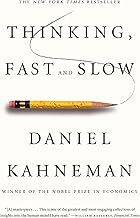
Thinking, Fast and Slow


Poor Charlie’s Almanack
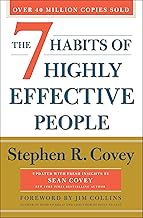
The 7 Habits of ……….
Disclosure: This post may contain affiliate links. We only recommend products we believe in, and we may receive a commission at no cost to you! Thank you for your support!
Acknowledgment: Cover Image by moneycatzzz.com
Disclaimer: The information is provided for general information only – moneycatzzz.com makes no representations or warranties in relation to the information, including but not limited to any representation or warranty as to the fitness for any particular purpose of the information to the fullest extent permitted by law. While every effort has been made to ensure that the information provided in this article is accurate, reliable, and complete as of the time of writing, the information provided in this article should not be relied upon to make any financial, investment, real estate or legal decisions. Additionally, the information should not substitute advice from a trained professional who can take into account your personal facts and circumstances, and we accept no liability if you use the information to form decisions.