
 Reading Time: 8 mins #
 This post may contain affiliate links.
There is a specific kind of panic that arrives in the silence, not the dramatic, chest-clutching kind; the quiet kind. The kind that shows up when you are sitting alone with your thoughts at a red light, and you reach for your phone before the panic even has a name. You didn’t decide to reach for it. Your hand just went, and if you caught yourself in that moment and asked honestly, “Why did I do that?”, the answer, if you let it surface, might be something you’d rather not look at directly.
We are losing the ability to be alone with our own minds. Not because we are weak, undisciplined, or spiritually shallow. Because something in the architecture of modern life has made the quiet feel dangerous. And because, if we are being tender and honest with each other, some of us already know what lives in that quiet. We’ve heard it before. We just learned very quickly how to turn the volume up on everything else.
The Gaps That Used to Hold Us
There was a time, not too long ago, a decade or two ago, when life had built-in pauses. It took three minutes for the kettle to boil. You pick up old magazines in the waiting room. Remember the bus ride where the window fogged and the world smeared into soft color, and your mind was left entirely to its own devices.
Nobody called these moments “mindfulness practice.” They were just the texture of ordinary days. But over time, things evolved—something the brain needed the way lungs need air. Psychologists call it the Default Mode Network; the brain’s internal housekeeping system, responsible for self-reflection, memory consolidation, empathy, and the quiet assembly of identity. It only switches on when the mind is genuinely unstimulated, not when it’s relaxing with Netflix or scrolling slowly.
Actually. Nothing.
We have systematically filled every single one of those gaps. The kettle has a podcast now. The waiting room has a screen on the wall and a phone in your hand. The bus window still fogs, but you don’t see it anymore. And the Default Mode Network, the part of you that was quietly doing the work of being you, has been waiting for a window that never opens.
This is not a personal failure, clearly. This is environmental. The gaps were not filled by accident; they were deliberately targeted. Every app on your phone was designed by a team whose singular professional purpose was to ensure you never had an unoccupied moment. They are very good at their jobs.
But here is the thing I need to say next, and I need you to stay with me when I say it: some of us would have filled those gaps ourselves, even without the phone.
What the Silence Contains
The silence is not empty. That is the part nobody tells you in the articles about “digital detox” and “screen-free Sundays.” They make it sound peaceful: a meadow, a candle, the soft return to yourself. Sometimes it is, but first, before the meadow, there is the thing you’ve been driving past at high speed for months—possibly years.
For some of us, it is a marriage that has gone quietly, politely cold. For others, it is a career grief; the slow recognition that the work you are doing bears no resemblance to the work you once believed your life was for. It might be an old guilt that never received a proper verdict, still circling. It is loneliness, the particular kind that visits you inside a full life, surrounded by people who love you, which feels shameful and therefore cannot be named.

[“The Default Mode Audit: Reclaiming the 90-Second Gap” – Image by moneycatzzz.com]
The thoughts we avoid do not dissolve with avoidance. This is what the research on experiential avoidance tells us, and what your body already knows without needing a citation. Every time you successfully outrun a thought: with a podcast, a scroll, a glass of wine, or a very productive burst of cleaning the kitchen, you increase its psychological charge. You are not filing it away. You are feeding it. The thing you will not sit with grows—it learns to wait. And it gets better at choosing its moments: 3 AM, the shower, the drive home from somewhere that reminded you of something.
It is not punishing you. It is just trying to be heard.
The Performed Version of Solitude
Here is something I’ve been sitting with, something a little uncomfortable to say: many of us have replaced real solitude with its photograph.
We arrange the candle, the journal, and the cup of chamomile, and we share them before we’ve written a single word. We download the meditation app, open it 7 times, and close it 6. We describe ourselves as “someone who needs quiet time” at dinner parties and then spend our quiet time watching other people describe their quiet time on a screen.
I am not saying this to catch you off guard. I am saying it because I have done every single one of these things, and I noticed something: the performed version leaves you more depleted than the distraction did. Because it gives you the feeling of having rested, the aesthetic of restoration—without any of the neurological reality. Your Default Mode Network is not activated by a beautifully lit photograph of a journal. It needs the journal; the open page. The pen moves slowly because you are not sure what you are about to say.
Real solitude is uncomfortable at the beginning. This is not a design flaw. This is the point.

Sitting Down Next to the Noise
I am not going to tell you to face your fears. That phrase has been handled so many times that it has lost all its edges. I suggest something smaller and stranger.
The next time the silence arrives: in the car, in the kitchen, in the three minutes before sleep claims you, don’t reach for anything. Don’t make it a practice or give it a name. Just let the quiet be there, the way you let a nervous animal be there. Don’t chase it and don’t run from it.
When the thought surfaces, and it will, the one you’ve been rerouting, don’t analyze it. Don’t solve it. Place one hand on your sternum, feel the warmth of your own palm, and say to it, not out loud but somewhere inside: “I know you’re there. I’m not ready yet, but I’m not leaving.“
That’s it. That’s the whole thing.
You are not trying to fix the thought, dissolve it, or integrate it into a renewed sense of purpose. You are simply ending the pretense that it doesn’t exist. You are closing the gap between what your outer life looks like and what your inner life actually contains. That gap, the one we maintain with great effort and considerable expense, is where the exhaustion lives. Not in the busyness. In the performance of being fine, while something underneath quietly, persistently knocks.

[“Experiential Avoidance: Sitting Down Next to the Noise” – Image by moneycatzzz.com]
A Note on the Kettle
Somewhere this week, there will be a moment when nothing is required of you. It will last ninety seconds. The kettle, the elevator, the red light, the space between putting the children to bed and picking up your phone.
Don’t pick up your phone.
Don’t do it as a spiritual exercise. Don’t do it to be productive, present, or improved. Do it because for ninety seconds, you are allowed to be a person standing in a kitchen, thinking whatever comes, feeling whatever surfaces, belonging entirely to yourself.
The Default Mode Network will do the rest. It has been waiting patiently. It knows exactly what it needs to do. It just needs the window.
And you, the real you, the one that exists before the noise and after it—you have been waiting too.
This week, leave one gap unfilled. One commute without audio. One cup of tea without a screen. Notice what arrives. You don’t have to do anything with it. Just let it arrive.

Counter-Insurgency: 3 Books to Reclaim Your Internal Territory

The Body Keeps the Score

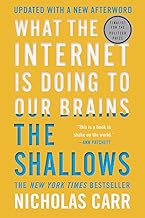
The Shallows
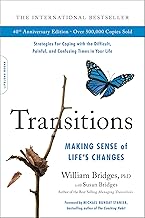
Transitions
Disclosure: This post may contain affiliate links. We only recommend products we believe in, and we may receive a commission at no cost to you! Thank you for your support!
Acknowledgment: Cover Image by moneycatzzz.com
Disclaimer: The information is provided for general information only – moneycatzzz.com makes no representations or warranties in relation to the information, including but not limited to any representation or warranty as to the fitness for any particular purpose of the information to the fullest extent permitted by law. While every effort has been made to ensure that the information provided in this article is accurate, reliable, and complete as of the time of writing, the information provided in this article should not be relied upon to make any financial, investment, real estate or legal decisions. Additionally, the information should not substitute advice from a trained professional who can take into account your personal facts and circumstances, and we accept no liability if you use the information to form decisions.