 Reading Time: 8 mins #
 This post may contain affiliate links.
Philip Glass was playing “Metamorphosis“ in the bookstore when I witnessed a man cry over a blank notebook. He’d been standing there for twenty minutes, holding different journals, comparing weights and textures, paralyzed by choice. When he finally chose the simplest one, tears came. “I just realized,” he said to no one, “I’ve been collecting notebooks instead of writing in them.” That moment crystallized what minimalism in life actually means: it’s not about having less, but about recognizing what you’ve been using to avoid having more: more depth, more truth, more contact with what matters.
Standing there among thousands of books, watching him hold that single blank notebook as if it were a revelation, I understood that our possessions aren’t just objects. They’re building blocks. They create the corridors through which our attention moves, the walls against which our thoughts echo. Most of us have built mazes when we meant to build cathedrals.
The Geometry of Attention
Every object in your space is a decision you’re making repeatedly without realizing it. That stack of books you’ll read “someday”? You’re deciding to feel guilty every time you see them. The seventeen pens scattered across your desk? You’re choosing micro-friction every time you need to write. Minimalism in life isn’t about deprivation; it’s about recognizing that your environment is constantly programming your consciousness.
Princeton’s Neuroscience Institute discovered that physical clutter literally reduces the brain’s ability to focus. But the research only confirms what monks have known for millennia: space isn’t absence; it’s presence. It’s the canvas that makes the painting possible.
Marie Kondo understood this in The Life-Changing Magic of Tidying Up, though she focused on joy. I prefer to focus on geometry. Each object creates angles of attention, vectors of energy. Too many objects, and you’re living in a house of mirrors, your mental clarity fractured into infinite, useless reflections.
The Desk as Diagnostic Tool
Your desk isn’t just furniture—it’s an X-ray of your mind. The arrangement of objects reveals the architecture of your priorities. The clutter exposes the recurring patterns of avoidance. The empty spaces, if any exist, show where you still have room to breathe.
I once spent a month photographing my desk every evening, creating a time-lapse of its daily transformation. What emerged wasn’t random chaos but precise patterns. Papers accumulated in the same corner when I was avoiding difficult decisions. Notebooks multiplied as I processed emotional weight. Coffee cups gathered when I was pushing through exhaustion rather than honoring it.
These weren’t failures of organization. They were the physical manifestation of internal dialogue made visible. The desk was writing my psychological autobiography in objects.
Cal Newport explores this in Digital Minimalism, showing how our digital spaces mirror our physical ones. Every open tab is an uncommitted decision. Every notification is a micro-interruption. Every app is a portal to distraction. The clutter isn’t just visual; it’s a cognitive architecture that shapes how we think.
Recurring Patterns in Physical Space
Recurring patterns in how we organize space reveal more profound truths about how we manage our thoughts. I noticed three universal patterns in my own space and in others’:
The Accumulation Pattern: Objects gather in specific zones during specific emotional states. Stress creates piles. Anxiety creates categories. Depression creates stagnation.
The Circulation Pattern: Items move through space in predictable cycles, never finding homes because they represent unresolved decisions.
The Fortification Pattern: We build walls of possessions around ourselves, mistaking quantity for security, options for opportunity.
Research from Harvard Business Review confirms that these patterns directly impact performance. Executives with minimalist offices make decisions 23% faster than those in cluttered spaces. It’s not about aesthetics; it’s about cognitive bandwidth.

[“Your Desk Writes Your Autobiography” – Image by moneycatzzz.com]
Internal Dialogue and External Order
Your internal dialogue doesn’t happen in a vacuum. It occurs in space, and that space shapes its quality. A cluttered room creates cluttered thoughts, not metaphorically but literally. The visual cortex doesn’t distinguish between external and internal complexity; it processes both as cognitive load.
I tested this by spending one week in an empty room, just a cushion and a notebook. My internal dialogue initially panicked, desperately seeking stimulation. But by day three, something shifted. Thoughts became linear instead of looping. Ideas emerged fully formed instead of fragmented. The space wasn’t empty; it was pregnant with possibility.
Danny Penman describes this in Mindfulness for Creativity: space allows thoughts to complete their natural cycles rather than colliding with external stimuli. Minimalism in life creates the conditions for thoughts to think themselves.
Emotional Intelligence Through Subtraction
Emotional intelligence isn’t just about recognizing emotions; it’s about identifying what triggers them. Every object in your space is an emotional trigger. That expensive gadget you never use triggers guilt. That photo from better times triggers nostalgia. That pile of unfinished projects triggers anxiety.
By systematically removing objects and observing the emotional response, you develop what Travis Bradberry calls emotional granularity in Emotional Intelligence 2.0. You learn to distinguish between the sadness of letting go and the relief of release. You discover that emotional intelligence often means recognizing which emotions are yours and which belong to your possessions.
I discovered that 80% of my possessions were emotional anchors to past selves: the musician I’d stopped being, the athlete I’d never become, the scholar I’d imagined. Each object was a ghost, and I was living in a haunted house. Minimalism in life became an exorcism, releasing not objects but outdated identities.
The Geometry of Mental Clarity
Mental clarity has a geometry. It requires straight lines of thought, explicit angles of perspective, and space between ideas. Clutter creates fractals: infinitely complex patterns that fascinate but don’t resolve.
I developed what I call the Triangle Test. Every space should support three primary functions, no more. My desk supports writing, reading, and thinking. That’s it. Everything else belongs elsewhere or doesn’t belong at all. This constraint creates mental clarity through limitation.
The Long Now Foundation’s research on long-term thinking shows that simplified environments extend temporal horizons. When you’re not managing immediate complexity, you can think in years instead of minutes.
The Protocol of Intentional Emptiness
Here’s the protocol I developed for creating minimalism in life:
Week 1: Observation Without Action
Photograph your space daily. Notice recurring patterns without changing them. You’re gathering data, not making decisions.
Week 2: The Subtraction Experiment
Remove five items daily. Not permanently, just for storage. Notice what you reach for, what you miss, what you forget existed.
Week 3: The Function Audit
Every remaining item must justify its existence through function. “It might be useful” isn’t a function. “I use it daily for X” is a function.
Week 4: The Geometry Reset
Arrange remaining items by frequency of use and relationship. Create clear zones, clear purposes, and clear boundaries.
This isn’t about achieving some minimalist aesthetic. It’s about creating space that serves rather than enslaves, that clarifies rather than clutters.
Digital Space as Mental Architecture
Your computer desktop is your mind’s desktop. Those 47 folders? That’s 47 open loops in your consciousness. Those 200 browser bookmarks? That’s 200 decisions deferred. Digital minimalism in life isn’t optional; it’s survival.
I maintain three folders: Active, Archive, and Reference. Three browser bookmarks: Current project, Calendar, and Email. Three apps on my phone’s home screen. The constraint creates freedom. When everything is accessible, nothing is findable. When a few things are accessible, everything is immediate.
Studies on cognitive load show that even invisible digital clutter impacts performance. Files you never see but know exist occupy mental RAM. Mental clarity requires digital archaeology: excavating and eliminating the accumulated sediment of digital life.

[“The Geometry of Mental Clarity” – Image by moneycatzzz.com]
The Revelation of Empty Space
Six months into this practice, I discovered something profound: space isn’t empty. It’s full of potential. Every clear surface is a canvas for creation. Every organized drawer is a decision eliminated. Every simplified process is energy reclaimed.
My internal dialogue transformed from a noisy café to a quiet library. Recurring patterns of anxiety dissolved because their physical anchors were gone. Emotional intelligence increased because emotions had space to be felt rather than managed.
Minimalism in life revealed that I’d been using possessions as proxies for experiences, accumulating instead of living. The man in the bookstore was right: we collect notebooks instead of writing, gather tools instead of creating, accumulate possibilities instead of choosing realities.
Your Space, Your Mind
That Philip Glass composition continues playing somewhere, its repetitive patterns creating structure through constraint. Your space is playing its own composition, shaping your thoughts through its arrangement and guiding your attention through its geography.
Look at your desk right now. What story is it telling about your mind? What recurring patterns are visible in the placement of objects? What does the clutter reveal about your internal dialogue?
Minimalism in life isn’t about Instagram-worthy spaces or monk-like austerity. It’s about recognizing that your environment is your extended mind, and a cluttered space creates cluttered thought.
The geometry is precise: less complexity, more clarity. Fewer objects, more subject. Space, full presence.
Your desk is waiting to tell you the truth.
Are you ready to listen? What three functions should your space support? Write them down. Remove everything that doesn’t serve them.
Books That Redefine Minimalism: From Space to Self
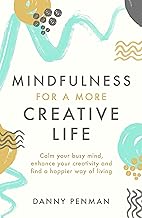
Mindfulness for Creativity


Emotional Intelligence 2.0
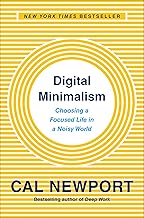
Digital minimalism
Disclosure: This post may contain affiliate links. We only recommend products we believe in, and we may receive a commission at no cost to you! Thank you for your support!
Acknowledgment: Cover Image by moneycatzzz.com
Disclaimer: The information is provided for general information only – moneycatzzz.com makes no representations or warranties in relation to the information, including but not limited to any representation or warranty as to the fitness for any particular purpose of the information to the fullest extent permitted by law. While every effort has been made to ensure that the information provided in this article is accurate, reliable, and complete as of the time of writing, the information provided in this article should not be relied upon to make any financial, investment, real estate or legal decisions. Additionally, the information should not substitute advice from a trained professional who can take into account your personal facts and circumstances, and we accept no liability if you use the information to form decisions.