stay cover

The People Who Stay

imagesReading Time: 8 mins #

disclosure line icon vector This post may contain affiliate links.

My phone had died somewhere over the Atlantic. I had no map, no plan, and exactly zero energy to locate either.


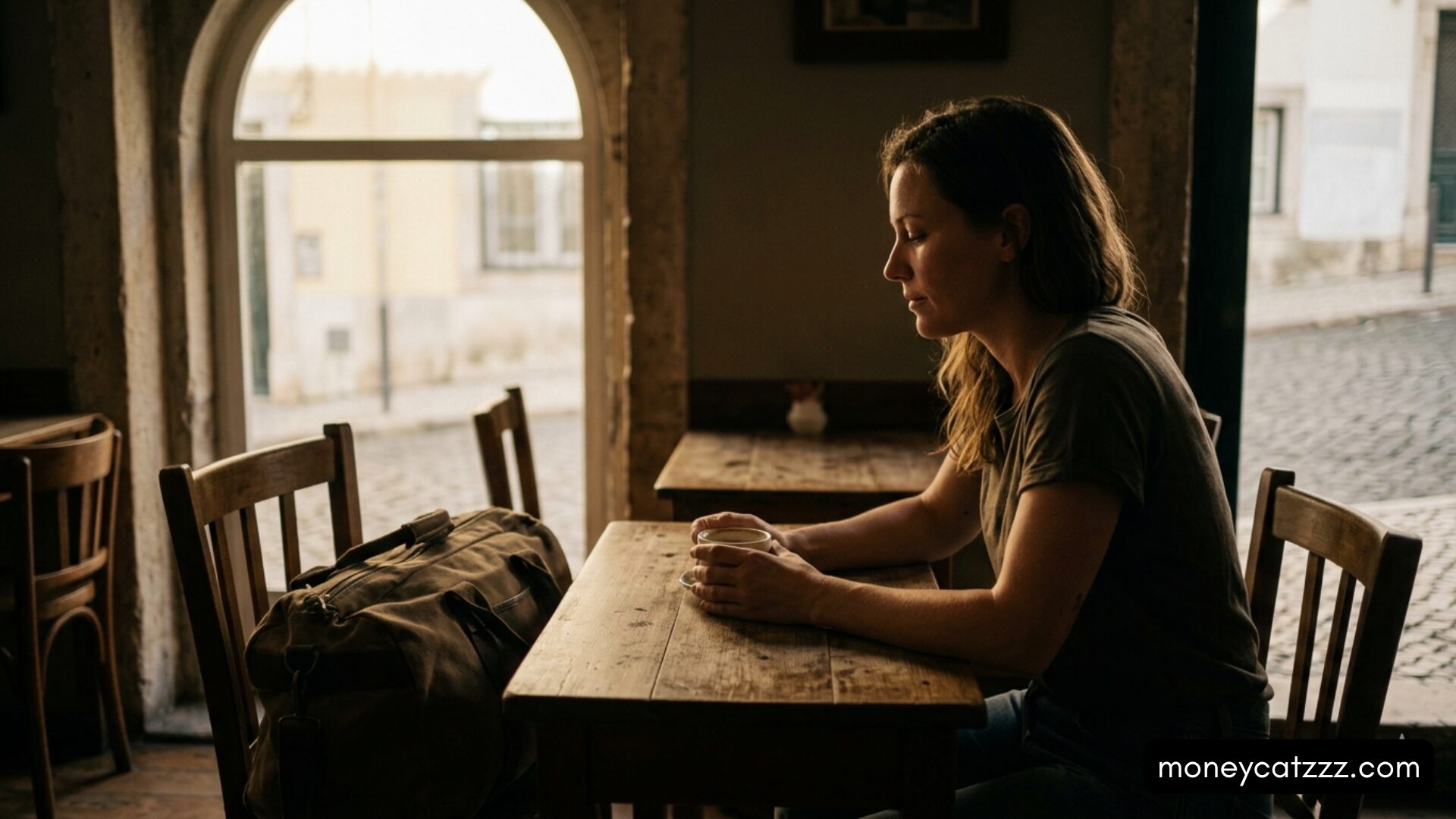
I walked to the café where Marta and I used to meet when I lived in Lisbon two years ago, before I left for reasons that made sense at the time and less sense now. She was already there. Reading a book, espresso untouched, like someone who hadn’t moved while I’d been orbiting the planet.


She glanced up.


“You look tired,” she said.


That was all.

There was no “where have you been” or “why didn’t you call” or the subtle performance of wounded patience that I probably deserved. Just the simple acknowledgment that I had arrived, and I looked like I needed to sit down.


The dock does not ask where you have been.


It asks if you are home.

The Ones Who Choose to Stay

I want to be precise about something. The people who stay are not people who have nowhere else to go.


They are not exactly passively waiting for you. They are living their own full, complete lives that happen to include the steady act of remaining in one place, holding a particular point on the map that you can navigate back to when the moving gets too heavy.


I have a friend in Bangkok, Dao, who hasn’t moved in twelve years. Same apartment on the same street in the same neighborhood, shopping at the same market stall every Saturday morning, teaching at the same university where she’s worked since before I owned a proper suitcase. She doesn’t travel and doesn’t particularly want to. If I am “Yin”, she is “Yang.”


When I return, she says the same thing every time.


“You are back. Sit down. Tell me one story.”

stay - The Invisible Hum
[The Invisible Hum: Holding Distance and the Unanswered Message | moneycatzzz.com]

She doesn’t want the whole journey or the highlights reel. One story. Like she instinctively understands that the real thing always lives in one specific moment, not in the accumulated summary of everywhere you’ve been.


That is presence, loud and clear, no demand. Performance not necessary.


Just being there, genuinely, every time you come back.

The Guilt I Carry in My Carry-On

The guilt is not a scream. It never announces itself dramatically.


It is a low, persistent hum — the kind you can ignore for weeks until you can’t.


My friend Rachel sent me three messages last month. A photo of her new dog, a small terrier who looked personally offended by the camera. A link to an article about something she knew I’d find interesting. And then just:


“Thinking of you.”

I read all three in airport lounges, taxi queues, and the useless five minutes between check-in and boarding. I told myself I’d reply properly later, when I had time to say something real instead of “miss you too.”

Later is a continent I haven’t yet landed in.


The people who stay are not asking for daily dispatches. They understand the nature of the arrangement. What they’re asking is smaller and harder than that.


They’re asking to be remembered.


That’s the whole deal. Stay present, even across distance. Hold them in your mind the way they hold space for you in theirs. Do not let the distance disappear.


Historically, I am not great at this. But I am getting better, which is a sentence I couldn’t have said honestly three years ago.

What Distance Actually Costs

Distance is not just geography, though we talk about it as if it were.


Distance is also time with compounding interest of accumulated absences. It’s the birthday I missed because I was twelve time zones away and forgot to account for the date change. I canceled the dinner with one hour’s notice because a flight came up. The ordinary Tuesday afternoon that my friends spent together, laughing about something I’ll never fully understand because I wasn’t there when it happened. You can’t reconstruct ordinary Tuesdays from a summary.


I have missed funerals. Two of them, in the same year, both for people I loved in that particular way you love someone who has always been part of the landscape of your life.

I have missed weddings. I attended one via video call, propped up my laptop on a hostel bed in Porto, wearing a dress on top and jeans on the bottom because nobody could see below the chest, toasting with a glass of local wine that cost two euros and tasted like an apology.


The people who stay do not complain about any of this. They light the dock, wait, send postcards, and do not weaponize your absence against you.


This generosity is something I have not always deserved and have never adequately thanked.

The Seduction of New

The transient life has a particular gravity. New cities, new faces, new conversations with strangers you’ll never see again, who tell you things they’d never tell someone from Home. The new is relentlessly shiny.


The old is reliable, which sounds like a lesser thing, but it isn’t.


I have met people in hostels, coworking spaces, and train compartments who describe themselves as “bad at keeping in touch,” the way you’d describe being bad at parallel parking. A small failing, amusing, essentially harmless. I used to say the same thing. I nodded along. I understood.


I’ve also been on the other side of it. I’ve been the person sending the message that goes unanswered for three weeks, waiting for the return that keeps getting postponed. I have finally realized that “bad at keeping in touch” is not a personality trait — it’s a choice, dressed up as a limitation.


Being bad at something doesn’t mean you stop trying. It means you try harder, because the thing matters.

The Small Ritual

I have a rule now, small enough to actually follow.


When I arrive somewhere new, I send a message to someone in a place I used to be. Not a photo of the view. Not a caption about the food. A question: “How are you? What’s happening in your life?”


I call instead of texting. The voice is harder to ignore, on both sides.

When I am in a city long enough to feel like a resident rather than a visitor, I find the equivalent of Marta’s café, and I sit in it regularly, letting the staff learn my order, letting myself become a small familiar presence in one corner of the world for however long I’m there.


I care little for grand gestures, but maintaining rituals that keep the connections from calcifying while I’m away is a worthwhile effort.


The dock stays lit because someone tends it.


I am trying to be a better tender.

What They Teach You About Home

I returned to Lisbon last month, and Marta was at the café, at the same table, reading a different book. She looked up.


“You look less tired,” she said.


I told her about the delays, the lost luggage, the Frankfurt airport where I’d sat for four hours next to a man who did not understand that headphones are a social contract. She listened. She didn’t offer advice or solutions or the particular kind of sympathy that is really just waiting for your turn to speak.


She just nodded and let me talk until I ran out of words.


Then she said, “Good. You’re back now,” and went back to her book.


The boat had returned. The dock had not moved.

stay - The Tender’s Hand
[The Tender’s Hand: The Simple Choice to Keep the Connection Real | moneycatzzz.com]

This is what the people who stay teach you, eventually, if you pay attention. They teach you that Home is not geography. It is not the city you were born in, or the apartment you keep your things in, or the address you give on forms that require an answer.


Home is where the person who says “you’re back” and means it completely. No performance. No grievance. Just the simple fact of being glad.


They are the anchors. Without them, you are not a traveler.


You are just someone who keeps moving.

The Dock That Stays Lit

Clara sends me a postcard every month. An actual postcard, bought at an actual shop, with a stamp she has to find and affix, addressed in her handwriting to wherever I am now.


She knows I won’t always reply.


She does not care about the reply.


The postcard is not about a response. It is about the dock staying lit, whether the boat is in or not.


I have started thanking people like Clara, Marta, and Dao. Not in grand gestures, which are easy and cost nothing real; returning does not need to be a performance. You don’t need to bring gifts, tell a story, or explain the gap. You need to show up. Preferably with your phone charged, ideally with some honesty about where you’ve been and what it cost.


The dock is small. It does not need to be grand. It just needs to be there, holding a space in the geography of the world where you are known and expected and genuinely, quietly missed.


The world is wide.


The dock is small.


I am grateful it is still there.


Who is holding your dock? When did you last let them know?

___________________________________

Resources for the Returning

81Q4uUdbqNL. AC UY218


The ARt of Travel

by Alain Botton

Amazon Button

81eWtkEaoL. AC UY218


Braiding Sweetgrass

by Robin Wall Kimmerer

Amazon Button

Slow Art of Trust


The Gifts of Imperfection

by Brené Brown

Amazon Button

Disclosure: This post may contain affiliate links. We only recommend products we believe in, and we may receive a commission at no cost to you! Thank you for your support!

Acknowledgment: Cover Image by moneycatzzz.com

Disclaimer: The information is provided for general information only – moneycatzzz.com makes no representations or warranties in relation to the information, including but not limited to any representation or warranty as to the fitness for any particular purpose of the information to the fullest extent permitted by law. While every effort has been made to ensure that the information provided in this article is accurate, reliable, and complete as of the time of writing, the information provided in this article should not be relied upon to make any financial, investment, real estate or legal decisions. Additionally, the information should not substitute advice from a trained professional who can take into account your personal facts and circumstances, and we accept no liability if you use the information to form decisions.

Signup to our Newsletter for regular updates: