 Reading Time: 8 mins #
 This post may contain affiliate links.
I opened my closet a fortnight ago and realized everything in it was gray. Charcoal, slate, dove, the color of rain on asphalt, a sweater the shade of old dishwater. It just happened. I had not planned this. I am not creative, admittedly. At first, I told myself it was practical; Keanu Reeves does it, so why not? Gray goes with everything. Gray is professional, calm, and unbothered. I was a woman who had her life together, and her life together came in sixty shades of nothing.
I did not yet have the words for it, but I was bothered.
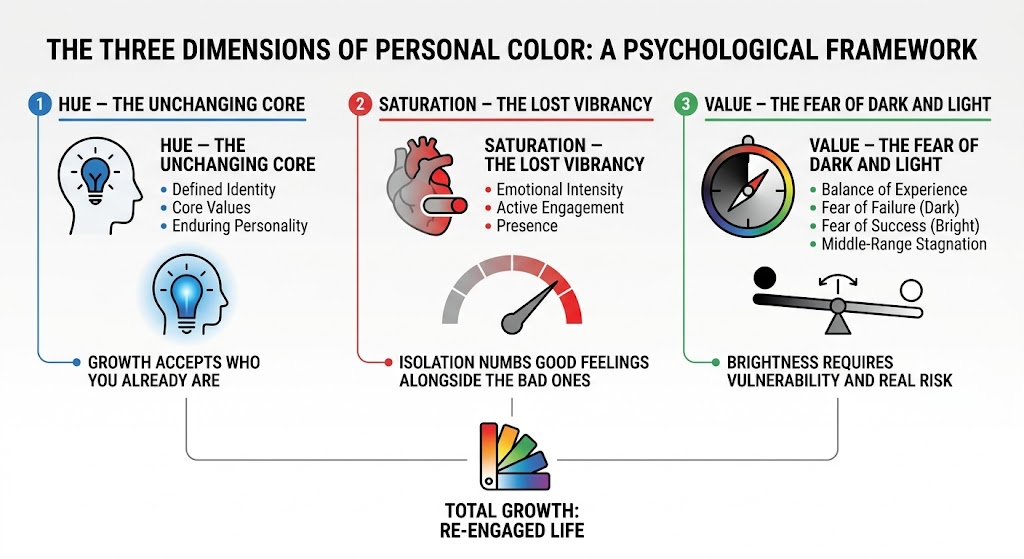
A week later, I came across something interesting about color theory. I didn’t know that painters think about color in three dimensions: hue, saturation, and value. Hue is the actual color: red, blue, green, your basic identity. Saturation is the intensity, how pure or muted. Value is the brightness, how light or dark.
I realized that although my hue had changed, it was not the reason my life was gray. My hue was still somewhere underneath the same curious, slightly stubborn person I had always been. The problem was saturation. I had turned it down so slowly that I did not notice. My value was stuck in the mid‑range, with no deep shadows or bright light. Just an even, exhausted medium.
That was the first time I connected color to stagnation. Color is not just about being happy. It is about being present. My color had not disappeared. I had just turned the volume down on everything.

How I Lost the Saturation
I did a reflective account and traced the dimming specifically to the year my father got sick. Work became a series of emergencies. A friendship I treasured ended without a fight but with a long, quiet fade. I had a slow leak, and was close to a breakdown. The red coat I loved no longer appealed to me, and I stopped playing music in the car. I ate the same three meals on rotation because deciding what to cook felt like too many choices. My life became efficiently gray.
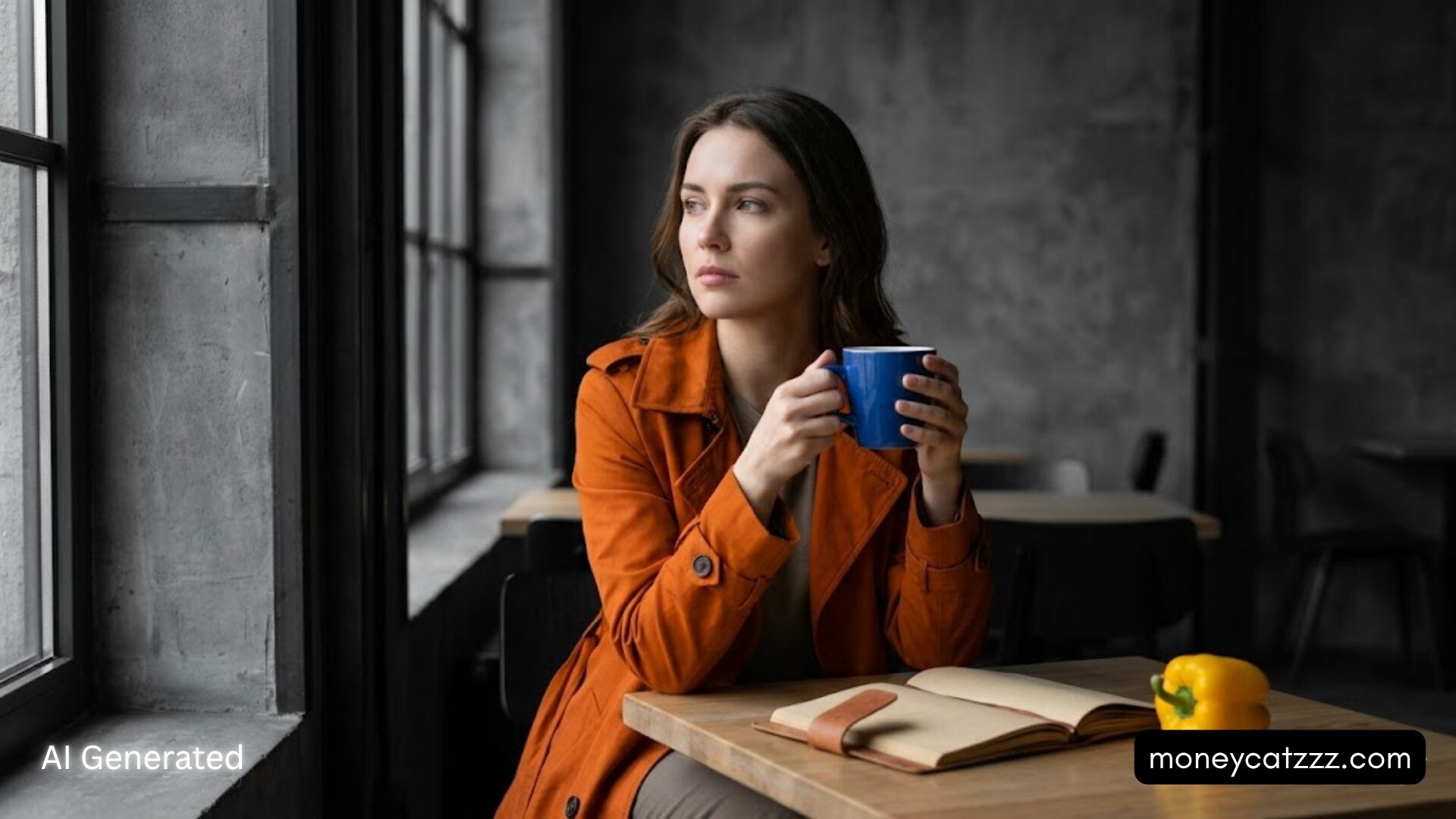
Stagnation had crept into my life, looking like someone who has squeezed all the joy out of her days. I remember standing in the produce section of the grocery store, staring at bell peppers. Red, yellow, green. I picked the green one, always. Green is safe. Green is not a decision. It’s pre-decided. I picked the green pepper every time for eighteen months before I noticed. Derek Jarman said he built his garden with the colors of healing. I was building mine with the color of avoidance.

[The Geometry of Choice: Breaking the Green Loop | moneycatzzz.com]
The Three Dimensions of a Life
I kept thinking about that color theory. It became a quiet obsession. I started applying it to everything.
Hue – The Unchanging Core
My hue had not shifted much. I was still someone who loved to write, who got too attached to stray cats, who cried at commercials about dads and daughters. That was me, and that was fine. My identity was never an issue, and growth does not always require a brand‑new you. Sometimes growth means turning up the volume on the you that already exists.
Saturation – The Thing I Had Lost
Low saturation means the color is weak. As jeans faded from too many washes, I had stopped doing things with intensity. I went to work, came home, scrolled, and slept. I said yes to obligations and no to invitations that required emotional effort. My life had color in theory but not in practice – saturation is a thief.
I had highlighted a passage by Brené Brown years ago. She says we numb the good feelings alongside the bad ones. I had not applied it to myself. The numbness was my saturation knob, turned all the way down.
Value – The Fear of Both Dark and Light
Value was trickier and a whole lot messier. Low-value areas are dark and shadowy, while high-value areas are bright, almost white. I was stuck in the middle. Too numb for a real breakdown, too hollow for genuine hope. I was afraid of the dark, and I was also afraid of the bright: bright meant risk, visibility, the chance of being seen and rejected. I stayed in the gray because I refused to face that. The gray asked nothing of me.
Some people live close to creativity but never step inside. Julia Cameron calls them shadow artists. I was a shadow person. Close to feeling, close to color, but always on the other side of the glass.
The First Small Turn of the Knob
It’s funny how small, insignificant details can change how you grow. I was in the grocery store again. Green pepper in my hand. I put it back and picked up a bright, beautiful yellow capsicum. My heart raced like I was doing something dangerous. Mehmet Murat Ildan once said:
“Your life will be colorful if you just add colors to your life! It is your own decisions that will determine whether you have a miserable or a marvelous life!”
That night, I wrote in my journal for the first time in months: “The yellow pepper tasted like a decision.”
I started with baby steps. Swapped my gray coffee mug for a blue one. Went for a walk without my phone. Called a friend I had been avoiding. Each tiny act felt ridiculous and necessary.
The Value Problem Did Not Fix Itself
I had spent years afraid of light and dark. Fine-tuning value is harder than turning up saturation. Is protecting myself from failure just running away from success?
Life is not a set of calibrations on your TV. I could add color with a yellow pepper. I could not add brightness. Brightness is intense and requires risk. Real risk.
We build walls against pain, then live inside them and call it home. My gray was a wall. It was safe. It was also a cage.
I started letting in small bits of light, baby step by baby step. I submitted a story for publication. Closed a necessity – told someone I loved them first. Stood in the sun for five extra minutes. The light did not burn me. What surprised me was how ridiculous it felt, and that it worked.
[The Three Dimensions of Personal Colors | moneycatzzz.com]
What I Learned About Hue
My hue had shifted slightly, not dramatically. I was no longer the same shade of gray. I felt a hint of blue: maybe thoughtful, introspective, a little melancholy. After the gray, I was something else. A paint palette. Secondary color visits some days: Blue with yellow undertones. Green.
I read somewhere, a psychology study on emotional color associations, that people in recovery from numbness often report perceiving color more vividly than before they got numb. I started noticing color everywhere. Rust and bronze on a fire escape. The pink strips on a grocery store receipt remind the cashier to change for a fresh roll. Golden luminosity in my father’s eyes before he passed.
My hue was still inside, but I had just forgotten how to see it.

What Remains
Gray has its place. I do not demonize it. Gray hoodies and sweatpants on a lazy Sunday afternoon are still as comforting as a warm blanket on a rainy day. But I also own a red coat now. I wear it on days when I need to remember that saturation is a choice.
Color is a perception. It is not a physical property of the universe. A gray t‑shirt is purple to a person with color blindness. Growth is not about becoming a rainbow. You can be stuck in deep navy, but stuck is stuck. It is about remembering that you have knobs, and you are allowed to turn them.
Sometimes I still catch myself reaching for the green pepper; old habit. I pick the yellow one now. I do not know why yellow, except that it is a color I had forgotten I loved.
________________
Transformational Reading: Expanding Your Color Spectrum
Daring Greatly

The Artist’s Way
The Untethered Soul
Disclosure: This post may contain affiliate links. We only recommend products we believe in, and we may receive a commission at no cost to you! Thank you for your support!
Acknowledgment: Cover Image by moneycatzzz.com
Disclaimer: The information is provided for general information only – moneycatzzz.com makes no representations or warranties in relation to the information, including but not limited to any representation or warranty as to the fitness for any particular purpose of the information to the fullest extent permitted by law. While every effort has been made to ensure that the information provided in this article is accurate, reliable, and complete as of the time of writing, the information provided in this article should not be relied upon to make any financial, investment, real estate or legal decisions. Additionally, the information should not substitute advice from a trained professional who can take into account your personal facts and circumstances, and we accept no liability if you use the information to form decisions.