
 Reading Time: 8 mins #
 This post may contain affiliate links.
Your colleague just walked into the meeting and, instead of saying hello, vomited his calendar at you. “Sorry, I’m late, back-to-back since 6 AM, three fires to put out, haven’t even checked the Asia numbers yet.“ He’s not greeting you; he’s performing a ritual sacrifice of his humanity at the altar of perceived importance. This is what systemic breakdown looks like: when the handshake between two humans gets replaced by a status report that nobody requested.
That wasn’t a greeting; it was a surrender. When someone leads with their ‘back-to-back‘ schedule, they aren’t bragging—they’re confessing that they’ve lost control of the machinery. They’re drowning in cognitive debt, and ‘busy‘ is the only word they have left to describe the water filling their lungs. They’re sitting across from you, but their eyes are scanning a phantom inbox. They’ve traded their presence for a status bar that’s stuck at 99%.
I see this everywhere: executives who introduce themselves with their meeting count, entrepreneurs who measure worth by exhaustion, professionals who’ve replaced personality with productivity metrics. They’re not living; they’re just processing. And they want you to congratulate them for it.
The Handshake Protocol That Failed
Every human interaction starts with a handshake protocol, not the physical kind, but the neurological synchronization that says, “I see you, you see me, we’re both here.“ When someone leads with how busy they are, they’re telling you their system has crashed. They can’t complete the introductory handshake because all their ports are occupied processing yesterday’s backlog.
This is latency in human form. They’re physically present but temporally displaced, running three months behind real-time. Their mind is still processing Q3 while their body stumbles through Q4. They’ve become a walking buffer overflow, constantly playing catch-up with a present that keeps getting further away.
Talking to a ‘busy‘ person is like trying to sync a high-speed Talking to a ‘busy‘ person is like trying to sync a high-speed drive with a corrupted port. MIT’s Human Dynamics Lab calls it ‘neural synchronization,’ but let’s be real: it’s a biological rejection. When the person across from you is mentally checking their inbox while you’re speaking, your brain feels the latency. You stop being a person to them and become a background process they’re trying to force-quit.
Cognitive Debt: The Compound Interest on Stupidity
Cognitive debt works exactly like technical debt in software. Every shortcut you take, every decision you defer, every task you half-complete adds to the principal. The interest compounds daily. Eventually, you’re so busy servicing the debt that you can’t make any forward progress.
Your friend who just spent three months “working remotely“ from Bali? He didn’t escape anything. He just exported his dysfunction to a beach. Same systemic failures, better Instagram backdrop. He accumulated more cognitive debt by trying to maintain peak output while his brain was screaming for actual rest.
Modern professionals have become addicted to busyness as a proxy for productivity. But motion isn’t progress. A hamster on a wheel is extremely busy. It’s also going nowhere, which is precisely where most professionals find themselves – in motion but static, active but unproductive, busy but broke.
The Default Mode Hijacking
Your brain has a default mode network designed for reflection, creativity, and human connection. It’s the system that makes you human, not just a meat computer. But when you’re perpetually busy, you override this system. You become stuck in task-positive mode, optimized for output but incapable of genuine input.
This is why your colleague can’t ask about your life. It’s not rudeness; it’s a hardware limitation. The bandwidth required for empathy has been reallocated to keep the busy façade from crashing. They’ve become a productivity zombie—animated by lukewarm espresso and a vibrating eyelid, but dead to any experience that isn’t on a spreadsheet.
Your brain is physically shrinking under the weight of your calendar. The neuroscientists at Stanford have seen the scans: when you spend ten hours a day in ‘task-mode,‘ the parts of you that handle empathy and original thought just… starve. You aren’t ‘grinding‘; you’re lobotomizing yourself. You’re becoming a high-speed processor with zero soul left to run the hardware.

[“The Human Latency Fail” – Image by moneycatzzz.com]
Latency: The Tax on Everything
Latency is the gap between a stimulus and a response, between the present reality and your ability to process it. When you’re drowning in cognitive debt, your latency increases exponentially. You’re never actually here; you’re constantly processing there, whenever there was.
This creates a cascading systemic failure:
- Delayed decisions compound into crises
- Relationships atrophy from neglect
- Opportunities expire while you’re “getting to them.”
- Health degrades while you’re “too busy to notice.“
You’re living life on a lag, experiencing everything through a buffer of accumulated tasks and unprocessed experiences. By the time you process today, it’s next month. You’re a ghost haunting your own existence.

The Performance of Exhaustion
Here’s the pathetic truth: being busy has become a performance. It’s competitive suffering, a race to the bottom where the prize is burnout. “You think you’re tired? I haven’t seen my kids awake in three weeks!“ It’s not achievement; it’s masochism with a business card.
We’ve confused activity with accomplishment, motion with progress. The modern professional hasn’t eliminated slavery; they’ve just become their own taskmaster, whipping themselves toward a finish line that keeps moving.
Your colleague who opens every conversation with their schedule?
They’re not communicating; they’re competing. They want you to validate their suffering, to confirm that their self-imposed imprisonment means something. It doesn’t. They’re just advertising their systemic failure to prioritize anything that matters.
You might also like:

Time as Capital: The Only Asset You Can’t Buy Back
Saying No to Busywork
Breaking the Default Setting
The default setting of modern professional life is unsustainable velocity toward unclear objectives. Everyone’s busy, but nobody knows why. Everyone’s exhausted, but nothing meaningful gets done. It’s collective insanity disguised as culture.
Breaking this requires violent recalibration:
Step 1: The Greeting Intervention. Next time someone leads with ‘busy,’ stop them cold. “I didn’t ask for your schedule. I asked how you are. Try again.” Force the human protocol to complete before allowing the performance to begin.
Step 2: The Cognitive Debt Audit. List every open loop, deferred decision, and half-finished project. That’s your cognitive debt balance. Now calculate the interest: how much mental energy does maintaining this backlog cost daily? The number will horrify you into action.
Step 3: The Latency Reset. Cancel everything for 48 hours. Not postpone. Cancel. Let the system crash completely so it can restart clean. Yes, people will be upset. Their upset is less important than your sanity.
Our attention hasn’t been lost; it’s been systematically hijacked by systems designed to keep us busy but unproductive, active but not advancing.
The ROI of Presence
Presence has infinite ROI: being fully here, fully now, fully engaged pays dividends that compound forever. One real conversation beats a thousand status updates. One focused hour beats ten distracted days.
But presence requires accepting that you’re not that important. The world won’t end if you don’t respond immediately. The company won’t collapse if you take lunch. The sky won’t fall if you say no. Your inflated sense of indispensability is just ego masquerading as responsibility.
The highest-paid people I know are also the most unreachable. They aren’t ‘maintaining boundaries‘—they’re protecting their capacity to think. Harvard can call it ‘outperformance,‘ but the reality is simpler: they refuse to drown in the shallow end. They know that a CEO who answers emails in 3 minutes isn’t solving the $10 million problems. They aren’t working harder; they’re just refusing to let the ‘busy‘ virus infect their decision-making hardware.
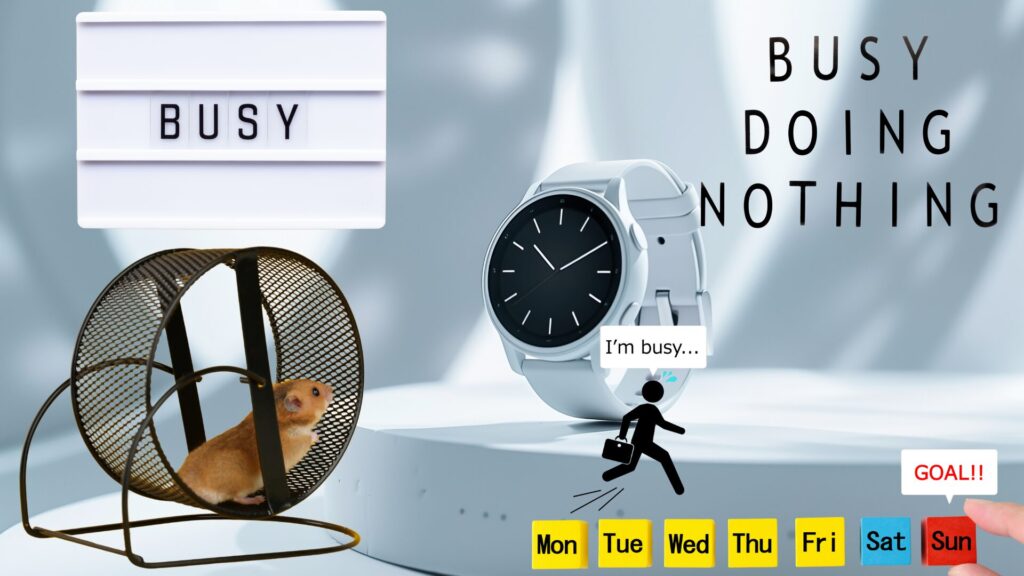
[“The Sarcophagus of Motion” – Image by moneycatzzz.com]
The Ownership Protocol
Stop renting space in your own life. Stop paying the latency tax on existence. Stop accumulating cognitive debt you’ll never pay off. Own your time, or it owns you.
The protocol is simple but brutal:
- The 70% Rule: If your calendar is more than 70% full, you’re lying to yourself about what you can accomplish. Cut 30% immediately.
- The Single Tasking Mandate: Multitasking is a myth. It’s just rapid task-switching that increases latency and errors. Do one thing completely or don’t do it.
- The Presence Practice: In every interaction, be fully there or don’t be there at all. Half-presence is worse than absence.
Your time is the only asset that matters. Everything else: money, status, achievements – is just what you trade time for. If you’re too busy to live your life, you’re not successful. You’re just a high-functioning corpse.
Your Systemic Reset Starts Now
That colleague who can’t stop talking about how busy they are? They’re not a role model; they’re a warning. They’ve confused motion with progress, activity with achievement, exhaustion with importance. They’re drowning and calling it swimming.
Your default doesn’t have to be their default. Your system doesn’t have to run their software. You can choose presence over performance, depth over breadth, completion over accumulation.
The question isn’t whether you have time. The question is whether you dare to claim it. Stop decorating your cage with productivity apps. Stop optimizing your dysfunction. Stop being too busy to live the life you’re supposedly working toward.
What’s one thing on tomorrow’s calendar that’s complete bullshit? Delete it now. That’s not scheduling; that’s liberation.
Your life is waiting for you to show up.

Bedrock Wisdom: Foundation Stones for the Un-Busy Life
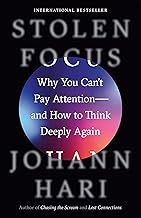
Stolen Focus

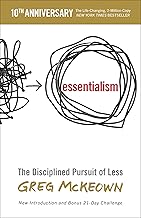
Essentialism
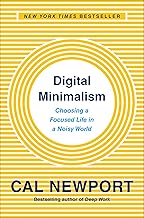
Digital minimalism
Disclosure: This post may contain affiliate links. We only recommend products we believe in, and we may receive a commission at no cost to you! Thank you for your support!
Acknowledgment: Cover Image by moneycatzzz.com
Disclaimer: The information is provided for general information only – moneycatzzz.com makes no representations or warranties in relation to the information, including but not limited to any representation or warranty as to the fitness for any particular purpose of the information to the fullest extent permitted by law. While every effort has been made to ensure that the information provided in this article is accurate, reliable, and complete as of the time of writing, the information provided in this article should not be relied upon to make any financial, investment, real estate or legal decisions. Additionally, the information should not substitute advice from a trained professional who can take into account your personal facts and circumstances, and we accept no liability if you use the information to form decisions.