
 Reading Time: 8 mins #
 This post may contain affiliate links.
I’m staring at my fourth “urgent” email of the day, each one a variation of the same problem I’ve been solving manually for two years. That’s when it hit me: I wasn’t lacking time or skills. I was lacking a systematic framework design.
Within three months of implementing what I’m about to share, I reduced my workweek from 60 to 40 hours while actually increasing my output. The secret wasn’t working harder or even smarter. It was building a personal operating system that handles recurring decisions automatically.
I’m staring at my fourth “urgent” email of the day, each one a variation of the same problem I’ve been solving manually for two years. That’s when it hit me: I wasn’t lacking time or skills. I was lacking a systematic framework design.
Within three months of implementing what I’m about to share, I reduced my workweek from 60 to 40 hours while actually increasing my output. The secret wasn’t working harder or even smarter. It was building a personal operating system that handles recurring decisions automatically.
Research from McKinsey Global Institute reveals that knowledge workers spend 41% of their time on repetitive decisions that could be systematized. We’re drowning in the same problems, week after week, because we treat each occurrence as unique instead of recognizing the pattern and building a systematic framework to handle it permanently.
Think about your phone. iOS or Android runs thousands of complex processes in the background, presenting you with simple, clean interfaces. Your life needs the same thing: a systematic framework design that handles complexity automatically, leaving your conscious mind free for creativity and connection.
Why Most People Never Escape the Chaos Loop
Before diving into the five-step protocol, we need to address why intelligent, capable people often remain stuck in a reactive mode. It’s not a matter of laziness or lack of intelligence. It’s the absence of a systematic framework for design thinking.
Daniel Kahneman explains in Thinking, Fast and Slow that our brains have a limited capacity for decision-making. Every choice, from what to wear to how to handle a difficult email, depletes this finite resource. By noon, you’ve made thousands of micro-decisions, leaving you mentally exhausted for the important stuff.
The solution isn’t making better decisions. It’s making fewer decisions through personal protocols. When you build frameworks for recurring situations, you’re essentially pre-making decisions that can run on autopilot.
James Clear reinforces this in Atomic Habits with his famous quote: “You do not rise to the level of your goals. You fall to the level of your systems.” Your systematic framework design IS that system, customized for your specific bottlenecks and challenges.
Step 1: Audit the Bottleneck (The 80/20 Diagnostic)
The Power of Specific Problem Identification
Your first personal protocols should target a specific, recurring problem, rather than general messiness. This is where the 80/20 framework audit becomes essential.
Last year, I felt constantly overwhelmed by email. But when I actually tracked my frustrations for a week, I discovered email wasn’t the real problem. Project scope creep was. Unclear project boundaries caused 80% of the back-and-forth emails that were drowning me.
How to Run Your Bottleneck Audit
Week 1: Track Everything
Keep a simple note on your phone. Every time you feel frustrated, stressed, or stuck, write down:
- What triggered the feeling
- What category does it fall into (personal, professional, financial)
- How much time did it consume
Week 2: Find the Pattern
Review your notes. You’ll see the same 3-5 problems appearing repeatedly. One of them will stand out as causing disproportionate stress. That’s your bottleneck.
The Validation Test:
Ask yourself: “If I could permanently solve this ONE issue, would my daily life dramatically improve?” If yes, you’ve found the target for your systematic framework design.
Real-World Bottleneck Examples
Personal Domain:
Sarah discovered her energy crashes weren’t random. The 80/20 framework audit revealed that skipping lunch during flow states contributed to 80% of her afternoon fatigue. Her personal protocols now include non-negotiable eating windows.
Professional Domain:
Marcus thought he had a time management problem. The audit revealed that unclear communication protocols with his remote team were responsible for 80% of his overtime. His systematic framework design now includes structured check-ins and async updates.
Financial Domain:
Emma believed she had a spending problem. The audit revealed that emotional shopping triggered by specific events accounted for 80% of her overspending. Her systematic framework design now includes a 48-hour pause rule.
Research from Harvard on the Pareto Principle confirms that in most systems, 20% of inputs generate 80% of the outputs. Your systematic framework design targets that crucial 20%.
Step 2: Define the Trigger and Rule
Removing Willpower from the Equation
The most potent aspect of systematic framework design is the automation of trigger rules. You’re creating IF-THEN statements that execute without conscious decision-making.
Charles Duhigg explores this in The Power of Habit, showing how our brains naturally operate on cue-routine-reward loops. Your systematic framework design hijacks this existing neural machinery for your benefit.
Building Your Trigger-Rule Pairs
The formula is deceptively simple:
- Trigger: A specific, observable condition
- Rule: A non-negotiable response
Email Management Example:
- Trigger: “Email arrives.”
- Rule: “If under 2 minutes to handle, do now. Otherwise, flag for batch processing at 10 AM or 3 PM.”
Financial Decision Example:
- Trigger: “Want to buy something over $50.”
- Rule: “Add to wishlist, wait 48 hours, then evaluate against monthly budget.”
Energy Management Example:
- Trigger: “Clock hits 2 PM.”
- Rule: “10-minute walk outside, regardless of weather or workload.”
The Psychology of Trigger-Rule Success
Your systematic framework design works because it eliminates the exhausting “Should I or shouldn’t I?” internal debate. The decision is already made. You’re just executing predetermined code.
I’ve built seventeen different trigger-rule automation pairs over the past year. Each one removed a daily decision, freeing mental energy for creative work. The compound effect is extraordinary.

[“Automated Mental Clarity” – Image by moneycatzzz.com]
Advanced Trigger-Rule Patterns
Your personal protocols can include branching logic:
Primary Trigger: New project request arrives
Primary Rule: Run through the project evaluation checklist
- If it passes all criteria: Accept and send the scope template
- It fails one criterion: Request clarification
- If it fails multiple criteria: Politely decline with referral
The key to effective trigger-rule automation is keeping each decision binary. Yes or no. This or that. Complex decisions can be broken into multiple binary choices within your personal protocols.
Step 3: Design the 3-Component Matrix
The Cognitive Science of Three
Miller’s Law from cognitive psychology suggests that working memory can hold 7±2 items, but three is the optimal number for quick processing without overload. Your systematic framework design must respect this limitation.
The Three Universal 3-Component Matrix Patterns
| Pattern | Purpose | Components (The Trinity) | Example Application: Systematic Framework Design |
| Pattern 1: The Input Trinity | Perfect for collection and processing systems. | 1. Capture (get it out of your head) | Task Management: Monday: Capture all commitments and ideas |
| 2. Clarify (decide what it means) | Task Management: Wednesday: Clarify priorities and dependencies | ||
| 3. Complete (take action or file) | Task Management: Friday: Complete or reschedule based on reality | ||
| Pattern 2: The Stage Progression | Ideal for development and growth frameworks. | 1. Foundation (learn the basics) | Skill Acquisition: Month 1: Foundation through books and courses |
| 2. Development (practice deliberately) | Skill Acquisition: Months 2-3: Development through daily practice | ||
| 3. Optimization (refine and scale) | Skill Acquisition: Month 4+: Optimization through real-world application | ||
| Pattern 3: The Decision Triangle | Essential for evaluation systems. | 1. Must-have (non-negotiable requirements) | Hiring Matrix: Core technical competencies |
| 2. Nice-to-have (beneficial additions) | Hiring Matrix: Cultural enhancement qualities | ||
| 3. Deal-breaker (absolute disqualifiers) | Hiring Matrix: Value misalignment indicators |
Building Your Own Matrix
Start by listing everything involved in your current approach to the bottleneck. Then ruthlessly group them into three categories. If you have more than three, you’re not grouping broadly enough. Your systematic framework design succeeds when it’s simple enough to remember without reference materials.
The 3-component matrix forces elegant simplicity. Complex problems don’t need complex solutions. They need simple solutions applied consistently, which is precisely what your systematic framework design provides.
Step 4: Automate the Execution
Three Levels of Framework Automation
The best systematic framework design runs without your conscious involvement. Here’s how to achieve true automation:
Level 1: Digital Automation
Technology handles the framework for you:
- Calendar blocks for framework execution time
- IFTTT or Zapier for connecting digital triggers to actions
- Auto-transfers for financial frameworks
My content creation systematic framework design utilizes Buffer to automatically schedule posts based on engagement data. I create once, and the framework handles distribution.
Level 2: Environmental Design
Your physical space enforces the framework:
- Visual cues that trigger the right behaviors
- Friction removal for desired actions
- Friction addition for undesired actions
My morning system works because everything is staged the night before: coffee is programmed, clothes are selected, and the phone is charging in another room. The environment makes the right choice the easy choice.
Level 3: Social Automation
Other people help execute your framework:
- Accountability partners who check your adherence
- Public commitments that create social pressure
- Team protocols that distribute framework execution
Our team’s project personnel protocols include automated Monday metrics emails generated from our project management tool. Nobody has to remember to create or send them.
The Automation Technology Stack
Your personal protocols become truly powerful when technology handles the heavy lifting:
- Notion for framework templates and databases
- Todoist for recurring framework tasks
- YNAB for financial framework automation
The goal isn’t to add more tools. It’s to make your systematic framework design invisible. Good frameworks run in the background like operating system processes.
Step 5: Review and Refactor (The Feedback Loop)
The Evolution Principle
Your personal protocols are a living document, not carved in stone. The framework feedback loop ensures continuous improvement without constant tinkering.
The 90-Day Review Protocol
Every three months, evaluate your systematic framework design against three criteria:
Effectiveness Metrics:
- Is the bottleneck actually solved?
- What percentage improvement occurred?
- How many times did you bypass the framework?
Efficiency Metrics:
- Where does friction still exist?
- What feels unnecessarily complex?
- Which steps could be combined or eliminated?
Edge Case Documentation:
- What situations didn’t fit the framework?
- How did you handle exceptions?
- Should the framework be expanded or remain focused?
Real Evolution Example
Version 1 of my email systematic framework design had five categories and ten rules. Too complex. I constantly forgot the nuances.
Version 2 simplified to three categories and three rules. Better, but still required too much thinking.
Version 3 (current) has one trigger and two possible actions. It’s so simple that it’s automatic. The framework feedback loop revealed that simplicity beats sophistication.
The Success Indicators
Your systematic framework design has succeeded when:
- You stop thinking about that problem category
- Others ask how you handle that area so effortlessly
- The bottleneck completely disappears from your stress list
Michael Gerber writes in The E-Myth Revisited: “Systems run the business and people run the systems.” Your personal protocols collection IS your personal business system.
Implementation Week: Building Your First Framework
Your Action Plan
Monday-Tuesday: Bottleneck Audit
Track every frustration. Look for patterns. Apply the 80/20 framework audit to identify your highest-impact target.
Wednesday: Trigger-Rule Definition
Create one apparent trigger and one simple rule. Test it immediately. Your systematic framework design starts with this single IF-THEN statement.
Thursday: Matrix Design
Build your 3-component matrix. Remember: if you can’t remember all three components without looking, it’s too complex.
Friday: Automation Setup
Implement at least one automation element. Even a simple calendar reminder counts. Your systematic framework design needs technological support.
Weekend: Test and Adjust
Run your framework through real situations. Note where it breaks. Adjust accordingly. Your systematic framework design improves through use, not theory.
The Compound Effect of Multiple Frameworks
Here’s the beautiful secret about systematic framework design: each one makes the next one easier to build. You develop an intuition for patterns, for simplification, for automation opportunities.
After six months of building frameworks, I now have:
- Morning routine framework (personal)
- Email processing framework (professional)
- Investment decision framework (financial)
- Content creation framework (professional)
- Exercise selection framework (personal)
- Spending decision framework (financial)
Together, these form my life operating system. They handle 80% of my daily decisions automatically, leaving my mental energy for what matters: creative work, deep relationships, and strategic thinking.

[“The Framework Design Matrix” – Image by moneycatzzz.com]
Common Pitfalls and Solutions
Pitfall 1: Over-Engineering
You try to build the perfect systematic framework design that handles every possible scenario. This always fails.
Solution: Start with the most common scenario only. Add edge cases later if needed.
Pitfall 2: Skipping the Audit
You build a framework for what you think the problem is, not what it actually is.
Solution: Always run the 80/20 framework audit first. Data beats assumptions.
Pitfall 3: Abandoning Too Early
You give up on your personal protocols after a week because it feels awkward.
Solution: Commit to a minimum of 30 days. Habits take time to form.
Your Next Step
Right now, identify one area where you face the same problem repeatedly. That’s your first target for designing a systematic framework.
Don’t overthink it. Don’t perfect it. Build it, use it, refine it.
Within 90 days, you’ll have a functioning systematic framework design that handles what used to exhaust you. Within a year, you’ll have a complete life operating system that runs your complexity in the background while you focus on what matters.
The choice is simple: continue solving the same problems manually forever, or invest once in a systematic framework design and solve them permanently.
[Download The Framework Design Template] Complete worksheets for all five steps, plus 10 example frameworks for common bottlenecks.
Build your systems. Run your life. The framework is the way.
3 Essential Reads to Re-Boot Your Life's Operating System

Thinking, Fast and Slow

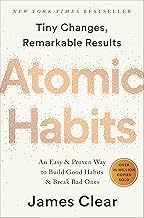
Atomic Habits
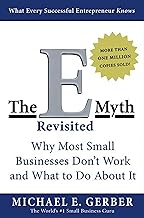
The E-Myth Revisited
Featured Book of the Week:
Charles Duhigg’s The Power of Habit explores the science of behavioral change by introducing the neurological Habit Loop: a three-step pattern of Cue, Routine, and Reward that drives all behavior.
Through engaging stories from corporate transformations to personal success, Duhigg demonstrates that by recognizing and actively manipulating this loop, particularly through the implementation of Keystone Habits, anyone can achieve lasting personal and organizational change.

The Power of Habits
Disclosure: This post may contain affiliate links. We only recommend products we believe in, and we may receive a commission at no cost to you! Thank you for your support!
Acknowledgment: Cover Image by moneycatzzz.com
Disclaimer: The information is provided for general information only – moneycatzzz.com makes no representations or warranties in relation to the information, including but not limited to any representation or warranty as to the fitness for any particular purpose of the information to the fullest extent permitted by law. While every effort has been made to ensure that the information provided in this article is accurate, reliable, and complete as of the time of writing, the information provided in this article should not be relied upon to make any financial, investment, real estate or legal decisions. Additionally, the information should not substitute advice from a trained professional who can take into account your personal facts and circumstances, and we accept no liability if you use the information to form decisions.