
 Reading Time: 8 mins #
 This post may contain affiliate links.
Frugal Power: Modern Austerity Wealth Strategy
Have you ever encountered a dusty box in the attic and found something that redefined your perspective? Last summer, I did—inside was my grandmother’s 1960s ledger, hand-written with meticulous detail. Each entry revealed a lifestyle built on intention: measured spending, purposeful saving, and a clear sense of financial values. It wasn’t just about being frugal. It was about austerity with purpose—a mindset more relevant now than ever.
“Happiness doesn’t come from things; it comes from experiences.” – David Steindl-Rast.
“Austerity” may evoke images of scarcity or restriction, often associated with government cutbacks or wartime rationing. But that’s a narrow—and outdated—definition. Today’s modern austerity is neither about deprivation nor self-denial. It’s about financial sovereignty, intentional living, and strategic resource allocation.
In his acclaimed book The Psychology of Money, Morgan Housel asserts that wealth isn’t measured by what you accumulate—but by what you can afford to live without. Modern austerity leans into that truth. In a time when excess is easy, the ability to say no becomes a superpower.
And yet, financial anxiety remains widespread. Credit card debt is soaring; studies show that 61% of Americans live paycheck to paycheck. Amid abundance, we’re more financially fragile than ever.
1. Intentional Spending: The Mindful Way to Be Frugal
Forget budgeting apps that feel like digital nagging. Intentional spending reframes money as a tool for alignment, not a constraint.
- Track Your Joy-to-Spending Ratio: Start rating purchases by how much satisfaction they deliver. You’ll quickly spot high-cost, low-return habits. It’s a mindset similar to what Vicki Robin advocates in Your Money or Your Life—where every dollar equals life energy.
- Audit Autopilot Habits: Are your recurring expenses aligned with your goals? Cancel unused subscriptions. Disable one-click ordering. These small actions free both money and mental space.
- Invest in Quality Over Quantity: Austerity isn’t cheapness—it’s discernment. Think in terms of the total cost of ownership. A $150 pair of boots that lasts a decade is more frugal than a $40 pair that disintegrates in a year.
“Being frugal isn’t about being cheap; it’s about prioritizing value.”

[“Modern Austerity – The Frugal Mind” – Photo by cottonbro studio]
2. Smart Automation: Your Frugal Wealth Engine
Automation isn’t just for tech startups. It’s the backbone of sustainable personal finance.
- Pay Yourself First: As Ramit Sethi recommends, set automatic transfers to your savings and investment accounts before spending begins. This ensures your wealth grows silently in the background.
- Build Impulse Shields: Leverage browser extensions like BlockSite or try the 24-hour cart rule before purchases. The delay introduces friction that leads to more intelligent choices.
- Unsubscribe and Declutter: Email promos and shopping apps are designed to erode your willpower. Remove temptations proactively—it’s a frictionless austerity tactic that works.

3. Mindful Consumption: Mastering the 24-Hour Rule
Before you click “Buy Now,” ask:
- Is this a want or a need?
- What’s the life energy cost of this purchase?
- Will I care about this in six months?
This simple 24-hour rule builds intentionality. You’ll be surprised how many “urgent” purchases lose their shine overnight.
Case Study: Debbie Chen’s Atomic Austerity
Debbie, a 32-year-old software engineer in Seattle, took inspiration from James Clear’s Atomic Habits. Her approach? Atomic austerity—small, consistent changes:
- Automated 30% of her income to investments.
- Deleted shopping apps.
- Initiated “Zero-Waste Wednesdays.”
Results after 24 months:
- Eliminated $45,000 in student debt.
- Built a six-month emergency fund.
- Cultivated what she calls a “strangely abundant life.”
“I feel wealthier now with less clutter and more clarity,“ she says.
Strategic Austerity: Spend Boldly Where It Counts
Ramit Sethi frames austerity not as a restriction but as a strategic indulgence: Spend lavishly on what you love and ruthlessly cut what you don’t. That’s frugal abundance in action.
Build Your Austerity Blueprint
Here’s a roadmap to apply this in real life:
1. Conduct a Financial Inventory
- Track every dollar for 2–4 weeks.
- Calculate your real hourly income.
- Identify “money leaks“: duplicated apps, takeout, and underused tools.
2. Define Your Personal Austerity Framework
- List non-negotiables (travel, fitness, books).
- Automate contributions to savings and investing.
- Plan indulgences—so they feel like treats, not guilt trips.
3. Create a Support System
- Find an accountability partner.
- Join FIRE or minimalist communities.
- Share goals with family or team members.
The Hidden Wealth in Modern Austerity
Those who embrace strategic austerity often report non-financial rewards:
- Better sleep from reduced stress.
- Sharper focus with fewer distractions.
- Stronger relationships through shared values.
- Heightened gratitude for what already exists.
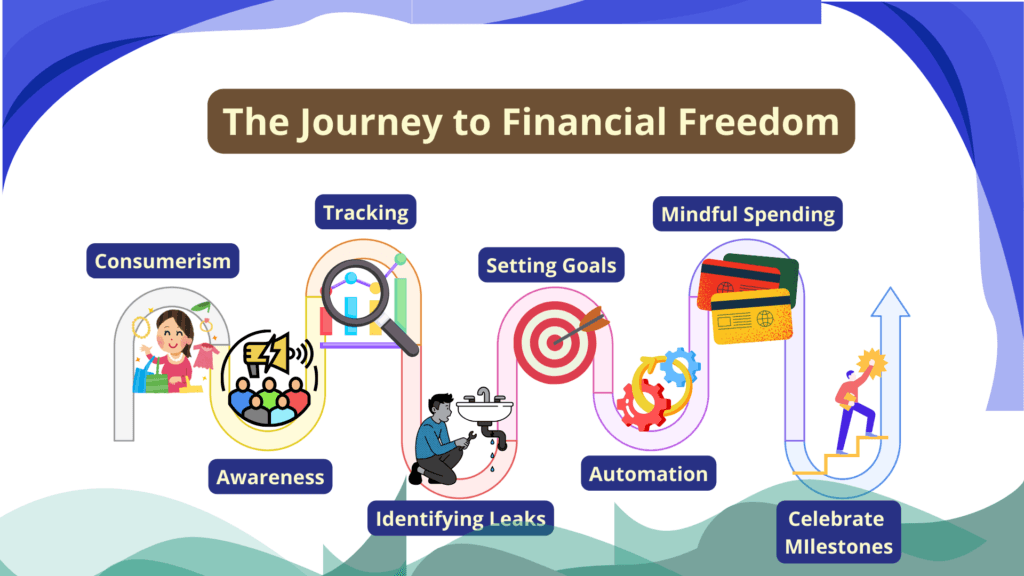
[“The Modern Austerity Pathway” – moneycatzzz.com]
Frugality in a Volatile World
Today’s economy is unpredictable: inflation spikes, AI disruption, climate pressures. Modern austerity is no longer niche—it’s a resilience strategy. Entrepreneurs and professionals who master frugal systems are better positioned to weather downturns and capitalize on opportunities.
“The highest form of wealth is the ability to wake up and say, ‘I can do whatever I want today.‘” – Morgan Housel.

The Quiet Power of Choosing Less
Modern austerity isn’t about lack—it’s about leverage. It’s not about denial but design. When we spend intentionally, automate wisely, and consume mindfully, we’re not just fixing our finances. We’re reclaiming ownership of our lives.
In a world shouting for more, choosing less is a radical act of clarity.
It’s how you build freedom one dollar at a time, break the cycle of consumption-as-identity, and lead by example in your business, household, and community.
So take a breath, take a step, and begin.
Track one category. Automate one habit. Reflect once a week.
These small acts compound into sovereignty—the kind Morgan Housel called the “highest form of wealth.“
Not someday. Today.
Because austerity, when chosen, becomes not a burden—but a badge of wisdom.
What’s your first move? Let’s redefine wealth together.
“Austerity, when chosen, becomes the quiet architecture of true freedom.”
Disclosure: This post may contain affiliate links. We only recommend products we believe in, and We may receive a commission at no cost to you! Thank you for your support!
Acknowledgement: Cover Image by Unsplash.com
Disclaimer: The information is provided for general information only – moneycatzzz.com makes no representations or warranties in relation to the information, including but not limited to any representation or warranty as to the fitness for any particular purpose of the information to the fullest extent permitted by law. While every effort has been made to ensure that the information provided in this article is accurate, reliable, and complete as of the time of writing, the information provided in this article should not be relied upon to make any financial, investment, real estate or legal decisions. Additionally, the information should not substitute advice from a trained professional who can take into account your personal facts and circumstances, and we accept no liability if you use the information to form decisions.