
 Reading Time: 8 mins #
 This post may contain affiliate links.
Estate planning isn’t just for the wealthy—it’s vital to safeguard your life’s work, ensuring your assets are protected, your will is honored—and your legacy endures.
In a world where career milestones and financial growth often take center stage, estate planning remains one of the most overlooked components of long-term success. Yet without a clear estate plan, the wealth you’ve worked hard to build could become the source of disputes, taxation burdens, and unintended consequences. For professionals, entrepreneurs, and high-net-worth individuals, crafting a thoughtful will and comprehensive estate plan is more than a legal exercise—it’s a powerful expression of values and vision.
Here are six strategic moves to preserve your legacy and protect your assets for the people and causes that matter most.
1. Start with a Clear Picture of Your Assets and Intentions
Effective estate planning begins with awareness conduct a complete inventory of your assets: real estate, investment accounts, business holdings, intellectual property, digital assets, and personal valuables—this clarity ensures your estate plan reflects your actual financial landscape.
Equally important is defining your broader intentions. Ask yourself:
- Do I want to provide for children or grandchildren?
- Should a portion of my assets support charitable causes?
- Do I want my business to continue operating after I’m gone?
Understanding your values helps align your will and estate plan with your long-term goals. Resources like The Millionaire Next Door by Thomas J. Stanley can help frame a stewardship mindset and intentional wealth transfer mindset.

[“It Pays To Plan Ahead” – Photo by Kampus Production on Pexels]
2. Consult an Estate Planning Attorney for Legal Precision
While DIY tools like Trust & Will or FreeWill have grown in popularity, high-earning professionals and entrepreneurs benefit from the insights of an experienced estate planning attorney—a knowledgeable legal partner ensures your documents are:
- Compliant with state and federal laws
- Structured to minimize taxes
- Clear to avoid ambiguity or future disputes
This is especially critical if your assets span multiple states, involve a family business, or include significant investments. A custom-tailored will and supporting legal documents protect your wealth and your loved ones from unnecessary stress and legal challenges.
For an overview of how attorneys help protect wealth—visit the American Bar Association’s Estate Planning Resources.

3. Anticipate Taxes, Fees, and the Impact of Probate
Without proper planning, a sizable portion of your assets could be lost to estate taxes—probate costs—and administrative fees. Understanding the financial implications of your estate plan is critical to preserving your legacy.
Federal estate tax exemptions are high—currently $13.61 million per individual as of 2024—but state-level inheritance taxes and capital gains on appreciated assets (like real estate or stocks) can still take a bite. Use strategies like:
- Revocable living trusts to avoid probate
- Charitable remainder trusts to reduce taxable estate size
- Gifting strategies to pass wealth during your lifetime
To dive deeper into tax strategies, check out The Bogleheads’ Guide to Retirement Planning, a well-regarded resource for minimizing estate and income taxes.
4. Designate the Right Executors, Trustees, and Guardians
Your will should name who will carry out your wishes. For most professionals, this includes an executor to manage your estate and—if you have children—a guardian to care for minors.
Choose individuals who are:
- Trustworthy and organized
- Financially savvy or willing to work with advisors
- Emotionally capable of navigating the responsibilities involved
This is the consideration and time needed to build a succession plan if you own a business. Identify who will manage or inherit the company and ensure they have the necessary tools, authority, and guidance. The U.S. Small Business Administration (SBA) offers advice on structuring a business succession plan that fits within your broader estate planning strategy.
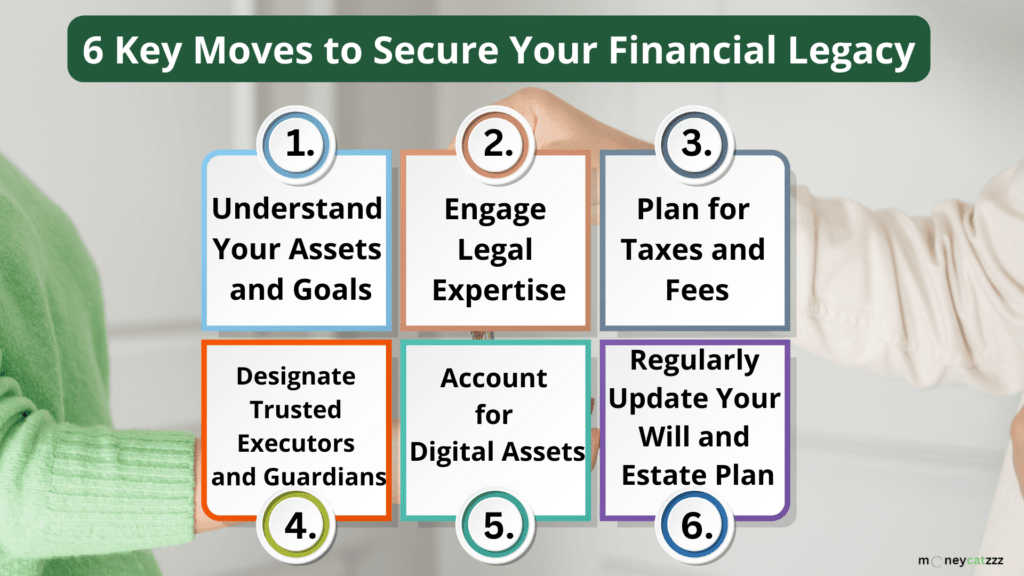
[“6 Key Moves to Secure Your Financial Legacy” – Image by moneycatzzz.com]
5. Include Digital Assets in Your Estate Plan
In today’s connected world, your digital assets—from cryptocurrency to email accounts—need specific instructions. Many estates now include online financial platforms, intellectual property, and social media profiles.
Steps to take:
- Create a digital asset inventory
- Store login credentials securely (consider using a password manager)
- Appoint a digital executor with the authority to manage or delete accounts
Books like The Digital Executor by Sharon Hartung can guide you in including online wealth in your broader estate planning strategy. Fidelity’s digital estate planning guide also offers actionable tips for managing online property.
6. Update Your Estate Plan Regularly
Life changes—and so should your estate plan. Significant events like marriage, divorce, the birth of a child, or a windfall warrant a review. Likewise, changes in estate law or your financial situation can affect your plan.
Experts recommend reviewing your will and supporting documents every 3–5 years or immediately after a significant life event. Update:
- Beneficiaries on life insurance and retirement accounts
- Guardianship designations
- Trust structures
- Healthcare directives and powers of attorney
Firms like Charles Schwab emphasize the need for regular updates to reflect current realities and avoid complications.

Additional Tools: Trusts, Directives, and Long-Term Care
Beyond the basic will, a full estate plan should also include:
- Living trusts: for bypassing probate and ensuring privacy
- Healthcare directives: stating your medical preferences
- Durable powers of attorney: empowering trusted individuals to act on your behalf
- Long-term care planning: preparing for potential assisted living or medical costs
According to the National Institute on Aging, advance directives and care planning help prevent confusion and family disputes—exploring long-term care insurance with your financial advisor can reduce the strain of healthcare costs on your estate.
These tools add flexibility and depth to your plan, providing your family clarity and peace of mind.
Your Legacy Is Built Today
Estate planning isn’t just for the ultra-wealthy—it’s a critical step for anyone to ensure their assets and values live on—regardless of your net worth, the decisions you make today about your will, trusts, and other legal tools will shape the legacy you leave behind. Whether you’re an entrepreneur building a business from the ground up, a professional growing generational wealth, or a parent safeguarding your children’s future, a strategic estate plan is one of the most profound acts of foresight and care.
Think of your estate plan as a legal necessity and a form of storytelling. It tells the world what matters to you. It outlines your priorities—your family, business, and values—and passes them on with intention. It gives voice to your life’s work long after you’re gone.
Without a plan, your story risks being written by default laws and court decisions. With one, you write every chapter with clarity and purpose.
Let your will reflect your wisdom, your estate planning strategy echo your foresight, and your assets serve as the enduring infrastructure of the life you’ve built. Legacy isn’t about how much you leave behind but how intentionally you leave it.
As Warren Buffett wisely said, “Someone is sitting in the shade today because someone planted a tree a long time ago.“ Let your legacy be that tree—deep-rooted, far-reaching, and planted with purpose.
Take the time today to lay the foundation. The future deserves it—and so do the people you love.
Disclosure: This post may contain affiliate links. We only recommend products we believe in, and We may receive a commission at no cost to you! Thank you for your support!
Acknowledgement: Cover Photo by Matthias Zomer
Disclaimer: The information is provided for general information only – moneycatzzz.com makes no representations or warranties in relation to the information, including but not limited to any representation or warranty as to the fitness for any particular purpose of the information to the fullest extent permitted by law. While every effort has been made to ensure that the information provided in this article is accurate, reliable, and complete as of the time of writing, the information provided in this article should not be relied upon to make any financial, investment, real estate or legal decisions. Additionally, the information should not substitute advice from a trained professional who can take into account your personal facts and circumstances, and we accept no liability if you use the information to form decisions.