Reading Time: 8 mins #
This post may contain affiliate links.

My friend’s mother died suddenly five days after celebrating her 62nd birthday. I spent two days not knowing what to say. Finally, I wrote the text, kept it simple, honest. Proofread three times before I hit send.
Â
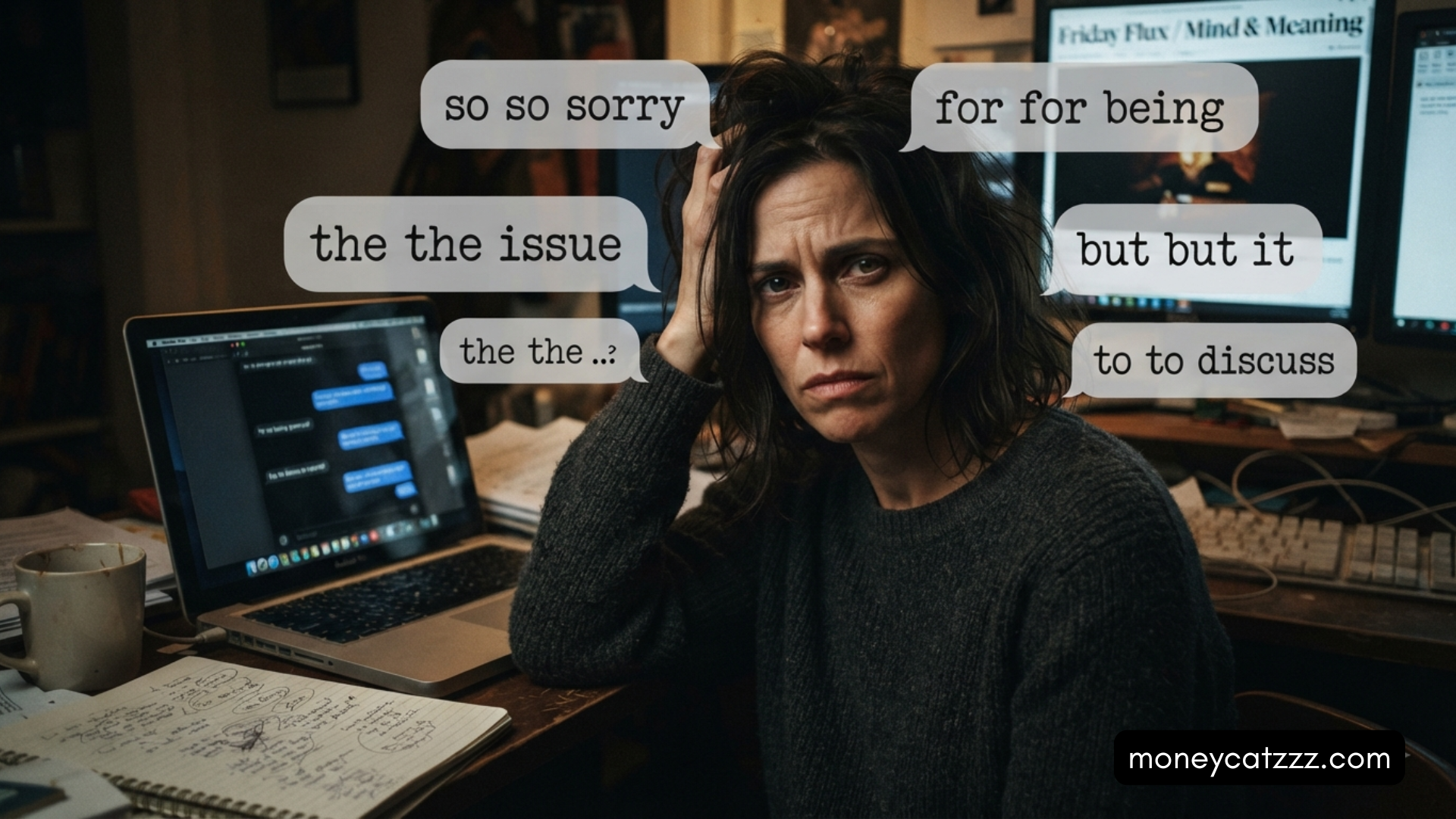
“I’m so so sorry for your loss. She was such a light.“
Â
Relief washed over me. I’d finally done it.
Â
Three hours later, I looked at the message again and saw it: “so so sorry.” Not “so sorry.” Two “so” s sitting there. It’s strange how easily you can type the same word twice when your mind is elsewhere, reading a sentence three times and missing it every single time. Was my mind really elsewhere?
The heat crept up my neck. How did I not see that? Did she notice? Does it look like I didn’t care enough to proofread?
Â
Then the darker thought arrived: if I can’t see a basic duplication typo in a message I read three times, what else am I missing?
The Spiral I Fell Into
I checked my bank account. Had I accidentally paid any bills twice without noticing? Scrolled through sent emails to look for duplicates I missed. Found two more instances of typing the same word twice in messages from the past month.
Â
How had I not seen them?
Â
Unable to sleep at 2 a.m., I Googled “typing the same word twice cognitive decline.” The search results talked about early dementia, attention disorders, and neurological problems.
[MindValley Promo | Rewire your mind, transform life. | Vishen Lakhiani]
I’m forty-three. Is this how it starts? Small errors that compound until you can’t trust your own perception?
Â
If my brain shows me “I’m so sorry” when the screen actually says “I’m so so sorry,” what else is it lying to me about? Can I trust myself to see “submit payment” versus “submit payment payment”? Can I trust myself to click “reply” instead of “reply all”?
Â
The duplication error wasn’t just embarrassing. It was evidence that I can’t rely on my own eyes to show me what’s actually there.
What I Wanted to Believe
After the panic subsided, I wondered if the duplication wasn’t an error at all.
Â
What if “so so” was intentional? What if my brain echoed “so” because I meant it twice, because one “so” wasn’t enough to hold what I felt?
Â
When something matters deeply, it reverberates: in your chest, in your thoughts, in your fingers as they type. That reverberation makes it onto the page. Perhaps the duplication isn’t an accident; it’s emphasis breaking through automation.
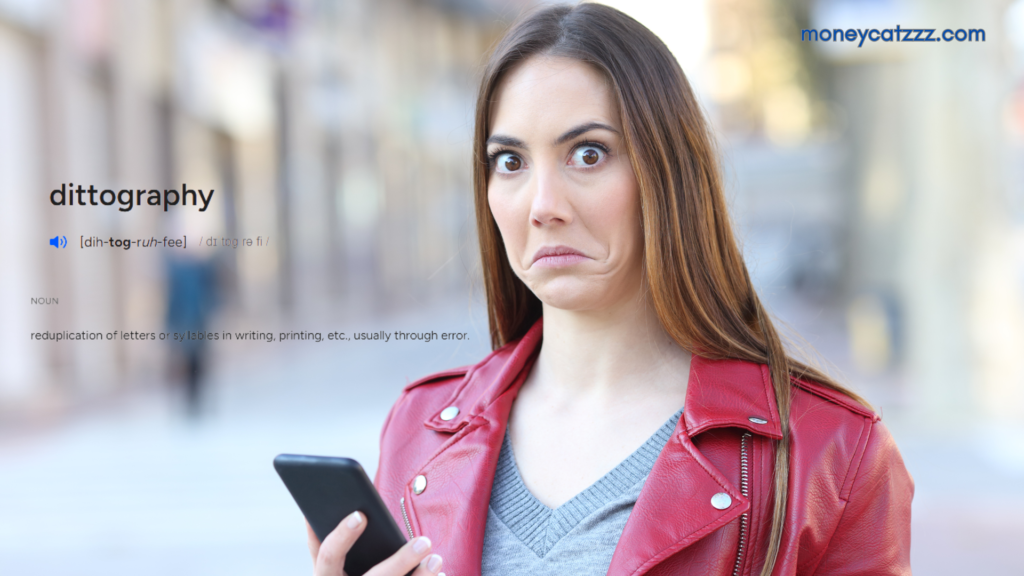
[dittography: glitch or proofreading blindness | moneycatzzz.com]
I started noticing which words get duplicated. I found that they are not random, and the words carry weight:
- “I’m so so sorry for your loss.”
- “Thank you for for being patient.”
- “IÂ really really appreciate this.”
The word you mean most, that which echoes.
Â
Typing the same word twice isn’t a lapse in attention. Maybe it’s your heart interrupting your fingers. The stutter may be the most honest part of the message.
Â
I wanted this explanation to be true because the alternative was too small to bear. It felt better than ‘your brain is deteriorating.’ It meant the error had weight. That ‘so so’ wasn’t casual neglect; it was grief carving its own path onto the glass.
What the Research Actually Says.
Determined, after reading too many Neville Goddard books, I looked it up. Really looked it up, beyond my 2 a.m. panic Googling.
Â
Duplication errors are among the most common typing mistakes. There’s a name for it: Dittography. They happen to everyone: professional writers, careful proofreaders, people with perfect cognitive function. The causes are mechanical:
Brain-finger mismatch. Your brain processes language faster than your fingers can execute the commands. While your hand is typing “so,” your brain is already two words ahead, thinking about “sorry.” The second “so” slips in during the gap between neural processing and motor execution.
Â
Cognitive load. When you’re emotionally activated (grief, stress, urgency), you’re more likely to lose your place mid-sentence. Your brain forgets it already sent the signal to type the word. It sends it again.
Â
Visual tracking slips. Your eyes move away from the screen and back to it. You misjudge where you left off. You type the word again without realizing you already typed it.
Â
Proofreading blindness. Your brain auto-corrects when you read your own writing. It shows you what you meant to write, not what’s actually there. Both instances of “so” are spelled correctly, so spellcheck doesn’t flag them. Your reading brain fills in the version that makes sense.
Â
That’s it. That’s why you type the same word twice. You’re NOT losing your mind, or your attention is failing. Your brain moves faster than your fingers; the timing occasionally gets out of sync.
Â
The disappointment I felt reading this was sharper than I expected.
The Explanation I Didn’t Want
It wasn’t a signal. It wasn’t my soul trying to bypass my fingers. It was just wetware firing too fast, a mechanical glitch when the RAM was full.
Â
The duplication doesn’t mean I felt “so” twice as strongly. It means I was distracted while typing. My brain got ahead of my fingers. I lost my place – standard stuff.
Â
Jenny Odell says we’ve trained ourselves for efficiency at the expense of presence. A duplication typo isn’t an absence of presence at all. What if it’s the exact friction point where efficiency and grief collide: your fingers running on absolute autopilot while a tired heart tries to slam the brakes.
Â
Except the very second, I write it down, I know how it sounds. That’s just a prettier way of romanticizing a motor control glitch. I’ve read her, I respect her, but I don’t buy the neatness of it.
I read Maggie Nelson’s The Argonauts, in which she writes about how language stutters when it tries to say something true. Repetition in poetry isn’t error, it’s emphasis. But I’m not a poet. I’m someone whose motor cortex sent a duplicate signal because my attention slipped.
Â
I wanted the poetry of it: the echo, the emphasis, grief forcing a stutter onto the page. The truth was much simpler. My brain was sprinting past my fingers, leaving a mechanical ghost in the text. I wanted the mistake to carry weight, but science told me it was just wetware lagging. I am not a fan.
The Question I Can’t Answer.
But here’s what I keep coming back to: if the duplication happened because of cognitive load during emotional activation, doesn’t that mean the mechanics ARE the meaning?
Â
The duplicated word was “so“ because that’s where my attention slipped. But why did my attention slip there? Was I distracted at that exact moment, or was I distracted BECAUSE that’s the word that required me to feel the grief I’d been avoiding for two days?
Â
I should have my OCD looked into.
Maybe “brain-finger mismatch during emotional activation“ is just the technical description of what an echo looks like. Explaining HOW something happens doesn’t explain what it means.
Â
I’ve thought about this dozens of times since sending that message. Did I mean to type “so so”? Or was it a pure typing error?
Â
I genuinely don’t know. I can’t remember what I was feeling in the exact second my fingers hit those keys. The research explains the mechanism. It doesn’t tell me whether the mechanism carried meaning.
Â
Error and intention might look identical. From the outside, definitely. Sometimes from the inside too.
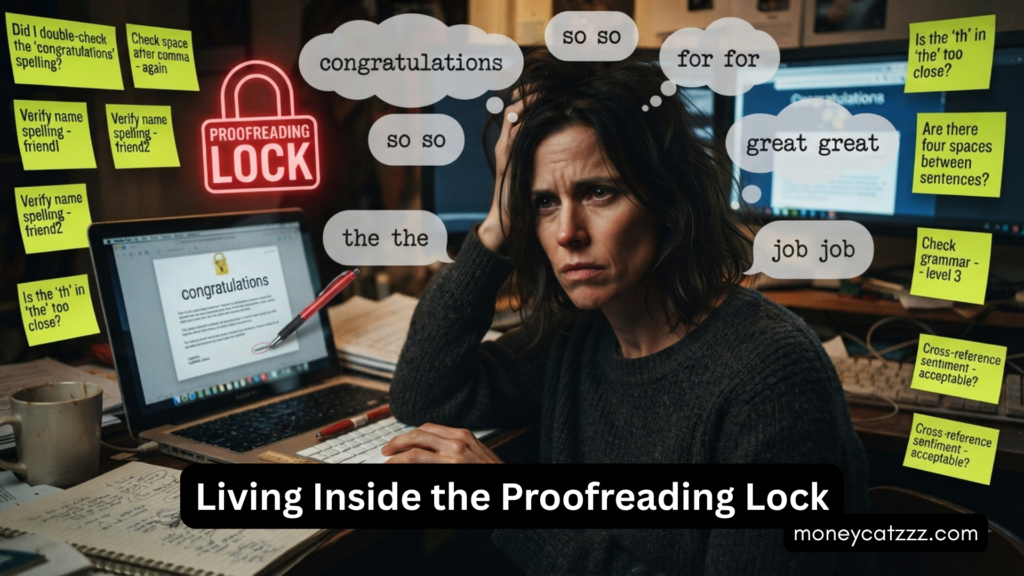
[The Over-Correction Chamber: Living Inside the Proofreading Lock | moneycatzzz.com]
What Happened Next
I sent a congratulatory message last week. Different friend, different feel. I typed it slowly, carefully. I did not want to move into an over-corrected, hyper-vigilant apartment, but I still proofread four times.
Â
After I sent it, I forced myself not to look at it again. I don’t want to know if there’s a duplication I missed. If there is one, I don’t want to spend another week spiraling about what it means or doesn’t mean.
Â
Maybe there’s a “for for“ in there. Maybe there’s a “the the.“ It could be clean.
Â
I’ll never know, and I’m trying to be okay with that.
While Writing This
I’ve typed “the the“ three times while writing this piece. Caught it twice. Probably missed it somewhere. You might be reading a duplication typo right now without noticing it. I wouldn’t see it even if I proofread this twenty times.
Â
That’s proofreading blindness. My brain showing me the corrected version automatically. Not broken, just human.
Â
But I still wonder: when I typed “so so sorry“ to my grieving friend, was my brain moving fast because I was rushing through an uncomfortable task? Or was it moving fast because I was feeling something my fingers were trying to keep up with?
Â
The research says it’s the first one. Cognitive load, visual tracking slip, and motor program error.
My heart wants it to be the second one. Grief interrupts the smooth automation of typing. Emotion making itself visible through a stutter.
Â
Both explanations may be true. The mechanics of how we type the same word twice and the meaning of why we do are the same thing described from different angles.
Â
They may be completely separate, and I’m looking for significance in random motor control errors.
Â
I don’t know. I’ll probably never know.
Â
And slowly, I’m learning to be okay with living in that ambiguity.
Â
The duplication will keep happening. My brain will keep moving faster than my fingers. I’ll keep being blind to typing errors in my own writing.
Â
I can safely tell myself I’m not in cognitive decline. It is what it is.Â
Â
But when it happens in a message that matters, I’ll still wonder: Was that an error? Or was that my heart echoing through my hands?
Â
Research and romance give different answers. I’m not sure which one I believe.
Â
Maybe I don’t have to choose.
_________________________________________________
Read Related Articles:
The Power of Staying Put
The Silence Between Opinions
The Self-Sabotage Trio
Disclosure: This post may contain affiliate links. We only recommend products we believe in, and we may receive a commission at no cost to you! Thank you for your support!
Acknowledgment: Cover Image by moneycatzzz.com
Disclaimer: The information is provided for general information only – moneycatzzz.com makes no representations or warranties in relation to the information, including but not limited to any representation or warranty as to the fitness for any particular purpose of the information to the fullest extent permitted by law. While every effort has been made to ensure that the information provided in this article is accurate, reliable, and complete as of the time of writing, the information provided in this article should not be relied upon to make any financial, investment, real estate or legal decisions. Additionally, the information should not substitute advice from a trained professional who can take into account your personal facts and circumstances, and we accept no liability if you use the information to form decisions.