
 Reading Time: 8 mins #
 This post may contain affiliate links.
Building Stronger Relationships Through Empathy & Active Listening
Building stronger relationships through empathy is essential for success—not just in sales but in every facet of life. Focusing solely on “me” and my personal goals often leads to ineffective communication; statistics show that 68% of salespeople struggle because they prioritize their product over understanding the customer’s deeper “why.” This “what’s in it for me?” mentality creates barriers to genuine connection.
The key to unlocking deeper connections lies in a counterintuitive approach – It’s Not About You. By prioritizing understanding others and offering genuine solutions that benefit them, you can transform your interactions and propel your personal and professional growth.
“You can make more friends in two months by becoming interested in other people than you can in two years by trying to get other people interested in you.” – Dale Carnegie
Building Stronger Relationships Through Empathy: The Self-Centered Trap
We all have a natural tendency to prioritize ourselves. It’s part of our basic human needs for survival and self-preservation. However, an overly self-centered approach is a recipe for failure in today’s interconnected world.
Dale Carnegie, the iconic author of “How to Win Friends and Influence People,” emphasized the importance of genuine interest in others as the key to building solid relationships. You create a foundation for trust and connection when you prioritize understanding the other person’s perspective, needs, and goals.
I once made the mistake of focusing solely on my goals during a networking event. I spent the entire time talking about my business and convincing people to use my services. It wasn’t until a more experienced colleague gently pointed out the self-centered approach that I realized my mistake. I just remembered having to ask questions about the other person’s work, aspirations, or even their day. I left that event with no new connections and a valuable lesson learned.
The truth is that people are naturally drawn to those who make them feel valued and understood. Focusing on yourself creates a one-sided interaction while prioritizing “them” fosters genuine connection and leaves a lasting positive impression.

[“The Self-Centered Trap” – moneycatzzz.com]
The Power of Empathy: Seeing the World Through Their Eyes
Empathy is the ability to understand and share the feelings of another person. It’s about seeing the world through their eyes and experiencing things from their perspective. In the context of personal and professional growth, Empathy is a powerful tool that can:
- Build Trust: When you understand someone’s needs and feelings, they are more likely to trust and open up to you.
- Improve Communication: Effective communication requires active listening and understanding the other person’s point of view, not just your own.
- Resolve Conflict: By seeing things from another perspective, you can navigate disagreements with more understanding and find solutions that benefit everyone.
Imagine meeting a colleague who seems stressed and overworked. Instead of saying “good morning” and moving on, take a step back and consider their perspective. What might be causing them stress? Is there anything you can do to help? A simple question like “How are you doing today?” paired with genuine concern can go a long way in building a stronger relationship and fostering a more supportive work environment.

In his seminal book “The 7 Habits of Highly Effective People,” Stephen Covey emphasizes the importance of “seeking first to understand, then to be understood.” You establish a foundation for more robust connections and more fulfilling life by prioritizing Empathy and understanding what matters to others.
Delving Deeper into Empathy
Psychologists differentiate between two main types of Empathy:
- Cognitive Empathy involves understanding another person’s thoughts, feelings, and perspectives. You can develop cognitive Empathy by asking open-ended questions, actively listening, and paying attention to nonverbal cues.
- Affective Empathy: This involves sharing the emotions of another person. This doesn’t mean feeling sorry for them but feeling with them. To develop practical Empathy, practice mindfulness and focus on genuinely connecting with the emotional state of the person you’re interacting with.
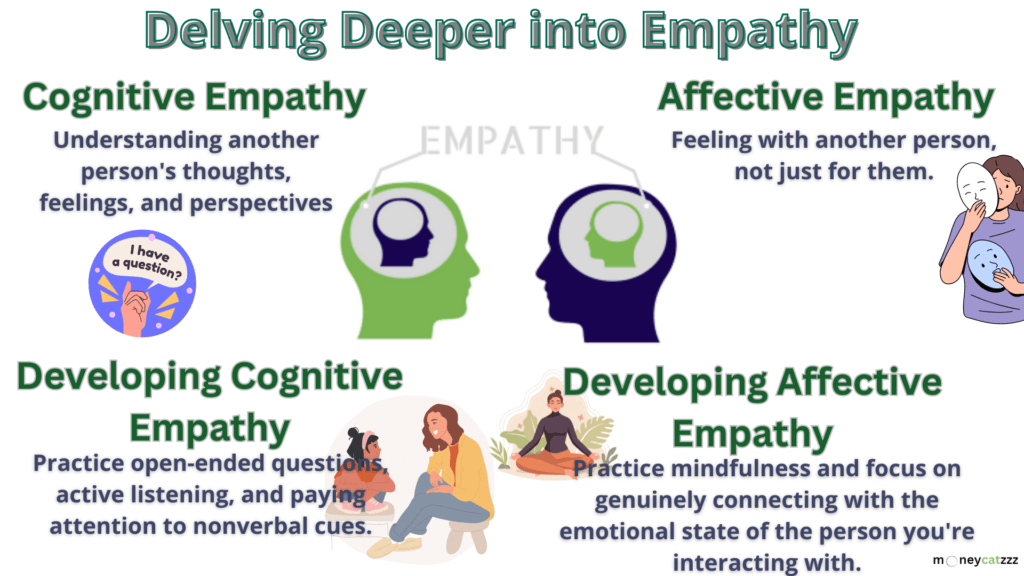
[“Branches of Empathy” – moneycatzzz.com]
Strengthening Your Empathy Muscles
Developing Empathy takes practice. Here are a few exercises you can try:
- Role-playing: Enlist a friend or family member to help you role-play challenging situations. Take turns acting out different scenarios and see things from each other’s perspectives.
- Journaling from Another Person’s Perspective: Choose someone you know well and imagine yourself in their shoes. Write a journal entry describing their thoughts, feelings, and experiences as if you were them.
The Power of “It’s Not About You”: A Case Study in Leadership
Moving beyond theory, let’s explore a real-world example of how embracing the “It’s Not About You” philosophy can lead to transformative results. This case study focuses on Herb Kelleher, the co-founder and former CEO of Southwest Airlines.
Southwest Airlines is known for its unique company culture, exceptional customer service, and consistent profitability. These achievements can be largely attributed to Kelleher’s leadership style, prioritizing his employees’ well-being and happiness over maximizing short-term profits.
Here’s how Kelleher put the “It’s No About You” philosophy into action:
- Empowering Employees: Kelleher believed that happy employees lead to happy customers. He implemented a profit-sharing program, encouraged a fun and casual work environment, and fostered a sense of ownership among his employees. This focus on employee well-being resulted in high morale, low turnover rates, and a dedicated workforce that went the extra mile to provide exceptional customer service.
- Internal Focus Before External: While competitors focused solely on cutting costs and maximizing profits, Kelleher prioritized building a strong internal culture. He understood that a happy and motivated workforce would translate into a successful company. This focus on “them” (the employees) ultimately benefited “them” (the customers) through exceptional service and “them” (the shareholders) through consistent profitability.
- Building Relationships: Kelleher was known for his approachability and genuine interest in his employees. He took the time to get to know his staff, celebrate their achievements, and create a sense of community within the company. This focus on building relationships fostered loyalty, trust, and a strong sense of “we’re all in this together” among the employees.
The Results
Southwest Airlines, under Kelleher’s leadership, achieved remarkable success. The company consistently ranked high in customer satisfaction surveys, enjoyed one of the lowest employee turnover rates in the airline industry, and maintained a strong financial performance throughout its history. This success story is a powerful testament to the transformative impact of the “It’s Not About You” philosophy in leadership.
By prioritizing the needs and well-being of his employees, Herb Kelleher created a company culture that fostered exceptional customer service, employee satisfaction, and long-term profitability. This case study demonstrates that focusing on “them” can make a win-win situation for all stakeholders.
From Transactions to Transformations: How Shifting Your Focus Benefits Everyone
Building on the concept of employee empowerment, consider this example in a sales context. Instead of focusing solely on closing the deal and making a commission, a salesperson who adopts the “It’s Not About You” philosophy would prioritize understanding the customer’s needs and challenges. They would ask questions, actively listen, and present solutions that benefit the customer. This approach fosters trust, builds long-term relationships, and increases sales and customer satisfaction.
The “It’s Not Abot You” philosophy can be applied to all life aspects. From your relationships to your professional interactions, focusing on understanding and serving others can create a ripple effect of positivity and lead to a more fulfilling and successful life.
Overcoming Obstacles: Embracing the “It’s Not About You” Mindset
Shifting your focus from “me” to “them” can be challenging. Here are some common roadblocks you might encounter and strategies to overcome them:
- Difficulty Letting Go of Control: We often need to control situations, especially when achieving our goals. However, focusing on “them” involves letting go of the need for control and trusting that others have their own needs and desires.
- Discomfort with Vulnerability: Building genuine connections with others often requires a certain degree of vulnerability. Sharing your own experiences and emotions can make you feel uncomfortable at first. However, vulnerability fosters trust and allows others to feel seen and understood.
- Fear of Rejection: Focusing on the needs of others might lead to concerns about being taken advantage of or not receiving the same level of effort in return. Remember, genuine relationships are built on reciprocity over time. Focus on giving without expecting anything in return, and trust that the positive energy you put out will come back to you.

[“Overcoming Obstacles” – Photo by Roman Biernacki]
Here are some additional tips for overcoming these obstacles:
- Practice Mindfulness: Mindfulness exercises can help you become more aware of your thoughts and feelings. This increased self-awareness allows you to identify and challenge limiting beliefs that might hinder your ability to focus on others.
- Positive Self-Talk: Replace negative self-talk with positive affirmations, reinforcing your commitment to a more outward-focused approach.
- Start Small: Wait to overhaul your entire interaction style overnight. Start by incorporating small acts of kindness and Empathy into your daily interactions. You’ll be more motivated to continue your journey as you witness the positive impact.
The Science of Selflessness: The Benefits of Focusing on Others
The “It’s Not About You” philosophy isn’t just about being nice. A growing body of research highlights the positive impact of focusing on others on both mental and physical well-being. Studies have shown that:
- Helping others releases feel-good hormones like oxytocin and dopamine, increasing happiness and reducing stress.
- Acts of altruism can boost your immune system and overall physical health.
- Focusing on social connection can help combat feelings of loneliness and isolation, which are linked to various health problems.
By prioritizing the needs of others, you not only benefit them but also create a more positive and fulfilling experience for yourself.
Resources for Further Exploration on Building Stronger Relationships Through Empathy
To deepen your understanding of Empathy, communication, and the “It’s Not About You” philosophy, consider exploring the following resources:
- Books:
- How to Win Friends and Influence People by Dale Carnegie
- The 7 Habits of Highly Effective People by Stephen Covey
- Start With Why by Simon Sinek
- Articles:
- “The Science of Empathy” by Greater Good Science Center at UC Berkeley
- “The Power of Selflessness” by Harvard Health Publishing
Websites:
- The Gottman Institute provides resources for building healthy relationships.
- The Center for Compassion and Altruism Research and Education (CCARE) at Stanford University – Researches the benefits of compassion and altruism.
By incorporating these resources and the actionable tips outlined in this article, you can embark on a transformative journey towards a more fulfilling and successful life, guided by the powerful principle of “It’s Not About You.“

The Ripple Effect of Selflessness
The “It’s Not About You” philosophy may seem counterintuitive at first, but it holds the key to unlocking deeper connections, achieving your goals, and becoming a more effective leader. By focusing on understanding and serving others, you create a ripple effect of positivity that benefits everyone involved. Imagine a world where everyone prioritizes Empathy, active listening, and genuine connection. This shift in perspective could revolutionize how we interact with each other, both personally and professionally.
Start incorporating these tips into your daily interactions, and watch your relationships, career, and overall sense of fulfillment flourish. Embrace the power of selflessness and embark on a transformative journey toward personal and professional growth!
Building Stronger Relationships Through Empathy – It’s Not About You
Ready to experience the power of the “It’s Not About You” philosophy? Share your thoughts and experiences in the comments below! What are some ways you plan to shift your focus to benefit others? Let’s create a community of support and growth together!
Additionally, consider these thought-provoking questions to spark further reflection and action:
- How can you incorporate the “It’s Not About You” philosophy into your interactions with family and friends?
- In your professional life, how can you shift your focus to understand better and serve the needs of your colleagues, clients, or customers?
- Identify a specific challenge you’re facing in a relationship or at work. How could approaching the situation from the perspective of “It’s Not About You” help you find a more favorable solution?
By actively engaging with these questions and implementing the strategies outlined in this article, you can transform your mindset and create a more fulfilling and impactful life for yourself and those around you. Remember, the journey towards a more outward-focused approach is a continuous process. Celebrate your progress, learn from setbacks, and enjoy the positive impact you create by embracing the power of “It’s Not About You.“
Disclosure: This post may contain affiliate links. We only recommend products we believe in, and We may receive a commission at no cost to you! Thanks for your support!”
Acknowledgement: Cover Image by Pexels.com
Signup to our Newsletter for regular updates:
Disclaimer: The information is provided for general information only – moneycatzzz.com makes no representations or warranties in relation to the information, including but not limited to any representation or warranty as to the fitness for any particular purpose of the information to the fullest extent permitted by law. While every effort has been made to ensure that the information provided in this article is accurate, reliable, and complete as of the time of writing, the information provided in this article should not be relied upon to make any financial, investment, real estate or legal decisions. Additionally, the information should not substitute advice from a trained professional who can take into account your personal facts and circumstances, and we accept no liability if you use the information to form decisions.