 Reading Time: 6 mins #
 This post may contain affiliate links.
Success isn’t a sudden explosion; it’s a quiet, deliberate build-up—a flywheel gathering speed with every push, no matter how small. Like a massive steel wheel, stubborn at first, but with each nudge, it gains momentum, turning faster and faster until it spins with unstoppable force. This is the essence of the Flywheel Effect, a principle that has powered not just businesses but the lives of individuals who understood the power of consistency and compounding effort.
When Jim Collins introduced the concept in his seminal work Good to Great, he described how companies like Amazon and Walgreens transformed their industries by focusing on small, consistent efforts that eventually led to massive success. But the Flywheel Effect isn’t just for corporations—it’s a universal principle that can be applied to any personal or professional endeavor. Understanding and harnessing this powerful effect allows you to turn your flywheel, gradually building momentum toward your goals and dreams.
The Science Behind the Flywheel Effect
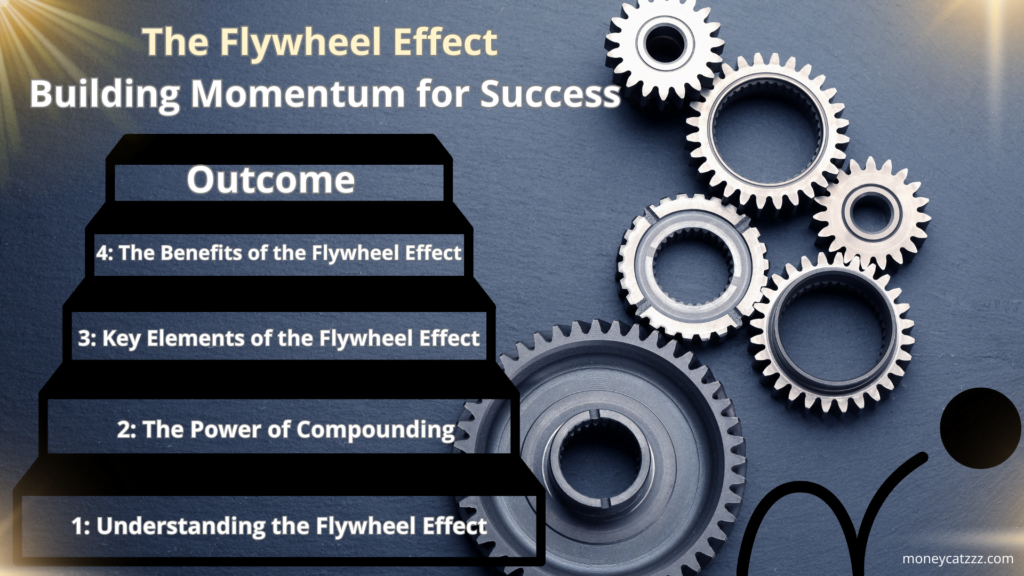
The Flywheel Effect, as introduced by Jim Collins in his book Good to Great, is more than just a concept—it’s a powerful mechanism that underpins long-term success. Imagine a giant, heavy flywheel like those found in old steam engines. At first, the wheel is stubborn and resistant to movement. Each push requires significant effort, and the progress is almost invisible. However, with every additional push, the wheel starts to move a bit faster, and as the momentum builds, it becomes easier to turn. Eventually, the wheel spins on its own, powered by the accumulated energy from all the previous efforts.
This process mirrors how success is built in both personal and professional realms. It’s not about sudden breakthroughs or explosive growth but consistent, incremental progress that compounds over time. Collins found that companies that achieved greatness took time to do so. Instead, they focused on disciplined, continuous improvement, turning their metaphorical flywheels a little more each day until they reached a tipping point where the momentum became self-sustaining.
[“The Flywheel Effect” – moneycatzzz.com]
Historical Context: The Flywheel in Business and Beyond
The Flywheel Effect isn’t just a theoretical model; it’s been observed in countless real-world scenarios. Take Amazon, for example. In the early days, Amazon wasn’t the retail giant it is today. Jeff Bezos and his team focused on providing excellent customer service, expanding product offerings, and improving operational efficiency—all seemingly small actions that, over time, built Amazon’s massive flywheel. As the company’s reputation grew, more customers came, leading to more sales innovation and investment into the business. This self-reinforcing cycle turned Amazon into one of the most influential companies in the world.
But the Flywheel Effect isn’t limited to the business world. In personal development, the same principle applies. Consider the journey of learning a new skill. The initial stages are often the hardest, with progress coming in small, hard-earned increments. But with consistent practice and dedication, those minor improvements add up, and before long, you’re moving with a speed and efficiency that would have seemed impossible at the start.
This is the magic of the Flywheel Effect—small, consistent efforts leading to exponential growth and success over time.

From Small Pushes to Big Wins
In my early career, I experienced the Flywheel Effect firsthand. When I started blogging, progress was slow. I spent hours crafting articles, researching topics, and learning the ins and outs of SEO, yet the traffic trickled in slowly, and the results could have been more encouraging. However, I persisted, publishing content regularly, improving my writing skills, and engaging with my audience. Each blog post was another push on the flywheel. Gradually, the traffic grew, my audience expanded, and my efforts started to compound.
This is the essence of the Flywheel Effect in action. Every slight push, article, and interaction built momentum, even when I needed more progress. Over time, those efforts accumulated, leading to a tipping point where the growth became self-sustaining. The flywheel was spinning, and the results were undeniable.
Real-Life Case Study: Netflix’s Transformation
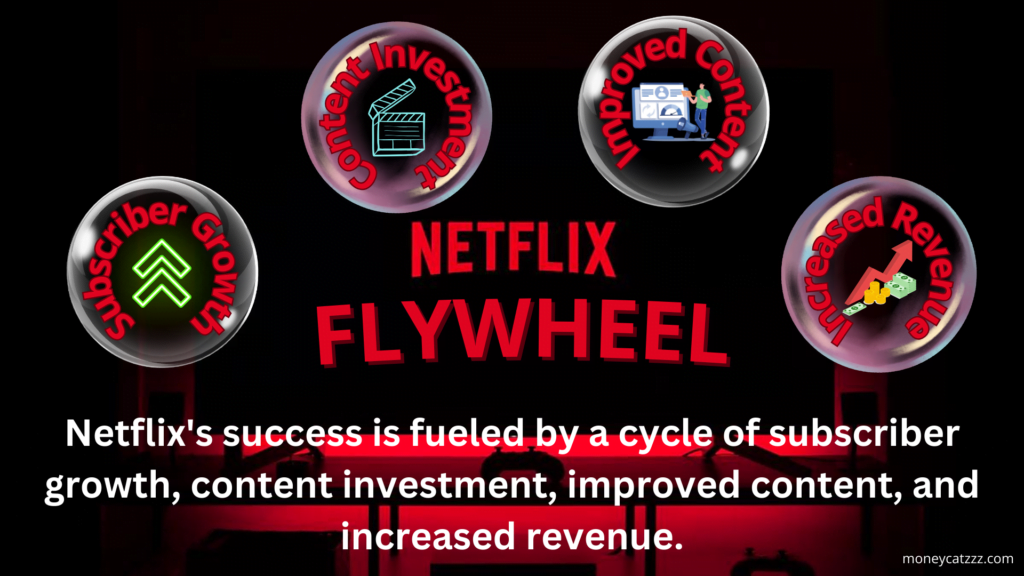
One of the most striking examples of the Flywheel Effect in the corporate world is Netflix’s journey from a DVD rental service to a global streaming powerhouse. When Netflix first launched its streaming service in 2007, it faced numerous challenges, including a limited content library and stiff competition from established players like Blockbuster. The initial progress could have been faster, with the service attracting only a modest number of subscribers.
However, Netflix continued to invest in its streaming platform, acquiring new content, refining its recommendation algorithms, and expanding its service to more devices. These efforts were small steps—each one a push on the flywheel. Over time, as the content library grew and the service improved, more people subscribed, funding more content acquisition and technological enhancements. This self-reinforcing cycle of improvement and growth led to the tipping point where Netflix became synonymous with streaming, ultimately putting Blockbuster out of business.
Today, Netflix is a prime example of the Flywheel Effect. The company’s relentless focus on customer experience, content acquisition, and innovation has created a self-sustaining momentum that continues to drive its success. You can explore Netflix’s journey in more detail here.
[“Netflix’s Flywheel” – moneycatzzz.com]
Overcoming Resistance: Breaking Through Plateaus
As you build momentum with the Flywheel Effect, there will inevitably be moments when progress stalls. These plateaus can be frustrating and demoralizing, but they are a natural part of the process. Overcoming these moments of resistance is crucial to keeping the flywheel turning and achieving long-term success.
The Nature of Plateaus
Plateaus often occur when the initial excitement of starting a new project or goal disappears. In the beginning, progress is often visible and motivating. But as time goes on, the same effort yields diminishing returns. This is where many people give up, thinking they’ve reached their limits. However, what’s happening is that the flywheel is still gathering momentum, even if it’s not immediately apparent.
Just like in physical fitness, where you might hit a plateau in weight loss or strength gains, your personal and professional growth efforts can seem flatline. But in reality, these plateaus are often periods of consolidation, where your body—or in this case, your skills and knowledge—are catching up with the demands you’ve placed on them. Pushing through these plateaus is essential to reaching the next level of performance.
Strategies to Overcome Plateaus
- Revisit Your Why: When you hit a plateau, it’s essential to reconnect with the reasons why you started your journey in the first place. Reflecting on your goals and the bigger picture can reignite your motivation and give you the strength to keep pushing.
- Adjust Your Approach: Sometimes, overcoming a plateau requires a change in strategy. This could mean trying a new approach, learning a new skill, or seeking advice from others who have faced similar challenges. The key is to remain flexible and open to new ideas.
- Embrace the Process: Understanding that plateaus are a natural part of growth can help you stay patient. Embrace the process, knowing that continued effort will eventually lead to breakthroughs.
- Celebrate Small Wins: During plateaus, it’s essential to recognize and celebrate small victories. These can provide the positive reinforcement needed to keep moving forward.
The Power of Compounding Effort
The Flywheel Effect is intrinsically linked to the principle of compounding effort—where small, consistent actions lead to exponential growth over time. Just as compound interest can turn a modest savings account into a substantial nest egg, the consistent application of effort in personal and professional development can lead to remarkable outcomes.
The Principle of Compounding
Compounding is a powerful force that can transform seemingly insignificant actions into significant results. In finance, it’s the process where the interest earned on an initial investment begins to earn interest itself, creating a snowball effect. The same principle applies to personal growth. Each small action, each incremental improvement, adds to the momentum of your flywheel, and over time, these efforts multiply, leading to exponential growth.
This principle is evident in various aspects of life. Consider learning a new skill—initially, progress might be slow, but as you continue to practice, the skills you acquire build on each other. Before long, the improvements become more noticeable, and what once seemed difficult now comes easily.

[“The Power of Compounding” – moneycatzzz.com]
Metaphor: The Penny Doubling Exercise
A famous metaphor to illustrate the power of compounding is the penny doubling exercise. Imagine you have a choice: take a million dollars today or a single penny that doubles in value every day for 30 days. While the million dollars might seem the better option initially, the penny, through the power of compounding, grows to over $5 million by the end of the month. This example underscores the importance of consistent, small actions in building long-term success.
Applications in Personal and Professional Growth
In personal and professional growth, the principle of compounding effort can be applied in various ways:
- Skill Development: Focus on improving one skill aspect at a time. Over weeks and months, these small improvements compound, leading to significant overall progress.
- Building Relationships: Consistently investing time and effort into personal or professional relationships can lead to a strong network of support and opportunities over time.
- Health and Wellness: Small, daily habits like drinking more water, taking a short walk, or meditating can compound over time, leading to substantial improvements in overall health.
By embracing the power of compounding effort, you can accelerate the momentum of your flywheel, achieving results that might seem impossible at the outset.
Building Your Flywheel
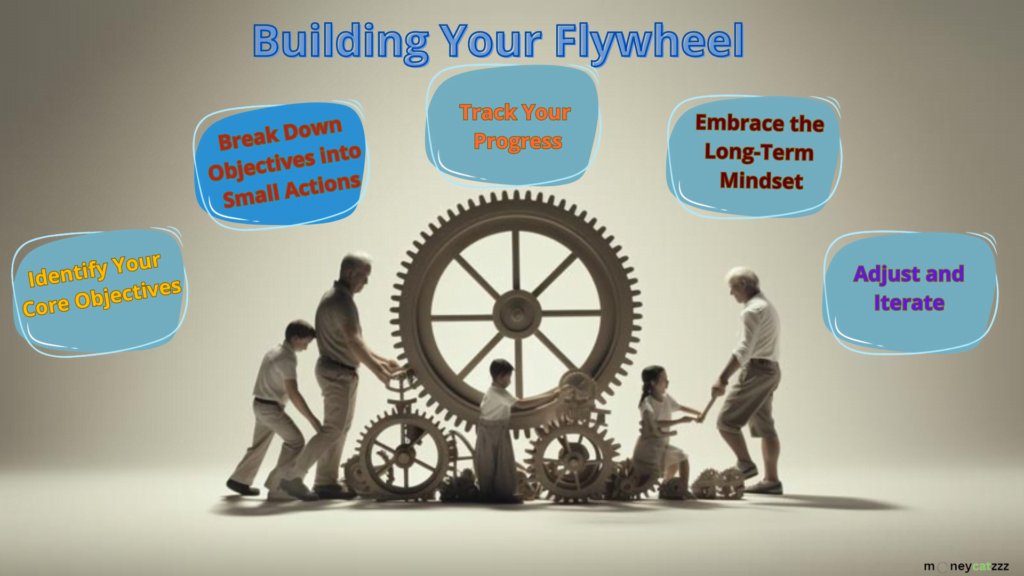
Now that you understand the principles behind the Flywheel Effect and the power of compounding effort, it’s time to apply these concepts to your life. Building your flywheel requires a long-term mindset, a commitment to consistent action, and a willingness to push through challenges. Here’s how you can start.
Step 1: Identify Your Core Objectives
Your core objectives drive your flywheel—those critical areas of your life or career that you want to develop. Start by identifying what matters most to you. This could be career advancement, financial independence, personal development, or health and wellness.
Step 2: Break Down Objectives into Small, Manageable Actions
Once you’ve identified your core objectives, break them into small, manageable actions. These are your daily or weekly pushes on the flywheel. For example, if your goal is to improve your physical fitness, your actions include a 30-minute workout three times a week, drinking more water, and getting adequate sleep.
Step 3: Track Your Progress
Tracking your progress is crucial for maintaining momentum. Use a journal, an app, or any method to record your daily actions and reflect on your growth over time. Seeing the accumulation of small wins will reinforce your commitment and help you push through plateaus.
Step 4: Embrace the Long-Term Mindset
Building a flywheel takes time, and the results are sometimes immediate. Embrace a long-term mindset, focusing on the process rather than the outcome. Remember that every slight push, no matter how insignificant it may seem, contributes to the overall momentum of your flywheel.
Step 5: Adjust and Iterate
As you progress, be open to adjusting your actions and strategies. The path to success is rarely linear, and flexibility is key to overcoming obstacles and continuing to build momentum.
[“Building Your Flywheel” – moneycatzzz.com]
The Profound Impact of the Flywheel Effect
The Flywheel Effect is more than just a business concept; it’s a transformative principle that can drive profound change in both personal and professional realms. Focusing on small, consistent actions, embracing the power of compounding effort, and pushing through resistance can create unstoppable momentum in your life.
The journey of building your flywheel is not without its challenges, but the rewards are immeasurable. Whether you’re striving for career advancement, personal growth, or any other goal, the Flywheel Effect offers a roadmap to success that is both practical and powerful.
As you apply these principles, remember that every action, no matter how small, is a push on your flywheel. With patience, persistence, and a long-term mindset, you will reach the tipping point where your flywheel spins, propelling you toward the life and success you envision.
Ultimately, the Flywheel Effect isn’t just about achieving success—it’s about creating a life of continuous growth, momentum, and fulfillment. The wheel is already in motion; it’s up to you to keep pushing.

Reinforcing the Flywheel Effect: Recommended Reading
- Atomic Habits by James Clear: Discover how small, incremental changes can lead to significant results.
- The Compound Effect by Darren Hardy: Understand the power of consistent effort and its cumulative impact.
- Deep Work by Cal Newport: Learn the importance of focused work and its effect on productivity.
- The Power of Habit by Charles Duhigg: Explore how habits shape our lives and how to create positive change.
These books offer valuable insights and practical strategies for applying the flywheel effect in your life.
Disclosure: This post may contain affiliate links. We only recommend products we believe in, and We may receive a commission at no cost to you! Thanks for your support!”
Acknowledgement: Cover Image by moneycatzzz.com
Signup to our Newsletter for regular updates:
Disclaimer: The information is provided for general information only – moneycatzzz.com makes no representations or warranties in relation to the information, including but not limited to any representation or warranty as to the fitness for any particular purpose of the information to the fullest extent permitted by law. While every effort has been made to ensure that the information provided in this article is accurate, reliable, and complete as of the time of writing, the information provided in this article should not be relied upon to make any financial, investment, real estate or legal decisions. Additionally, the information should not substitute advice from a trained professional who can take into account your personal facts and circumstances, and we accept no liability if you use the information to form decisions.