 Reading Time: 8 mins #
 This post may contain affiliate links.
This is for informational purposes only. For medical advice or a diagnosis, consult a professional.
The Box That Broke Me
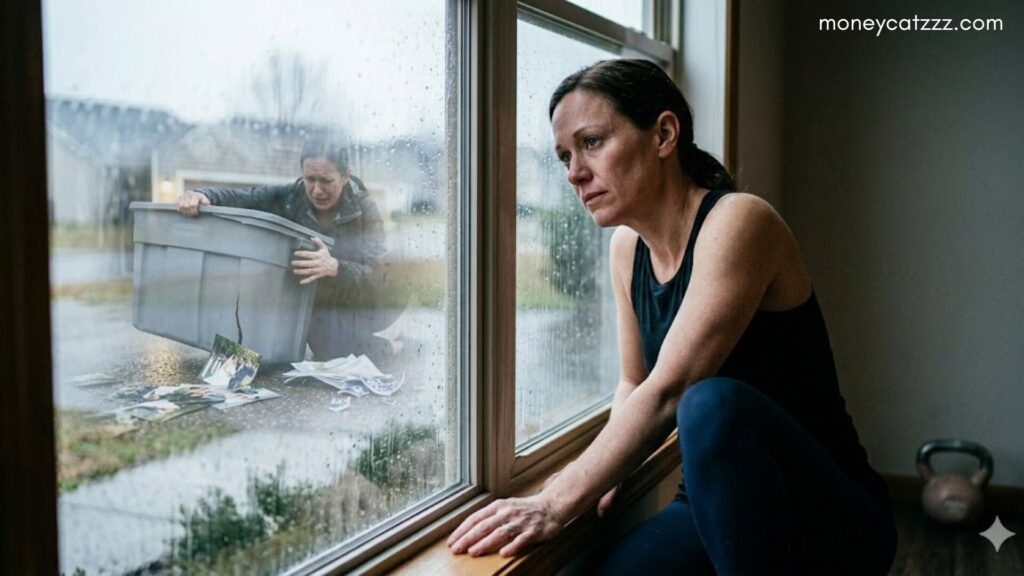
I sat down next to the mess, rain soaking through my sustainably sourced athletic wear, and understood something that no amount of therapy had taught me: I was losing my grip on everything because I literally couldn’t grip anything.
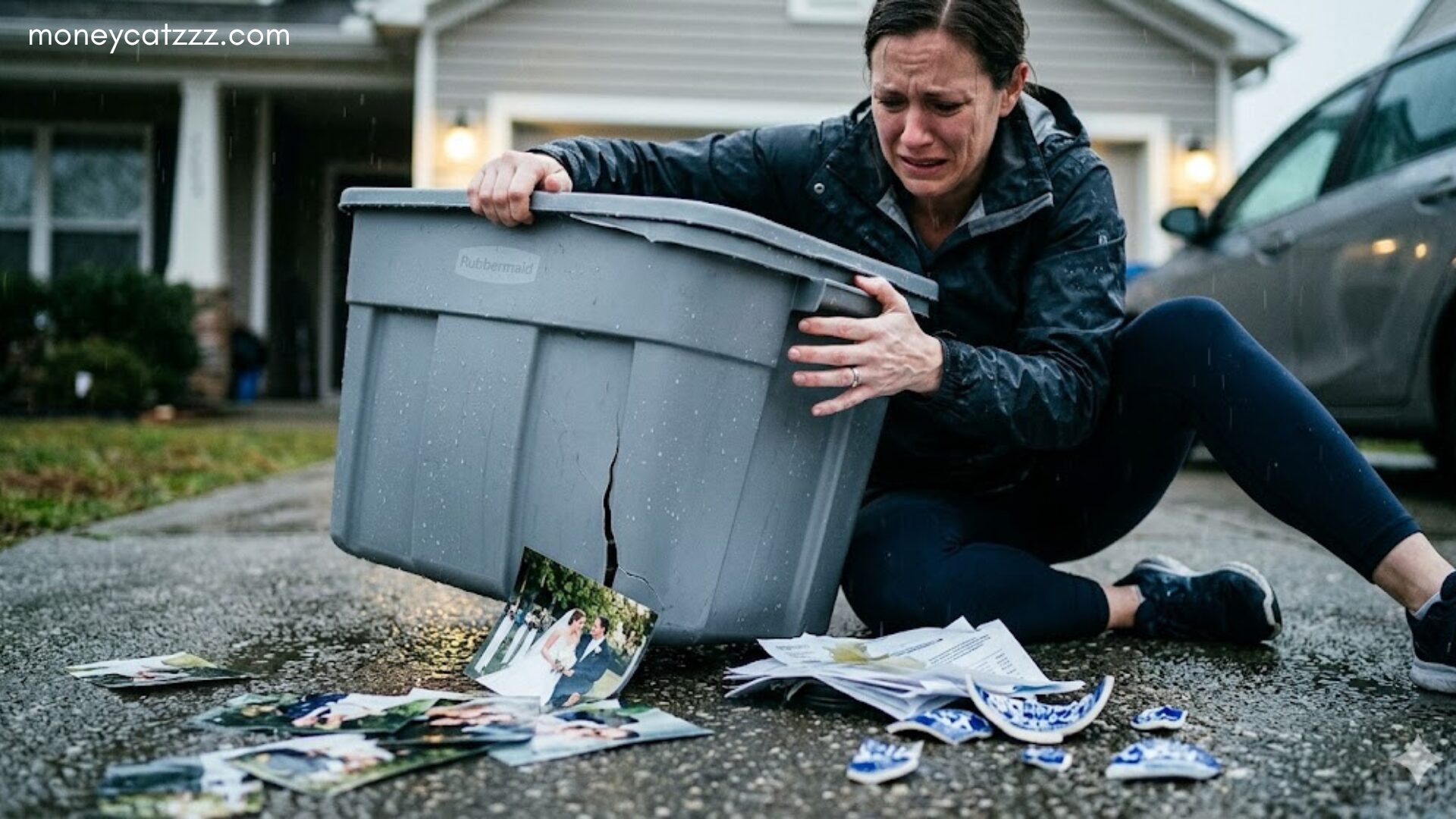
The divorce papers were in a Rubbermaid container that probably weighed thirty pounds, forty max, nothing that should have defeated a grown woman who did yoga three times a week and owned multiple pairs of Lululemon leggings that suggested athletic capability.
But standing in the driveway of what used to be our house, trying to carry that bin to my car in the rain, my forearms started shaking like I was having a personal earthquake. My fingers went white, then purple, then just gave up entirely. The bin hit the asphalt with the kind of crack that makes neighbors look out windows. Wedding photos scattered into puddles. Tax documents became paper boats. The ceramic bowl we’d bought in Portugal, the one that survived international shipping, shattered into pieces that looked like my current emotional state.
The Showroom Car Problem
For years, I’d treated my body like a mannequin that needed to stay thin enough to look good in dresses but never strong enough actually to do anything. I did barre classes where we pulsed our legs until they burned, but never picked up anything heavier than those three-pound weights they keep in wicker baskets. I ate salads with dressing on the side and protein portions the size of playing cards. I could hold a plank for two minutes, but couldn’t carry groceries upstairs without stopping.
This is what Bessel van der Kolk calls the disconnection between mind and body in The Body Keeps the Score. However, he’s talking about trauma, and I’m talking about the specific trauma of being a woman trained to take up as little space as possible, physically and otherwise.
My body truth was that I was weak. Not metaphorically weak, but actually, measurably unable to hold weight. And this physical weakness was creating a cascading system failure in my entire life. I couldn’t carry boxes, so I stayed in apartments I hated because moving felt impossible. I couldn’t lift anything overhead, so I paid other people to do basic home repairs. I couldn’t trust my body to hold, so I couldn’t trust myself to handle anything heavy in the emotional sense either.
The Anchor I Didn’t Have
There’s this system in your body called the posterior chain, which sounds like something from a corporate memo but is actually the network of muscles running down your back that literally keeps you upright. Mine was about as developed as my retirement account, which is to say, neglected to the point of comedy.
Research on grip strength and mortality shows that grip strength is one of the best predictors of overall health and longevity. Not because strong hands make you immortal, but because grip strength indicates whole-body physical integrity. If you can hold heavy things, you probably have the systematic strength to handle life’s weight.
I had none of that. I had yoga flexibility and the ability to look graceful in workout clothes, but ask me to carry a suitcase upstairs or hold a plank position while actually bearing a load, and I’d collapse like a tent with no poles.

The Gym Where Everything Changed
After the driveway incident, I joined a gym that looked like a garage where people go to punish themselves. No mirrors, no pink dumbbells, no inspirational quotes about being your best self. Just iron, chalk, and people who looked like they could carry refrigerators for fun.
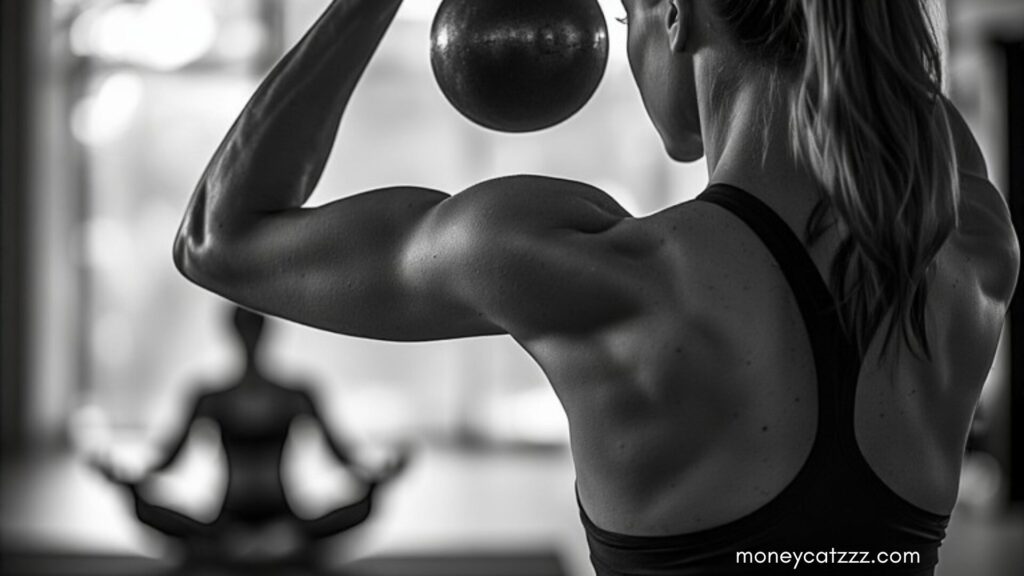
My first day, the trainer, a woman named Sam who could probably bench press my entire family, watched me try to pick up a kettlebell and said, “You move like you’re afraid of taking up space.”
[“The Heavy Carry (Somatic Sovereignty)” – Image by moneycatzzz.com]
She wasn’t wrong. I’d been trained my whole life to be light, to be easy, not to be a burden. This translated directly into my physicality. I moved through the world trying not to disturb it, which meant I had no physical integrity, no sense of my own weight and presence.
Sam started me on something called farmer’s walks, which is precisely what it sounds like: you pick up heavy things and walk with them until you can’t. The first time, I made it maybe twenty feet with fifteen-pound weights before I was losing my grip, gasping like I’d run a marathon.
“Your hands are strong enough,” Sam said, watching me shake. “Your mind just doesn’t believe they are.”
The Heavy Carry Philosophy
Kelly Starrett writes in Becoming a Supple Leopard about movement as a practice of reclaiming your physical sovereignty. But he makes it sound technical when really it’s emotional. Learning to carry heavy things is knowing that you can, which sounds redundant but is actually revolutionary if you’ve spent your life believing you can’t.
The heavy carry became my practice. Not just farmer’s walks but deadlifts, where you literally pull weight from the ground like you’re dragging your life out of hell. Overhead carries, where you hold weight above your head and walk, teach you to handle pressure from above without collapsing. Suitcase carries, uneven loads that force you to stay stable when life is unbalanced.
Each session was a body truth revelation. My hands could hold more than I thought. My back was stronger than I knew. My legs could carry me even when loaded down with what felt impossible.
The Grip That Changed Everything
Three months into lifting heavy things, I had to move apartments. I didn’t want to, but I had to, because the landlord sold the building. The same move that would have destroyed me six months earlier became a test of my new grip.
I carried my own boxes. Not all of them, because I’m not trying to prove anything to anyone, but the ones that mattered. The books I’d collected. The kitchen equipment I’d bought when I thought I’d be cooking for two. The Rubbermaid container with the papers is now properly sorted and dry.
My forearms burned but didn’t shake. My fingers stayed pink, oxygenated, alive. I could feel the physical integrity of my whole system working: feet pressed into the ground, glutes engaged, core tight, shoulders stable. This wasn’t just strength; it was architecture.
Studies on resistance training and mental health show that lifting heavy things significantly reduces anxiety and depression. Not because muscles cure mental illness, but because the practice of bearing load and not collapsing rewires your nervous system’s understanding of what you can handle.
The Truth About Getting a Grip
Cheryl Strayed writes in Wild about carrying her pack, “Monster,” on the Pacific Crest Trail, about how the physical weight became a meditation on what she could bear. But she actually had to carry it. She couldn’t think her way to strength. She had to build it, step by step, blister by blister.
That’s the thing about grip: it’s not a metaphor. Your ability to hold physical weight directly correlates to your ability to hold emotional weight. If you’re losing my grip on your life, it might be because you literally can’t grip anything substantial.
The body truth is uncomfortable and straightforward: we’ve become too weak for our own lives. We’ve optimized for appearance over function, for lightness over strength, for taking up less space when what we need is to claim more ground.
[“The Architecture of Weight” – Image by moneycatzzz.com]
The Anchor Effect
Now I deadlift twice my body weight, which isn’t impressive by powerlifting standards but feels like a miracle for someone who couldn’t carry a box of books two years ago. More importantly, I trust my body to hold what life hands me.
When my mother got sick last year, I could literally carry her when she needed help. When my career imploded, and I had to move cities, I could handle the physical logistics without falling apart. When relationships ended, I had the heavy carry practice to remind me that I could bear weight and keep walking.
The grip isn’t just about hands. It’s about the entire system of your body saying, “I can hold this.” It’s about developing enough physical integrity that when life gets heavy, you don’t immediately collapse.

What Are You Refusing to Carry?
My hands are different now. Callused where they used to be soft. My shoulders are broader, taking up space I used to apologize for needing. My back is strong enough to carry not just weight but the confidence that comes from knowing you can handle what needs handling.
The divorce papers are filed away now, in a container I can carry with one hand. Not because the papers got lighter, but because I got stronger. Not just physically, but in the way that only comes from proving to yourself, rep by rep, carry by carry, that you can hold more than you thought.
What weight are you refusing to pick up because you don’t trust your grip? What would change if you got strong enough to carry it?
Load-Bearing Literacy: Essential Texts for Reclaiming Your Internal Territory

Wild

Becoming a Supple Leopard
The Body Keeps the Score
Disclosure: This post may contain affiliate links. We only recommend products we believe in, and we may receive a commission at no cost to you! Thank you for your support!
Acknowledgment: Cover Image by moneycatzzz.com
Disclaimer: The information is provided for general information only – moneycatzzz.com makes no representations or warranties in relation to the information, including but not limited to any representation or warranty as to the fitness for any particular purpose of the information to the fullest extent permitted by law. While every effort has been made to ensure that the information provided in this article is accurate, reliable, and complete as of the time of writing, the information provided in this article should not be relied upon to make any financial, investment, real estate or legal decisions. Additionally, the information should not substitute advice from a trained professional who can take into account your personal facts and circumstances, and we accept no liability if you use the information to form decisions.