
 Reading Time: 8 mins #
 This post may contain affiliate links.
Jessica was answering emails at her son’s soccer game when she realized she’d become exactly what Sun Tzu warned against: a warrior fighting every battle, winning none completely.
That night, she discovered something that changed everything: The ancient Sun Tzu work strategies that transformed warfare 2,500 years ago work perfectly for modern workplace overwhelm. Not because work is war, but because the principle remains unchanged: Victory comes from position, not effort.
“The supreme excellence consists in breaking the enemy’s resistance without fighting,” Sun Tzu wrote. Jessica translated this to her project management role: The supreme excellence consists in completing work without exhaustion.
Six months later, she’s delivering better results in 40 hours than she previously managed in 60. Her secret isn’t time management or productivity hacks; it’s strategic workload management, based on military principles that have endured for millennia because they rely on a fundamental truth: smart positioning beats hard fighting every time.
Research from MIT Sloan confirms what ancient generals knew:
Professionals who approach work strategically rather than frantically are 47% more effective while reporting 52% less stress: They’re not working harder. They’re not even working smarter. They’re positioning themselves where success requires less force.
What follows are five battlefield-tested tactics that transform overwhelming workloads into strategic victories. No motivational fluff. No impossible standards. Just practical applications of ancient wisdom to modern chaos.
Because Sun Tzu’s greatest insight wasn’t about winning battles, it was about making battles unnecessary.
Tactic #1: Know Your Battlefield (The Work Terrain Analysis)
Sun Tzu spent more time studying terrain than training soldiers. “Know the terrain,” he insisted, “and victory is certain.”
Your terrain isn’t physical; it’s your workload landscape. Most professionals charge into their day blind, fighting whatever battle appears first. Strategic warriors map the battlefield before engaging in battle.
The Battlefield Mapping Method
Sarah, a marketing director, transformed her chaos using Sun Tzu’s terrain analysis. Her tactical work planning starts every Monday with a 15-minute battlefield assessment.
High Ground (High Impact, Low Effort):
These are your quick wins, tasks that create significant value with minimal energy.
Sarah discovered that her weekly analytics report, which she had found important, took three hours but had no influence on any decisions. Meanwhile, a 15-minute Monday morning team huddle she’d been skipping was causing massive downstream confusion.
Swamps (Low Impact, High Effort):
These drain resources with minimal return. That “optional” committee that somehow consumes Friday afternoons? That’s a swamp. Sun Tzu avoided swamps. So should you.
Strategic Positions (High Impact, High Effort):
These are worth fighting for, but only with full resources. Schedule these for peak energy times, never when depleted.
The Implementation
Use this simple matrix every Monday morning:
- List all week’s tasks
- Rate impact (1-10) and effort required (1-10)
- Only engage tasks with a 2:1 or better impact-to-effort ratio.
- Delegate or eliminate the rest
“If you know yourself and know your terrain,” Sun Tzu taught, “you need not fear the result of a hundred battles.“ In modern terms: Know your energy patterns and task values, and you’ll never burn out.
The workplace strategy principles here are simple: Stop treating all work as equal. It’s not, and pretending otherwise is why you’re exhausted.
Tactic #2: The Empty Fort Strategy (Strategic Invisibility)
Legend tells of Sun Tzu’s student who defended a city by opening the gates and sitting calmly on the walls. The attacking army, suspecting a trap, retreated. He won without fighting.
Your version? Strategic unavailability that protects deep work without seeming uncooperative
Modern Empty Fort Tactics
Calendar Camouflage:
Block time with important-sounding but vague entries. “Strategic Planning Session” sounds better than “Leave me alone to think.” Both achieve the same result.
Marcus, a software developer, blocks daily “Code Architecture Review” sessions. These are really his deep work blocks, but the formal name receives more respect than “Do Not Disturb.”
The Delayed Response Protocol:
Train colleagues that immediate responses aren’t guaranteed. Set an auto-responder: “I check messages at 10 AM and 3 PM for focused work. For emergencies, call.”
This isn’t rudeness; it’s strategic workload management that preserves your ability to deliver quality work.
The Decoy Task:
When interrupted, have a visible “urgent” project ready to reference. “I’m right in the middle of the board presentation,” ends conversations faster than “I’m busy.”
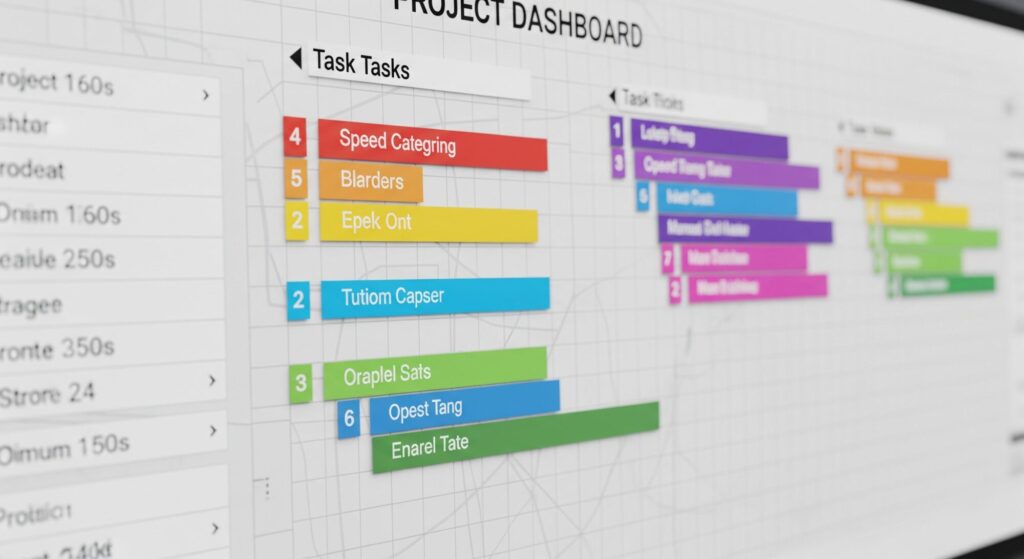
[“Know Your Battlefield (The Work Terrain Analysis) – Image by moneycatzzz.com]
Why This Works
The Art of War productivity principle here exploits human psychology: People respect what seems essential and avoid what seems complicated. Your empty fort makes interrupting you seem risky; perhaps you’re really doing something critical.
Research from UC Irvine shows that it takes 23 minutes to refocus after an interruption fully. The empty fort strategy prevents these thousand tiny defeats that destroy your day.
Tactic #3: Win Without Fighting (The Automation Army)
“The supreme art of war,” Sun Tzu wrote, “is to subdue the enemy without fighting.”
Every task you personally handle is a battle. Brilliant generals delegate to lieutenants, automate with systems, or eliminate. Your workplace strategy principles should mirror military efficiency: maximum impact with minimal personal engagement.
The Three-Army Strategy
The Automation Army:
Technology fights for you 24/7. Email filters, template responses, and scheduling apps are soldiers who never tire.
Jennifer, an HR manager automated 70% of initial candidate screenings using simple forms and filters. Time reclaimed: 8 hours weekly. Cost: 2 hours of setup.
The Delegation Division:
Others can fight specific battles better than you. The key question: Can someone else do this 70% as well? If yes, delegate immediately.
The Elimination Elite:
The strongest move is often not to play. That weekly report nobody reads? Kill it. That meeting where you’re optional? Decline it.
The Decision Framework
For every task, ask:
- Does this require my unique skills? (If no, delegate)
- Does this repeat regularly? (If yes, automate)
- Does this create measurable value? (If no, eliminate)
A study by McKinsey found that professionals who master delegation and automation gain 20% more capacity without working longer hours.
That’s tactical work planning at its finest, winning time without fighting for it.
Tactic #4: Use the Terrain (Environmental Leverage)
Sun Tzu won battles by positioning armies where the terrain multiplied their strength. Your workspace, physical and digital, either multiplies or divides your effectiveness.
Physical Terrain Optimization
The Command Center Setup:
Everything you need is within arm’s reach. Every distraction is removed from sight. This isn’t about expensive equipment, it’s about strategic positioning.
Lisa, a freelance writer, discovered that simply facing her desk away from the door increased focus by 40%. The terrain now worked for her, not against her.
Digital Terrain Mastery:
Your desktop is a battlefield. Is it organized for victory or cluttered with distractions?
- Remove social media bookmarks
- Create project-specific desktops
- Use focus apps that block distracting sites
Temporal Terrain (Time as Territory)
Your Art of War productivity includes understanding when you’re strongest. Morning person? Schedule complex work then. Night owl? Protect those evening hours.
The principle: Fight when you’re strongest, retreat when you’re weak. This isn’t motivation, it’s strategic resource allocation.
Stanford research indicates that aligning work with biological rhythms can improve output by 35% without requiring additional effort. That’s terrain advantage in action.
Tactic #5: Strategic Retreat (The Power of Tactical Withdrawal)
Here’s what nobody admits: Sometimes retreat is victory. Sun Tzu knew this. “He who knows when to fight and when not to fight will be victorious.“

[“Strategic Retreat (The Power of Tactical Withdrawal)” – Image by moneycatzzz.com]
When to Retreat
From Unwinnable Projects:
That initiative with unclear goals, no budget, and impossible deadlines? A strategic retreat preserves resources for future winnable battles.
From Energy Vampires:
Some colleagues, clients, or commitments drain more than they give. A tactical withdrawal isn’t a failure; it’s an effective use of resources.
From Perfectionism:
The last 20% of perfection often takes 80% of effort. Strategic retreat at “good enough” preserves energy for the next battle.
The Retreat Protocol
David, a consultant, used strategic workload management to transform his practice. He identified three energy-draining clients that produced 20% of the revenue but consumed 50% of the time. His tactical withdrawal:
- Prices were raised significantly (two clients left, one stayed)
- Used the freed capacity for one premium client
- Result: 30% more revenue, 40% less stress
- This isn’t giving up; it’s strategic repositioning for greater victory.
The Integration: Your Daily Battle Plan
Sun Tzu’s genius wasn’t in fighting every battle; it was in choosing battles where victory was inevitable. Your Sun Tzu work strategies create the same advantage.
Start this week:
- Monday: Map your battlefield (15 minutes)
- Tuesday: Create one empty fort (protect 2 hours)
- Wednesday: Identify three tasks to automate/delegate
- Thursday: Optimize your terrain (physical or digital)
- Friday: Practice strategic retreat from one commitment
The transformation isn’t instant, but it’s inevitable. When you stop fighting every battle and start choosing your victories, work becomes strategy, not struggle.
Remember: Ancient wisdom survives because it works. These workplace strategy principles have outlasted empires because they align with how humans and systems actually function, not how we wish they would.
Your overwhelming workload isn’t your enemy. Your approach to it is.
[Download the Sun Tzu Work Strategy Planner] Battlefield mapping template and weekly tactical planning guide.
“Victorious warriors win first and then go to war, while defeated warriors go to war first and then seek to win.” —Sun Tzu.
Choose your battles. Win before you fight.

Radical Acceptance


The Gifts of Imperfection
Atomic Habits
Disclosure: This post may contain affiliate links. We only recommend products we believe in, and we may receive a commission at no cost to you! Thank you for your support!
Acknowledgment: Cover Photo by moneycatzzz.com
Disclaimer: The information is provided for general information only – moneycatzzz.com makes no representations or warranties in relation to the information, including but not limited to any representation or warranty as to the fitness for any particular purpose of the information to the fullest extent permitted by law. While every effort has been made to ensure that the information provided in this article is accurate, reliable, and complete as of the time of writing, the information provided in this article should not be relied upon to make any financial, investment, real estate or legal decisions. Additionally, the information should not substitute advice from a trained professional who can take into account your personal facts and circumstances, and we accept no liability if you use the information to form decisions.