 Reading Time: 8 mins #
 This post may contain affiliate links.
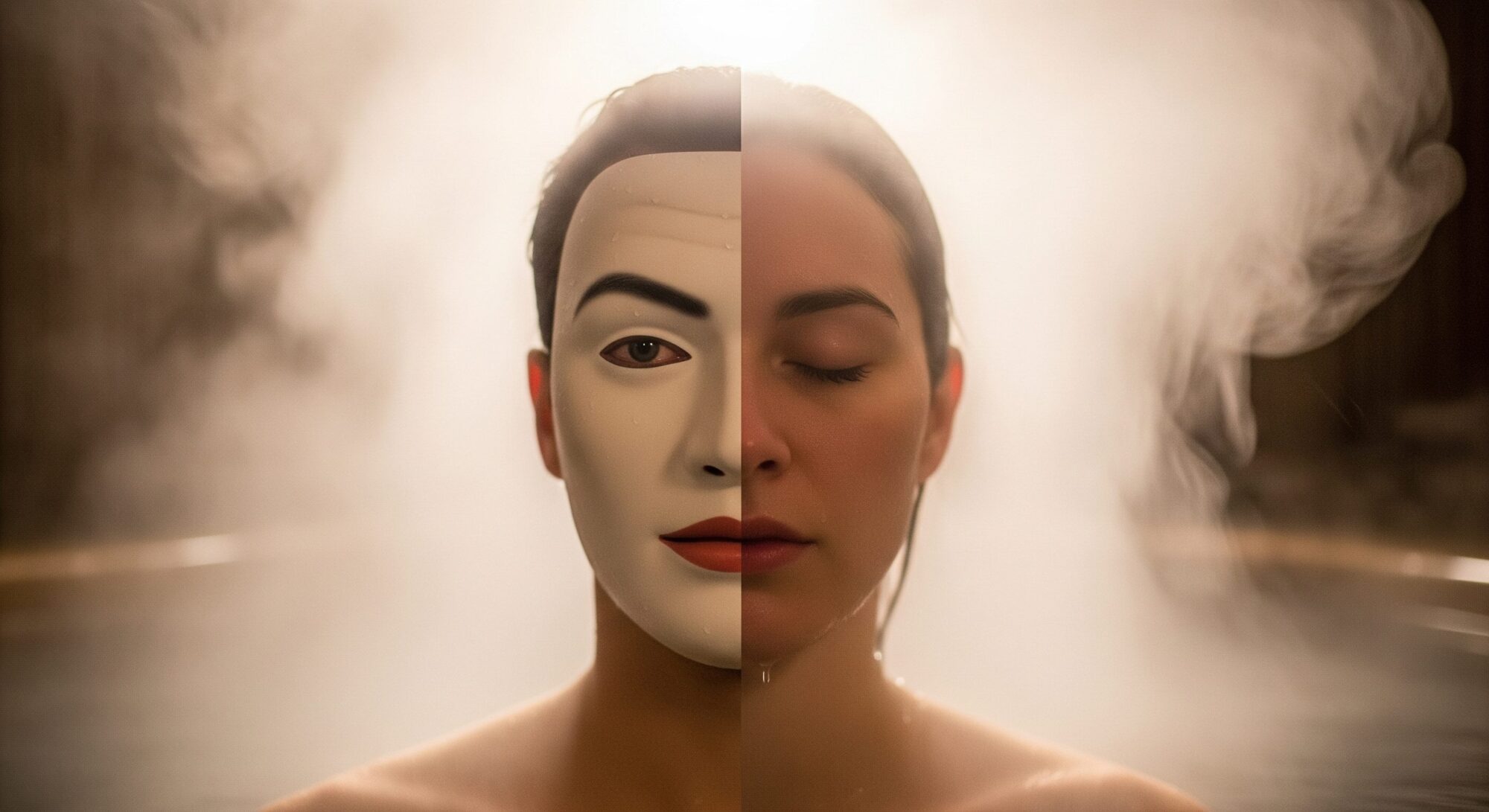
When you’re struggling with imposter syndrome, the fear isn’t of failure, it’s of exposure. I carried my own fear, a VP role I felt wildly unqualified for, all the way to Kinosaki Onsen, Japan. I was running from a team that expected answers I didn’t have. I learned that lie is easily dismantled in this small town built around seven public hot spring baths. The ritual there is terrifying but straightforward: you must shed your armor. You must get naked with strangers, because the true lesson of the onsen is that authentic leadership begins where pretense ends.
Landing in Kinosaki With Full Armor On
I arrived in Kinosaki Onsen wearing my usual armor: designer luggage, business class ticket stub carelessly visible, checking emails to look important. Three months into a VP role I felt wildly unqualified for, I was in Japan for “strategic planning.” Really, I was hiding from a team that expected answers I didn’t have.
Kinosaki is a small town built around seven public hot spring baths. Not private resort spas; public bathhouses where naked strangers soak together in volcanic water. The city offers a pass to visit all seven, each with distinct minerals, temperatures, and purported healing properties.
My Japanese colleague had recommended it. “Good for stress,” he’d said. What he didn’t mention: you can’t wear your armor in an onsen. You can’t wear anything at all.
The First Bath: Confronting the Fear of Being Seen
Standing in the changing room of Satono-yu, the first onsen, I faced a wall of small lockers and a terrible realization: I hadn’t been physically naked in front of strangers since high school gym class.
The ritual is specific:
- Strip everything off
- Wash thoroughly at seated stations
- Enter the bath with only a small towel (not for covering — for your head)
- Soak with strangers
No swimsuit. No phone. No status symbols. No hiding.
The other men moved through the routine without hesitation: salarymen, grandfathers, teenagers, all equally naked, equally human. My hands shook as I undressed, each removed layer feeling like a loss of protection.
But here’s what happened: nobody cared. Nobody looked. Nobody judged. In the democratic equality of nakedness, my imposter syndrome had nowhere to hide.
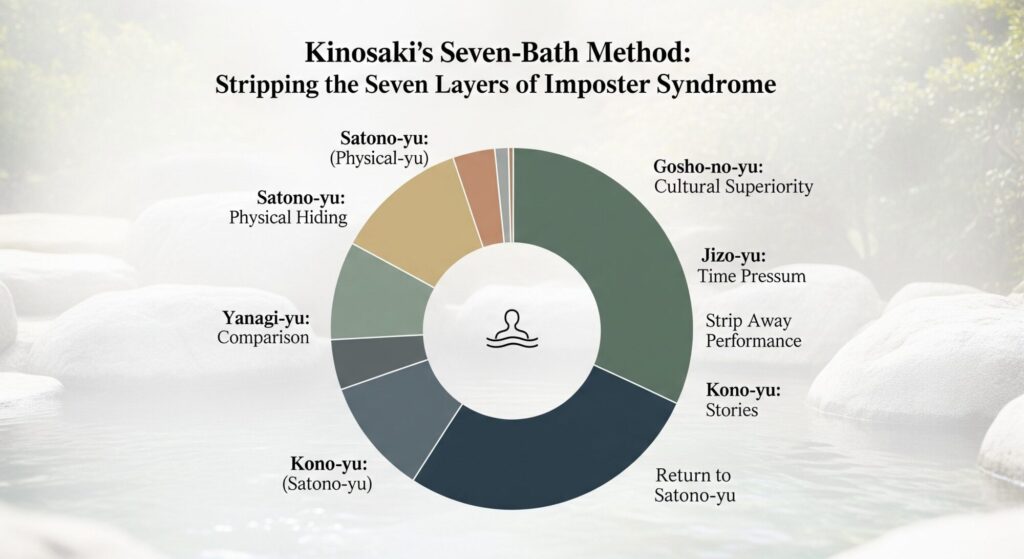
[“Kinosaki’s Seven-Bath Method” – Image by moneycatzzz.com]
For a great illustration of the 7 onsen, please visit this page: The 7 Mystic Onsen
The Seven Baths, Seven Layers of Armor
Each day in Kinosaki, I visited a different onsen, and each one stripped away another layer of psychological armor:
Ichino-yu (The First Bath): Stripped away physical hiding. Sitting naked in mineral water, I couldn’t pretend to be anything other than a pale, slightly soft-bodied man trying not to slip on wet stones.
Gosho-no-yu (The Palace Bath): Stripped away cultural superiority. I was the only one who didn’t know the etiquette. A grandfather gently corrected my towel placement. The student becomes the child.
Mandara-yu (The Buddhist Bath): Stripped away time pressure. The bath has no clock. You soak until you’re done. My productivity addiction screamed. My body finally relaxed.
Jizo-yu (The Guardian Bath): Stripped away comparison. A massive bodybuilder sat next to a frail elderly man. In the steam, all bodies became equally temporary.
Yanagi-yu (The Willow Bath): Stripped away performance. The smallest, oldest bath. No tourists. Just locals who’ve soaked here for decades. No one to impress.
Kono-yu (The Stork Bath): Stripped away stories. Legend says a stork healed here. Sitting in water that’s healed for 1,300 years, my two-month-old “senior executive” title seemed laughably insignificant.
Satono-yu (Return to the First): Stripped away the fear of being seen. Same bath, different man. The fear was gone.
Why Japanese Onsen Culture Destroys Imposter Syndrome
In Western culture, we hide our flaws and display our achievements. In the onsen, everyone shows their flaws: scars, aging, imperfections, while achievements stay in the locker.
This inversion is profound. When everyone is equally vulnerable, vulnerability becomes a regular part of life. When bodies are just bodies, pretense becomes impossible.
A middle-aged businessman entered the bath one evening, his body covered in yakuza-style tattoos (usually banned from onsen). The other bathers shifted slightly, acknowledging and accepting, then returned to their soak. Even the marked man was welcome in his nakedness.
That’s when I understood: imposter syndrome thrives on hiding. It dies in exposure.
“You can’t fake anything when you’re naked. That’s the point.”
The Salary Man’s Confession
On my fourth night, I shared the outdoor bath at Kono-yu with a Japanese executive. We sat in silence until he suddenly spoke in perfect English:
“Twenty years, I’ve worked at Sony. Still feel like I’m pretending.“
I nearly dropped my beer (yes, you can drink in some onsen).
“You?” I said. “But you’re...”
“Japanese? Successful? Senior?” He laughed. “Every morning, I put on my suit and become someone. Every evening, I come here and remember I’m just flesh and fear like everyone.“
We talked for an hour — about imposter syndrome, the weight of expectations, and the exhaustion of pretending. He told me something I’ll never forget:
“The onsen teaches you: the water doesn’t care about your title. The heat doesn’t respect your achievements. Your body tells the truth, your mouth won’t speak.“
Vulnerability at Work: Bringing Onsen Wisdom to the Office
Back home, I did something terrifying. In my first team meeting, I got naked, metaphorically.
“I don’t have all the answers,” I said. “I’m learning this role. I’ll make mistakes. I need your help.“
The room went silent. I waited for judgment, disappointment, loss of respect.
Instead, my lead engineer exhaled and said, “Thank God. I thought I was the only one feeling overwhelmed.“
What followed was the most honest meeting of my career. Everyone shared what they didn’t know, where they felt fraudulent, and what scared them. We built our strategy not on false confidence, but on collective vulnerability.
Authentic leadership isn’t about having answers — it’s about being honest about the questions.
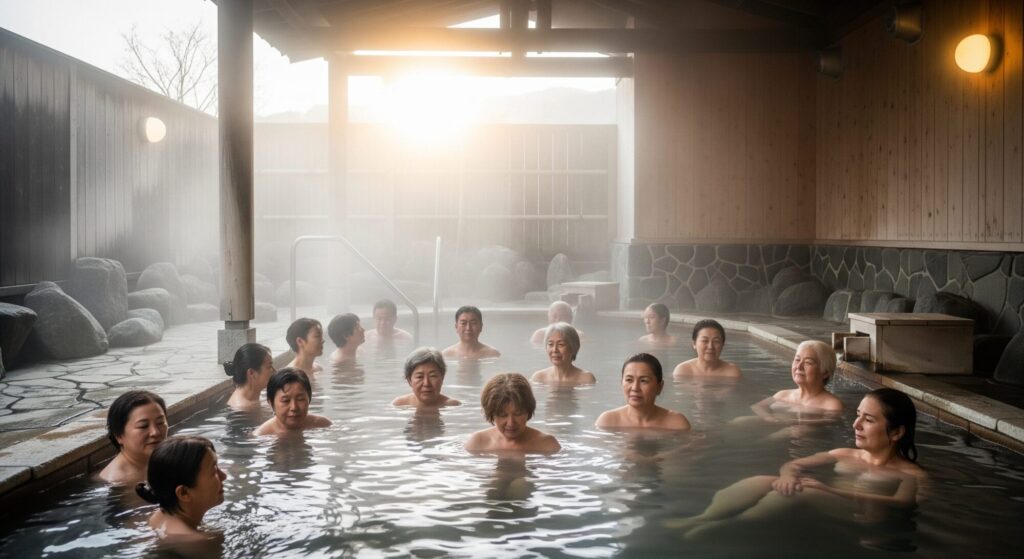
[“Vulnerability at Work: Bringing Onsen Wisdom to the Office” – Image by moneycatzzz.com]
The Seven-Bath Method for Overcoming Imposter Syndrome
Based on Kinosaki’s seven onsens — here’s a practical framework:
Bath 1: Name Your Naked Truth
Write down what you’re hiding. Be specific about where you feel you are being taken advantage of.
Bath 2: Find Your Onsen (Safe Space)
Identify where you can practice vulnerability — such as in therapy, a men’s group, or with a trusted friend.
Bath 3: Start Small
Share one small insecurity. Watch the world not end.
Bath 4: Notice Who Else is Naked
Pay attention to others’ vulnerability — you’re not alone in feeling like you’re not genuine.
Bath 5: Separate Performance from Person
You are not your achievements or failures. You’re the consciousness experiencing both.
Bath 6: Practice Daily Exposure
Admit one thing you don’t know or can’t do.
Bath 7: Return to the Beginning
Regularly revisit your fears. Notice how they shrink with exposure.
FAQ About Imposter Syndrome and Vulnerability
Doesn't showing weakness destroy authority?
No. Pretending to be invulnerable destroys trust. People follow human leaders, not robots.
What if people actually judge me?
Some will. But they're already judging your performance. At least let them judge the real you.
Is imposter syndrome ever useful?
It can signal growth—you're in new territory. But chronic imposter syndrome is fear in a three-piece suit.
The Last Soak: Integration
My final morning in Kinosaki, I visited all seven onsens in sequence, a pilgrimage locals call meguri (温泉巡. Starting at dawn, moving through empty baths, I felt the accumulated effect of a week of nakedness.
The fear of being seen hadn’t disappeared; it had transformed. Instead of terror, it was more like respect. The kind of healthy caution you have around fire: powerful, potentially dangerous, but essential for warmth.
At the seventh bath, I re-encountered the Sony executive. We nodded, two naked men who’d admitted our fraudulence and found freedom instead of shame.
“Still feeling like an imposter?” he asked.
“Yes,” I said. “But now I know everyone else is too.”
He laughed. “That’s the beginning of wisdom.”
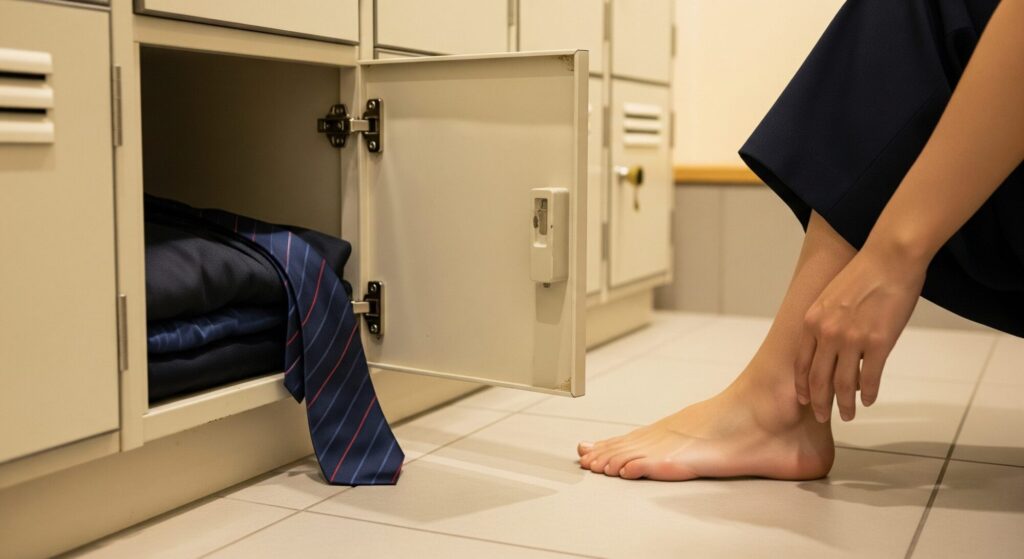
[“The Seven Baths – Seven Layers of Armor” – Image by moneycatzzz.com]
Your Next Step in Overcoming Imposter Syndrome
The seven onsens of Kinosaki taught me that imposter syndrome isn’t cured by becoming more competent. It’s cured by becoming more honest about incompetence.
Every human walking around in clothes is hiding something. The fear of being seen is a universal phenomenon. But so is the relief of finally being witnessed: flaws, fears, and all.
You don’t overcome imposter syndrome by becoming perfect. You overcome it by admitting you never were and never will be. And that’s precisely what makes you qualified to be human.
Start small. Tomorrow, admit one thing you don’t know in a meeting. Share one fear with a colleague. Let one person see you sweat.
Because vulnerability at work isn’t weakness, it’s the only authentic strength there is.
The water is waiting. The only question is: are you ready to get naked?
Practical Guide to Japanese Onsen & Kinosaki’s Meguri Pass
Ready to practice radical vulnerability? The Japanese onsen experience is your physical entry point into the principles of the “Seven-Bath Method.”
Plan Your Onsen Experience:
- Destination: Kinosaki Onsen is easily accessible, approximately 2.5 hours by train from Osaka.
- The Pass: Purchase the “Meguri Pass“ to gain entry to all seven public baths, allowing you to complete the whole ritual and experience the town’s unique atmosphere.
- Onsen Etiquette: Essential Rules to Follow: Wash thoroughly while seated before entering the bath; never swim; and use the small hand towel for blotting your face or resting on your head; it should never touch the bath water.
- Best Time to Go: Visit during weekday evenings for the quietest, least crowded experience, allowing for deeper contemplation.
- Essential Travel Guides and Tools
Essential Reading on Japan and Philosophies:

Do’s & Don’t s Japan


Ikigai

Japanese Philosophy
Disclosure: This post may contain affiliate links. We only recommend products we believe in, and we may receive a commission at no cost to you! Thank you for your support!
Acknowledgment: Cover Image by moneycatzzz.com
Disclaimer: The information is provided for general information only – moneycatzzz.com makes no representations or warranties in relation to the information, including but not limited to any representation or warranty as to the fitness for any particular purpose of the information to the fullest extent permitted by law. While every effort has been made to ensure that the information provided in this article is accurate, reliable, and complete as of the time of writing, the information provided in this article should not be relied upon to make any financial, investment, real estate or legal decisions. Additionally, the information should not substitute advice from a trained professional who can take into account your personal facts and circumstances, and we accept no liability if you use the information to form decisions.