
 Reading Time: 8 mins #
 This post may contain affiliate links.
Shore up your leadership by embracing self-reflection—an essential tool for growth and improvement. According to the Gallup State of the American Workplace report, 68% of employees leave their jobs due to bad leadership. If you’ve ever felt like you could have handled a leadership interaction better—whether it was a message that fell flat or a project that stalled due to unclear expectations—you’re not alone. Effective leadership isn’t about perfection but ongoing learning and adaptation.
This article provides six powerful self-reflection questions to help you become a more confident, inspiring leader. Integrating self-reflection into your leadership style can bridge the gap between good and great, creating a more engaged, motivated, and high-performing team.
“A leader is one who knows the way, goes the way, and shows the way.” – John C. Maxwell
Shore Up Your Leadership with Self-Reflection
How Self-Reflection Helps Shore Up Your Leadership Approach
Many leaders operate on autopilot, relying on past experiences and leadership styles they’ve observed. But just because something “worked” in the past doesn’t guarantee success in the ever-evolving business landscape. The most effective leaders understand the importance of introspection. Self-reflection allows you to identify areas of strength and opportunities for improvement, ensuring your leadership style adapts and evolves alongside your team and your organization.

[“Introspection” – Photo by Marc-Olivier Jodoin on Unsplash]
Shore Up Your Leadership by Understanding Different Leadership Styles
Adapting Your Leadership Style to Shore Up Your Leadership Effectiveness
Shore up your leadership by understanding and adapting different leadership styles. Self-reflection is a powerful tool for identifying your natural leadership style and enhancing your effectiveness. As explored in Leadership & Self-Deception by The Arbinger Institute, recognizing your leadership archetype can improve your self-awareness and ability to lead effectively. There is no single “best” approach—authentic leadership is about flexibility and growth.
Common Leadership Styles:
- Visionary Leadership: Excels at setting direction and inspiring teams.
- Democratic Leadership: Focuses on collaboration and consensus-building.
- Servant Leadership: Prioritizes the well-being and needs of team members.
- Coaching Leadership: Develops and nurtures team members’ potential.
- Transformational Leadership: Motivates teams to achieve extraordinary results.
Leaders Who Exemplify These Styles:
- Visionary Leadership: Steve Jobs set the direction for Apple, but Indra Nooyi, former CEO of PepsiCo, also thrived in this role, demonstrating that visionaries exist across industries and backgrounds.
- Democratic Leadership: Jacinda Ardern, former Prime Minister of New Zealand, exemplifies collaboration and inclusivity, much like Sheryl Sandberg, COO of Meta, who fosters open communication in leadership.
By recognizing and refining your leadership style through self-reflection, you can develop your leadership skills, empowering yourself and your team for long-term success.

Overcoming Gender Bias in Leadership: Reflect on whether unconscious bias might be affecting your perception of leadership styles. Consider female leaders you admire and identify the qualities you find inspiring in their leadership approach.
Recognizing your natural style is crucial, as is acknowledging areas for improvement. Self-reflection allows you to adapt your approach based on your team’s unique situation and needs. By incorporating diverse leadership examples, you gain a broader perspective on effective leadership and its many forms. This allows you to leverage your strengths and helps you identify areas where you can learn from other leadership styles to become a more well-rounded leader.
The 6 Powerful Questions for Self-Reflection
Now, let’s explore the six questions that will ignite your self-reflection journey and empower you to become a leader who truly inspires:
1. What are my strengths and weaknesses as a leader?
Self-awareness is the cornerstone of effective leadership. Recognizing your natural talents allows you to leverage them for maximum impact. Are you a visionary leader who excels at setting direction? Your strength lies in building strong relationships and fostering collaboration within your team. Understanding your strengths is crucial, but so is acknowledging areas for improvement. Do you need help with delegation? Is clear communication a challenge? Embrace vulnerability and recognize these weaknesses as opportunities for growth.
Next Actions:
- Consider taking a personality assessment like the Myers-Briggs Type Indicator (MBTI) to gain insights into your natural strengths and tendencies.
- Seek honest feedback from trusted colleagues or a mentor.
- Create a personal development plan: identify your strengths, pinpoint areas for improvement, and set goals for growth. Utilize resources like leadership development courses or books on specific topics you wish to improve on like “StrengthsFinder 2.0” by Tom Rath to identify your unique talents and “The Feedback Fix” by Joe Callaway to navigate receiving constructive criticism.
2. How effectively am I communicating with my team?
Communication is the lifeblood of any successful team. However, leadership isn’t simply about issuing directives; it fosters a two-way dialogue where information flows freely. Ask yourself: Do my team members understand my expectations? Is there a culture of open communication where they feel comfortable voicing concerns or suggestions? Remember, clear communication is about more than words; it’s about active listening and ensuring your message resonates with your audience.
Next Actions:
- Solicit honest feedback on your communication style. How does your approach impact team morale and engagement?
- To cater to different learning styles and preferences, utilize various communication methods – emails, meetings, one-on-one conversations.
- Strive for clarity and conciseness in your communication. Avoid jargon and complex language that might create confusion.
3. Am I fostering an environment of trust and psychological safety?
Building trust with your team is paramount. Innovation flourishes when team members feel safe taking risks, experimenting, and admitting mistakes. However, micromanagement, negativity, and a lack of respect breed fear and stifle creativity. Ask yourself: Do my team members feel comfortable owning their work? Are they encouraged to share ideas without fear of judgment? By fostering psychological safety, you create an environment where your team can reach their full potential.
Next Actions:
- Practice active listening and genuine interest in your team members’ concerns.
- Cultivate a culture of learning where mistakes are seen as opportunities for growth.
- Celebrate successes ̶ both big and small ̶ and acknowledge individual contributions. Consider “Radical Candor” by Kim Scott for fostering a culture of transparent and helpful communication within your team.

[“The Power of Self-Reflection” – moneycatzzz.com]
4. Am I empowering my team to take ownership and make decisions?
Micromanaging every step stifles initiative and hinders your team’s growth. Effective leaders empower their team members to take ownership of their roles and make informed decisions within established boundaries. This fosters a sense of responsibility and builds confidence. Consider: Do I delegate tasks effectively, providing clear expectations and support? Do I allow space for my team members to solve problems independently?
Next Actions:
- Delegate tasks with clear expectations, outlining the desired outcome but allowing flexibility in the approach.
- Provide support and guidance when needed, but avoid micromanaging every step of the process.
- Celebrate team accomplishments and acknowledge individual growth as they master tasks and take ownership.
5. Am I effectively motivating and inspiring my team?
A motivated and inspired team is a high-performing team. Effective leaders understand the importance of tapping into their team members’ intrinsic motivations and aspirations. This requires going beyond a one-size-fits-all approach. Ask yourself: Do I know what motivates my team members individually? Am I tailoring my leadership approach to cultivate a sense of purpose and engagement? By connecting with your team personally and recognizing their unique strengths, you can ignite their passion and inspire them to achieve remarkable results.
Next Actions:
- Take the time to connect with your team members on a personal level. Understand their career goals and what motivates them outside of work. For example, Farida, a data analyst on your team, thrives on intellectual challenges. You can tap into her intrinsic motivation and keep her engaged by assigning complex projects that allow her to utilize her analytical skills. In contrast, your marketing specialist, Paul, is highly motivated by recognition and public praise. When he delivers a successful campaign, publicly acknowledging his efforts at a team meeting can be a powerful motivator.
- Provide opportunities for growth and development that align with individual goals such as Asana or ClickUp.
- Celebrate successes and contributions, highlighting how their work fits the bigger picture and motivates others.

[“Lead Effectively by Examples” – Photo by fauxels]
6. Am I leading by example?
Leadership is not just about giving orders; it’s about setting the tone and embodying the values you expect from your team. Your actions speak louder than words. Inconsistencies between what you say and how you behave can erode trust and undermine your leadership. Ask yourself: Do my actions reflect the values I espouse? Am I demonstrating the work ethic and commitment to excellence I expect from my team? Leading by example inspires trust and motivates your team to follow suit.
Next Actions:
- Reflect on your values and ensure your leadership behavior aligns with them.
- Demonstrate a positive work ethic and unwavering commitment to excellence in everything you do. For instance, if you preach the importance of punctuality but consistently arrive late for meetings, your team will pick up on this inconsistency. By coming on time and managing your schedule effectively, you lead by example and demonstrate the behavior you expect from your team.
- Hold yourself accountable for meeting the same standards you expect from your team.
Overcoming Challenges to Shore Up Your Leadership Growth
Recognizing and Overcoming Biases to Shore Up Your Leadership
Self-reflection is essential to shore up your leadership, but it comes with challenges. Unconscious biases can distort self-assessment, and busy schedules often push introspection aside. To counter these hurdles, set aside dedicated time for reflection, even briefly. Journaling and mindfulness practices can provide deeper insights and clarity.
Confronting weaknesses isn’t easy, but reframing them as opportunities for growth is crucial. Embracing a growth mindset and seeking guidance from a mentor or coach can enhance your leadership skills. Shoring up your leadership is a continuous journey—by facing these challenges, you unlock your full potential and become a stronger, more effective leader.
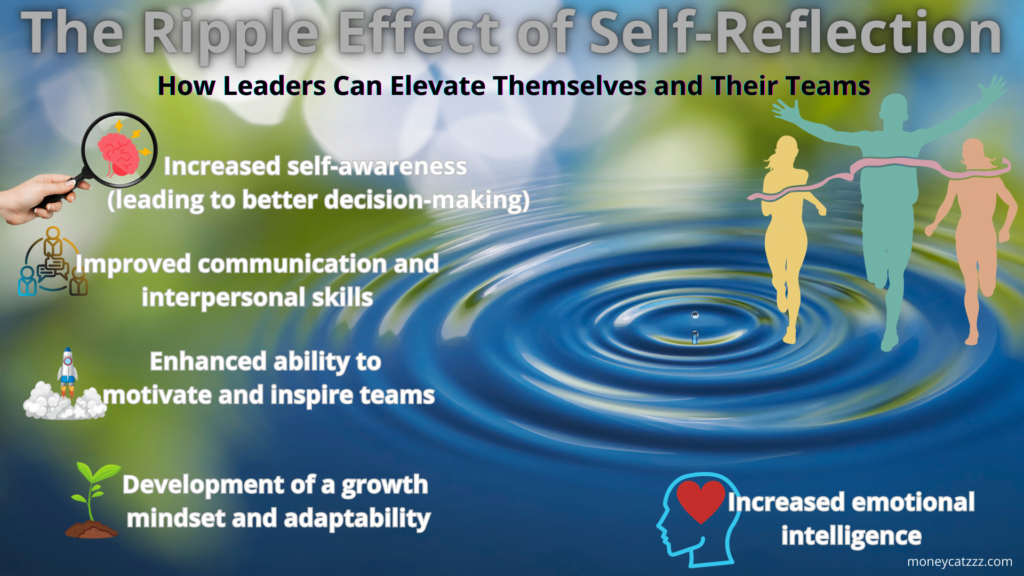
[“The Ripple Effect of Self-Reflection” – moneycatzzz.com]

The Ripple Effect of Self-Reflection: By consistently examining your leadership style through self-reflection, you can ensure your actions align with your values. This introspection empowers you to become the kind of leader you aspire to be, one who inspires not just by words but also by consistent, exemplary behavior. This, in turn, fosters an environment where your team can flourish. Remember, effective leadership is an ongoing evolution, not a destination. Embrace the power of self-reflection, and witness your leadership potential blossom.
Ready to Ascend to the Next Level?
This article equips you with the tools to embark on your leadership journey. Implement these self-reflection questions, share your experiences in the comments below, and join the ongoing conversation! Please explore our website for a wealth of leadership development tools and strategies to empower you and your team.
Further Shore Up Your Leadership Expertise:
Expand your knowledge base with acclaimed leadership books like “The Leadership Pipeline” by Ram Charan, Stephen Drotter, and James Noel or “Good to Great” by Jim Collins. These resources offer invaluable insights into building high-performing teams and organizations.

Disclosure: This post may contain affiliate links. We only recommend products we believe in, and We may receive a commission at no cost to you! Thanks for your support!”
Acknowledgement: Cover Photo by Thịnh Văn
Signup to our Newsletter for regular updates:
Disclaimer: The information is provided for general information only – moneycatzzz.com makes no representations or warranties in relation to the information, including but not limited to any representation or warranty as to the fitness for any particular purpose of the information to the fullest extent permitted by law. While every effort has been made to ensure that the information provided in this article is accurate, reliable, and complete as of the time of writing, the information provided in this article should not be relied upon to make any financial, investment, real estate or legal decisions. Additionally, the information should not substitute advice from a trained professional who can take into account your personal facts and circumstances, and we accept no liability if you use the information to form decisions.