
 Reading Time: 8 mins #
 This post may contain affiliate links.
The Power of Intentional Imperfection: A New Way to Succeed
And so many of us, especially women, kept walking.
We triple-check the email before sending it. We rehearse the conversation a dozen times before speaking up. We tweak, delay, and overthink until the thing we want to share, create, build, or become is buried under the weight of “not quite yet.” And when we fall short of perfection (because we all do), we don’t just feel disappointment — we feel defective.
The cruel trick? Perfectionism dresses up as responsibility. It whispers, “You’re just trying to do your best.” But it’s not a standard, it’s a straitjacket. And the tighter we cinch it, the less room we leave for joy, creativity, and growth.
It’s time to loosen the grip.
“Done is better than perfect.” — Sheryl Sandberg.
What if pursuing perfection isn’t a path to success, but a detour away from our most meaningful work and truest selves?
What if “good enough” isn’t a compromise, but a bold declaration of self-trust?
The Perfectionism Paradox: When “Perfect” Becomes the Enemy of Good
Perfectionism wears many disguises: ambition, responsibility, even care. But underneath its polished mask often lies fear — fear of being judged, falling short, and being seen as less than capable. It’s a fear that keeps us stuck, tweaking the same sentence for hours or never clicking “publish” on that blog post, just in case it’s not quite there yet.
Let’s examine Maggie’s story. Maggie is a gifted graphic designer known for her eye for detail. Her client needed a simple logo. What should have taken a week turned into a month of endless revisions. Color palettes blurred into one another. Fonts were swapped, reshaped, and rejected. “It’s almost done,” she’d say. But it never was. The client lost patience. Maggie lost sleep. In trying to make it perfect, she’d lost what she was hired to do: deliver.
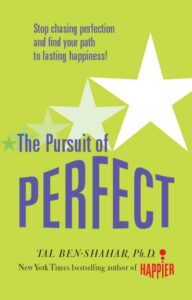
This is the cruel irony psychologist Tal Ben-Shahar highlights in The Pursuit of Perfect. The more we chase the ideal, the more elusive satisfaction becomes. Instead of progress, we get paralysis. Instead of joy, anxiety.
Perfection doesn’t inspire movement — it stalls it.

[“The Inner Critic vs. The Inner Ally” – Image by AI]

Embracing “Good Enough”: The Freedom of Forward Motion
Here’s the radical truth: Good enough is more than enough.
Not because it’s the easiest path, but because it is the only one that gets you moving. “Good enough” is not mediocrity — it’s momentum. It’s the brave decision to act, create, launch, and rest even when you feel incomplete or uncertain.
Think of Mark, an early-stage founder with a great app idea. He could have waited years to perfect it. Instead, he built a simple MVP, released it to beta users, and iterated in real-time. Was it flawless? No. Was it effective? Absolutely. Because “good enough” got him in the game and “perfect” would’ve left him on the bench.
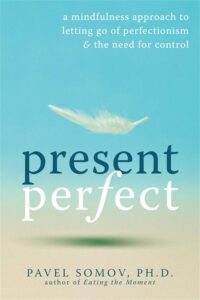
The power of this mindset shift is also echoed in Present Perfect by Pavel Somov, who reminds us that presence, not perfection, is where fulfillment resides. When we release the need to have everything “just right,” we reclaim our time, energy, and creative spirit.
The Feminist Lens: Who Taught You You Had to Be Perfect?
Perfectionism doesn’t exist in a vacuum. It’s often a response to a world that tells women, especially women of color—that they must be twice as good to be considered half as capable.
As Tressie McMillan Cottom powerfully shares in “Thick,” Black women face an impossible balancing act: be firm but soft, capable but not intimidating, excellent but never threatening. These dual burdens of race and gender feed a relentless internal editor, whispering, “Don’t mess this up.”
Similarly, Florence Given’s Women Don’t Owe You Pretty dismantles the idea that women exist to be pleasing, palatable, or polished. Her message is bold and liberating: You need not be perfect to be worthy. You do not need to earn rest, softness, or love.
Understanding these systemic narratives helps us question whose standards we’ve internalized—and why.
From Inner Critic to Inner Ally: The Healing Power of Self-Compassion
Changing our relationship with perfectionism isn’t just about logic — it’s about healing. And the healing begins with compassion.
Psychologist Kristin Neff outlines three vital elements of self-compassion: self-kindness, shared humanity, and mindfulness. It’s about pausing when the inner critic questions, “Would I speak to someone I love this way?” More often than not, the answer is no.
For me, that turning point came one late night after a minor mistake in a client presentation. I spiraled. Replay after replay in my mind. “You should’ve done better.” But then, something new emerged: “You did your best. And that matters too.” That voice didn’t silence the critic, but it softened the blow. And softness, it turns out, can be just as powerful as strength.
Books like The Self-Compassion Workbook by Joy Johnson offer practical tools for cultivating that inner ally. Actual progress doesn’t come from punishing ourselves into perfection; it comes from gently guiding ourselves forward, even through the mess.

[“The Gift of Flow” – Image Generated by AI]
Practical Ways to Embrace Intentional Imperfection
Want to live with more ease and progress? Start with small, consistent actions:
- Redefine success: Replace “flawless” with “meaningful.” Instead of a “perfect podcast episode,” aim for an “episode that helps one listener feel seen.“
- Use the 80% rule: When a task feels done chiefly, release it. Permit yourself to move on.
- Adopt the draft mindset: Whether it’s writing, painting, or launching a new service — treat everything as Version 1. You can’t improve what doesn’t exist.
- Practice daily self-compassion: Write down one thing you did well enough each evening. Let that be the seed of self-trust.
- Curate your influences: Follow creators and leaders who model vulnerability and imperfect action. Their courage will remind you of your own.
- Limit comparison exposure: Social media can magnify the myth of perfection. Take digital sabbaths or prune your feed to honor your mental space.

The Real Gift of “Good Enough”
Intentional imperfection isn’t giving up. It’s showing up again and again, with grace instead of guilt.
It’s allowing yourself to breathe in a world that demands constant breathlessness. It’s the quiet power of creating something real rather than waiting for something impossible. And perhaps most importantly, it’s trusting that you, with your flaws, fatigue, brilliance, and becoming, are already enough.
Because it’s not your polish that makes you powerful; It’s your presence.
Ask Yourself:
What have you delayed because it wasn’t “perfect” yet? What might change if “good enough” was your brave starting point?


Disclosure: This post may contain affiliate links. We only recommend products we believe in, and We may receive a commission at no cost to you! Thank you for your support!
Acknowledgement: Cover Image by moneycatzzz.com
Disclaimer: The information is provided for general information only – moneycatzzz.com makes no representations or warranties in relation to the information, including but not limited to any representation or warranty as to the fitness for any particular purpose of the information to the fullest extent permitted by law. While every effort has been made to ensure that the information provided in this article is accurate, reliable, and complete as of the time of writing, the information provided in this article should not be relied upon to make any financial, investment, real estate or legal decisions. Additionally, the information should not substitute advice from a trained professional who can take into account your personal facts and circumstances, and we accept no liability if you use the information to form decisions.