
 Reading Time: 8 mins #
 This post may contain affiliate links.
In today’s hyper-connected, high-velocity business world, the rules of success are quietly shifting. The relentless pursuit of profit is no longer enough to build sustainable organizations or meaningful careers. More than ever, leaders are realizing that real success is multidimensional. It lives at the intersection of peace, purpose, and profits.
This isn’t just an aspirational ideal. It’s a strategic evolution. High-performing individuals and values-driven companies are beginning to center inner alignment, mission-driven work, and financial resilience as equally essential. But integrating these three elements isn’t simple.
“Strive not to be a success, but rather to be of value.” – Albert Einstein.
Tensions emerge. Trade-offs surface. What happens when purpose threatens profit? When peace feels like stagnation? When growth erodes well-being?
Let’s unpack how these three forces interact, and why thriving in the modern age demands a more integrated model.

Cracks in the Old Model
The traditional playbook is familiar: hustle, climb, win, retire. But that formula is losing its grip. Burnout is at an all-time high. A 2024 Deloitte study reports that 77% of professionals feel burned out at their current job. Many cite a lack of purpose and the pressure for constant performance as core causes.
Even top performers are asking: Is this it? The answer, increasingly, is no.
Success without peace of mind or a clear “why” feels hollow. And organizations that chase profits without values often lose their edge, and their people.
Enter the new triad: peace, purpose, and profits. These are the three pillars of interconnected drivers of sustainable success.
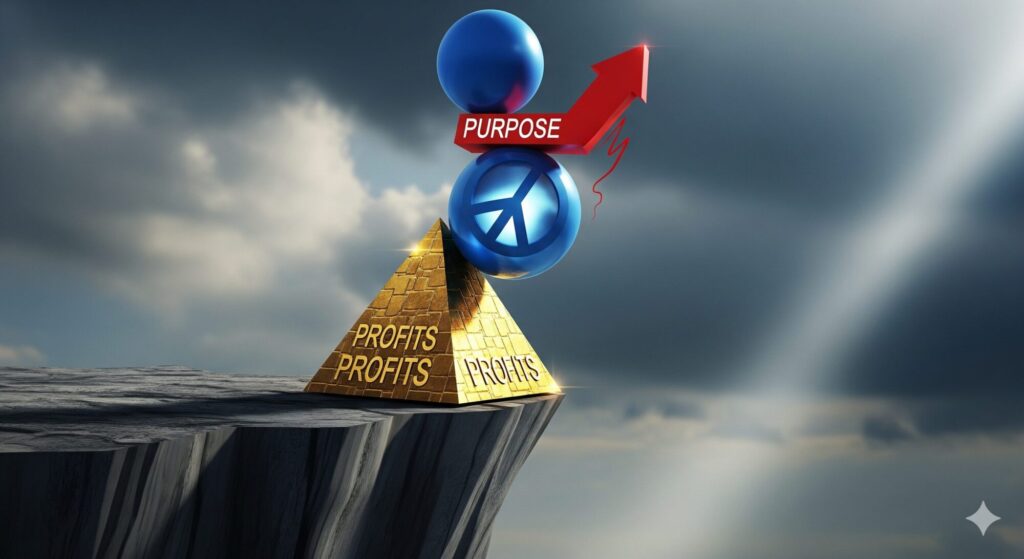
[“The Fragility of Imbalance” – Image by AI]
Peace: The Overlooked Power Metric
Peace is often misunderstood in business; it’s not laziness or inaction. It’s presence. It’s clarity. It’s resilience under pressure.
For individuals, peace looks like emotional steadiness, reduced anxiety, and decision-making from alignment rather than adrenaline. For organizations, it shows up as a strong culture, low drama, psychological safety, and clarity in roles and goals.
McKinsey reports that companies with high psychological safety outperform competitors by up to 25% in productivity and innovation. That’s not fluff — that’s leverage.
Yet peace is often the first casualty of a profit-at-all-costs culture. Speed, micromanagement, and urgency override thoughtfulness. But make no mistake: without peace, creativity shrinks, strategy suffers, and burnout becomes inevitable.
Purpose: The Strategic Compass
Purpose is what makes the work matter. It’s the story we tell ourselves, and others, about why we do what we do.
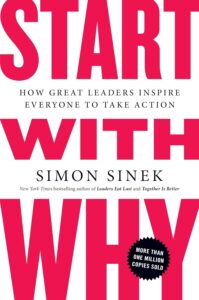
When a company operates from purpose, it earns trust. It attracts talent. It builds movements, not just markets. Simon Sinek says it simply in Start With Why: “People don’t buy what you do, they buy why you do it.”
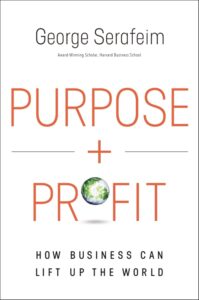
Harvard professor George Serafeim, in his book Purpose and Profit, documents how companies grounded in purpose enjoy stronger financial returns and higher retention. Purpose isn’t just a feel-good narrative. It’s a long-game strategy.
Still, many firms fall into the trap of performative purpose: empty mission statements, vague values, and cause marketing with no real backbone. When there’s a gap between messaging and operations, cynicism spreads fast.
Profits: Still the Oxygen
Let’s be clear: profits matter. Without them, peace and purpose can’t scale.
Financial viability enables innovation, pays people well, funds long-term goals, and sustains social impact. Profit isn’t the enemy. It’s a result of value creation.
But problems arise when profits become the only lens. Companies chasing quarterly gains often sacrifice the culture and clarity driving lasting performance. Two well-known cases come to mind: WeWork and Theranos promised revolutions but collapsed under misalignment, inflated hype, and internal chaos.
Instead of idolizing profits, we must contextualize them. They are a vital sign, not the soul.
The Fragility of Imbalance
Here’s the challenge: each pillar is essential but not sufficient alone. When one dominates at the expense of others, the system breaks.
1. Peace without Purpose: You may have harmony but not direction. The team is calm but uninspired. Nothing rocks the boat, but nothing moves it either.
2. Purpose without Peace: The startup archetype. Big vision, sleepless nights. Passion burns hot then burns out. Mission-driven chaos eventually erodes trust and health.
3. Profit without Peace or Purpose: This is the burnout economy: extract maximum output, ignore meaning. It works, until it doesn’t — turnover spikes. Customers lose interest. Culture collapses.
Integration, not intensity, is the future.
Patagonia: A Living Case Study
One brand consistently cited for achieving this triad is Patagonia. Their mission: “We’re in business to save our home planet.”
Patagonia has tied its business model to environmental advocacy. In 2022, founder Yvon Chouinard transferred company ownership to a trust and nonprofit, ensuring all profits go toward climate action. Yet the company remains profitable, respected, and culturally iconic.
Its culture emphasizes peace through flexibility and belonging.
Employees surf midday. They take paid time off for activism. Purpose isn’t just a tagline; it’s built into the structure. The result? High retention, loyal customers, and a brand identity that inspires action and admiration.
Chouinard writes in Let My People Go Surfing:
“Doing good work for good reasons with good people creates a good life.”

[“The Integrated Model” – Image generated by AI]
A Playbook for the Integrated Model
So how can leaders and individuals build systems where peace, purpose, and profits reinforce rather than conflict?
1. Audit for Alignment: Are our operations aligned with our mission? Are our profits creating space for peace, or eliminating it?
2. Hardwire Purpose into Metrics: Don’t just talk values. Measure them. Track diversity, well-being, and environmental impact and make them visible.
3. Protect Peace Actively: Create buffers against chaos: no-meeting days, sabbaticals, boundaries, model calm, praise patience.
4. Use Profits Intentionally: Reinvest in your people. Build long-term solutions. Support well-being and systems that sustain your mission.
5. Tell Honest Stories: Transparency beats perfection. Share your imperfections and tensions. Authenticity builds trust far more than polished messaging.
Practical Resources to Support the Triad
These books and tools can help you navigate the triad in your own life or organization:
- Purpose + Profit by George Serafeim: Business strategy meets social impact.
- Start With Why by Simon Sinek: Unlocking the motivational core of leadership.
- Let My People Go Surfing by Yvon Chouinard: How Patagonia redefined responsible business.
- Calm App: Tools for building inner peace in a noisy world.
- Mindsight by Dr. Daniel Siegel: Science-backed strategies for emotional clarity.

Bringing It All Together
Whether you’re navigating this triad as an individual, team leader, or entrepreneur, these resources offer more than insight; they offer alignment, they are invitations to shift how you define success, measure impact, and sustain yourself. True leadership isn’t just about driving outcomes; it’s about cultivating internal clarity, external integrity, and a sustainable rhythm that honors both.
Final Reflection: Leadership for a New Era
In an age of volatility, complexity, and constant change, the future belongs to those who can lead with vision and calm. The most resilient individuals and organizations won’t be those who dominate the loudest but can harmonize profits with purpose and protect peace in the process.
This is the new success playbook. The question is no longer whether this model works. The real question is:
Do you have the courage to lead from it?

Disclosure: This post may contain affiliate links. We only recommend products we believe in, and We may receive a commission at no cost to you! Thank you for your support!
Acknowledgement: Cover Image by moneycatzzz.com
Disclaimer: The information is provided for general information only – moneycatzzz.com makes no representations or warranties in relation to the information, including but not limited to any representation or warranty as to the fitness for any particular purpose of the information to the fullest extent permitted by law. While every effort has been made to ensure that the information provided in this article is accurate, reliable, and complete as of the time of writing, the information provided in this article should not be relied upon to make any financial, investment, real estate or legal decisions. Additionally, the information should not substitute advice from a trained professional who can take into account your personal facts and circumstances, and we accept no liability if you use the information to form decisions.