
 Reading Time: 8 mins #
 This post may contain affiliate links.
Abundance Mindset: Unlock Limitless Success & Growth
In today’s competitive, fast-paced world, abundance is often misunderstood. Many equate abundance solely with material wealth, but it extends far beyond money. It influences creativity, health, relationships, leadership, and opportunity. Adopting an abundance mindset can be transformative for entrepreneurs, leaders, and professionals invested in personal growth.
This mindset isn’t wishful thinking or empty optimism. It’s a practical, evidence-based approach to cultivating a life—and career—of meaning, resilience, and sustained growth.
“The universe is a bountiful garden, and we are all gardeners of our happiness.” — An inspiring reflection on self-creation.
What Is an Abundance Mindset?
An abundance mindset is the fundamental belief that more than enough success, opportunity, and resources exist. This mindset encourages collaboration instead of competition and creativity instead of fear.
Contrast this with scarcity thinking, which is rooted in fear and limitation. Those operating from scarcity often see success as a zero-sum game—if someone else wins, they lose. This perspective fuels stress, burnout, hoarding behavior, and short-term decision-making.
Psychologist Carol Dweck’s research on growth versus fixed mindsets complements this idea. Scarcity thinking aligns with a fixed mindset: “There’s no room for me.” Abundance aligns with growth: “There’s more than enough—and I can create even more.”

Abundance in Business and Personal Growth
Harvard Business Review highlights that leaders who cultivate an abundance mindset are more effective at inspiring innovation and retaining top talent. This mindset catalyzes sustainable success.
For example:
- As a marketing executive, Sarah initially worried that seeking a work-life balance would dull her competitive edge. Still, it sharpened her strategic thinking and boosted team morale—improving quarterly results.
- James, a software developer, struggled with burnout from erratic work habits. Adopting focused work sprints with scheduled recovery improved his output and job satisfaction.
- Maya, a small business owner, equated abundance with people-pleasing until she learned to confidently say “no“—improving client relationships and revenue.
These stories illustrate how shifting mindset transforms not just attitudes but tangible outcomes.

[“Nurturing an Abundance Mindset” – Image by Kris from Pixabay]
The Science Behind Thought and Reality
Modern neuroscience confirms what thinkers like Ernest Holmes proposed decades ago: our thoughts have creative power. Our brains constantly filter information based on beliefs—shaping how we experience reality. This means that the way we think isn’t just mental chatter—it actively influences how we perceive and interact with the world.
A landmark study from Stanford University on neuroplasticity demonstrates that our thoughts can rewire neural pathways—making mindset shifts a physiological process rather than just abstract ideals. This rewiring affects how we process information and respond to challenges—reinforcing the brain’s capacity to adapt throughout life.
Further research from the University of California, Berkeley, illustrates how cognitive biases rooted in our beliefs influence attention and decision-making. When you believe opportunities are scarce, your brain filters out potential openings, causing you to miss chances that are actually available. Conversely, affirming statements like “I am open to new possibilities” activate neural circuits that heighten awareness and readiness—prompting your brain to scan your environment for opportunities that align with that belief.
This dynamic interplay between belief and perception makes cultivating an abundance mindset both practical and scientifically grounded. It underscores that shifting your mindset isn’t just “positive thinking”—it’s a measurable neurological transformation with real-world impact.
Aligning with Universal Patterns
Many thought leaders identify reliable principles in how mindset influences outcomes:
- Like attracts like: Focusing on positive outcomes tends to bring more positive results.
- Generosity breeds generosity: Giving time, attention, and knowledge invites reciprocal growth.
- Cause and effect: Your thoughts and actions directly influence your results.
Eckhart Tolle’s The Power of Now emphasizes that true abundance exists now. Being fully present grounds your thinking reduces stress, and allows real opportunity.
Practicing presence is an underutilized leadership and growth strategy that delivers clarity and resilience.
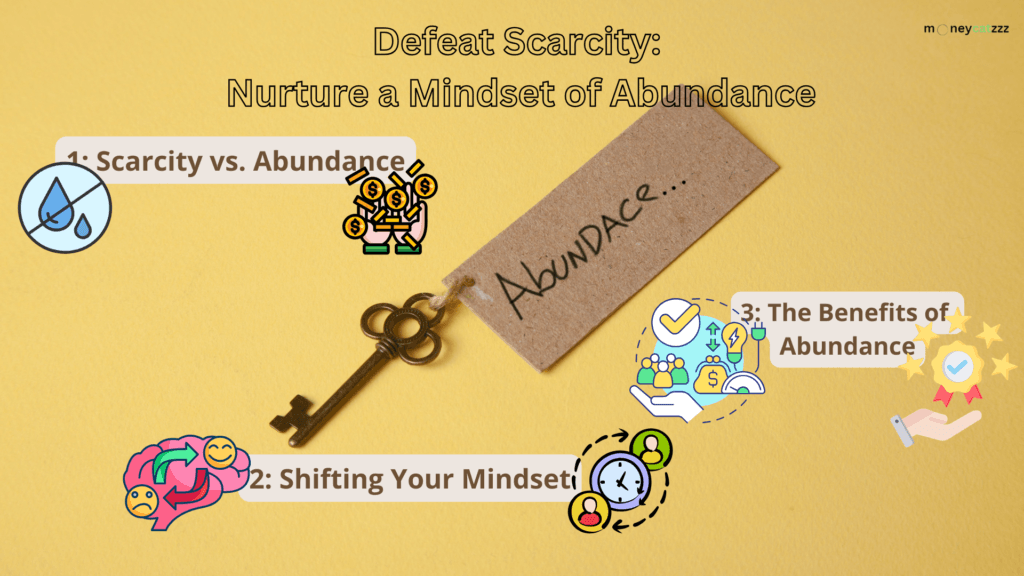
[“Embrace the Abundance Within You” – moneycatzzz.com]
Identifying—and Dismantling—Scarcity Programming
The hardest part of shifting to abundance is abandoning ingrained scarcity beliefs. These often stem from:
- Upbringing: Messages that money or success is limited or hard to attain.
- Culture: Media and societal narratives emphasizing lack—never enough time, youth, or money.
- Fear of Risk: Believing you only get one chance can paralyze decision-making.
In The Game of Life and How to Play It, Florence Scovel Shinn advocated affirmations to reprogram subconscious beliefs: “I am worthy,”
“Opportunities flow to me,” “Abundance surrounds me.”
Similarly, Don Miguel Ruiz’s The Four Agreements reminds us that beliefs are agreements we can renegotiate.
Rewriting these internal narratives is essential to unlocking growth.
Practical Tools to Shift Your Mindset
Adopting an abundance mindset is an active practice that includes:
- Daily Gratitude: Spend five minutes each morning listing three things you’re grateful for. Gratitude signals to your brain, “I already have more than enough.”
- Visualization: Picture yourself succeeding. Imagine the relationships, financial stability, health, or recognition you desire—and feel it as if it’s already yours.
- Reframe Setbacks: Instead of “I failed,” say, “I’m learning something valuable.” Scarcity panics in failure; abundance treats it as feedback.
- Set Boundaries: Abundance doesn’t mean endless giving. It means being selective with your time and energy to focus on what truly matters.
- Invest in Others: Share knowledge and celebrate others’ wins. Generosity quickly proves to your subconscious there’s plenty for everyone.

[“Develop an Abundant Mindset” – Image by Bertsz from Pixabay]
Final Thoughts: Abundance as a Competitive Advantage
Abundance isn’t a fluffy ideal—it’s a competitive advantage, a resilience framework, and a leadership strategy.
When you believe the pie is infinite, you stop guarding your slice. You innovate more, collaborate more, and recover faster from setbacks. This is more than personal growth—it’s sustainable success.
If you’re ready to evolve, stop waiting for the world to change. Start shifting your mindset. The abundance you seek is already available—you only need to see, claim, and step into it.
“Abundance isn’t something we acquire; it’s something we tune into. When we shift from scarcity to possibility—we unlock limitless opportunities that have always been within our reach. Embrace abundance, and watch your life transform beyond measure.”

Key Takeaways
- A scarcity mindset limits growth; an abundance mindset fuels innovation and collaboration.
- Neuroscience shows thoughts can rewire the brain—mindset shifts are physiological.
- Presence and generosity are practical, underused leadership tools.
- Reprogramming scarcity beliefs with affirmations and boundaries is essential.
- Daily gratitude, visualization, and investing in others accelerate mindset transformation.
Disclosure: This post may contain affiliate links. We only recommend products we believe in, and We may receive a commission at no cost to you! Thank you for your support!
Acknowledgement: Cover Image by Jill Wellington
Disclaimer: The information is provided for general information only – moneycatzzz.com makes no representations or warranties in relation to the information, including but not limited to any representation or warranty as to the fitness for any particular purpose of the information to the fullest extent permitted by law. While every effort has been made to ensure that the information provided in this article is accurate, reliable, and complete as of the time of writing, the information provided in this article should not be relied upon to make any financial, investment, real estate or legal decisions. Additionally, the information should not substitute advice from a trained professional who can take into account your personal facts and circumstances, and we accept no liability if you use the information to form decisions.