
 Reading Time: 8 mins #
 This post may contain affiliate links.
Mentorship for Success: The Key to Unlocking Your Full Potential
Mentorship for success is a proven catalyst for personal and professional growth. Even the greatest achievers, like Bruce Lee, relied on mentors to refine their skills and reach new heights. His lightning-fast strikes, unwavering focus, and relentless pursuit of mastery weren’t just about physical prowess—they reflected a philosophy of self-improvement that extended beyond martial arts. But even Bruce Lee, the epitome of strength and self-reliance, didn’t achieve greatness alone.
He honed his skills under the legendary Ip Man, a mentor who recognized and nurtured his potential. This highlights a universal truth: having the right mentor accelerates growth, builds confidence, and opens doors that might otherwise remain closed.
“The successful teacher is the one who can inspire him with a vision, a purpose, and the power to achieve it.” – Bruce Lee (Martial Artist, Philosopher)
This truth resonates far beyond martial arts. Mentorship for success is a powerful tool for both personal and professional growth. Statistics reveal that 97% of people believe having a mentor is valuable, while over 55% credit mentorship with accelerating their success. Businesses also see significant advantages, with 67% reporting increased employee productivity and 55% acknowledging mentorship’s positive impact on their bottom line.
If even Bruce Lee, the epitome of self-reliance, thrived under the guidance of a mentor, shouldn’t we seek the same advantage in our journey? A mentor can be the catalyst that unlocks hidden opportunities, refines your skills, and fast-tracks your success. Having the right guide by your side is like having a Bruce Lee to your IP Man—someone who opens doors you never knew existed and propels you toward unimaginable heights.
You don’t have to navigate the Dojo of personal and career growth alone. This guide will explore the transformative power of mentorship, finding the right mentor, and building a meaningful, long-lasting mentorship relationship that drives real success.

[“Mentorship for Success _ Bruce Lee and Ip Man” – FreePress]
Lost in the Current: Why Mentorship for Success is Essential
At 13 years old, I dreamt of conquering the Alcatraz Sharkfest Swim—a grueling 1.5-mile open water challenge from Alcatraz Island to Aquatic Park in San Francisco Bay. Even seasoned swimmers considered it a daunting feat, with unpredictable currents and the occasional shark sighting fueling my fascination and fear. Determined to push my limits, I signed up. But as race day loomed, self-doubt crept in.
What if the currents were stronger than I anticipated? What if I panicked halfway through, lost in the vast, churning water? And, of course, the lingering fear—what if a shark mistook me for lunch?
These anxieties threatened to drown my initial enthusiasm. I needed a guiding force—mentorship for success. Enter Mr. Thomson, my swimming coach. He had always seen potential in me beyond the pool and knew exactly how to turn my fear into focus.
He didn’t dismiss my concerns but instead helped me create a plan for success. We worked on techniques for navigating strong currents, practiced breath control, and even used mental visualization techniques to picture me completing the race. His calm demeanor and unwavering belief in me slowly replaced my doubt with determination.
Race day arrived. The churning water of the bay no longer seemed as intimidating. With each stroke, I heard Mr. Thomson’s voice of encouragement. The fear of sharks was still there, but it no longer controlled me. I finished the race—not just overcoming the distance and the elements but also conquering the self-doubt that had once threatened to hold me back.
This experience solidified my belief that mentorship for success is invaluable. Having the right mentor can mean the difference between stagnation and breakthrough achievement, whether in sports, business, or personal growth.

[“A Mentor can become Your Cheerleader” – Photo by cottonbro studio]
The Mentor’s Magic: Unleashing Your Inner Dragon with Mentorship for Success
So, what exactly does a mentor do? Think of them as a mentorship catalyst, someone who ignites your potential and helps you channel raw talent into focused action. Mentorship for success is about more than just advice—it’s about challenging limiting beliefs (like that nagging voice telling you, “you’re not good enough“ to achieve your financial or career goals) and fostering a growth mindset, as outlined in Carol Dweck’s groundbreaking book Mindset.
A mentor is your cheerleader and guide, offering unwavering support, celebrating small wins, and reminding you of your “why“ during inevitable setbacks. But the true magic of mentorship goes beyond encouragement.
A great mentor acts as a sounding board, providing a safe space to test strategies, refine ideas, and receive constructive feedback—whether on an investment plan, business strategy, or career path. They hold you accountable for your goals, keeping you motivated and on track, much like Ip Man continuously pushed Bruce Lee to refine his martial arts mastery.
This dynamic mentor-mentee relationship fosters trust and open communication, the cornerstones of success, as explored in Stephen M.R. Covey’s The SPEED of Trust. Through this trust, your mentor becomes personally invested in your journey, celebrating victories and guiding you through setbacks—perhaps by connecting you with industry contacts, key resources, or valuable opportunities.
The power of mentorship for success is undeniable. When you find the right mentor, you unlock the hidden potential within yourself—your own Inner Dragon, ready to take on the world.
Finding Your Master: Unlocking Mentorship for Success
Finding your own Ip Man doesn’t require scaling a mystical mountain or earning a black belt! Mentorship for success comes in various forms, and the right mentor might already be within reach.
Where to Look for a Wise Guide
- Industry Leaders – Look within your professional network for established individuals who excel in your field (e.g., Oprah Winfrey).
- Subject Matter Experts – Seek mentors with specific expertise aligned with your goals (e.g., a financial advisor for investment strategies).
- Former Colleagues – Consider those you’ve worked with who exemplify leadership, resilience, or innovation.
Explore mentorship opportunities on LinkedIn, professional groups, mentorship platforms like Mentor.org, or alumni associations—fantastic starting points for building meaningful mentor relationships.
Finding someone who aligns with your values and aspirations is the key to mentorship for success. When reaching out, be clear and respectful about what you seek. Express admiration for their work and highlight how their mentorship could accelerate your growth.
But remember, mentorship is a two-way street. Be prepared to offer value in return, whether through sharing insights, networking opportunities, or by paying it forward as a mentor in the future, as Robert Emmons explores in Thanks! How the New Science of Gratitude Can Make You Happier: Expressing gratitude strengthens relationships crucial for long-term mentorship success.

“A mentor is someone who allows you to see the hope inside yourself.” – Oprah Winfrey (Media Mogul, Philanthropist)
Different Types of Mentorship for Success
Finding the right mentor isn’t a one-size-fits-all approach. Mentorship for success comes in different forms, each offering unique benefits based on your goals and learning style.
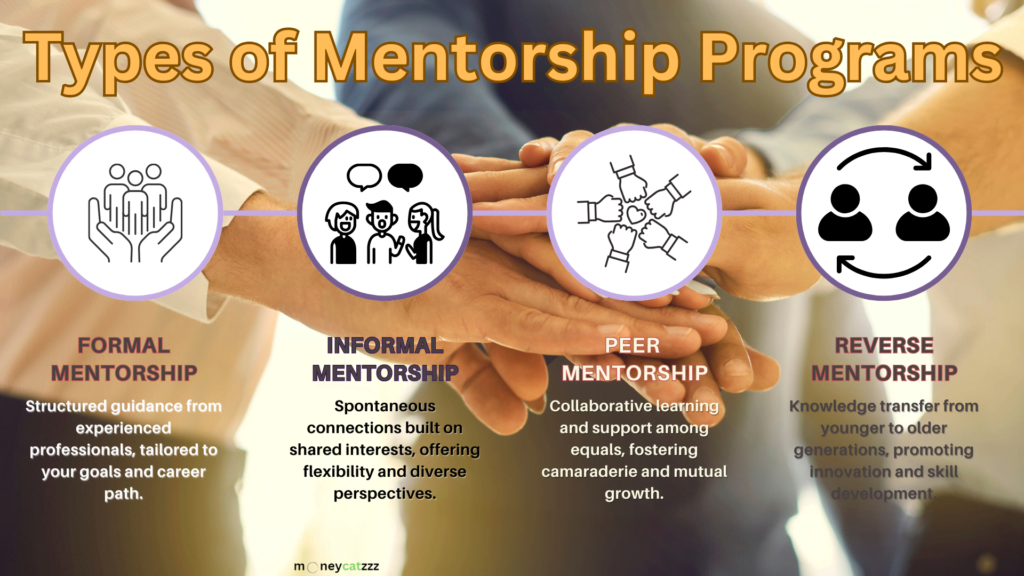
1. Formal Mentorship Programs
Many organizations and platforms offer structured mentorship programs that match you with a mentor based on your industry, experience level, and objectives. This is an excellent option if you’re unsure where to start or prefer a guided approach.
2. Informal Mentorship
Some of the most impactful mentorships for success happen organically through personal connections. A mentor could be a colleague, a former professor, or even someone you meet at an industry event. Informal mentorship allows flexibility and diverse perspectives, making it a valuable, natural learning experience.
3. Peer Mentorship
Peer mentors are individuals at a similar career stage, offering mutual knowledge exchange and support. This fosters camaraderie and helps navigate challenges unique to your experience level.
4. Reverse Mentorship
In reverse mentorship, a less experienced mentee provides insights to a more senior mentor—often in areas like technology, social trends, or emerging markets. This mutual learning experience strengthens leadership skills for both parties.
Choosing the Right Mentorship for Success
The ideal mentorship structure depends on your needs and preferences. Explore different formats and choose the one that aligns best with your learning style, career trajectory, and personal growth objectives.
[“Types of Mentorship Programs” – moneycatzzz.com]
Mentorship for Success in Real-Life Situations
Case Study: From Intern to COO – Sheryl Sandberg and Marissa Mayer
Sheryl Sandberg, now the COO of Meta (formerly Facebook), began her career as a summer associate at Google in 1999. Fresh out of Harvard Business School, she had ambition but lacked experience in the tech industry.
That’s where mentorship for success changed her trajectory.
The Role of Mentorship for Success
Enter Marissa Mayer, a Google executive who recognized Sandberg’s potential and became her mentor. Mayer provided:
- Guidance on navigating Silicon Valley’s fast-paced world.
- Challenges that pushed Sandberg beyond her assumptions about tech.
- Support through setbacks, helping her develop a growth mindset.
The Impact of Mentorship
With Mayer’s mentorship for success, Sandberg thrived at Google—honing her skills, learning from failures, and emerging as a rising star. Years later, she paid it forward, mentoring women in the tech industry and advocating for women’s leadership (Source: Lean In by Sheryl Sandberg).
This real-life example proves that mentorship for success isn’t just about career advancement—it’s about empowering future leaders.
Case Study: Jacob Lawrence – How Mentorship Shaped an Artistic Legacy
Mentorship for Success: The Role of Augusta Savage
Jacob Lawrence, one of the most influential African American artists of the 20th century, didn’t follow the path of traditional art education. Instead, he found mentorship for success under the guidance of Augusta Savage, a key figure in the Harlem Renaissance.
How Mentorship for Success Shaped Lawrence’s Career
Savage recognized Lawrence’s raw talent and took him under her wing, providing:
- Studio space and art supplies to nurture his creativity.
- Guidance and support helped him refine his skills.
- A strong work ethic and an appreciation for African American history and culture.
- Encouragement to use art as a tool for storytelling.
The Lasting Impact of Mentorship
Under Savage’s mentorship for success, Lawrence developed his bold, dynamic painting style. His ability to tell powerful stories through art made him a defining figure in American history. He later credited Savage’s mentorship as pivotal to his artistic journey.
This case study exemplifies how mentorship for success can transform raw potential into mastery, paving the way for lasting impact and legacy.
Building a Thriving Mentorship: Cultivating a Lasting Partnership
Finding the right mentor is just the first step—the real magic happens in nurturing a strong and lasting mentorship. A successful mentor-mentee relationship requires commitment, communication, and mutual respect.
Key Strategies for a Successful Mentorship
1. Set Clear Expectations from the Start
Begin with a structured conversation to define:
- Goals – What do you hope to achieve?
- Communication Style – Do you prefer email, calls, or in-person meetings?
- Time Commitment – Establish a realistic schedule that works for both of you.
2. Communicate Regularly for Continuous Growth
Consistent check-ins allow you to:
- Track your progress and seek guidance.
- Discuss specific challenges and brainstorm solutions.
- Gain valuable insights from your mentor’s expertise.
3. Show Respect and Appreciation
A mentor’s time and wisdom are invaluable—always:
- Express sincere gratitude for their guidance.
- Actively listen and apply their advice.
- Respect their availability and boundaries.
4. Take Initiative and Be Proactive
Don’t wait for advice—come prepared!
- Ask specific, well-thought-out questions.
- Share your progress and implement feedback.
- Show enthusiasm and commitment to growth.
5. Embrace Reciprocity & Pay It Forward
A thriving mentorship is a two-way street:
- Offer your mentor support in return—perhaps by sharing insights or helping with projects.
- As you gain experience, become a mentor to others, continuing the growth cycle.
A strong mentorship can be a game-changer in your personal and professional journey. These principles will build a mutually beneficial relationship that fosters success, learning, and empowerment.

[“Don’t just wait for advice, Be Pro Active” – Photo by cottonbro studio]
Overcoming Common Mentorship Challenges
Building a successful mentorship for success requires effort from both mentor and mentee. Like any valuable relationship, it thrives on communication, mutual respect, and adaptability. Here’s how to tackle common mentorship challenges:
1. Finding the Right Mentor
Identifying the perfect mentorship for success can be challenging. Instead of waiting for the ideal mentor:
- Expand your network through professional events and LinkedIn connections.
- Explore mentorship platforms designed for career growth.
- Be open to multiple mentors, each providing unique expertise.
2. Managing Time Commitments
Balancing mentorship for success with other responsibilities can feel overwhelming. To make it work:
- Set clear expectations regarding availability and communication methods.
- Prioritize high-impact meetings instead of frequent but unstructured ones.
- Use digital tools to maintain momentum between sessions.
3. Navigating Personality Clashes & Communication Barriers
Even the best mentor-mentee relationships may face communication challenges. If issues arise:
- Express concerns openly and adjust communication styles as needed.
- Seek common ground to ensure a productive mentorship experience.
- Reevaluate if necessary—sometimes, finding a better match is the best solution.
Every successful mentorship for success comes with challenges, but proactively addressing obstacles strengthens the mentor-mentee bond. Stay committed, flexible, and open to feedback, and you’ll unlock long-term growth and professional success.

Embrace the Climb – The Power of Mentorship for Success
The journey to personal and financial success is rarely a solo endeavor. Having mentorship for success means having a guiding force—someone who believes in your potential, challenges you, and helps you grow. But remember, mentorship is a two-way street—a mentor without a mentee is just another individual. The real power lies in the exchange of knowledge, encouragement, and inspiration.
Become a Mentor, Pay It Forward
Don’t just seek mentorship for success—become a mentor yourself. As you reach your goals, extend a helping hand to those following behind. By fostering a culture of mentorship, we create a ripple effect of growth and empowerment.
Take Action Today
Ready to embrace mentorship for success? Explore platforms like Mentee Nation or MentorMe to connect with mentors. Attend local mentorship workshops and networking events to build lasting connections that fuel personal and professional growth.
Together, through mentorship, we can all reach new heights.
Disclosure: This post may contain affiliate links. We only recommend products we believe in, and We may receive a commission at no cost to you! Thanks for your support!”
Acknowledgement: Cover Photo by The Coach Space
Signup to our Newsletter for regular updates:
Disclaimer: The information is provided for general information only – moneycatzzz.com makes no representations or warranties in relation to the information, including but not limited to any representation or warranty as to the fitness for any particular purpose of the information to the fullest extent permitted by law. While every effort has been made to ensure that the information provided in this article is accurate, reliable, and complete as of the time of writing, the information provided in this article should not be relied upon to make any financial, investment, real estate or legal decisions. Additionally, the information should not substitute advice from a trained professional who can take into account your personal facts and circumstances, and we accept no liability if you use the information to form decisions.