
 Reading Time: 6 mins #
 This post may contain affiliate links.
Awareness: Unlock Empowerment in Your Workplace!
In an ever-shifting workplace—where technology races ahead and expectations grow more complex by the day, one simple yet profound quality is becoming essential—awareness. It’s not just about paying attention—it’s about being deeply attuned to yourself, your team, your organization, and the world beyond your office walls. And it may very well be the secret ingredient to building a healthier, more human-centered workplace.
Let’s step back for a moment. Think of awareness as an internal compass. It doesn’t just tell you where you are—it shows you how you’re moving, what you’re reacting to, and where you might be headed. At the individual level, this awareness helps you recognize your emotions, motivations, and habits that either hold you back or help you thrive. At the organizational level, it becomes a collective intelligence, guiding teams through change, competition, and opportunity with clarity and purpose.
“Self-awareness is the most important skill you can develop. It is the key to understanding yourself, your strengths, and your weaknesses. It is also the key to understanding others and building strong relationships.” – Stephen Covey.
Why Self-Awareness Matters More Than Ever
In practical terms, self-awareness helps you step back and say, “Here’s how I tend to react in stressful situations. Here’s where I shine, and here’s where I struggle.” Knowing this isn’t just practical—it’s empowering—knowing your internal landscape allows you to communicate more clearly, navigate conflict gracefully, and show up as your best self, even on hard days.
But empowerment doesn’t just benefit the individual—it ripples outward. When people are more in tune with themselves, they show up differently at work. They are usually more engaged, flexible when things shift, and willing to hear feedback without getting defensive—take responsibility for their growth, actively look for ways to learn, and tend to bring a grounded, thoughtful energy to their teams. Over time, that kind of self-awareness helps shape a workplace culture that feels more resilient, connected, and rooted in trust and care.
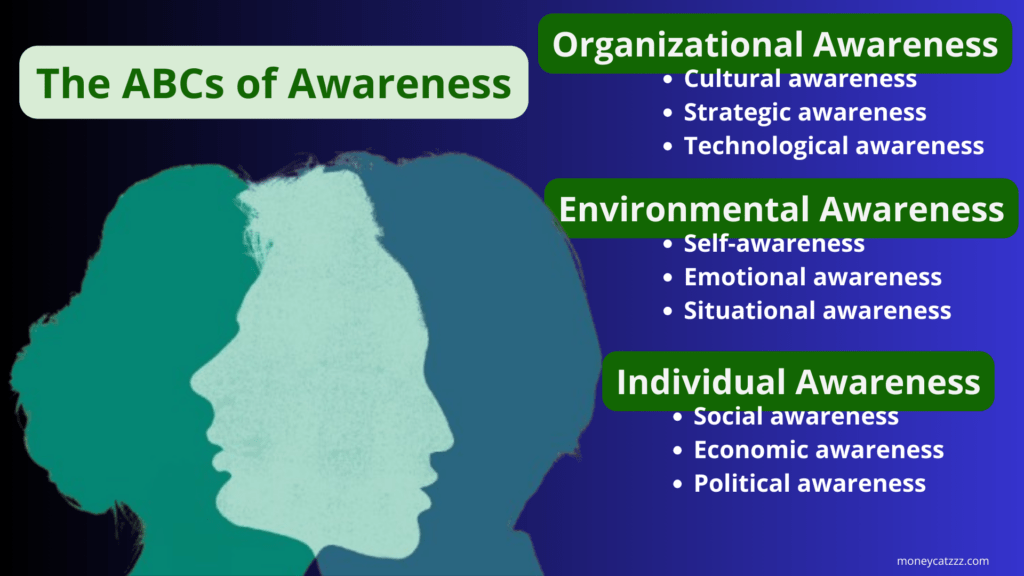
[“The ABCs of Awareness” moneycatzzz.com]
Organizational Awareness: Seeing the Bigger Picture
While individual awareness lays the groundwork, organizational awareness helps complete the puzzle. It’s about employees understanding the values, vision, and strategic goals of the business—and seeing how their work fits into the larger mission.
Motivation naturally follows when people understand the “why” behind their actions. A clear sense of alignment helps foster loyalty, purpose, and engagement. Likewise, when leaders stay aware of shifts in industry trends, customer needs, and internal dynamics—they’re better prepared to respond with agility and creativity.
Individual and organizational awareness create a feedback loop, each strengthening the other. When people know themselves and feel seen by their organization, a sense of belonging and shared purpose naturally emerges.
Mindfulness: The Gateway to Awareness
One of the most effective tools for developing awareness is mindfulness—a practice that encourages being present with openness and curiosity at the moment. In the workplace, this might look like taking a mindful pause before responding to a tense email or tuning in to how your team feels during a meeting.
Research consistently shows that mindfulness practices reduce stress, enhance focus, and improve emotional regulation. Mindfulness helps employees build resilience, cultivate empathy, and make thoughtful decisions when integrated into daily work life.
Organizations that offer mindfulness training or create space for quiet reflection aren’t just promoting wellness—they’re building a culture of presence. A culture where people are more grounded, attentive, and connected to the task—and each other.
Awareness Starts at the Top: The Role of Leadership
You can’t cultivate a culture of awareness without conscious leadership. Leaders set the emotional tone of an organization—they model self-reflection, transparency, and empathy.
Great leaders are not afraid to admit when they don’t have all the answers. They listen deeply, communicate with intention, and create a psychologically safe environment, making team members feel valued and heard. They’re attuned to the human needs of their teams—not just the performance metrics.
When leaders lead with awareness—they create the conditions for trust, innovation, and shared responsibility. That’s how fundamental cultural transformation begins.
Building a Supportive Environment for Growth
A truly aware workplace doesn’t just talk about well-being—it builds it into how people work and live—meaning more than perks or surface-level benefits. It ensures employees access to mental health support, flexible schedules, and a culture grounded in equity, safety, and belonging.
Whether in how the office is designed or how time off is respected, the message should be clear: “You matter here. Not just for what you do, but for who you are.” That kind of care shows up in mentorship programs, growth opportunities, and emotional support systems—things that say the company is invested in productivity and the whole person behind the role.
This kind of thoughtfully shaped environment naturally encourages curiosity, invites self-reflection, and fuels ongoing growth—the organic outcomes of a workplace rooted in genuine awareness.
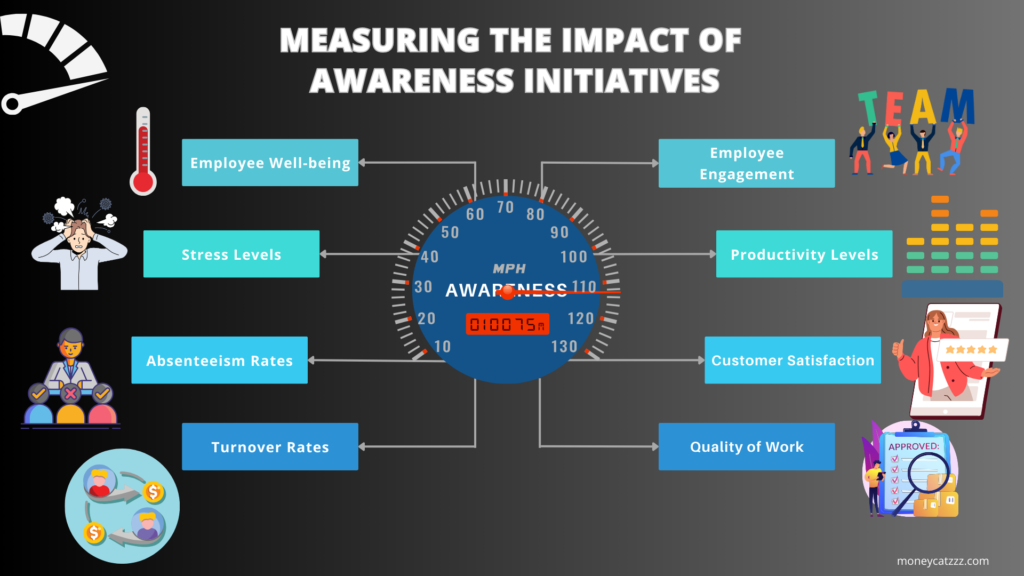
[“Measuring the Impact of Awareness Initiatives” – moneycatzzz.com]
A Real-World Example: Google’s Mindfulness Culture
Google’s Search Inside Yourself (SIY) program is a powerful example of awareness in action. The program goes beyond a wellness add-on—blending mindfulness, emotional intelligence, and neuroscience designed to help employees manage stress, sharpen their focus, and build stronger relationships at work.
What makes it stand out isn’t just the improved performance—the more profound sense of connection and shared humanity it fosters across teams. Alongside SIY, Google supports its people with generous wellness benefits, flexible work models, and a strong emphasis on psychological safety—making awareness a part of everyday culture.
While Google’s scale may be unique, the heart of their approach is something any organization can embrace: start where you are, stay consistent, and build a workplace where people feel safe to grow—not just professionally, but personally too.

How to Measure What You Can’t Always See
Awareness might seem like a soft skill—something hard to pin down—but its impact is anything but vague. You can see it in the numbers: employee engagement scores, stress and absenteeism rates, turnover trends, and even how long people choose to stay. These markers help tell the story of how well your awareness-based efforts are working.
But data alone isn’t enough. To truly understand the heartbeat of your organization, you need to pair those metrics with real, human voices. That means checking in through satisfaction surveys, gathering feedback on team collaboration, looking at the quality of output, and listening closely to customer experience stories. Most importantly, it means creating safe, open spaces where employees feel comfortable sharing how they’re really doing. Their stories—alongside the data—can guide your next steps and help you shape a strategy that grows with your people.
Looking Ahead: Awareness in a Changing World
As remote and hybrid work models become the norm, the need for connection and shared purpose becomes even more vital. Once seen as a soft skill, awareness is quickly becoming a core competency.
We’re also seeing a rising emphasis on mental health, diversity, and corporate responsibility—areas where awareness plays a foundational role. The organizations that will thrive in the future see awareness not as an HR initiative but as a strategic lens for everything they do.
[“Awareness” – moneycatzzz.com]
Practical Advice for All Types of Organizations
- Small Businesses: Focus on open communication, trust-building, and personalized growth opportunities. Even simple mindfulness practices or check-ins can make a big difference.
- Large Enterprises: Use your resources to implement leadership development programs, well-being initiatives, and DEI strategies. Prioritize measurement and feedback.
- Non-Profits: Build a values-driven culture where employees feel connected to a meaningful mission—create room for reflection and emotional connection to the work.
Embracing the Journey of Awareness
Cultivating awareness in the workplace isn’t something you check off a to-do list. It is a long-term commitment that is shaped by honest reflection, open dialogue, and leadership that’s willing to show up with heart. There’s no finish line—just a continual process of learning, adjusting, and growing together.
The payoff? It’s more than better performance or smoother collaboration—it’s a workplace that feels alive. One where people are seen and heard, where trust grows, and where resilience becomes part of the culture. In today’s unpredictable world, awareness isn’t just a nice-to-have—it’s essential. And it all begins with something simple, yet powerful—the courage to slow down, listen deeply, and stay connected—to ourselves and each other.

Must-Read Books on Workplace Awareness and Well-being
- “Mindfulness for Beginners“ by Jon Kabat-Zinn: This classic guide introduces mindfulness meditation and its benefits for stress reduction, focus, and overall well-being. It provides practical exercises and techniques that can be easily incorporated into daily life.
- “Emotional Intelligence 2.0“ by Travis Bradberry and Jean Greaves: This book explores the importance of emotional intelligence in personal and professional success. It offers practical strategies for developing self-awareness, empathy, and effective communication skills.
- “The Power of Positive Thinking“ by Norman Vincent Peale: While not specifically about workplace well-being, this timeless classic emphasizes the power of positive thinking and its impact on personal and professional success. It offers practical techniques for cultivating optimism and resilience.
- “Quiet: The Power of Introverts in a World That Can’t Stop Talking“ by Susan Cain: This book challenges the stereotype that extroverts are the most successful and highlights introverts’ unique strengths and contributions. It offers valuable insights for organizations looking to create inclusive and supportive work environments.
Disclosure: This post may contain affiliate links. We only recommend products we believe in, and We may receive a commission at no cost to you! Thanks for your support!”
Acknowledgement: Cover Photo by Matthias Kramer
Disclaimer: The information is provided for general information only – moneycatzzz.com makes no representations or warranties in relation to the information, including but not limited to any representation or warranty as to the fitness for any particular purpose of the information to the fullest extent permitted by law. While every effort has been made to ensure that the information provided in this article is accurate, reliable, and complete as of the time of writing, the information provided in this article should not be relied upon to make any financial, investment, real estate or legal decisions. Additionally, the information should not substitute advice from a trained professional who can take into account your personal facts and circumstances, and we accept no liability if you use the information to form decisions.