
 Reading Time: 8 mins #
 This post may contain affiliate links.
Conflict is an inevitable part of human interaction. Whether in personal or professional life, disagreements and clashes of opinion are bound to occur. However, how we navigate these challenges defines our ability to build strong relationships, foster collaboration, and achieve our goals. Central to effective conflict management is cultivating a positive conflict resolution mindset. This mindset is a mental framework that enables individuals to approach conflicts as opportunities for growth rather than threats.
“Conflict is inevitable, but hostility is a choice.” – Thich Nhat Hanh
Understanding the Complexities of Conflict
Conflict is a multifaceted phenomenon with various origins. It can stem from differences in values, goals, or personalities. Understanding the nuances of conflict is crucial for developing effective resolution strategies. For instance, intrapersonal conflict arises within an individual, interpersonal conflict between two or more people, and intergroup conflict between teams or organizations. Recognizing the type of conflict is the first step towards addressing it constructively.
The repercussions of unresolved conflict can be far-reaching. It can erode trust, damage relationships, and hinder productivity. Moreover, prolonged strife can lead to emotional distress, burnout, and even physical health problems. Therefore, developing a proactive approach to conflict resolution is essential for overall well-being and success.
Understanding the Complexities of Conflict
Conflict, an inherent aspect of human interaction, often evokes negative connotations. Yet, it’s a dynamic force that can either hinder or propel personal and professional growth. Individuals can transform challenges into opportunities for deeper understanding, stronger relationships, and innovative solutions by cultivating a positive conflict resolution mindset.
Types of Conflict
Conflict manifests in various forms, each demanding unique approaches to resolution.
- Intrapersonal Conflict: Inner turmoil arising from conflicting values, goals, or desires. For instance, a desire for career advancement might clash with a longing for work-life balance.
- Interpersonal Conflict: Disagreements between individuals, often rooted in misunderstandings, differing perspectives, or personality clashes. Workplace disputes over project priorities or relationship conflicts between friends or family members fall into this category.
- Intragroup Conflict: Conflicts within a group, such as team disputes over roles, resources, or decision-making processes.
- Intergroup Conflict: Conflict between different groups, organizations, or communities, often involving competition for resources, power, or identity.
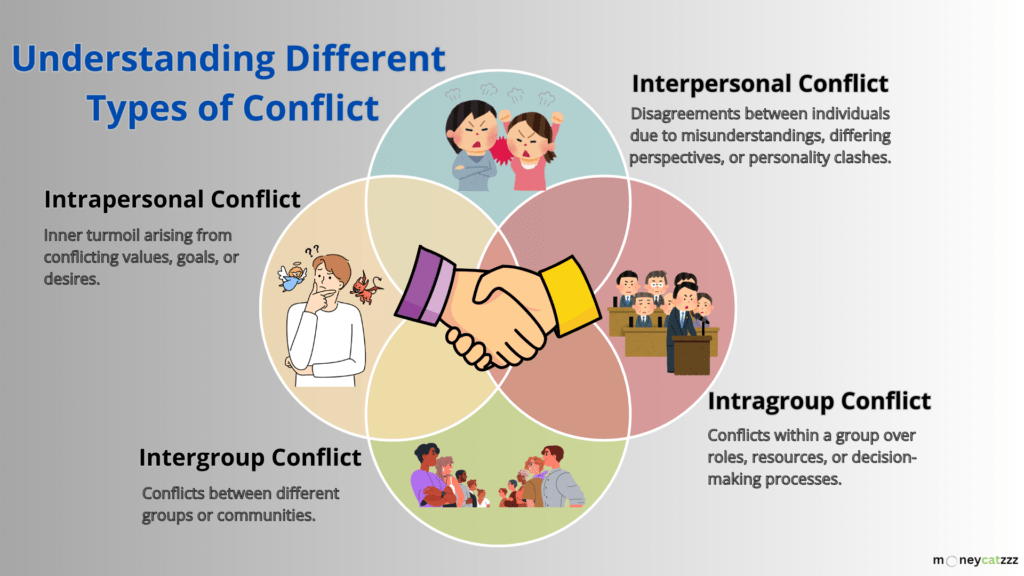
[“Understanding Different Types of Conflict” – moneycatzzz.com]
The Dynamics of Conflict
Conflict is often a complex interplay of factors, including communication breakdowns, differing values, power imbalances, and emotional responses. Understanding these dynamics is crucial for developing effective resolution strategies. For instance, a conflict rooted in miscommunication might require improved listening skills, while a power imbalance might necessitate negotiation and compromise.
The Impact of Unresolved Conflict
The consequences of unresolved conflict can be far-reaching. At the individual level, it can lead to stress, anxiety, and decreased job satisfaction. On a relational level, conflict can erode trust, damage relationships, and create a hostile environment. Organizations experiencing high levels of conflict may suffer from decreased productivity, increased turnover, and damaged reputation.
Understanding the potential negative impacts of conflict underscores the importance of developing practical conflict resolution skills. By addressing conflicts proactively and constructively, individuals and organizations can mitigate these risks and create a more harmonious and productive environment.

Cultivating a Positive Conflict Resolution Mindset
A positive conflict resolution mindset is characterized by a belief in the possibility of finding mutually beneficial solutions. It involves approaching conflicts with curiosity, empathy, and a willingness to learn. Cultivating this mindset requires a shift in perspective from viewing conflict as a negative to seeing it as an opportunity for growth and development.
Embracing a growth mindset is fundamental to developing a positive conflict resolution mindset. This involves viewing challenges as opportunities to learn and improve rather than as personal failures. By adopting a growth mindset, individuals become more open to feedback, willing to experiment with new approaches, and resilient in the face of setbacks.
Overcoming negative thought patterns is another crucial step. Common cognitive distortions such as all-or-nothing thinking, overgeneralization, and personalization can hinder effective conflict resolution. Individuals can develop a more balanced and constructive perspective by identifying and challenging these negative thought patterns.
Mastering the Art of Communication
Effective communication is the cornerstone of successful conflict resolution. Active listening is essential for understanding the perspectives of others and building empathy. By paying full attention to the speaker without interrupting or forming judgments, individuals can create a safe and open environment for dialogue.
Assertive communication, a balance between passivity and aggressiveness, is crucial for expressing needs and boundaries clearly and respectfully. It involves using “I” statements to express feelings and opinions without blaming or accusing others. Assertiveness helps to prevent misunderstandings and promotes mutual respect.
Empathy, the ability to understand and share the feelings of others, is vital for building rapport and fostering connection. By putting oneself in another person’s shoes, individuals can develop a deeper understanding of their perspective and find common ground.
Conflict Resolution Strategies: A Toolbox for Success
Various strategies can be employed to resolve conflicts effectively. Negotiation and compromise involve finding mutually agreeable solutions through give-and-take. Problem-solving and decision-making focus on identifying the root causes of the conflict and developing creative solutions. Mediation and facilitation can be helpful in complex or high-stakes conflicts, involving a neutral third party to guide the process.
Crucial Conversations by Kerry Patterson, Joseph Grenny, Ron McMillan, and Al Switzler offer valuable insights into handling difficult conversations. The book emphasizes the importance of mutual purpose and shared meaning in resolving conflicts effectively. By applying the principles outlined in the book, individuals can navigate challenging situations with greater skill and confidence.
Building Strong Relationships: The Foundation for Harmony
Strong relationships are essential for preventing and resolving conflicts. Trust, respect, and empathy are the building blocks of healthy relationships. By fostering open communication, honoring commitments, and supporting each other, individuals can create a foundation of trust that can withstand conflict challenges.
Forgiveness is another crucial aspect of building strong relationships. Letting go of resentment and anger can free individuals from the emotional burden of past conflicts. It is essential to distinguish between forgiveness and reconciliation, as forgiveness is a personal process, while reconciliation involves repairing the relationship.
Nonviolent Communication by Marshall Rosenberg offers a compassionate approach to conflict resolution that emphasizes meeting needs without violence. The book introduces the concept of “needs language,“ which involves expressing one’s feelings and underlying needs non-blamingly. Individuals can find common ground and build stronger connections by understanding and addressing underlying needs.
Overcoming Challenges: Resilience and Adaptability
Conflict resolution is sometimes complicated. There may be times when individuals encounter particularly challenging situations or difficult people. Developing resilience is essential for navigating these obstacles. By building emotional resilience, individuals can better cope with stress and setbacks, maintaining a positive outlook even in adversity.
Difficult Conversations by Douglas Stone, Bruce Patton, and Sheila Heen provides practical guidance for challenging conversations. The book emphasizes the importance of identifying interests, exploring options, and reaching mutually beneficial agreements. By applying the strategies outlined in the book, individuals can navigate challenging conversations with greater confidence and effectiveness.
Managing emotions is crucial during conflict. Emotional intelligence plays a vital role in understanding and regulating one’s feelings as well as empathizing with the emotions of others. Mindfulness practices can help manage stress and maintain composure during conflict.

[“Overcoming Challenges” – Image by Arek Socha from Pixabay]
Case Studies: Real-World Applications
To illustrate the practical application of conflict resolution strategies, let’s examine three case studies:
Case Study 1: The Affordable Care Act (ACA)
The Affordable Care Act (ACA), often called Obamacare, ignited one of the most contentious political debates in recent U.S. history. This landmark healthcare reform aimed to expand insurance coverage, regulate the insurance industry, and introduce subsidies to make healthcare more affordable.
The ACA was met with fierce opposition from Republicans, who argued that it represented an overreach of government power and would lead to higher costs. Democrats, on the other hand, championed the law as a crucial step towards achieving universal healthcare coverage. The debate highlighted deep ideological divisions over the role of government in healthcare, individual responsibility versus collective welfare, and the balance between market forces and regulation.
The ACA’s implementation has been marked by legal challenges, political gridlock, and evolving market dynamics. While the law has expanded insurance coverage for millions of Americans, it has also faced criticism for rising premiums and limited choice in some regions. The ongoing debate over the ACA’s future underscores the complexities of healthcare policy and the challenges of achieving a consensus on such a divisive issue.
Case Study 2: The AOL-Time Warner Merger: A Tale of Two Titans
The merger of AOL, a digital pioneer, with Time Warner, a media behemoth, was once heralded as a match made in technological heaven. A union of the internet’s dynamic spirit and traditional media’s established infrastructure promised a new era of entertainment and information. However, reality paints a grimmer picture.
A clash of cultures was the first stumbling block. AOL’s fast-paced, entrepreneurial ethos collided head-on with Time Warner’s hierarchical, bureaucratic structure. Mismatched expectations, communication breakdowns, and a power struggle ensued. Strategic misalignment was another critical factor. The merger was predicated on the synergy between AOL’s online subscribers and Time Warner’s content, a hypothesis that crumbled as the internet landscape rapidly evolved.
The fallout was substantial. Investor confidence plummeted as the stock price tanked. Employee morale dwindled amidst uncertainty and layoffs. Ultimately, the merger served as a cautionary tale, highlighting the complexities of integrating disparate corporate cultures and the importance of thorough due diligence in strategic partnerships.
Case Study 3: The Paris Agreement
The Paris Agreement, a landmark international treaty on climate change, represents a complex interplay of global cooperation and national interests. Adopted in 2015, the agreement aims to limit global warming to below 2 degrees Celsius above pre-industrial levels.
Negotiating the Paris Agreement involved overcoming significant challenges, including differing national circumstances, economic concerns, and divergent political ideologies. Developing countries argued for financial support from developed nations to mitigate the impacts of climate change. In contrast, developed countries expressed concerns about the economic burden of implementing ambitious emissions reduction targets.
The agreement represents a significant step forward in global climate governance, establishing a framework for international cooperation. However, challenges remain in ensuring compliance, increasing ambition, and addressing the needs of vulnerable countries. The ongoing negotiations to strengthen the Paris Agreement highlight the complexities of international climate cooperation and the need for continued diplomacy and compromise.
Mastering the art of conflict resolution is a journey toward personal and interpersonal growth. By understanding the complexities of conflict, cultivating a positive mindset, and developing effective communication skills, individuals can transform challenges into opportunities for deeper understanding and stronger relationships.
Remember, every conflict presents an opportunity for growth and strengthening connections. By embracing a proactive approach to conflict resolution, you can create a more harmonious and productive environment for yourself and those around you.
Conflict is inevitable, but how we respond to it defines our character and the quality of our relationships. Through intentional practice and self-awareness, individuals can become skilled conflict resolvers, capable of navigating challenges with grace and resilience.
Let conflict be a catalyst for growth, not a barrier to progress.

The Next Step
Are you ready to harness the power of positive conflict resolution? Begin your transformation by implementing the strategies outlined in this article. Adopting a proactive approach can create a more harmonious and fulfilling life.
Recommended Reading
To delve deeper into the world of conflict resolution, consider exploring these insightful works:
- Crucial Conversations: Tools for Talking When Stakes Are High by Kerry Patterson, Joseph Grenny, Ron McMillan, and Al Switzler offer practical guidance on navigating difficult conversations and finding common ground.
- Nonviolent Communication: A Language of Life by Marshall Rosenberg provides a compassionate approach to conflict resolution, emphasizing empathy and understanding.
- Difficult Conversations: How to Discuss What Matters Most by Douglas Stone, Bruce Patton, and Sheila Heen offer strategies for handling challenging conversations gracefully and effectively.
- Getting to Yes: Negotiating Agreement Without Giving In by Roger Fisher and William Ury provides a framework for principled negotiation and achieving win-win outcomes.
These books offer invaluable insights and tools for individuals seeking to enhance their conflict resolution skills and build stronger relationships.
Disclosure: This post may contain affiliate links. We only recommend products we believe in, and We may receive a commission at no cost to you! Thanks for your support!”
Acknowledgement: Cover Image by Mohamed Hassan from Pixabay
Signup to our Newsletter for regular updates:
Disclaimer: The information is provided for general information only – moneycatzzz.com makes no representations or warranties in relation to the information, including but not limited to any representation or warranty as to the fitness for any particular purpose of the information to the fullest extent permitted by law. While every effort has been made to ensure that the information provided in this article is accurate, reliable, and complete as of the time of writing, the information provided in this article should not be relied upon to make any financial, investment, real estate or legal decisions. Additionally, the information should not substitute advice from a trained professional who can take into account your personal facts and circumstances, and we accept no liability if you use the information to form decisions.