Reading Time: 8 mins #
This post may contain affiliate links.

She called me by her name. My colleague looked up from her screen and said, “Oh, Sarah, can you …” and stopped mid-sentence. “Sorry. You look so much like her.”
Â
I smiled. Said it was fine. This coincidence happens all the time. And it does. I’ve been mistaken for other women so often that I’ve stopped correcting most of them. Sometimes I speak up. Usually, I let it go. The mistake itself takes five seconds. The exhaustion comes from the accumulation.
Â
What wears me down isn’t the coincidence of looking like someone else. It’s being treated as though the similarity makes us the same person. We are not. Surface level becomes the whole story; the erasure happens quietly.
The Statue and the Clay
There’s a philosophical puzzle called the Problem of Material Constitution, I read about years ago that I keep coming back to. A sculptor takes a piece of clay and shapes it into a statue. The clay and the statue occupy the same space, made of the same matter, existing in the same moment.
Â
But they’re different things. The clay could be reshaped, flattened, or rolled into something else entirely. The statue is already formed. If you squash the statue, it’s destroyed. If you squash the clay, it’s just clay in a different shape.
Philosopher Daniel Z. Korman writes about this in Objects: Nothing Out of the Ordinary. He argues they’re two separate entities sharing the same physical location but with completely different futures. The statue has a fixed destiny. The clay has infinite possibilities.
Â
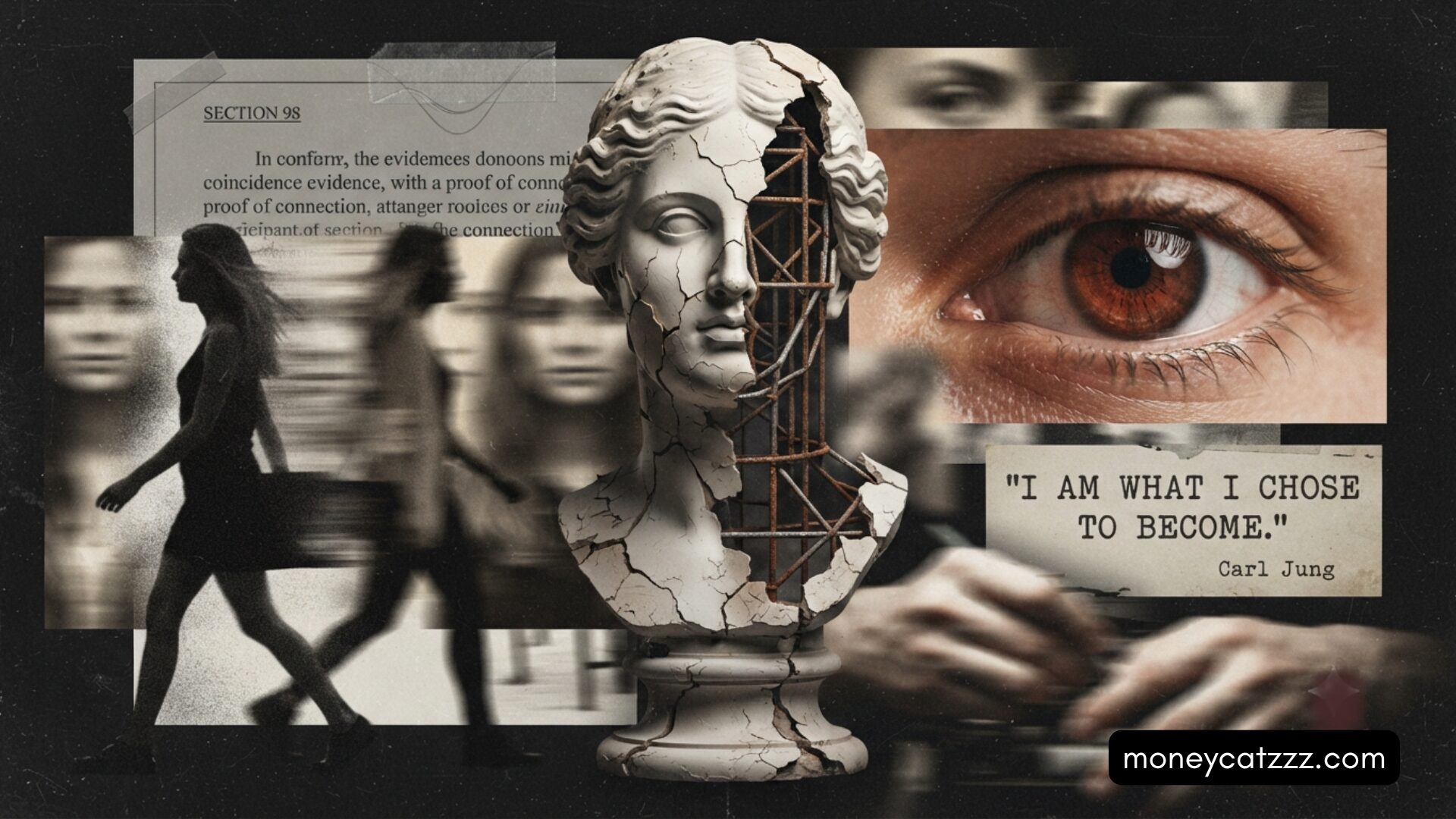
I think about this whenever someone mistakes me for Sarah, or Emily, or whoever I am supposed to resemble this week. We share the same physical space in their perception: matching hair color, a similar build, and features close enough to pass as the same person. To them, we are interchangeable clay. They cannot see that I am already a statue: already formed, fully specific, and completely something that isn’t her.
Â
The similarity blinds them to the difference. That’s the coincidence they can’t see past.
When the Law Uses Resemblance as Proof
I learned about coincidence in a different context while researching legal frameworks for an article. The Australian Evidence Act has a section on coincidence evidence. Section 98 allows courts to admit proof that two or more events are “substantially and relevantly similar“ because it’s improbable they occurred by coincidence.
Â
The law uses similarity as evidence of connection. If two events are alike enough, they can’t be random. There must be a pattern.
Â
People do this too, just less carefully. They see my similarity to someone else and treat it as evidence of who I am. They assume I share her personality, her history, her way of being in the world. The legal doctrine requires probability and significance. People require a vague resemblance and a lapse in attention.
[The Strategic Pause: The Art of Remaining | moneycatzzz.com]
The cost isn’t the individual mistake. That’s a moment, usually harmless. The cost is the slow accumulation of being treated as interchangeable; each instance is small, collectively heavy.
Â
I’ve started wondering if this is what the statute and the clay feel like. Do they mind being conflated? Does the statue wish people could see it’s already something specific?
Â
I do.
The Relief of Being Recognized
I met another writer once who’d spent years being mistaken for someone else: different person, same experience. We talked for an hour over coffee that had gone cold while we compared stories.
Â
“People think I’m my sister,” she said. “I’m older. I’m quieter. I carry completely different wounds. They don’t see any of that.”
Â
“Same,” I said. “They see the shape of the scar, never the story behind it.” She nodded. “They stop at similarity. They don’t keep looking.”
Â
Our meeting felt like recognition: two people who’d been invisible in the same way, finally seeing each other. The relief was immediate and a little disorienting. I hadn’t realized how much energy I’d been spending on being mistaken until I met someone who didn’t mistake me.
Penelope Mackie asks whether objects that occupy the same space but have different properties can be considered identical or must be understood as distinct. Her work on coincidence and identity mirrors something I’ve lived: being collapsed into a category while knowing I’m separate from it.
Â
The philosophical question is whether the statue and the clay are the same thing. The personal question is whether I’ll ever be seen as myself instead of as close enough to someone else.
The Shift I Didn’t Expect
Last year, I met someone who saw me as an individual from the first conversation. She didn’t know anyone who looked like me. She had no box to put me in. She just paid attention.
Â
Being seen changed something fundamental. I hadn’t realized how much effort I’d been putting into proving I wasn’t a coincidence until I met someone who never assumed I was.
Â
I’d spent years correcting, explaining, and providing context and history to establish that I was distinct. It rarely worked. People see what they’re prepared to see. They expect familiar categories, and are uncomfortable with strangers who don’t fit existing templates.
Â
The shift wasn’t about convincing anyone. It was about finding people willing to look past surface-level similarities and see the structure beneath.
Â
I still don’t know how to make that happen consistently. It may not be something I can control. But knowing it’s possible helps.
[The Unseen Disconnect: Existence Without Permission | moneycatzzz.com]
What I’m Still Learning
You’ve probably been mistaken for someone else; it may happen once and stick with you. Either way, you know the small sting of being collapsed into someone else’s category.
Â
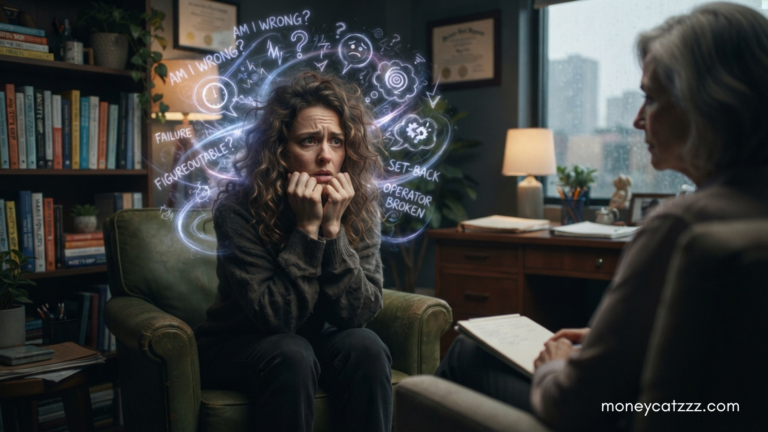
The exhaustion comes from the correction. From explaining again and again that you’re you, that the similarity is surface level, that there’s depth they’re missing if they’d look a little closer.
Â
I don’t correct as often anymore. I have started just remaining. A statue doesn’t need to explain itself to prove it is distinct from the clay; it simply stands, holds its shape, and exists as it is, regardless of who is looking.
Â
I still get called by the wrong names and assigned stories that aren’t mine. I still watch people’s faces when they realize I am different from whoever they expected, catching the small flash of embarrassment followed by their minimal effort to adjust.
Mostly, I stay present. The coincidence is not the event of looking like someone else; it is how people use that resemblance to avoid seeing who is actually in front of them.
Â
You are already formed, specific, and carrying an identity that similarity cannot erase, even when it obscures the truth.
Â
Relief comes when someone finally sees you clearly. It happens when similarity stops being evidence of sameness and becomes what it actually is: just a surface that fails to tell the whole story.
Â
I am still learning to hold my shape while others decide whether to look closely enough to see it. The statue does not need permission to be distinct; it just is.
Â
Carl Jung puts it most eloquently:
“I am not what happened to me, I am what I chose to become.”
_________________________________________________
Disclosure: This post may contain affiliate links. We only recommend products we believe in, and we may receive a commission at no cost to you! Thank you for your support!

Acknowledgment: Cover Image by moneycatzzz.com
Disclaimer: The information is provided for general information only – moneycatzzz.com makes no representations or warranties in relation to the information, including but not limited to any representation or warranty as to the fitness for any particular purpose of the information to the fullest extent permitted by law. While every effort has been made to ensure that the information provided in this article is accurate, reliable, and complete as of the time of writing, the information provided in this article should not be relied upon to make any financial, investment, real estate or legal decisions. Additionally, the information should not substitute advice from a trained professional who can take into account your personal facts and circumstances, and we accept no liability if you use the information to form decisions.