
 Reading Time: 8 mins #
 This post may contain affiliate links.
The 73rd-generation ninja descendant poured tea with deliberately clumsy movements, spilling exactly three drops on the lacquered table. “First lesson,” he said in perfect English, he’d pretended not to speak for the past hour, “never show your best tea ceremony. Someone will ask you to perform it at every meeting forever.” I had come to Iga Province to research historical espionage for a thriller novel I’d never write. What I found instead was a masterclass in workplace capacity management that would save my career from the very excellence that was killing it.
His name was Yamamoto, though I suspected that was as strategic as his poor tea service. He ran a small dojo behind the Iga-ryu Ninja Museum, teaching what he called “corporate ninjutsu” to executives who paid extraordinary sums to learn how to become less visible.
“You’re dying from competence,” he diagnosed, watching me unconsciously check three phones while trying to appear present. “In feudal times, the best ninja lived as mediocre farmers. Today, the best executives appear as adequate performers. Show everything, lose everything.”
The Museum of Hidden Capability
The next morning, Yamamoto walked me through the Ninja Museum, pointing out architectural deceptions. Walls that pivoted to reveal weapons. Floors with hidden compartments. Stairs that weren’t stairs but defensive positions.
“Every surface shows one purpose, serves another,” he explained. “This is workplace capacity management. What they see is not what exists.”
In the museum’s scroll room, he translated a principle called ‘In’in’, shadow endurance. “Not hiding in shadows,” he clarified, “but enduring in them while others exhaust themselves in light. The visible ninja died young. The invisible ones became advisors to daimyos.”
I thought about my last performance review. “Exceeds expectations” in every category — reward: three new projects, two additional direct reports, no additional compensation. The competence trap had caught me perfectly.
Understanding Ninja Philosophy for Business
“Western business says give one hundred ten percent,” Yamamoto said, demonstrating shuriken throwing in the museum’s courtyard. The star struck the target’s edge, a respectable but not remarkable result. “This is stupid mathematics. You cannot give what doesn’t exist. And if you show one hundred percent, what reserves remain for war?”
He threw again, this time missing the outer ring entirely. A group of tourists moved on, unimpressed.
Then, when we were alone, he threw six stars simultaneously. All hit the bullseye.
“Strategic incompetence,” he said. “The tourists think I’m adequate. They don’t book private lessons. I keep my weekends. But you, you show every capability. So everyone wants everything.”
This was ninja philosophy for business at its core: survival through selective revelation.

[“The Competence Trap” – Image by moneycatzzz.com]
The 70/30 Principle
Yamamoto drew a circle in the dirt, dividing it into segments. “Shinobi operated on ratios. Show thirty percent capability. Use fifty percent when necessary. Never reveal the final twenty percent. This twenty percent is your escape velocity.”
“But won’t showing less hurt advancement?” I asked.
“You’re already hurt. Burnout is not advancement; it’s delayed termination. Workplace capacity management means sustainable performance, not spectacular collapse.”
He was right. I’d watched colleagues flame out brilliantly, their excellence becoming their downfall through poor execution. The fastest promotions led to the fastest exits.
The Three Levels of Deception
“Ninja philosophy for business operates on three levels,” Yamamoto explained over lunch, eating convenience store onigiri with the same deliberation as haute cuisine.
“Shu: Hide your learning. Never appear to master things quickly, or you become the perpetual trainer.
Ha: Hide your efficiency. If you finish in two hours, deliver in four. The saved time is your strategic reserve.
Ri: Hide your innovation. Present ideas through others occasionally. Let them think it was their inspiration.”
“This sounds like strategic incompetence,” I said.
“No. Incompetence is the inability. This is selective ability. You choose when to deploy excellence, rather than excellence deploying you.”
You might also like:
Disengage Without Detaching: How to Reclaim Mental Clarity and Emotional Freedom
The Competence Trap Exposed
That evening, Yamamoto introduced me to his prize student, a Japanese CEO who ran three companies while appearing to manage one at a time.
“I learned the competence trap the hard way,” Tanaka said, pouring sake with genuinely mediocre form. “First company, I showed everything. Worked hundred-hour weeks. Investors loved it. Then I had a heart attack at forty-one.”
He rolled up his sleeve, showing surgical scars.
“Now I practice workplace capacity management. My boards think I’m good, not great. My companies run better because I’m not burning reserves on performance theater.”
“But doesn’t hiding capability feel like lying?” I asked.
“Does the ninja lie by dressing as a farmer? Or does he survive by choosing which truth to reveal?”
Avoiding Workplace Burnout Through Invisibility
The International Labor Organization reports that Japan has the highest burnout rates among developed nations, despite also having the most workplace efficiency protocols. Yamamoto suggested this wasn’t a coincidence but causation.
“Efficiency made visible becomes expectation. Expectation becomes baseline. Baseline becomes minimum. This is why avoiding workplace burnout requires strategic invisibility.”
He showed me a scroll describing ‘Onmitsu‘, the art of hiding in plain sight. Medieval ninja didn’t vanish; they became unremarkable. The modern application was precise: become competent enough to avoid attention, not so skilled that you attract it.
“Your American phrase ‘nail that sticks up gets hammered down’ is incomplete,” Yamamoto said. “In Japan, we know the nail that stays perfectly level gets ignored. This is the sweet spot of workplace capacity management.”
The Strategic Reserve Protocol
Back in my hotel, I mapped my visible capabilities versus my actual ones. The gap was nonexistent. I’d been operating at complete visibility, wondering why I felt constantly depleted.
Yamamoto had given me homework: “Choose three things you’re excellent at. Become publicly adequate at two. Hide one completely.”
My list:
- Financial modeling (currently expert, visible)
- Presentation design (currently expert, visible)
- Python programming (presently an expert, visible)
The strategic decision: become “decent” at modeling, “acceptable” at presentations, never mention Python again.
“This is your strategic reserve,” Yamamoto had explained. “When a crisis comes, you deploy hidden capacity. You become a hero temporarily, then return to the shadows. Avoiding workplace burnout means having capacity no one knows exists.”
Books for Shadow Endurance
Yamamoto recommended four texts, which he called “modern scrolls for workplace capacity management“:
- The Book of Five Rings by Miyamoto Musashi: “All warfare is based on deception, especially warfare with yourself.”
- The 48 Laws of Power by Robert Greene: Specifically Law 21, “Play dumb to make your victims feel smart.”
- Antifragile by Nassim Taleb: The chapter on redundancy as a survival strategy.
- The Art of War by Sun Tzu: “When strong, appear weak. When capable, appear incapable.”
Implementing the Shinobi Discipline
Returning to New York, I began practicing strategic incompetence carefully. Not failure, but selective excellence. The results were counterintuitive.
Week one: Delivered a “good enough” presentation instead of my usual spectacular one. Response: “Solid work.” No additional assignments.
Week two: Admitted ignorance about a system I knew well. Response: Someone else became the expert. Their problem now.
Week three: Took the full deadline for a project I’d finished early and used the saved time for actual strategic thinking.
Month two: My stress levels dropped 40%. My performance rating remained “meets expectations.” My weekends returned.
“The competence trap releases slowly,” Yamamoto had warned. “People resist when their best performer becomes merely good. Let them. Their resistance is your freedom.”
The Hidden Capacity Revelation
Six months into practicing ninja philosophy for business, I faced a genuine crisis. A client relationship imploding, a deal collapsing, the kind of situation where I’d typically deploy everything.
Instead, I deployed exactly 50%.
The Python scripts I’d hidden solved the data problem. The presentation skills I’d downplayed delivered the pitch. The financial modeling I’d made “adequate” suddenly became exceptional.
“Where did this come from?” my CEO asked, stunned. “I’ve been developing new capabilities,” I said. Not a lie. The capability was restrained.
The crisis resolved, I returned to adequacy. The CEO wanted me to maintain that level. I explained I needed “recovery time.” He understood. Heroes need rest.
This is workplace capacity management at its most sophisticated: heroism as exception, not rule.

[“Strategic Incompetence” – Image by moneycatzzz.com]
The Farmer Who Was a Ninja
Yamamoto’s final lesson came via email, a photo from the Iga museum. A display showcasing a farmer’s tools that were actually used as weapons. The sickle that was a kusarigama. The walking stick that hid a blade.
“Most ninja died as farmers,” his message read. “Their neighbors never knew. They succeeded not through visible excellence but through invisible sufficiency. The greatest victory is the battle no one knows you won.”
- Avoiding workplace burnout doesn’t require working less; it requires working smarter. It requires revealing less. The energy saved from performance theater becomes actual performance capacity.
- The competence trap arises from the modern delusion that visibility equates to value. But the ninja knew better. Value comes from sustained capability, not spectacular demonstration.
The New Discipline
I close my laptop now at reasonable hours, not because the work is done, but because I’ve shown enough. The extra 30% capacity isn’t a sign of laziness; it’s a strategic reserve. The unclaimed expertise isn’t deception, it’s preservation.
Workplace capacity management means understanding that careers are marathons, not sprints, and the runner who shows their best pace early rarely finishes first. Or finishes at all.
The shinobi survived 400 years not through superior combat but through superior concealment. They appeared as farmers, merchants, entertainers —anything but what they truly were. Their invisibility was their immortality.
Strategic incompetence isn’t about being less capable; it’s about being less effective. It’s about being selectively visible. It’s choosing when your excellence serves you, rather than letting excellence make you everyone’s servant.
The door closes on total transparency. Opens on strategic shadows.
Both lead to recognition. Only one preserves the recognizer.
The ninja knew this. Now, so do I. Workplace capacity management isn’t deception; it’s the highest form of professional truth: sustaining capability by never fully revealing it.

Radical Acceptance


The Gifts of Imperfection
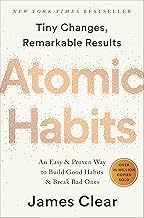
Atomic Habits
Disclosure: This post may contain affiliate links. We only recommend products we believe in, and e may receive a commission at no cost to you! Thank you for your support!
Acknowledgment: Cover Image by mioneycatzzz.com
Disclaimer: The information is provided for general information only – moneycatzzz.com makes no representations or warranties in relation to the information, including but not limited to any representation or warranty as to the fitness for any particular purpose of the information to the fullest extent permitted by law. While every effort has been made to ensure that the information provided in this article is accurate, reliable, and complete as of the time of writing, the information provided in this article should not be relied upon to make any financial, investment, real estate or legal decisions. Additionally, the information should not substitute advice from a trained professional who can take into account your personal facts and circumstances, and we accept no liability if you use the information to form decisions.