
 Reading Time: 8 mins #
 This post may contain affiliate links.
The promotion was everything I wanted: more clients, higher rates, and leadership visibility. I said yes to all of it: the expanded team, the bigger projects, the strategic responsibilities everyone said I needed.
Six months later, I was waking up at 3 a.m. with a tight chest: forgetting meetings, and snapping at the people I loved. My doctor called it burnout, but it felt like failure.
Then a mentor, a former CEO who’d walked away at her peak, said something that changed everything:
“You’re not broken. You’re operating above your Natural Level. Water can’t sustain pressure it wasn’t designed for. Neither can you.”
That wasn’t professional burnout as personal inadequacy. It was physics. The solution wasn’t willpower; it was career recalibration, restructuring my skilled life until external pressure matched my sustainable internal capacity.
In this guide, we’ll explore the Natural Level: your authentic, sustainable capacity, and why professional burnout signals over-pressurization, not inadequacy. You’ll learn the Equilibrium Test and six strategies to align work with your true worth.
What is Your Natural Level?
Water finds its level. Apply too much pressure, and it either leaks out or the container bursts.
Your Natural Level is your authentic, sustainable professional capacity: the work, responsibility, and relational load you can carry indefinitely without depletion, definitely not for a sprint.
It’s determined by:
- Energy reserves (your physical, mental, and emotional baseline)
- Recovery capacity (how quickly you restore after exertion)
- Cognitive load tolerance (decisions and context switches you can manage daily)
- Relational bandwidth (meaningful professional relationships you can sustain)
- Creative renewal needs (unstructured time required to generate ideas)
Your Natural Level isn’t a ceiling to break through — it’s your equilibrium point where you operate with excellence, consistency, and joy without system breakdown.
The myth says success requires pushing past this level. Research from Adam Grant and Stanford’s Jeffrey Pfeffer, as presented in “Dying for a Paycheck,” shows that operating at your natural level produces better work than operating above it while depleted.
The Over-Pressurized Pipe: How Burnout Happens
Professional burnout isn’t caused by working hard; it’s caused by operating consistently above your Natural Level, like running a 40 PSI pipe at 80 PSI.
Three Stages of Over-Pressurization
Stage 1: The Leak
You’re performing, but energy, creativity, and patience leak out. You need more recovery. Small tasks feel harder. You’re irritable. You call it a “busy season.”
Stage 2: The Strain
Quality declines. You forget things, miss deadlines, and make uncharacteristic errors. Relationships fray. You feel perpetually behind despite working more hours. Most people add more pressure here: staying later, waking earlier, cutting rest.
Stage 3: The Burst
Health crisis. Panic attacks. Complete inability to work. Relationship collapse. This is burnout as a functional breakdown.
The World Health Organization classifies burnout as energy depletion, mental distance from work, and reduced efficacy — not a character flaw, but a phenomenon that occurs when demands exceed sustainable capacity for too long.

[“The Over-Pressurized Pipe: How Burnout Happens” – Image by moneycatzzz.com]
The Three Lies Keeping You Over-Pressured
Before we can embrace our Natural Level, we must first dismantle the toxic internal narratives that keep the pressure dangerously high. These are the three fundamental lies of the “Extrovert Ideal” that lead to chronic stress and burnout:
Lie #1: “Everyone Else Handles This — I Should Too”
You’re comparing your internal experience to others’ external performance. You don’t know what they’re sacrificing or their actual Natural Level. Comparison here is poison.
The necessary truth? Your Natural Level is uniquely yours; it’s not a referendum on your worth, nor is it negotiable based on what others seem to handle.
Lie #2: “Slowing Down Means Losing Everything”
This assumes operating above capacity is sustainable. It’s not. The Over-Pressurized Pipe always fails, and when it does, you lose everything.
The liberating truth is that sustainable careers are built at your Natural Level. Brené Brown’s Daring Greatly shows that sustainable high performers fiercely protect their capacity: saying no often, resting strategically, and refusing to glorify exhaustion.
Lie #3: “Burnout Means I’m Not Cut Out for This”
Burnout isn’t evidence of a wrong career; it’s evidence of wrong structure (pricing, workload, boundaries, expectations).
The actionable truth? Most professional burnout is fixable through Career Recalibration, which means restructuring your work approach to achieve a more balanced and fulfilling life. Greg McKeown’s Essentialism distinguishes “I can’t do this” from “I can’t do this this way.” The solution is almost always the latter.
The Equilibrium Test: Are You Over-Pressurized?
The only reliable way to check your Natural Level is through an internal audit. This test helps you read the signals your body and mind are already sending. Answer the following questions honestly to determine if the pressure in your professional pipe is too high:
1. Recovery Ratio
After a work week, how many rest days do you need to restore?
- At Natural Level: 1-1.5 days
- Above: 2+ days or never fully recover
2. Quality Consistency
Is your best work as good as it was six months ago?
- At Natural Level: Yes or improving
- Above: Declining, more errors, less creativity
3. Relational Patience
Snapping at loved ones over small things?
- At Natural Level: Occasional frustration, and quick recovery
- Above: Chronic irritability and/or lingering resentment
4. Health Signals
New or worsening symptoms (insomnia, headaches, illness)?
- At Natural Level: Stable health
- Above: Declining health, stress symptoms
5. Joy Baseline
Feel genuine enjoyment in work?
- At Natural Level: Yes, regularly
- Above: Rare or absent; everything feels like an obligation
6. Strategic Thinking
Can you plan long-term or react?
- At Natural Level: Can plan, pivot, innovate
- Above: Only firefighting
If you answered “Above” to 3 or more questions, you’re over-pressurized. The pipe is leaking or near bursting. This is a signal, not a failure.
Career Recalibration: 6 Strategies to Align With Your Natural Level
The Equilibrium Test gave you the signal; now, here is the solution. Re-calibration isn’t about working less; it’s about making deliberate, structural choices to align external demands with your fixed internal capacity. Use these six strategies to shift the pressure down to your sustainable Natural Level.
1. Reduce Volume, Not Quality (The Subtraction Strategy)
You can’t significantly expand your Natural Level; it’s largely fixed. The solution is to reduce the volume until it fits your capacity perfectly.
- Action: Identify your top 3 impact areas. Commit to saying no to everything else for 90 days.
- Script: Frame your decision: “I’m streamlining focus to deliver my best work. I won’t be taking on [type of project or responsibility] moving forward.”
2. Raise Prices Until Demand Matches Capacity (The Pricing Lever)
If you’re overbooked, you are fundamentally under-priced. Raising your rates reduces volume while maintaining (or increasing) revenue.
- Action: Increase rates 20-30% for all new clients. If you’re still overbooked in 60 days, raise them again. Repeat until demand equals your Natural Level.
3. Delegate, Automate or Eliminate (The 80/20 Audit)
Time-tracking for two weeks will reveal tasks that either (a) drain you, (b) don’t leverageyour strengths, or (c) could be done by others at 80% quality.
- Action: Delegate one category (e.g., admin or scheduling). Automate another (e.g., templates or invoicing). Eliminate the rest.

[“Career Recalibration: Strategies to Align With Your Natural Level” – Image by moneycatzzz.com]
4. Build Hard Boundaries Around Recovery (The Non-Negotiable White Space)
Your Natural Level includes recovery. If you’re not actively protecting rest, you’re over-pressurizing by design.
- Action: Block one full day weekly as “unavailable,” this means no meetings and no client work. Use this time for rest, creative input, or strategic thinking.
- Script: Clearly state your boundaries: “I protect Fridays for deep work and renewal. I’m available Monday through Thursday.”
(5. Renegotiate Scope with Existing Clients (The Mid-Contract Reset)
If you’re already drowning, you can’t wait for new boundaries to emerge with new work; you must renegotiate what already exists. This isn’t failing; it’s a strategic intervention.
- Action: Initiate a conversation focusing on long-term sustainability over short-term fulfillment.
- Script: Start the conversation: “I’ve been reflecting on sustaining our partnership long-term. To ensure the quality you deserve, I need to adjust the scope to [X] or the timeline to [Y]. Can we explore what works for both of us?”
Henry Cloud and John Townsend’s Boundaries frames this powerful move as protecting relationships, not abandoning them, by being honest about your limits.
6. Exit Relationships Requiring Over-Pressurization (The Strategic Release)
Some partnerships or roles are not inherently bad, but they are structurally mismatched to your Natural Level; forcing constant over-extension.
- Action: Identify 1-2 relationships where you are consistently over-extended despite setting boundaries. Commit to releasing them gracefully.
- Script: Deliver the transition with professionalism: “I can’t serve this at the level it deserves while honoring my other commitments. I will be stepping back as of [date]. Here are two colleagues who might fit better.”
When operating above your Natural Level, you are forced into what is known as “defection” in The Prisoner’s Dilemma in Business; breaking commitments and delivering subpar work because the capacity to cooperate fully is depleted. Exiting protects your reputation ledger.
What Sustainable Capacity Looks Like
Operating at Natural Level means:
- Finishing work weeks feeling accomplished, not annihilated
- Your best work today matches six months ago
- Energy left for relationships, creativity, and/or rest
- Thinking strategically, not just reactively
- Stable or improving health
- Proud of work without sacrificing yourself
This isn’t mediocrity. It’s mastery. Only possible when pressure aligns with capacity.
What Over-Pressurization Looks Like
- Waking exhausted regardless of sleep
- Small tasks feel overwhelming
- Forgetting things, missing details, and making errors
- Snapping at loved ones over minor frustrations
- Fantasizing about getting sick for permission to rest
- Work you loved now feels like a grinding obligation
- Can’t remember feeling truly restored
If this resonates, then you’re not failing. The pressure is wrong. Career Recalibration can fix it.
Professional Burnout: Frequently Asked Questions
What is professional burnout?
Professional burnout is characterized by chronic exhaustion resulting from operating above one's sustainable capacity. The WHO defines it as energy depletion, mental distance from work, and reduced efficacy. These are structural mismatches, not personal failures.
What is your Natural Level?
Your Natural Level is your authentic, sustainable capacity; the work and responsibility you can carry indefinitely without experiencing depletion. It's your equilibrium point, determined by energy reserves, recovery capacity, cognitive tolerance, relational bandwidth, and creative needs.
How do I know if I'm burnt out?
Use the Equilibrium Test: needing 2+ recovery days after work weeks, declining quality, chronic irritability, new health symptoms, no joy in work, stuck in reactive mode. Three or more signals = over-pressurized.
Can I expand my Natural Level?
Slightly, through better health and systems. But it's largely fixed. Trying to expand it through willpower is like increasing pipe pressure by believing harder. The solution is Career Recalibration, which involves reducing volume or raising prices until demand aligns with actual capacity.
What if I can't afford to reduce workload?
Raise rates until the same revenue requires less volume. If pricing isn't flexible (salaried), consider renegotiating the scope, delegating tasks, or exiting for a role that aligns with your Natural Level. Operating above capacity indefinitely isn't sustainable; eventually, you can't work at all.
Is burnout the same as being lazy?
Mild cases: 3-6 months with Career Recalibration. Moderate: 6-12 months. Severe: 1-2+ years. Recovery requires reducing pressure below Natural Level temporarily, overcorrecting to rebuild, not just returning to "normal."
The Pipe Wasn’t Built for This Pressure. Neither Were You.
That promotion? I eventually stepped back from half the responsibilities. Raised rates significantly. Started saying no to projects requiring me to operate above Natural Level.
It felt like defeat at first, like I wasn’t strong, ambitious, or committed enough.
But my work improved: sharper, more creative, and consistent.
Relationships healed because I had presence to offer. Health stabilized. The clients I kept were better fits.
I wasn’t doing less. I was doing right-sized.
You’re not broken. The pressure is wrong.
Find your Natural Level. Recalibrate everything: pricing, volume, boundaries, and commitments, to ensure they align.
That’s not a ceiling. That’s sustainability. The only foundation strong enough for a career that lasts and a life you don’t need to escape from.
The water knows where it belongs. So do you.
Dig Deeper: Books on Sustainable Capacity

Boundaries


Daring Greatly
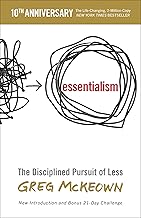
Essentialism
Disclosure: This post may contain affiliate links. We only recommend products we believe in, and we may receive a commission at no cost to you! Thank you for your support!
Acknowledgment: Cover Photo by moneycatzzz.com
Disclaimer: The information is provided for general information only – moneycatzzz.com makes no representations or warranties in relation to the information, including but not limited to any representation or warranty as to the fitness for any particular purpose of the information to the fullest extent permitted by law. While every effort has been made to ensure that the information provided in this article is accurate, reliable, and complete as of the time of writing, the information provided in this article should not be relied upon to make any financial, investment, real estate or legal decisions. Additionally, the information should not substitute advice from a trained professional who can take into account your personal facts and circumstances, and we accept no liability if you use the information to form decisions.