
 Reading Time: 8 mins #
 This post may contain affiliate links.
Coffee. Phone. One “quick check.” Thirty minutes gone. You didn’t choose to waste time — time was selected for you. That’s the Attention Economy Trap: products engineered to harvest your attention, convert it into “engagement,” and sell it. The result? Chronic digital distraction and fewer hours of the only thing that moves your life forward: deep work.
However, you don’t need to go off‑grid to win. You need a few brave boundaries, a couple of tiny systems, and an explicit promise about what your attention is for.
A simple truth that changes everything
You are not “bad at focus.” You are living inside machines that are great at stealing it. Philosopher James Williams calls this the fight for your “attentional goals” — the quiet commitments you make to yourself vs. the loud invitations of a feed. When you feel scattered, it’s not a moral failing. It’s a design success.
What the trap feels like (from the inside)
- “I opened to write, ended up scrolling.”
- “I read about what I should build instead of building it.”
- “I’m busy, but nothing important ships.”
That isn’t laziness. It’s the frictionless path doing what it does best.
Three shifts that made focus feel human again
These aren’t hacks. They’re posture changes, easy to remember when days get messy.
- Shift 1: From willpower to architecture: Willpower works until 2 p.m. Architecture works all day. Add friction to distractions, remove friction from creation.
- Shift 2: From blended to binary: Stop blending “work while I scroll.” Separate Creator and Consumer Mode so you always know which game you’re playing.
- Shift 3: From infinite to enough: Choose one outcome that matters today. “Enough” isn’t small; it’s specific. Specificity beats overwhelm.
Creator Mode vs. Consumer Mode (your new on/off switch)
- Creator Mode: no feeds, one file, one outcome. Think: draft, design, analysis, code, proposal. Phone out of reach. Headphones in.
- Consumer Mode: time‑boxed (20–30 minutes), one purpose (research/relax), one list to capture tangents.
- Physical anchors help: different desktop wallpaper, a separate browser profile, even a different chair. Social anchors help too: set a status that you’re in Creator Mode and list reply windows.
When you stop blending, you stop slipping.
A tiny Focus OS you can run today.
This is lightweight on purpose. It’s the “show up anyway” version.
- Name one Most Important Task (one sentence, one outcome).
- Two 50‑minute blocks, one in the morning, one in the afternoon. One task, one tab.
- Notification hygiene: default off; two response windows (e.g., 11:30 and 4:30).
- Three‑minute review: one win, one improvement, tomorrow’s MIT.
Friction is your friend (and it’s kinder than you think)
- Remove one‑click buy and saved cards.
- Move social apps off your dock/home screen.
- Block your top five sticky sites during Creator Mode (Freedom / Cold Turkey).
- Unfollow what agitates, keep what expands.
You’re not weak; the defaults are firm. Change the defaults.
Tools, if you want them:
Money Angle: Attention = Purchases
Countdowns. Scarcity badges. “Only 2 left.” Same loop, different domain.
Try this:
- A 24–72‑hour “cooling‑off” list for non‑essentials.
- “Wishlist Wednesday”: review carts once a week with a calm brain.
- Buy the tool that speeds up Creator Mode before the shiny thing that distracts it.
For Leaders and Teams (Where Interruptions Masquerade as Urgency)
- Replace status meetings with quick memos; use live time to decide, not update.
- Set shared Creator Mode hours. Publish reply windows.
- Track shipped outcomes: features live, proposals sent, drafts published, not “messages sent.”
If you want one article on meeting sanity, HBR’s “Stop the Meeting Madness” is practical without the guilt.
Two Quick Practices
- I moved Slack off my dock and set two response windows. I didn’t feel “disciplined.” I felt normal again. That “quiet brain” was enough to publish an extra weekly piece.
- Parking my phone in another room during Creator Mode felt silly until ideas returned. Turns out silence is a feature, not a bug.
Quick Overview: Trapped vs. Reclaimed
| How it feels | Trapped | Reclaimed |
|---|---|---|
| Mode | Blended (scrolling while “working”) | Binary: Creator vs. Consumer |
| Defaults | Frictionless to distract | Frictionless to create |
| Inputs | Many, algorithmic | Few, chosen, batched |
| Output | Busy, shallow | Fewer, better, shipped |
Final Thoughts: Attention is a promise you make to yourself
Being present is a quiet act of rebellion in a world that profits when you scroll. Your focus isn’t a personality trait; it’s a boundary. Add a little friction to everything that steals it. Remove friction from everything that builds it. You don’t become what you consume — you become what you continually return your attention to.
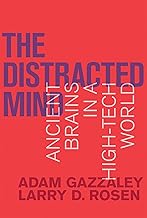
Books to Dig Deeper

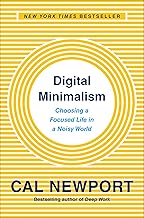
Digital Minimalism
by Cal Newport
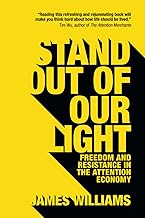
Stand Out of Our Light
Disclosure: This post may contain affiliate links. We only recommend products we believe in, and We may receive a commission at no cost to you! Thank you for your support!
Acknowledgement: Cover Image by moneycatzzz.com
Disclaimer: The information is provided for general information only – moneycatzzz.com makes no representations or warranties in relation to the information, including but not limited to any representation or warranty as to the fitness for any particular purpose of the information to the fullest extent permitted by law. While every effort has been made to ensure that the information provided in this article is accurate, reliable, and complete as of the time of writing, the information provided in this article should not be relied upon to make any financial, investment, real estate or legal decisions. Additionally, the information should not substitute advice from a trained professional who can take into account your personal facts and circumstances, and we accept no liability if you use the information to form decisions.