 Reading Time: 8 mins #
 This post may contain affiliate links.
Master Your Workday with the Pomodoro Technique: Boost Productivity and Focus
In the modern work environment, distractions are everywhere. Between constant notifications, meetings, and a never-ending stream of tasks, staying focused can feel like an impossible challenge. But there’s a solution: the Pomodoro Technique. This simple yet powerful time management strategy has helped millions boost their focus and productivity. Let’s dive in and explore how you can use it to crush your to-do list, unlock your productivity, and finally achieve that elusive work-life balance.
“Success is the sum of small efforts, repeated day in and day out.” – Robert Collier.
What is the Pomodoro Technique?
Developed by Francesco Cirillo in the 1980s, the Pomodoro Technique is a time management method that divides work into intervals, traditionally 25 minutes long, separated by short breaks. The term “Pomodoro” (Italian for “tomato“) comes from the tomato-shaped kitchen timer Cirillo used during his studies.
The Power of Focus: Why Pomodoro Works
Our brains crave focus, but constant distractions – pings, social media notifications, and multitasking – drain our energy and productivity. Research has shown that multitasking can lead to cognitive overload, reducing efficiency. The Pomodoro Technique counters this by encouraging focused work intervals, allowing you to dive deep into your tasks while minimizing distractions. With structured work periods followed by refreshing breaks, it’s easier to maintain high concentration levels throughout the day.
How the Pomodoro Technique Works
The Pomodoro Technique is deceptively simple but incredibly effective. Here’s how it works:
- Choose a Task: Select a specific task that you can complete within a Pomodoro interval. Avoid large, overwhelming projects.
- Set the Timer: Set a timer for 25 minutes. This is the length of one Pomodoro session.
- Work Uninterrupted: Focus solely on the task at hand. Silence notifications and close unnecessary tabs to eliminate distractions.
- Take a Break: Take a 3-5 minute break when the timer rings. Get up, stretch, hydrate, or relax.
- Repeat: After four Pomodoros, take a longer break of 15-20 minutes to recharge before starting the cycle again.
This technique helps you stay focused and motivated while ensuring you don’t experience burnout from prolonged work sessions.
Customizing the Pomodoro Technique for Your Needs
The Pomodoro Technique doesn’t have to be a one-size-fits-all solution. You can customize the intervals based on your work and attention span. For example, if tackling a deep work task, try using longer intervals, such as 50 minutes of work followed by a 10-minute break. Alternatively, shorter intervals of 15 or 20 minutes might work better for less demanding tasks.
Experiment with different intervals to find what suits your natural rhythm. The key is maintaining focused work periods, whether 25 minutes or longer, followed by a break. This approach will keep you energized and productive, regardless of the complexity of the task.

[“Pomodoro Technique -Avoid Stress” – Image by Canva]
Handling Interruptions: Stay Focused Even in a Busy World
While the Pomodoro Technique encourages uninterrupted focus, it’s not always realistic in collaborative or reactive work environments. You might experience interruptions, but that doesn’t mean you can’t stay on track.
How to Handle Interruptions
- Quickly Note the Distraction: If interrupted, jot down the distraction and return to your task. This allows you to refocus without losing too much momentum.
- Pause the Timer for Significant Interruptions: If the interruption requires your full attention, pause the Pomodoro timer and resume it when ready to continue.
- Designate “Interruptible” Pomodoros: For tasks that are prone to interruptions (like emails or meetings), designate certain Pomodoros as “interruptible,” allowing flexibility.
- Use Buffer Time Between Pomodoros: Add a short buffer time (1-2 minutes) between sessions to handle quick check-ins or urgent tasks.
By embracing flexibility and adjusting to the demands of your environment, you can stay focused and productive even when life throws distractions your way.
How to Break Down Large Projects with The Pomodoro Technique
One challenge many face is tackling large, complex projects. The Pomodoro Technique works best for focused execution tasks like writing, coding, or studying. However, how can it be applied to tasks that require more planning, brainstorming, or meetings?
Task Selection and Breakdown
When faced with a large project, break it into manageable chunks that fit into a Pomodoro session. For example, if you’re writing a report, each Pomodoro might focus on a specific section (introduction, body, conclusion). Similarly, if you’re brainstorming ideas, each Pomodoro could focus on exploring one concept at a time.
This method works particularly well for task prioritization techniques, allowing you to focus on high-priority components of the project while avoiding the overwhelming task of tackling everything at once.
Integrating the Pomodoro Technique with Other Methods
While the Pomodoro Technique is a powerful standalone tool, it can also be integrated with other time management strategies to create a seamless workflow.
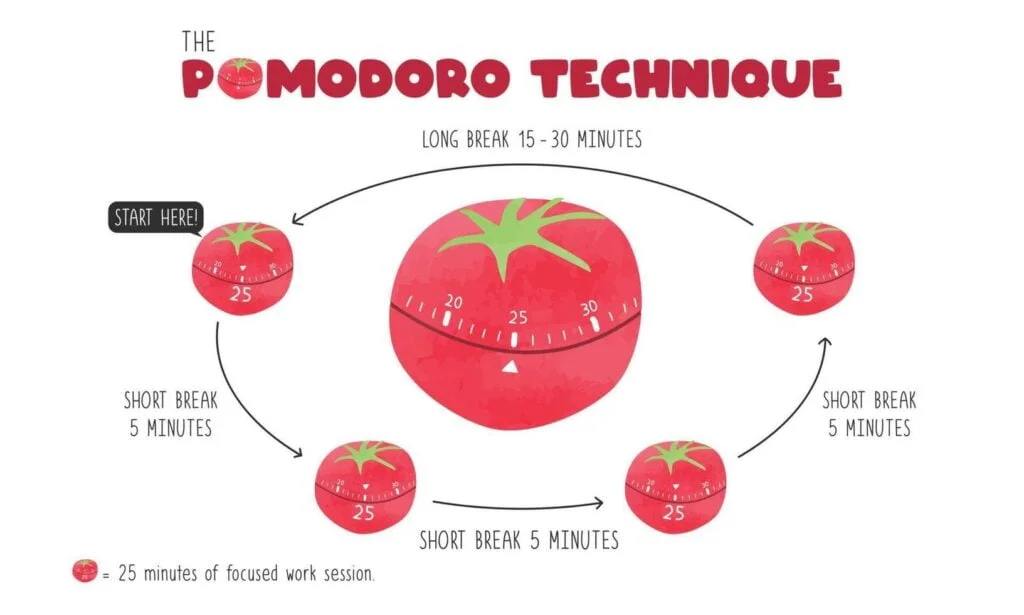
[“Pomodoro Technique -Method” – Image by moneycatzzz.com]
Combining Pomodoro with GTD (Getting Things Done)
David Allen’s Getting Things Done (GTD) method can help you capture and organize tasks before applying Pomodoro. For example, you could use GTD’s “capture” phase to list all your tasks, then prioritize them using the Eat That Frog principle (tackle your most important task first). Once you have your task list sorted, break each priority task into Pomodoro-sized chunks to ensure you stay focused and productive.
Enhancing Pomodoro with Atomic Habits
James Clear’s Atomic Habits focuses on small, incremental improvements. You can create routines that support consistent productivity by integrating the Pomodoro Technique with habit-building principles. For instance, you might start each day with a Pomodoro session dedicated to the most important task, followed by a series of shorter Pomodoros for routine tasks. Over time, these small habits add up to significant improvements in your productivity.

Common Pitfalls of the Pomodoro Technique and Tips for Success
While the Pomodoro Technique can be highly effective, common pitfalls may cause beginners to abandon the method. Let’s explore these mistakes and how to avoid them.
Pitfall #1: Skipping Breaks
The breaks are just as important as the work intervals. Skipping them can lead to burnout and decreased productivity. Stick to the recommended break times to recharge your brain and maintain focus.
Pitfall #2: Not Silencing Notifications
Checking your phone during a Pomodoro is tempting, but this breaks your focus. Before starting a session, mute notifications and close any unnecessary apps to stay on track.
Pitfall #3: Making Tasks Too Large or Too Small
Pomodoros work best for tasks completed within a 25-minute focus session. Avoid making your tasks too vague or too granular. If a task is too large, break it into smaller chunks.
Pitfall #4: Feeling Discouraged When You Lose Focus
It’s normal to lose focus now and then. If this happens, don’t be hard on yourself. Take a short break, reset, and return to the next Pomodoro with renewed energy.
⏲️Remember the Long Break
Don’t skip your longer break after four Pomodoros. This longer rest is essential for recharging so you don’t burn out during your next round of focused work.
The Pomodoro Technique
Supercharge Your Pomodoro Sessions with AI Tools
In the digital age, smart tools can further enhance the effectiveness of the Pomodoro Technique. AI-powered apps can help optimize your work sessions and create a more personalized productivity experience.
Specific App Recommendations
- Focus Apps: These apps help you stay on track by gamifying your productivity or providing focus-enhancing features.
- Forest: An app that gamifies the Pomodoro Technique by letting you grow virtual trees as you focus. If you check your phone, your tree dies, motivating you to stay on task.
- Focus Booster: A sleek app designed to implement the Pomodoro Technique while tracking your work habits. It helps visualize your productivity in real time.
- Website Blockers: These tools block distractions so you can focus solely on your tasks during Pomodoro sessions.
- Freedom: A highly customizable website blocker that can prevent access to distracting sites during your Pomodoro sessions.
- StayFocusd: A Chrome extension that restricts your access to certain websites, helping you stay focused while working.
- Timers: These are for those who need a simple timer to keep track of Pomodoro intervals.
- Be Focused: A timer app that allows you to customize Pomodoro sessions and track your progress. It’s ideal for those who prefer simplicity.
- Toggl Track: A time-tracking app that integrates with Pomodoro timers to provide insights into your time on various tasks.
How AI Can Enhance Your Pomodoro Workflow
Some AI-powered tools take productivity a step further. For instance, tools like RescueTime analyze your focus patterns and suggest when to take breaks. Other apps use machine learning to suggest optimal times for productivity based on your habits, ensuring you’re always working when your energy is highest.
The Psychology Behind Pomodoro: Focus and Attention
The Pomodoro Technique taps into psychology, particularly the concept of attention residue. When you switch tasks, some cognitive resources remain attached to the previous task, reducing your ability to focus fully on the next one. Pomodoro minimizes this issue by limiting task-switching, helping you concentrate deeply during each session.
Additionally, short breaks allow your brain to process and consolidate information, preventing decision fatigue and ensuring you can maintain high levels of cognitive performance throughout the day.
How Tim Ferriss Uses the Pomodoro Technique to Boost Focus and Productivity
Tim Ferriss, the author of The 4-Hour Workweek and Tools of Titans, is a big advocate of productivity techniques like the Pomodoro Technique. On his blog, he shared that the Pomodoro Technique has helped him maintain focus and avoid burnout while working on multiple projects. Ferriss incorporates Pomodoro sessions in his daily routine, mainly when writing or working on creative tasks. By sticking to strict work intervals and short breaks, he can enhance focus and prevent decision fatigue, leading to higher productivity in less time.

Unlock Your Full Potential: How the Pomodoro Technique Transforms Productivity and Focus
Picture a workday where distractions fade, focus sharpens, and productivity flows seamlessly. By embracing the Pomodoro Technique, you can make this a reality. With structured work intervals and regular breaks, this method helps you tackle even the most challenging tasks while avoiding burnout. You’ve learned how to adjust your Pomodoro sessions, whether customizing intervals or effectively handling interruptions, to fit your needs. We’ve seen how Tim Ferriss incorporates Pomodoro to enhance productivity and maintain focus.
Now it’s your turn. The Pomodoro Technique adapts to your style, making it a flexible tool that evolves with you. Ready to take control of your workday and eliminate distractions? Set your timer, dive into your first Pomodoro session, and watch your productivity skyrocket. Every session brings you closer to reaching your goals and unlocking your true potential.
Disclosure: This post may contain affiliate links. We only recommend products we believe in, and We may receive a commission at no cost to you! Thank you for your support!
Acknowledgement: Cover Image by Canva.com
Disclaimer: The information is provided for general information only – moneycatzzz.com makes no representations or warranties in relation to the information, including but not limited to any representation or warranty as to the fitness for any particular purpose of the information to the fullest extent permitted by law. While every effort has been made to ensure that the information provided in this article is accurate, reliable, and complete as of the time of writing, the information provided in this article should not be relied upon to make any financial, investment, real estate or legal decisions. Additionally, the information should not substitute advice from a trained professional who can take into account your personal facts and circumstances, and we accept no liability if you use the information to form decisions.