
 Reading Time: 7 mins #
 This post may contain affiliate links.
We all find ourselves searching for meaning in the experiences that shape us. From the quiet—everyday moments to the life-altering turning points, we ask: Why did this happen? What’s the lesson here? That quiet questioning isn’t just philosophical—it’s deeply human. And the belief that nothing happens by accident invites us to look more closely. It suggests that even the moments that feel random or insignificant are threads in a much larger—interconnected pattern.
This sense of interconnectedness isn’t just rooted in ancient wisdom—it’s a guiding principle that touches every part of our lives. It influences how we grow personally, navigate professional challenges—and make financial choices. Every action sets something in motion, creating ripple effects that stretch far beyond what we can immediately see.
What makes this truth powerful is not just its depth—but its practicality. We gain a new clarity when we understand how cause and effect shape our experiences. We start to make more intentional choices about how we show up, what we invest in, and how we align our daily actions with our long-term goals. Because in the end, it’s rarely the grand gestures—but rather the smallest, consistent decisions—that shape the story of our lives.
“We cannot live only for ourselves. A thousand fibers connect us with our fellow men; and among those fibers, as sympathetic threads, our actions run as causes, and they come back to us as effects.” – Herman Melville.
With that lens, let’s explore how interconnectedness reveals itself across our experiences—from our daily habits to the strategies that shape our careers and finances.

[“Interconnectedness of Life” – Image by moneycatzzz.com]
Interconnectedness: A Universal Truth Across Life and Business
The idea of interconnectedness runs through both ancient wisdom and modern science. From Buddhism’s concept of interdependence to quantum physics’ entanglement theory, the message is consistent: everything affects everything else.
In real life, this plays out through the cause-and-effect chain. Small, consistent choices—like journaling, reading, or meditating—may initially seem insignificant but often compound into transformational change. As James Clear writes in Atomic Habits, “You do not rise to the level of your goals. You fall to the level of your systems.“
A simple daily habit—like reading for 20 minutes—may not offer instant gratification—but this habit could reshape your thinking, expand your knowledge base, and lead to unexpected professional and personal opportunities over time. It’s not magic—it’s momentum.
Minor interactions, such as a kind word to a colleague or a thoughtful email, can blossom into collaborations or support systems that drastically improve your quality of life. Carl Jung described this as synchronicity—seemingly random events that connect meaningfully in hindsight.
Cause and Effect on Personal Growth
Personal transformation doesn’t happen overnight. It emerges from the compounded effects of small decisions shaped by our values and habits. Whether prioritizing health, investing in learning, or building emotional resilience, every intentional choice contributes to long-term growth.
Books like The Power of Habit by Charles Duhigg and Mindset by Carol Dweck underscore this truth:
- Duhigg explains how cue-routine-reward loops drive behavioral change.
- Dweck emphasizes that a growth mindset—the belief that we can improve with effort—amplifies our ability to evolve.
A small personal habit like gratitude journaling can gradually shift your worldview, influence your mood, and improve your response to challenges. In the context of cause and effect, it’s clear that change begins with awareness and is sustained through intention.

Professional Choices with Long-Term Impact
In business and careers, the ripple effect is magnified—every professional decision—taking on a new project, hiring a team member, or attending a networking event—can catalyze lasting impacts. What may seem like a routine email or conversation today might become a pivotal turning point tomorrow.
Consider the story of Reed Hastings, who co-founded Netflix following a carpool conversation with Marc Randolph. That simple interaction eventually disrupted the global entertainment industry. It’s a reminder that chance meetings are rarely random—embedded in a larger web of interconnected cause and effect
.
Books like Dale Carnegie’s How to Win Friends and Influence People highlight how building authentic relationships can foster trust, opportunity, and long-term success. With professional life becoming increasingly relationship-driven, small human gestures carry weighty consequences.
Recent workplace trends support this, too. According to a 2023 report by McKinsey, 85% of job opportunities are filled through networking, not formal applications—a powerful demonstration of interconnected outcomes at play.
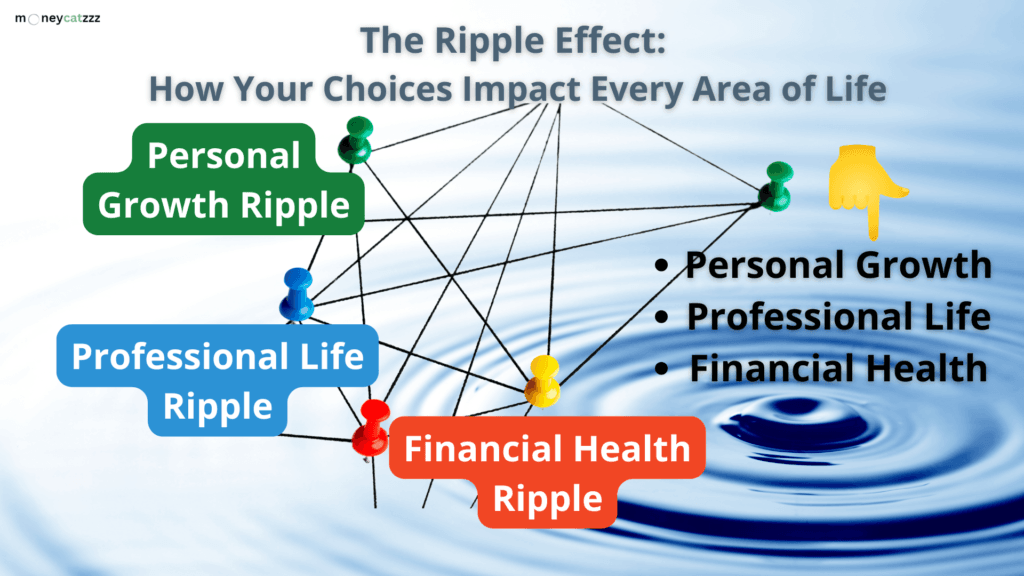
[“The Ripple Effect: How Your Choices Impact Every Area of Life” – Image by moneycatzzz.com]
The Financial Ecosystem: How Your Choices Compound
There may be interconnectedness that is more tangible than in our financial lives. Every spending choice, investment, and budgeting habit sets off a chain reaction with lasting results.
Take compound interest, for example. A 25-year-old investing $200 monthly at a 7% annual return could grow nearly $400,000 by age 65. Small, consistent choices drive this exponential growth—proving how micro-decisions lead to macro-impact.
George Clason’s timeless book The Richest Man in Babylon advocates “paying yourself first“—a simple idea that builds financial resilience and self-discipline over time.
In today’s world, apps like Acorns or Mint make it easier than ever to integrate these principles by automatically investing spare change or tracking expenses. These tools reinforce that small, values-aligned actions can generate large-scale financial transformation.
Moreover, aligning money decisions with your values brings emotional ROI. Brands like Patagonia prioritize sustainability and show how financial and ethical goals can align—influencing consumer behavior and societal norms. According to Deloitte’s 2024 Consumer Insights report, over 60% of millennials prefer to spend with companies that reflect their values—proving that even your wallet has a ripple effect.

Start Small, But Start with the Intention
Ultimately, understanding the interconnectedness of life encourages us to live with more intention. No matter how small, every action can spark a chain of events far beyond our immediate view. From personal habits to professional relationships and financial choices, our lives are defined by these threads of cause and effect.
What is one habit you can adopt today that aligns with the future you want to build? Choose a small action, done consistently, and let the ripple begin.
Key Takeaways
- Interconnectedness is absolute: Every choice—personal, professional, or financial—has a ripple effect across your life.
- Small habits lead to significant growth: Actions like reading 20 minutes daily or saving $50 a month compound into lasting change.
- Cause and effect is everywhere: Your present outcomes are directly influenced by past decisions—and your future hinges on today’s.
- Align with purpose: Financial and professional decisions rooted in your core values—lead to deeper fulfillment.
- Intentional action matters: Start with one small habit or decision today that reflects the future you want to create.
Disclosure: This post may contain affiliate links. We only recommend products we believe in, and We may receive a commission at no cost to you! Thank you for your support!
Acknowledgement: Cover Image by Canva.com
Disclaimer: The information is provided for general information only – moneycatzzz.com makes no representations or warranties in relation to the information, including but not limited to any representation or warranty as to the fitness for any particular purpose of the information to the fullest extent permitted by law. While every effort has been made to ensure that the information provided in this article is accurate, reliable, and complete as of the time of writing, the information provided in this article should not be relied upon to make any financial, investment, real estate or legal decisions. Additionally, the information should not substitute advice from a trained professional who can take into account your personal facts and circumstances, and we accept no liability if you use the information to form decisions.