
 Reading Time: 7 mins #
 This post may contain affiliate links.
Boost Focus: Master Attention in a Distracted World
Paying attention has become a rare superpower in a world buzzing with endless notifications, digital chatter, and mounting to-do lists. We’re constantly pulled in multiple directions—emails here, social media updates there, mental notes piling up in the background. Many feel scattered, tired, and vaguely disconnected amid this chaos. But what if the secret to reclaiming our clarity, energy, and purpose lies in something deceptively simple?
“Where focus goes, energy flows,” Tony Robbins once said. And while that phrase is often tossed around in self-help circles, modern neuroscience gives it real weight. How and where we direct our attention shapes our productivity, well-being, relationships, and even our sense of meaning. Let’s explore what science says about focus and how we can use that knowledge to live more intentional, vibrant lives.
“Where Focus Goes, Energy Flows” – attributed to Tony Robbins.
Your Brain on Focus: Why Multitasking Fails Us
First, let’s clear up a common myth: multitasking doesn’t make us more efficient—it slows us down. When we switch between tasks, our brain uses valuable energy to recalibrate, a phenomenon known as “task-switching cost.” This constant toggling can make us feel mentally drained without having accomplished much.
Instead, deep, focused attention—”single-tasking“—activates different neural pathways that allow for deeper learning and more meaningful engagement. It’s not just about getting things done faster; it’s about doing them better and with more presence.
Dopamine, Reward, and the Motivation Loop
There’s also a chemical reason why focus feels good. Enter dopamine—a neurotransmitter deeply linked to reward and motivation. When you complete a task or progress on a goal, your brain releases dopamine, reinforcing that behavior. Your brain says, “Nice job—do more of that.”
The trick is to create small, achievable goals that keep you motivated. Break big projects into manageable steps. Celebrate the little wins. The more often you complete meaningful tasks, the more you strengthen that reward loop—and the more naturally your brain leans into focus.
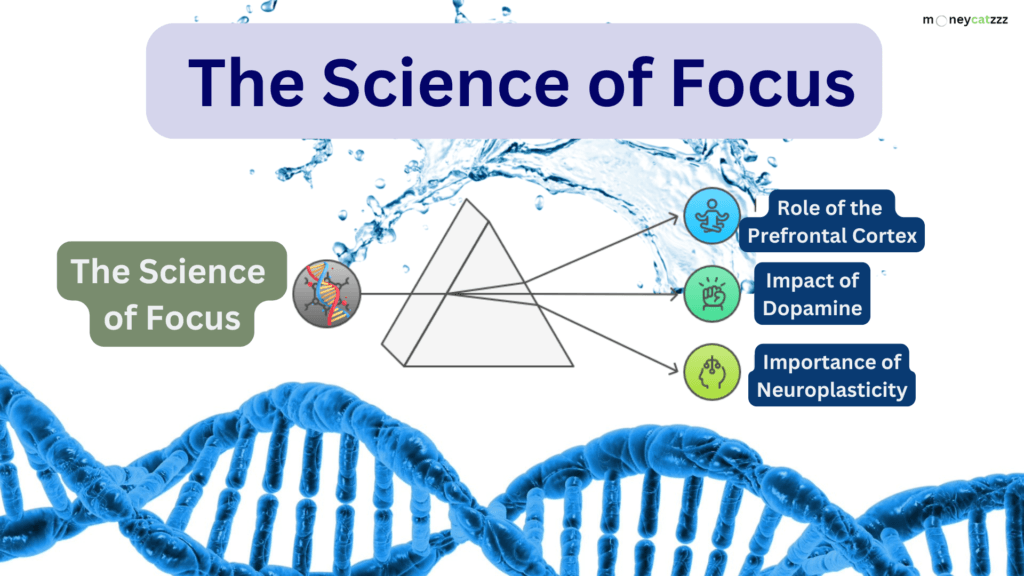
[“The Science of Focus” – moneycatzzz.com]
Intention as a Force of Nature
Focusing isn’t just about grit or willpower but also clarity. When you set a clear intention—you give your mind a direction to follow. You’re no longer reacting to every distraction but choosing where to invest your energy.
The focused intention is powerful. Athletes use it to visualize crossing finish lines. Musicians rely on it to hone their craft over years of practice. Entrepreneurs harness it to turn ideas into reality. Behind each success lies a profound but straightforward habit: the ability to direct attention with purpose.

Practical Tools to Strengthen Your Focus
Knowing that focus matters is one thing—cultivating it in your life is another. Here are some real-world strategies to help you build more focused, intentional attention:
1. Mindful Meditation
Even five to ten minutes of mindfulness daily can train your brain to focus. Meditation strengthens the prefrontal cortex, the part of the brain responsible for decision-making and attention. When your thoughts drift (as they will), gently returning your focus to your breath helps build mental resilience.
2. Try the Pomodoro Technique
This popular time management method breaks your work into 25-minute focus sessions followed by short breaks. It helps prevent burnout and keeps your brain fresh. You’ll be surprised how much more you get done when you work with—not against—your natural rhythms.
3. Declutter Your Space
Your environment reflects your mental state. A clean, organized workspace sends your brain a signal: this is a place for clarity and calm. Remove digital distractions—turn off unnecessary notifications—and create a space where focus can thrive.
4. Embrace Digital Boundaries
Take regular breaks from screens—go for a walk without your phone. Designate a time in the day when you unplug completely—even 30 minutes can reset your nervous system and improve mental clarity.
5. Prioritize What Truly Matters
At the start of each day, ask yourself: “What’s one thing I can do today that will make everything else easier or unnecessary?” Focusing on what matters most prevents you from getting lost in busy work or low-priority tasks.
Real-Life Examples of Focus in Action
Focus isn’t some abstract concept—it shows up in the lives of people who commit to their craft:
- Athletes visualize their race or game down to every breath and movement. This mental rehearsal sharpens their performance and builds confidence.
- Musicians devote countless hours to practicing the same pieces, refining every note and gesture with intense concentration.
- Entrepreneurs often cite their unwavering focus on a single mission or problem as the engine behind their success.
In each case, results are born from scattered effort and sustained purposeful attention.
Focus and Emotional Well-being
Here’s something often overlooked: focus isn’t just good for getting things done—it’s also deeply healing. When your mind is present, you’re less likely to ruminate on the past or spiral into anxiety about the future.
Mindful focus can reduce stress, promote emotional regulation, and foster creativity. You’re more likely to notice the small joys—sunlight on your skin, the rhythm of your breath, a kind word from a colleague—when you’re not mentally five steps ahead.
Deep Work: The Gold Standard of Modern Productivity
In his book Deep Work, author Cal Newport argues that the ability to do focused, meaningful work without distraction is one of the most valuable skills in today’s economy. He’s right. Whether writing, coding, designing, or leading, deep work allows you to tap into a flow state—where time disappears and your best ideas emerge.
To cultivate deep work, schedule uninterrupted blocks of time for your most important tasks. Treat these windows as sacred. No email, no multitasking. Just you, your focus, and the work that matters.
The Habit Loop: How Focus Becomes Second Nature
Charles Duhigg, in The Power of Habit, explains that habits form through a loop: cue →, routine → reward. You can apply this to focus:
- Cue: A time of day, a specific environment, or even a sound that signals it’s time to begin work.
- Routine: Your focused work session—no distractions.
- Reward: A break, a stretch, a cup of tea, or simply the satisfaction of finishing something meaningful.
Over time, these cues become signals for your brain to switch into focus mode—no willpower is required.
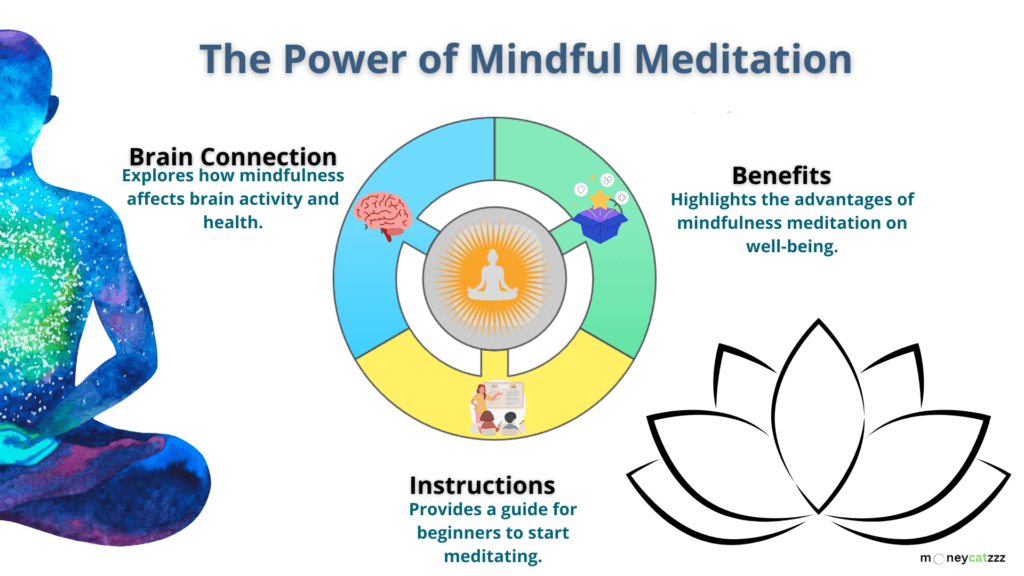
[“The Power of Mindful Meditation” – moneycatzzz.com]
The Art of Flow
In his book Flow: The Psychology of Optimal Experience, Mihaly Csikszentmihalyi explores the concept of flow, a state of complete absorption in an activity. When we’re in a flow state, we’re so focused on the task at hand that we lose track of time. To achieve flow, we need to find a balance between challenge and skill. Setting challenging but achievable goals allows us to enter a flow state and maximize our productivity and creativity.

Living with Intention
Ultimately, mastering focus isn’t just about productivity—it’s about living on purpose. It’s about choosing where to place your attention and, in doing so, choosing the kind of life you want to live.
Because where your attention goes, your energy follows. And your energy? That’s your most precious resource.
So start where you are. One breath. One clear goal. One mindful step.
The rest will follow.
Disclosure: This post may contain affiliate links. We only recommend products we believe in, and We may receive a commission at no cost to you! Thank you for your support!
Acknowledgement: Cover Image by moneycatzzz.com on Canva
Disclaimer: The information is provided for general information only – moneycatzzz.com makes no representations or warranties in relation to the information, including but not limited to any representation or warranty as to the fitness for any particular purpose of the information to the fullest extent permitted by law. While every effort has been made to ensure that the information provided in this article is accurate, reliable, and complete as of the time of writing, the information provided in this article should not be relied upon to make any financial, investment, real estate or legal decisions. Additionally, the information should not substitute advice from a trained professional who can take into account your personal facts and circumstances, and we accept no liability if you use the information to form decisions.