
 Reading Time: 8 mins #
 This post may contain affiliate links.
There was a time when Monday mornings felt like a test I hadn’t studied for. I would bolt upright before dawn, heart thumping, already bracing for the avalanche. My coffee cooled untouched beside me as I rehearsed the week ahead like a chess match, one in which every opponent had more pieces than I did.
For years, this was my ritual: a private panic dressed up as planning, fueled by the exhausting belief that I could control everything outside of myself. I realized I had misplaced my power, misunderstanding the very nature of my Internal Locus of Control. I told myself I was being proactive. But really, it was the same old loop, half dread, half denial, repeating so faithfully that even my cat started hiding from me on Monday mornings.
And then came the winter I ran myself so thin I could hear my nerves humming like an exposed wire. I remember sitting at my kitchen table: grey light, cold tiles, the faint taste of metal in my mouth, and feeling genuinely confused about how a life full of choices had begun to feel like one long reaction.
A therapist friend once told me the difference between reacting and responding is the difference between being chased and being met. That morning, I felt thoroughly chased.
But that was also the morning something small shifted.
Not a breakthrough. Not a revelation. Just a subtle, almost imperceptible refusal to keep starting my week on a cliff’s edge. It happened the way most real change does: quietly, under the surface, like a tide turning before anyone on the beach notices.
What I wanted was simple: fifteen minutes to feel like my life was mine again.
And that was how this ritual began.
The Morning That Changed My Mondays
It started with a question I hadn’t asked myself in years:
What, exactly, am I building my week on?
I didn’t have an answer. I had plans, yes — ambitious, shimmering ones, but no foundation beneath them. It felt like trying to build a lighthouse on sand.
So I turned off my phone. Pulled my notebook toward me. And did something embarrassingly basic: I wrote down, by hand, what actually mattered that week. What would genuinely move me forward? What would steady me, return me, ground me?
And something curious happened.
My breathing slowed.
My pulse steadied.
The day softened around the edges.
It felt like stepping back into my own internal locus of control, a phrase I once thought belonged in research papers and university corridors. But that morning, it felt like something far more precious: the ability to choose my stance before the world came at me.
Fifteen minutes. One page. A clarity I hadn’t felt in years.
I carried that feeling into the following week. Then the next. And slowly, almost shyly, the ritual took on a shape of its own.

[“Internal Locus of Control: The Anchor of Choice in a Chaotic Week” – Image by moneycatzzz.com]
What the Week Looks Like When You Don’t Rush Into It
Somewhere along the way, those Monday fifteen minutes became a kind of boundary; a membrane between who I was before the week began and who I intended to be inside it.
I stopped acting out of urgency as a personality trait.
I stopped treating every request like a command.
I stopped forgetting that “control what you can control” is not a platitude but a survival skill.
People think power comes from doing more.
But in my experience, it comes from discerning what is yours to carry.
It comes from recognizing what falls within your sphere of control, and blessing the rest to drift where it must.
But that discernment doesn’t arrive on its own. It has to be invited. Named. Sat with. Cultivated.
And for me, those fifteen minutes became the invitation.
The Year I Learned to Look Down Before I Look Ahead
Last spring, during a month when life felt particularly carnivorous, a colleague asked me, a little too casually, how I stay “so calm under pressure.” I laughed, because if she’d seen me ten minutes earlier wrestling with my inbox like an insulted octopus, she might have phrased it differently.
However, the truth is that the calm doesn’t come from talent or temperament. Goodness knows it doesn’t come from childhood conditioning.
It comes from fifteen minutes each week when I gather my scattered energy, lay it on the table, and deliberately decide what gets my attention and what merely triggers my awareness.
Those minutes repair something in me. They narrow my focus down to the essential, and in doing so, soften the decision fatigue that waits for all of us just beyond breakfast.
And perhaps most importantly, they allowed me to choose my actions and reactions, rather than relying on habit or panic.
There is tenderness in that kind of choice. And responsibility. And relief.
The Day the Ritual Was Tested
There was a Monday not long ago when the ritual almost slipped through my fingers.
I woke up late. A client pinged me before sunrise. A family situation simmered in the background. I felt myself sliding back into the old mode, the one where everything is urgent because nothing is intentional.
But muscle memory is a quiet ally.
I sat down. Just fifteen minutes, I told myself. Just breathe.
By the time I looked up, the day had lost its teeth.
The difference wasn’t that the problems were gone; they were all still lined up politely, waiting. The difference was that I had remembered who I was before they arrived. I had tapped back into that private place inside me that refuses to be dragged by circumstances.
The place where the internal locus of control is not philosophy but practice.
Where proactive vs reactive is not a slogan but a way of breathing.
Where emotional regulation feels less like discipline and more like dignity.
I walked into the day upright.
Not invincible.
Just… clear.
What the Ritual Really Does
People ask me now what the “Monday 15” consists of. I always hesitate to answer, not because it’s secret, but because the mechanics are not the point.
The real magic isn’t in the structure; it’s in the stillness.
It’s in asking the steadying questions:
What can I actually control this week?
What will require boundaries I haven’t set yet?
Where am I bracing unnecessarily?
What is genuine, and what is noise?
These questions won’t rearrange your entire life.
But they will rearrange your stance, which is often what matters more.
Over time, the ritual becomes less of a reset and more of an anchor. A pause that reminds you: you are allowed to meet your life with intention rather than speed.

[“Decision Fatigue Prevention: Choosing the Essential Three Actions” – Image by moneycatzzz.com]
I think of it as checking the ground beneath my feet before I attempt to stand on it.
A foundation check.
A quiet one.
A necessary one.
What I Know Now
I no longer trust weeks that begin with urgency.
I don’t trust plans that require me to disappear to be accomplished.
And I certainly don’t trust any system that tells me exhaustion is a strategy.
But I trust this ritual.
I trust the pause.
The breath.
The re-entry into myself.
Fifteen minutes is not much.
But it is enough to return me to my own influence, to the small but sturdy sphere of control that no one can take from me.
It is enough to shift me from reacting to choosing.
From scattering to aiming.
From surviving the week to shaping it.
And every Monday, when I close my notebook and take that first calm step into the day, I hear the echo of something my grandmother used to say while brushing her hair before work:
“Start from yourself, sweetheart. Everything else starts from there.”
She was right.
Everything begins in those fifteen minutes.
Recommended Reading to Master Your Internal Locus of Control
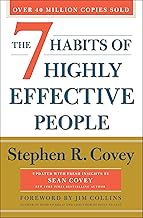
The 7 Habits of ……….

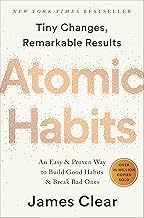
Atomic Habits

Man’s Search for Meaning
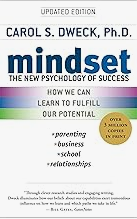
Mindset
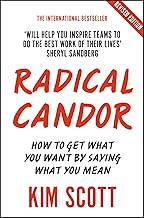
Radical Candor
Daring Greatly
Resources: The 15-Minute Anchor: Master Your Control, Defeat Procrastination
Resource Title (Anchor Text) | URL | Why It’s Relevant |
|---|---|---|
Rotter’s Locus of Control: Understanding Internal vs. External | Defines Julian Rotter’s Locus of Control, the core psychological principle guiding the shift from external reaction to internal action. | |
Harvard Business Review: The Four Ways People Get and Stay Stuck | https:hbr.org/2014/11/the-four-ways-people-get-and-stay-stuck | Offers a business-world perspective on moving from being “stuck” (reactionary) to being proactive and taking deliberate control. |
Psychology Today: How to Stop Procrastinating and Start Living | Provides a clinical view on overcoming procrastination and the mental “dread” that the 15-Minute Anchor is designed to combat. |
Disclosure: This post may contain affiliate links. We only recommend products we believe in, and we may receive a commission at no cost to you! Thank you for your support!
Acknowledgment: Cover Image by moneycatzzz.com
Disclaimer: The information is provided for general information only – moneycatzzz.com makes no representations or warranties in relation to the information, including but not limited to any representation or warranty as to the fitness for any particular purpose of the information to the fullest extent permitted by law. While every effort has been made to ensure that the information provided in this article is accurate, reliable, and complete as of the time of writing, the information provided in this article should not be relied upon to make any financial, investment, real estate or legal decisions. Additionally, the information should not substitute advice from a trained professional who can take into account your personal facts and circumstances, and we accept no liability if you use the information to form decisions.