
 Reading Time: 8 mins #
 This post may contain affiliate links.
The client’s face went cold as she stared at her iWatch, and she said, “It is almost 3 P.M., this isn’t what we agreed to pay for.” My chest tightened. Vision tunneled: three months of work, about to walk out the door. I opened my mouth to defend, to explain, to panic-fix, and heard myself say the wrong thing precisely. The meeting ended twelve minutes later. The contract dissolved with it.
That night, I told my therapist I’d failed because I “couldn’t stay calm.” She corrected me gently: “You didn’t lack calm. You lacked Crisis Poise,’ the trained ability to access stillness when everything accelerates. It’s not a personality trait. It’s a skill. And it starts with your breath.”
She introduced me to Zen breathing as the doorway to Crisis Poise. Not the shallow, chest-based breathing I’d been doing my entire life, but deep, intentional breathing that actually communicates with your nervous system, telling it you’re safe even when your mind screams otherwise.
What if you could access complete calm in 30 seconds, even as everything burns around you?
The Promise: From Panic to Poise
In this guide, you’ll discover how Crisis Poise isn’t an inborn gift but a trainable response. You’ll learn the science of Zen breathing, master the 4-6-8 technique that shifts your physiological state in under a minute, and get a three-stage framework for maintaining poise under pressure when professional chaos strikes.
The Neuroscience of Losing Your Crisis Poise
The Brain’s Betrayal
I used to think people with natural poise under pressure were born different, built with some unshakeable core I lacked. Then I discovered the neuroscience of stress, brilliantly explained in Bessel van der Kolk’s The Body Keeps the Score. When we perceive a threat, our amygdala (the brain’s alarm system) literally hijacks our prefrontal cortex (the rational thinking center); blood flow shifts. Cognitive bandwidth disappears. We stop thinking and start surviving.
This physiological shift happens in milliseconds, faster than conscious thought. Your body is flooded with cortisol and adrenaline. Your breathing becomes shallow and rapid. Your field of vision narrows. Your ability to process complex information vanishes. You’re not weak or incompetent; you’re experiencing a biological response that evolved to help you escape tigers, not navigate high-pressure professional moments.
Research from Stanford’s neuroscience department shows that it takes approximately six seconds for your rational brain to come back online after an amygdala hijack. But most of us respond in those first six seconds, making decisions from our most primitive, fear-based state. That’s why we say things we regret, send emails we wish we could retract, and make choices that seem insane in hindsight.
The Professional Cost
Every time we lose our Crisis Poise, we pay a compound price. The immediate cost is obvious: the botched presentation, the reactive email, the defensive response that makes everything worse. However, there’s a hidden cost as well. Each panic response reinforces the neural pathway that says “crisis equals panic.” We literally train our brains to lose composure faster next time.
I once calculated that my lack of Crisis Poise in that single client meeting cost me not just the $30,000 contract but also three referrals she would have made, plus the confidence that took six months to rebuild; one moment of panic, rippling out for years.
What Is Crisis Poise?
Crisis Poise is the trained ability to maintain inner stillness and clear thinking in the face of chaotic or threatening external circumstances. It’s not about suppressing emotions or pretending you’re not stressed. As my therapist explained, “Crisis Poise means feeling the stress fully while choosing your response from a place of groundedness rather than reactivity.”
It’s the space Viktor Frankl wrote about: “Between stimulus and response there is a space. In that space is our power to choose our response.” Crisis Poise is learning to access and expand that space, even when every cell in your body wants to react immediately.
The Vagus Nerve: Your Built-In Crisis Poise Switch
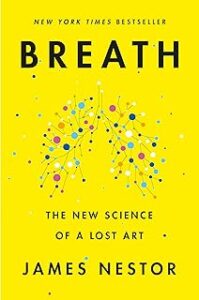
I thought breathing exercises were mystical nonsense until I read James Nestor’s Breath and learned about the vagus nerve. This wandering nerve (vagus means “wanderer” in Latin) connects your brain to your heart, lungs, and gut. It’s the superhighway of your parasympathetic nervous system, the “rest and digest” response that counters the “fight or flight” state.
Here’s the revelation: your vagus nerve is bidirectional. Your brain tells your body to panic, but your body can tell your brain to calm down. The mechanism? Diaphragmatic breathing, specifically with an extended exhale.
Dr. Andrew Huberman’s lab at Stanford has extensively studied this “physiological sigh,” showing that specific breathing patterns can shift your nervous system state in as little as one to three breath cycles. When you breathe deeply into your diaphragm and extend your exhale, you activate your vagus nerve, which signals your brain that you’re safe. Your heart rate drops. Your prefrontal cortex comes back online. Your cognitive bandwidth returns.
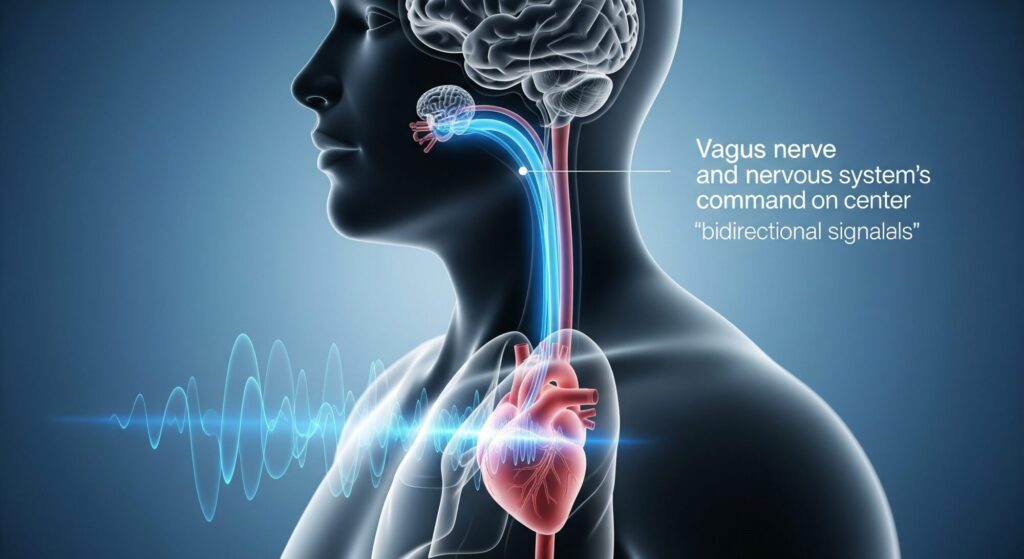
[“The Vagus Nerve: The Switch from Panic to Poise” – Image by moneycatzzz.com]
The 4-6-8 Technique for Instant Crisis Poise
The most effective pattern I’ve found for achieving Crisis Poise is the 4-6-8 technique:
- Inhale through your nose for 4 counts. Let your belly expand fully. Place one hand on your chest, one on your belly; only the belly hand should move.
- Hold gently for 6 counts. No clenching, no tension. Just a soft pause, like the moment between waves.
- Exhale through your mouth for 8 counts. Complete the release, allowing your belly button to draw toward your spine.
- Pause briefly before the next cycle. This pause is where Crisis Poise lives, in the stillness between breaths.
The first time I tried this in an actual crisis was during a board presentation when the projector failed. As IT scrambled and board members shifted impatiently, I excused myself for “just a moment” and did three cycles of Zen Breathing in the hallway. Forty-five seconds total. I walked back in with complete Crisis Poise, suggested we use the whiteboard instead, and delivered the best impromptu presentation of my career.
The long exhale is crucial. Research published by Science Direct shows that extended exhalation activates the parasympathetic nervous system more effectively than any other breathing pattern. It’s literally the opposite of hyperventilation, which can trigger a panic attack. Every long exhale tells your nervous system:
“We’re okay. We can think clearly now.”
Training for Crisis Poise Before You Need It
You can’t learn to swim while drowning. Similarly, you can’t master Zen Breathing for Crisis Poise while in an actual crisis. The practice must be built during calm moments, creating what researchers call “stress inoculation.”
I started practicing in the most mundane moments. Standing in line at the grocery store: three cycles of 4-6-8. Waiting for my computer to boot up: three cycles. Sitting in traffic: three cycles. These weren’t meditation sessions; they were Crisis Poise rehearsals, training my nervous system to shift states on command.
The beauty of this practice is its invisibility. No one knows you’re doing Zen Breathing. You can practice Crisis Poise in a meeting, on a call, or in an elevator. You’re building your capacity for calm in micro-doses throughout the day.
My daily protocol:
- Morning coffee: Three cycles before the first sip
- Email check: Three cycles before opening the inbox
- Meeting transitions: Three cycles between calls
- Evening shutdown: Three cycles before leaving work mode
Each practice session builds what neuroscientists call “vagal tone,” essentially strengthening your nervous system’s ability to transition quickly from stress to calm. You’re literally building the neural path
Your Crisis Poise Protocol: From Panic to Power
When a crisis actually strikes, you need a clear protocol in place. Through trial and many errors, I’ve developed a three-stage framework that transforms panic into poise under pressure.
Stage 1: The Tactical Pause
The moment you feel the stress spike (tight chest, racing thoughts, rising heat), stop. Don’t speak. Don’t type. Don’t move. Take three complete cycles of Zen Breathing using the 4-6-8 pattern.
Last month, I received an email accusing me of a significant error that could have cost our company a key account. My first impulse was to defend myself immediately. Instead, I pushed back from my desk and took my three cycles. In those 45 seconds, my Crisis Poise returned. I realized the accusation was based on a misunderstanding I could easily clarify, rather than an attack I needed to defend against.
If you’re in a meeting and need to respond immediately, try: “That’s an important point. Let me take a moment to consider it properly.” Then breathe. No one has ever criticized me for being too thoughtful.
Stage 2: Information Intake
With your cognitive bandwidth restored through Zen Breathing, you can now process information rather than react to it. Ask yourself three questions:
- What is actually happening? (Facts only, no interpretation)
- What story am I adding to these facts?
- What does this situation need from me?
This separation of fact from story is crucial for Crisis Poise. As Marcus Aurelius wrote in Meditations, “How much trouble he avoids who does not look to see what his neighbor says or does.” Often, our panic comes not from what’s happening but from what we imagine it means.AASE
Stage 3: The Neutral Response
From a state of Crisis Poise, you can now respond rather than react. Your response will have three qualities:
- Factual rather than emotional: “I understand there’s a gap between expectations and delivery.”
- Forward-focused rather than defensive: “Let’s clarify what success looks like and create a path there.”
- Collaborative rather than combative: “What would need to change for this to meet your needs?”
This neutral response is only possible when you’ve used Zen Breathing to maintain poise under pressure. Without it, you’re responding from a fight-or-flight mode, which always sounds defensive, aggressive, or desperate.
When Your Body Resists Crisis Poise
“I don’t have time for breathing exercises during a crisis!” I said to my therapist. She smiled. “You don’t have time NOT to. Three breaths take 45 seconds. Poor decisions made from panic take years to undo.”
Your body might resist Zen Breathing at first. The shallow chest breathing of stress feels familiar, even comfortable in its dysfunction. Diaphragmatic breathing may initially make you feel more anxious as your body adjusts to the increased oxygen. This is normal. It’s your nervous system recalibrating.
Some people worry that pausing to breathe makes them look weak or indecisive. The opposite is true. Taking a moment to achieve crisis poise demonstrates ultimate poise under pressure. It shows you’re not reactive but responsive, not impulsive but intentional.

[“The 4-6-8 Technique for Instant Crisis Poise” – Image by moneycatzzz.com]
Crisis Poise as Life Philosophy
Crisis Poise extends beyond professional moments. Once you master Zen Breathing for work crises, you’ll find yourself using it everywhere: difficult conversations with family, financial decisions, health scares, and relationship tensions.
The Stoics understood this. Marcus Aurelius wrote, “Confine yourself to the present,” which is essentially Crisis Poise in ancient language. You can’t control what happens, but you can control your response. That control starts with your breath.
Each moment of Crisis Poise builds capacity for the next. It’s compound interest for your nervous system. Over time, what once triggered panic barely raises your heart rate. You become someone others turn to during high-pressure professional moments because your calm is contagious.
Your First Crisis Poise Moment
Crisis Poise isn’t a talent you’re born with or without. It’s a practice, built one breath at a time. Every expert in poise under pressure started exactly where you are, with a single decision to breathe differently.
Your challenge: Choose one low-stakes moment today. It could be before checking email, or during your commute, or while waiting for lunch. Take three cycles of Zen Breathing using the 4-6-8 pattern. Notice without judging. You’re not trying to feel anything specific. You’re just building the pathway you’ll need when a crisis actually strikes.
What if every crisis became an opportunity to practice becoming who you really are underneath the stress? What if Crisis Poise wasn’t about never feeling pressure but about dancing with it gracefully?
The breath is always there, always available, always free. It’s the doorway to Crisis Poise, waiting for you to walk through.
Start with one breath. The rest will follow.
Essential Resources for Mastering the Tactical Pause and Crisis Poise

Disclosure: This post may contain affiliate links. We only recommend products we believe in, and We may receive a commission at no cost to you! Thank you for your support!
Acknowledgement: Cover Image by moneycatzzz.com
Disclaimer: The information is provided for general information only – moneycatzzz.com makes no representations or warranties in relation to the information, including but not limited to any representation or warranty as to the fitness for any particular purpose of the information to the fullest extent permitted by law. While every effort has been made to ensure that the information provided in this article is accurate, reliable, and complete as of the time of writing, the information provided in this article should not be relied upon to make any financial, investment, real estate or legal decisions. Additionally, the information should not substitute advice from a trained professional who can take into account your personal facts and circumstances, and we accept no liability if you use the information to form decisions.