
 Reading Time: 8 mins #
 This post may contain affiliate links.
In the depths of Auschwitz, stripped of everything: family, possessions, dignity, psychiatrist Viktor Frankl discovered humanity’s final freedom, the power to choose one’s attitude in any given circumstances. His seminal work, Man’s Search for Meaning, isn’t just a Holocaust memoir; it’s a blueprint for finding purpose when life seems purposeless.
Written in nine days after his liberation, this book has sold over 16 million copies, been translated into 50 languages, and the Library of Congress named it one of the ten most influential books in American history. But beyond statistics lies a profound truth: meaning, not happiness, is what sustains us through suffering.
What is Logotherapy? The Third Viennese School
The Revolutionary Approach to Mental Health
While Freud emphasized pleasure and Adler focused on power, Frankl introduced logotherapy, therapy through meaning. This “Third Viennese School of Psychotherapy” posits that our primary drive isn’t pleasure (Freud) or power (Adler), but the discovery and fulfillment of meaning.
Frankl observed that prisoners who maintained a sense of purpose, such as reuniting with loved ones, completing unfinished work, or bearing witness, survived at higher rates than those who lost hope. This observation became the cornerstone of his therapeutic approach, validated by modern research from Stanford University, which shows that meaningful lives, although sometimes harder, provide deeper satisfaction than purely happy ones.
The Three Sources of Meaning
Frankl identified three primary sources through which we discover meaning:
1. Creative values – What we give to the world through work or creation
2. Experiential values – What we take from the world through experiences and relationships
3. Attitudinal values – The stance we take toward unavoidable suffering
This framework is echoed in contemporary works, such as Eckhart Tolle’s The Power of Now, which similarly emphasizes choosing our response to present circumstances, and Ryan Holiday’s The Obstacle Is the Way, which applies Stoic principles to modern challenges.
he Existential Vacuum: Why Modern Life Feels Empty
When Success Doesn’t Equal Fulfillment
Frankl predicted our current crisis of meaning with startling accuracy. Despite unprecedented material comfort, research from the American Psychological Association shows anxiety and depression at record highs. Frankl called this the “existential vacuum,” the emptiness that emerges when life lacks purpose.
This vacuum manifests as:
- Sunday neurosis – The depression that sets in when the busy week ends
- Unemployment neurosis – Loss of purpose with loss of work
- Retirement crisis – The “now what?” after achieving life goals
The antidote isn’t more achievement but what Frankl calls “self-transcendence,” finding meaning beyond ourselves.
Practical Applications: Logotherapy Techniques for Daily Life
The Paradoxical Intention Method
One of Frankl’s most practical tools involves prescribing the symptom to break anxiety cycles. Someone afraid of sweating during presentations might intentionally try to sweat as much as possible. This paradoxical approach, now validated in cognitive-behavioral therapy, breaks the cycle of fear and symptoms.
Suggested exercise: Write in a journal (like the Leuchtturm1917 dotted notebook, perfect for reflection practices) about a fear, then deliberately imagine the worst-case scenario in detail. Often, the absurdity becomes apparent, and anxiety dissipates.
Dereflection: Shifting Focus Outward
Modern culture encourages hyper-reflection, constant self-monitoring, and optimization. Frankl’s dereflection technique redirects attention from ourselves to meaningful engagement with the world. This principle is presented in Cal Newport’s “Deep Work,” which advocates for focused, meaningful work over shallow busywork.

[“The Existential Vacuum” – Image by moneycatzzz.com]
The Connection to Stoic Philosophy
Ancient Wisdom Meets Modern Psychology
Frankl’s emphasis on choosing our response echoes Marcus Aurelius’s Meditations: “You have power over your mind, not outside events. Realize this, and you will find strength.” Both traditions recognize that while we cannot control what happens to us, we have absolute control over our response.
This Stoic connection makes Man’s Search for Meaning a perfect companion to:
- Epictetus’s Enchiridion
- Seneca’s Letters from a Stoic
- William Irvine’s A Guide to the Good Life (an excellent modern Stoic primer)
Finding Your Why: The Logotherapy Questions
Three Questions to Uncover Purpose
Frankl suggested three profound questions for discovering personal meaning:
- What does life expect from me right now?
- For whose sake do I live?
- What unique task awaits my completion?
These questions shift perspective from “What can I get?” to “What can I give?,” a reframe that Simon Sinek explores in Start with Why, showing how purpose-driven individuals and organizations outperform their peers.

[“Dereflection and Purpose” – Image by moneycatzzz.com]
The Tragic Optimism Framework
Hope Despite Everything
Frankl’s “tragic optimism“ maintains hope despite life’s tragic triad: pain, guilt, and death. This isn’t naive positivity but what he calls “optimism in the face of tragedy,” choosing to:
- Turn suffering into achievement
- Transform guilt into improvement
- Use life’s transitory nature as an incentive for responsible action
This framework offers practical resilience tools, particularly when combined with modern positive psychology research, as outlined in Martin Seligman’s “Learned Optimism.“
Why Meaning Matters More Than Happiness
The Research-Backed Truth
Contemporary neuroscience confirms Frankl’s insights. Studies show that pursuing meaning activates different brain regions than seeking pleasure; with individuals who seek meaning exhibiting greater resilience, longevity, and life satisfaction.
Consider keeping a “meaning journal“ using prompts from Frankl’s work—many readers find the Five Minute Journal structure helpful for daily reflection practices on meaning.
Modern Applications: From Boardroom to Bedroom
Leadership Through Meaning
Organizations applying Frankl’s principles report higher engagement and lower turnover. Leaders who help employees connect their work to a larger purpose see productivity increases of up to 30%, as documented in Daniel Pink’s book, Drive.
Relationships and Logotherapy
Frankl believed love was the ultimate meaning-maker: “Love is the only way to grasp another human being in the innermost core of his personality.“ This principle transforms relationships from need-fulfillment to mutual growth.
Integration Practices for The Slow Scroll Reader
This Sunday, as you sit with Frankl’s wisdom, consider these integration practices:
Morning Question: “What is life asking of me today?”
Evening Reflection: “Where did I choose my attitude today?”
Weekly Review: “What suffering did I transform into growth?”
The Enduring Legacy
Man’s Search for Meaning endures because it addresses humanity’s eternal question: Why continue when life is hard? Frankl’s answer, that we can find meaning in any circumstance, offers hope without false promises.
As you close this reflection, remember Frankl’s most quoted insight: “Everything can be taken from a man but one thing: the last of human freedoms, to choose one’s attitude in any given set of circumstances.“
This isn’t self-help; it’s soul-help. In our age of anxiety, Frankl’s logotherapy offers what meditation apps and life hacks cannot: a framework for transforming inevitable suffering into chosen purpose.
Continue Your Journey: If Frankl’s wisdom resonates, explore our curated reading list featuring complementary works on meaning, resilience, and purpose. The search for meaning isn’t a destination; it’s the path itself.
Recommended Reading: Ten Books for Purpose, Stoicism, and Meaning
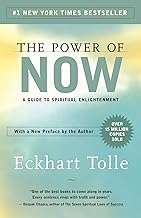
The Power Of Now


Man’s Search for Meaning
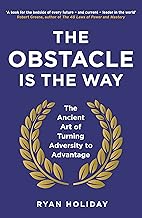
The Obstacle Is the Way
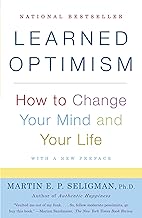
Learned Optimism
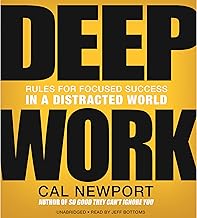
Deep Work
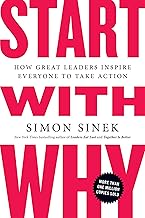
Start With Why
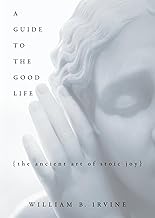
A Guide to the Good Life
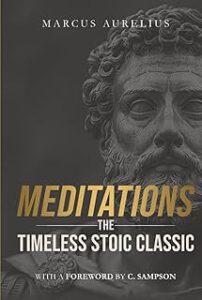
Meditations
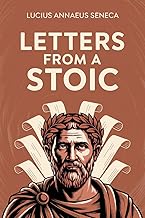
Letters from a Stoic
Disclosure: This post may contain affiliate links. We only recommend products we believe in, and we may receive a commission at no cost to you! Thank you for your support!
Acknowledgment: Cover Image by moneycatzzz.com
Disclaimer: The information is provided for general information only – moneycatzzz.com makes no representations or warranties in relation to the information, including but not limited to any representation or warranty as to the fitness for any particular purpose of the information to the fullest extent permitted by law. While every effort has been made to ensure that the information provided in this article is accurate, reliable, and complete as of the time of writing, the information provided in this article should not be relied upon to make any financial, investment, real estate or legal decisions. Additionally, the information should not substitute advice from a trained professional who can take into account your personal facts and circumstances, and we accept no liability if you use the information to form decisions.