 Reading Time: 8 mins #
 This post may contain affiliate links.
Purposeful Investing with Ikigai: Ignite Your Wealth
In the classic film It’s a Wonderful Life, George Bailey comes to a life-changing realization…. true fulfillment doesn’t come from wealth or personal ambition; it comes from the lives we touch. His journey is a gentle reminder that meaning isn’t measured in dollars, but in the difference we make.
When a more profound sense of purpose guides our actions, we create not just success, but something lasting. A legacy is shaped not by what we’ve earned but by how we’ve helped others.
Imagine applying that same principle to your investments. Picture a world where your financial goals aren’t separate from your life’s mission, but fully aligned. Where your money grows not just for your future but for the greater good, it’s not wishful thinking; it’s the heart of a Japanese philosophy called Ikigai.
Ikigai translates to “a reason for being.” It’s the place where what you love, what you’re good at, what the world needs, and what you can be paid for come together. Ikigai offers a robust framework that merges personal growth, financial health, and meaningful contribution in the process of building wealth.
This article explores how to bring purpose into your portfolio through values-aligned investing, introduces strategies such as ESG and SRI 2.0, and examines how to navigate the ethical and practical complexities.
“Money is a terrible master but an excellent servant“ – P.T. Barnum.
Part 1: Ikigai Meets Finance – Finding Purpose in Your Portfolio
In The Art of Happiness, the Dalai Lama emphasizes that genuine joy arises when our actions align with our inner values. The same applies to your finances. Your investments don’t have to be separate from your beliefs; they can be a tool to help you live more intentionally.
The Four Pillars of Ikigai, Reimagined for Investing
- What You Love: Investing in causes or industries that matter to you can bring emotional fulfillment. Passionate about climate action; look into renewable energy funds. Committed to social justice; consider funds that promote equity and inclusion.
- What You’re Good At: Your experience can guide your strategy. If you are familiar with the tech space, you may consider exploring impact funds that focus on clean tech or ethical AI.
- What the World Needs: Impact investing focuses on solutions to pressing global issues, such as access to clean water, sustainable farming practices, and affordable healthcare. These opportunities can be financially sound and socially transformative.
- What You Can Be Paid For: At the end of the day, investing is about return. However, the magic happens when you discover investments that are both profitable and deeply aligned with your values.
When these four areas overlap, you find your “Investing Ikigai,” a way to build wealth while staying true to who you are and what matters to you.

[“The Ikigai Effect” – Image by moneycatzzz.com on Canva]
Part 2: The Rise of ESG and Socially Responsible Investing (SRI)
While value-based investing isn’t new, it’s evolving fast. In Principles: Life and Work, Ray Dalio highlights the importance of understanding systems. The same thinking applies to your portfolio: the financial system, the environment, and society are interconnected, and your investments should reflect that awareness.
What is ESG Investing, and Why Does It Matter?
ESG stands for Environmental, Social, and Governance. It’s a framework that evaluates companies not just on what they do, but also on how they do it, how they treat the planet, people, and stakeholders.
Why should this matter to you as an investor? Because ESG isn’t just about ethics; it’s about innovative business. Studies show that companies with strong ESG practices are more resilient, better managed, and more likely to deliver strong, stable returns over time; often, they are more transparent, less risky, and more future-ready.
Still, no investment is without risk. Even with ESG in mind, diversification is essential. A values-aligned portfolio should remain balanced so you’re not overly exposed to one industry or trend. Purpose doesn’t mean ignoring the fundamentals; it means integrating them thoughtfully.

Part 3: SRI 2.0 – The Next Chapter in Purposeful Investing
SRI, or Socially Responsible Investing, has come a long way. In the past, it often meant avoiding harmful industries, like tobacco, firearms, or fossil fuels. That was a good start. But SRI 2.0 goes further. It’s not just about avoiding harm, it’s about actively doing good.
As Aaron Hurst outlines in The Purpose Economy, the purpose should be central to how we live and work. That idea extends to investing as well. SRI 2.0 is about utilizing your capital to drive positive change, whether through carbon reduction, ethical technology, or global health solutions.
How to Start Practicing SRI 2.0
- Define Your Values: Begin by identifying the issues that matter most to you. Climate action? Racial justice? Economic equity? Let those priorities guide your strategy.
- Explore Impact Funds: These funds are designed to generate measurable, positive outcomes in education, clean energy, or fair labor. Follow indices that are transparent and metrics that show real-world impact.
- Engage as a Shareholder: Investing gives you a voice. Use shareholder advocacy to support positive change in the companies you believe in. Voting on corporate resolutions can push firms to adopt better practices.
SRI 2.0 invites you to be an active participant in shaping a more just, sustainable economy, without sacrificing returns.
Part 4: Navigating the Risks – Greenwashing and Ethical Gray Areas
As powerful as values-based investing is, it’s not without its pitfalls. One primary concern is greenwashing, which occurs when companies market themselves as eco-friendly or socially responsible without substantiating their claims. There is an expanding trend, and it’s a growing issue as more investors seek purpose-driven options.
Being a mindful investor means doing your homework. Look beyond marketing claims: seek third-party ratings, impact reports, and transparency. If a company claims to be sustainable but won’t disclose its environmental footprint, that’s a red flag.
Another challenge is ethical nuance. Sometimes, investments that seem aligned with your values can still raise questions. A company might champion clean energy while underpaying workers. A health-tech firm might promote equity in one area while engaging in questionable data practices.
There’s no perfect answer. Staying informed, asking questions, and refining your strategy over time can help you invest with integrity.
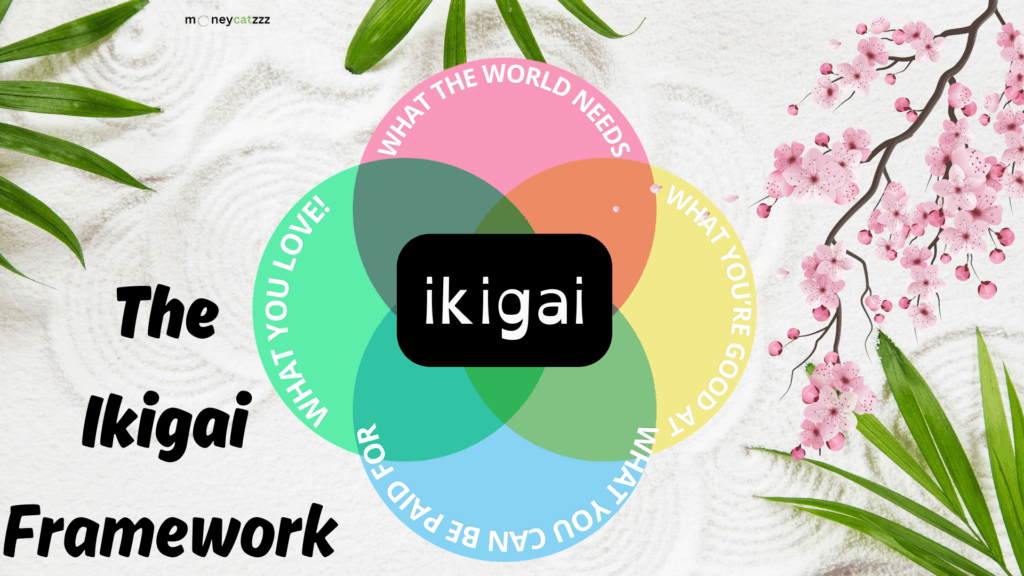
[“The Ikigai Framework: Aligning Passion, Talent, and Purpose in Investing” – moneycatzzz.com]
Inclusion and Accessibility – Who Gets to Invest with Purpose?
While Ikigai investing can be transformative, we must acknowledge a hard truth: not everyone can access it equally.
Many people, especially in low-income or marginalized communities, lack access to financial education and basic investment opportunities. The gap between those who can invest and those who want to but can’t is wide.
Private equity, venture capital, and even some ESG funds are often out of reach for everyday investors. Systemic inequalities persist, limiting access and reinforcing the wealth divide.
Bridging the Gap
Fortunately, change is happening. New platforms are emerging to democratize impact investing, through crowdfunding, public ESG funds, and educational resources tailored to underrepresented groups. The more we support and expand these tools, the closer we reach a more inclusive financial future.
Ikigai investing shouldn’t be a luxury but an opportunity for everyone.
Case Study – Patagonia and the Power of Purpose
Patagonia offers a compelling example of what it looks like when business and values truly align. In 2022, founder Yvon Chouinard made headlines, not for launching a new product, but for giving the company away. He transferred ownership to a specially designed trust and nonprofit, ensuring that all future profits would be used to combat climate change.
It wasn’t about publicity. It was a bold, values-driven decision that redefined what success can mean. Supporting a company like Patagonia isn’t just a wise investment—it’s a way to participate in meaningful environmental action through business.
It’s a shining example of the Ikigai of Investing in action: values, impact, and financial performance working hand in hand.

Final Thoughts: Creating a Legacy of Purpose
Ikigai isn’t just a poetic concept; it’s a practical compass for living with intention. At its heart, it invites you to align what you love, what you’re good at, what the world needs, and what you can be paid for. While it’s often spoken about in the context of life purpose, its wisdom applies just as powerfully to how we invest.
When introduced to the world of finance, Ikigai challenges the long-held assumption that making money and making a difference must be separate goals. It offers another way forward, one where your investment choices align with your deeper values, not just your financial objectives. It means building a portfolio that not only grows your wealth but also supports causes you care about, empowering industries that align with your beliefs and contribute to a world you want to see thrive.
This isn’t about perfection or finding a mythical “ideal“ investment. It’s about conscious alignment, choosing with care, asking better questions, and recognizing that fulfillment and financial returns don’t have to be mutually exclusive. When your money aligns with your purpose, it becomes more than a tool for personal gain; it becomes a quiet force for good.
Investing with intention takes more than ticking boxes. Fundamentally, it asks you to stay curious, question what aligns with your values, and make thoughtful choices in a world full of noise. The payoff is far more than mere numbers, the quiet confidence that your money is helping shape a future you believe in.
So, ask yourself:
What if your investments could support your passions, not just your retirement?
What if your money could tell a story you’re proud of?
The Ikigai of Investing invites you to dream bigger, to align your financial life with your values, and create lasting impact.
Discover Your Reason For Being with These Resources
The Purpose Economy

Sustainable Investing ..

The Art of Happiness
Feature Book of the Week:
Ikigai: The Japanese Secret to a Long and Happy Life
by Héctor García and Francesc Miralles

Disclosure: This post may contain affiliate links. We only recommend products we believe in, and we may receive a commission at no cost to you! Thank you for your support!
Acknowledgment: Cover Image by moneycatzzz.com
Disclaimer: The information is provided for general information only – moneycatzzz.com makes no representations or warranties in relation to the information, including but not limited to any representation or warranty as to the fitness for any particular purpose of the information to the fullest extent permitted by law. While every effort has been made to ensure that the information provided in this article is accurate, reliable, and complete as of the time of writing, the information provided in this article should not be relied upon to make any financial, investment, real estate or legal decisions. Additionally, the information should not substitute advice from a trained professional who can take into account your personal facts and circumstances, and we accept no liability if you use the information to form decisions.