
 Reading Time: 8 mins #
 This post may contain affiliate links.
The specialist who spent 20 years mastering a single skill has been replaced by someone with just six months of experience using ChatGPT. This isn’t a technology problem. It’s an expertise paradox problem. The very depth that once guaranteed job security has become a career burial ground.
Last week, I met a radiologist with 25 years of experience who was outperformed by an AI trained in six weeks. Not in every aspect of radiology, but in the one narrow specialty he’d built his entire career around: detecting lung nodules in CT scans. His accuracy rate: 94%. The AI’s: 99.7%. His expertise didn’t evolve. It expired.
When Depth Becomes a Grave
Here’s what nobody tells you about expertise: it’s a melting ice cube. The moment you achieve mastery; depreciation begins. What took you decades to learn can now be downloaded, automated, or outsourced in months. This is the expertise paradox that’s destroying careers faster than professionals can adapt.
We were sold a lie. “Become an expert,” they said. “Specialize deeply,” they advised. “Own your niche,” they preached. But while you were digging deeper into your specialty, the world was building ladders to climb out of that hole entirely.
David Epstein captures this brilliantly in Range: Why Generalists Triumph in a Specialized World. He documents how specialists excel in “kind” environments with clear rules and patterns, but fail catastrophically in “wicked” environments where rules change and patterns shift. Guess which environment we’re living in now?
The data is devastating. MIT’s research on skill commoditization indicates that technical expertise now has a half-life of 2.5 years in technology fields and 5 years in traditional industries. Your 20 years of experience? It might represent only 3-4 years of relevant knowledge. The rest is museum material.
I categorize the death of expertise into three stages that are probably killing your career right now:
Stage 1: Commoditization. Your rare expertise becomes common knowledge. That specialized database architecture you spent years mastering? There’s now a YouTube playlist teaching it in a weekend. Your proprietary methodology? It has been documented, packaged, and democratized. The expertise paradox begins when your unique value becomes universally accessible.
Stage 2: Automation. Algorithms learn your patterns and replicate your judgment. Legal research that took lawyers days now takes AI seconds. Machine learning models match medical diagnoses that require years of training. Your expertise becomes code, and code doesn’t need healthcare benefits.
Stage 3: Obsolescence. Your expertise no longer solves relevant problems. The market has moved past your specialty entirely. You’re a master blacksmith in the age of 3D printing, a COBOL programmer in the cloud era, a travel agent in the time of Expedia. The specialization trap closes: you’re too deep to pivot, too narrow to adapt, too invested to abandon ship.
The Knowledge Portfolio: Your Professional Balance Sheet
Think of your expertise as a portfolio. Like any portfolio, it contains both appreciating and depreciating assets. The expertise paradox occurs when professionals invest everything in depreciating assets while ignoring appreciating ones.
Depreciating Assets (The Expertise Trap)
Technical Specialization loses value faster than you can accumulate it. That certification you earned last year? Already outdated. The software you mastered? Version discontinued. The methodology you perfected? Replaced by better frameworks. These assets have a half-life measured in months, not decades.
Historical Knowledge becomes a liability disguised as an asset. “We’ve always done it this way,” expertise actually prevents adaptation. You become the guardian of obsolete practices, the defender of dying methodologies. Your experience becomes resistance to progress.
Credential Dependency crumbles when performance matters more than papers. Your MBA from 2005 means less than someone’s GitHub portfolio from last week. Your certification carries less weight than demonstrated results. The expertise paradox intensifies when your value depends on institutional validation rather than market validation.
Appreciating Assets (The Adaptation Advantage)
Meta-Learning Abilities compound over time. Scott Young explores this in Ultralearning, showing how the ability to acquire new skills rapidly becomes more valuable than any specific skill itself. When you master learning itself, every disruption becomes an opportunity for growth. Your adaptive expertise turns change from threat to advantage.
Systems Thinking increases in value as complexity grows. Understanding how parts connect to wholes, how changes cascade through systems, how patterns repeat across domains: this never depreciates. T-shaped professionals excel here because they see connections that specialists miss.
Human Interface Skills remain irreplaceable because they’re irreducibly human. Emotional intelligence, complex communication, trust building, empathy: AI amplifies these rather than replacing them. Harvard Business Review’s longitudinal research confirms that these skills increasingly determine career trajectories as technical skills become commoditized.
Problem Architecture represents the ultimate appreciating asset. Defining the correct problems to solve, framing challenges effectively, connecting solutions to strategic objectives: this is where human judgment remains supreme. Your knowledge portfolio should prioritize problem-finding over problem-solving, because machines excel at the latter but fail at the former.
The T-Shaped Professional Architecture
The expertise paradox has one proven solution: becoming a T-shaped professional. This means maintaining depth in one domain (the vertical stroke) while building breadth across multiple domains (the horizontal stroke).
But here’s what most people get wrong: becoming T-shaped isn’t about becoming mediocre at many things. It’s about creating unique combinations that multiply value. A developer who understands psychology creates better user experiences than a pure developer or pure psychologist ever could. A marketer who grasps data science makes decisions that neither pure marketers nor pure data scientists would conceive.

[“When Depth Becomes a Grave – The Melting Ice Cube” Image by moneycatzzz.com]
Building Your Vertical Stroke: Dynamic Depth
Choose specialties with high adaptation potential. Don’t master a tool; master a principle. Don’t learn a language; learn computational thinking. Don’t memorize procedures; understand systems. The expertise paradox spares those whose expertise evolves rather than crystallizes.
Treat your expertise as a living system requiring constant nourishment.
Build learning loops into your specialty. Follow research, engage with communities, and share your knowledge with others. Career adaptability means your expertise evolves rather than simply aging.
Building Your Horizontal Stroke: Strategic Breadth
McKinsey’s comprehensive study on professional value creation found that T-shaped professionals command 40% higher compensation than pure specialists. Why? They translate between domains, connect disparate ideas, and solve problems others can’t even see.
Start with adjacent possible exploration. If you’re a developer, learn design; if you’re in finance, study psychology. If you’re in marketing, it’s crucial to grasp the fundamentals of data science. These aren’t random additions; they’re strategic multipliers that transform your knowledge portfolio from a single asset into a diversified system.
The Portfolio Rebalancing Protocol
Here’s your systematic approach to defeating the expertise paradox:
Phase 1: The Expertise Audit
List every professional capability you possess. Be comprehensive and categorize each as either appreciating or depreciating. Be honest, most professionals discover that 80% of their expertise is depreciating. That’s not a crisis; it’s a wake-up call.
Research automation threats to each skill; if someone’s building an AI to do it, if there’s a boot camp teaching it in weeks, and if offshore teams can replicate it cheaply, it’s depreciating. Face this truth now or face unemployment later.
Phase 2: The 70-20-10 Formula
Allocate your professional development time strategically. Spend 70% of your time maintaining and evolving your core expertise, keeping it current and relevant. Invest 20% building adjacent capabilities that multiply your core value. Reserve 10% for completely new domain exploration.
This isn’t random learning; it’s strategic skill depreciation management. You’re building bridges before you need them, creating options before crisis hits.
Phase 3: The Continuous Learning Infrastructure
Nassim Taleb argues in Antifragile that systems should gain from disorder rather than merely surviving it. Your adaptive expertise should follow this principle. Every disruption should make you stronger, not weaker.
Dedicate five hours weekly to new skill development. Join communities outside your expertise domain. Teach what you know to learn what you don’t. Build a learning system that compounds rather than depletes.

[“The Evolving Path” – Image by moneycatzzz.com]
The Evolution Evidence
Let me share three professionals who defeated the expertise paradox through strategic evolution:
The Architect Who Became Irreplaceable: A traditional architect watches as CAD software commoditizes technical drawing. Instead of resisting, she added behavioral psychology and sustainable design to her expertise. She became a T-shaped professional who designs experiences, not just buildings. Her rate tripled while traditional architects struggled.
The Lawyer Who Transcended Law: A contract lawyer saw AI handling document review more efficiently and effectively. He built expertise in negotiation psychology and behavioral economics. Now he prevents disputes rather than documenting them. The shift in his knowledge portfolio from pure law to human dynamics made him immune to automation.
The Data Scientist Who Survived the AI Wave: A technical specialist watched AutoML tools replicate her work. She added storytelling, business strategy, and visual design to her capabilities. She transformed from “data scientist” to “insight architect.” Same technical foundation, vastly expanded value proposition.
Your Expertise Evolution Mandate
The expertise paradox isn’t a temporary disruption. It’s the permanent new reality. Technologies will continue accelerating. Industries will continue converging. The half-life of specialized knowledge will continue shrinking.
Your expertise is not your identity. It’s a tool, and tools become obsolete. But your ability to learn, adapt, connect, and evolve? That’s your true professional asset. T-shaped professionals don’t just survive disruption; they surf it.
Stop defending your depreciating expertise. Start building your appreciating capabilities. Stop digging deeper into one hole. Start building bridges between domains. Stop believing that what got you here will get you there.
The specialist who spent 20 years mastering one thing didn’t fail because he lacked expertise; instead, he failed because he didn’t apply it effectively. He failed because he believed expertise alone was enough. It never was. It certainly isn’t now. And it definitely won’t be tomorrow.
The future belongs to professionals who treat expertise as a dynamic knowledge portfolio rather than a fixed achievement. Those who understand that the expertise paradox rewards breadth with depth, not depth alone. Those who recognize that in a world of accelerating change, the ability to learn beats the accumulation of learning every time.
Your choice is binary: evolve or expire. Build adaptive expertise or watch specialized knowledge become worthless. Become a T-shaped professional or become professionally extinct.
The ice cube is melting. But you don’t have to melt with it.
What depreciating expertise will you augment with appreciating skills this month?
Part of The Thought Leadership Thursday series on career evolution, professional development, and navigating the expertise paradox in an AI-accelerated world. Ray Tan explores why knowing too much about too little has become a career liability.
Dig Deeper: Books on Sustainable Capacity

Radical Acceptance

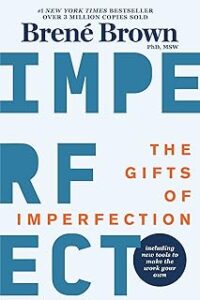
The Gifts of Imperfection
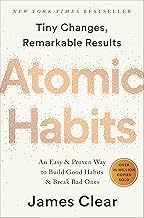
Atomic Habits
Disclosure: This post may contain affiliate links. We only recommend products we believe in, and We may receive a commission at no cost to you! Thank you for your support!
Acknowledgment: Cover Image by moneycatzzz.com
Disclaimer: The information is provided for general information only – moneycatzzz.com makes no representations or warranties in relation to the information, including but not limited to any representation or warranty as to the fitness for any particular purpose of the information to the fullest extent permitted by law. While every effort has been made to ensure that the information provided in this article is accurate, reliable, and complete as of the time of writing, the information provided in this article should not be relied upon to make any financial, investment, real estate or legal decisions. Additionally, the information should not substitute advice from a trained professional who can take into account your personal facts and circumstances, and we accept no liability if you use the information to form decisions.