
 Reading Time: 8 mins #
 This post may contain affiliate links.
Outsmart Your Brain by embracing smart psychology hacks to stop overthinking and make better decisions. In our modern world, the abundance of choices can lead to decision fatigue, where the quality of decisions deteriorates after a lengthy decision-making session.
This phenomenon clouds our judgment, consumes our time, and leaves us feeling like passengers rather than captains of our own lives. A Decision Science Research Institute study found that 85% of individuals experience difficulty making choices, leading to stalled progress. Imagine the missed career opportunities, financial setbacks, or strained relationships that could stem from poor decision-making.
We make decisions every day. Some are complex, but most are simple; not everything we do needs to be an “Art.“ By learning to train your brain, you can navigate this labyrinth with clarity, confidence, and the power to choose wisely.
“In any moment of decision, the best thing you can do is the right thing, the next best thing is the wrong thing, and the worst thing you can do is nothing.” – Theodore Roosevelt
Smart Psychology Hacks to Stop Overthinking & Make Better Decisions
You find yourself standing at a crossroads, each path leading to an unknown destination. Should you take the scenic route with breathtaking views but potential delays? Or stick to the familiar highway, guaranteeing a quicker arrival but offering little excitement? This is the essence of decision-making—navigating a labyrinth of options with the hope of reaching a desirable outcome.
The constant barrage of choices in our modern world, from what to wear to which career path to pursue, fuels decision fatigue. We spend excessive time deliberating, often ending up paralyzed by indecision or making rushed choices we later regret. The consequences of poor decision-making are real: wasted time, missed opportunities, and the gnawing feeling that we’re not living to our full potential.
This article equips you with six powerful hacks to sharpen your decision-making skills. By implementing these smart psychology hacks, you’ll gain clarity, efficiency, and the confidence to navigate life’s crossroads with wisdom and purpose.

[“The Decision-Making Maze” – Image from Pexels.com]
Hack #1: Outsmart Your Brain by Framing Choices Like a Chess Master
Have you ever noticed how a minor change in wording can dramatically shift your perception of a situation? This is the power of framing in decision-making, a principle explored by Nobel laureate Daniel Kahneman in his groundbreaking book Thinking, Fast and Slow.
Framing refers to how information is presented, influencing how we evaluate our options. For example, imagine you’re given two choices for a medical treatment:
| Option A | Option B |
|---|
| 90% chance of survival | 10% chance of mortality |
Most people instinctively choose Option A, even though both options are statistically identical. Why? Because our brains are wired to favor positive framing over harmful.
Now, apply this smart psychology hack to everyday decisions. Instead of viewing quitting an unfulfilling job as a risk, frame it as an opportunity to pursue your passion. This simple mental shift allows you to stop overthinking and make better decisions that align with your long-term goals.
How to Train Your Brain to Use Positive Framing
- Reword the problem: Shift your focus from loss to opportunity.
- Visualize the benefits: Picture the best-case outcome.
- Use empowering language: Instead of “I have to,“ say, “I get to.”
Mastering the art of framing will transform uncertainty into confidence and hesitation into action—one strategic move at a time.

Beyond the Book: The Subtle Science of Decision Architecture
Economist Richard H. Thaler and legal scholar Cass R. Sunstein explore how decision-making environments shape our choices in Nudge: Improving Decisions About Health, Wealth, and Happiness. They introduce the idea of choice architecture, where the way options are presented influences our decisions—often without us even realizing it.
By understanding decision architecture, you can become a more intentional decision-maker, less influenced by external pressures and more in control of your outcomes. Whether it’s structuring your workspace to reduce distractions or reordering your to-do list to prioritize essential tasks, small nudges can help you stop overthinking and make better decisions with ease.
Hack #2: The Art of the “Good Enough“ Decision
Do you ever feel paralyzed by too many choices, endlessly weighing pros and cons without concluding? This analysis paralysis is a byproduct of “maximizing”—the relentless pursuit of the absolute best choice. However, Herbert A. Simon, in Administrative Behavior, introduced the concept of satisficing—choosing an option that is good enough and meets essential criteria.
The reality is that perfect decisions don’t exist. Clinging to the illusion of an ideal choice wastes time, mental energy, and opportunities. Instead, train your brain to define core decision criteria and focus on options that satisfy most of them. This approach enables you to make timely, confident choices and avoid indecision.
Example: Searching for the perfect apartment can be exhausting. Instead of chasing perfection, establish clear criteria—location, budget, and must-have amenities. Once you find a place that meets most of these, trust your decision and move forward. This stops overthinking and frees up mental energy for other important priorities.
How to Outsmart Your Brain and Make Faster Decisions
- Gather relevant information – Research options, but set a time limit to avoid getting lost in details.
- Seek trusted advice – Consult experts or people who have made similar choices.
- Consider long-term impact – Will this decision align with your goals in six months or a year?
The more informed and strategic your approach, the easier it is to trust your gut and make better decisions without second-guessing yourself.
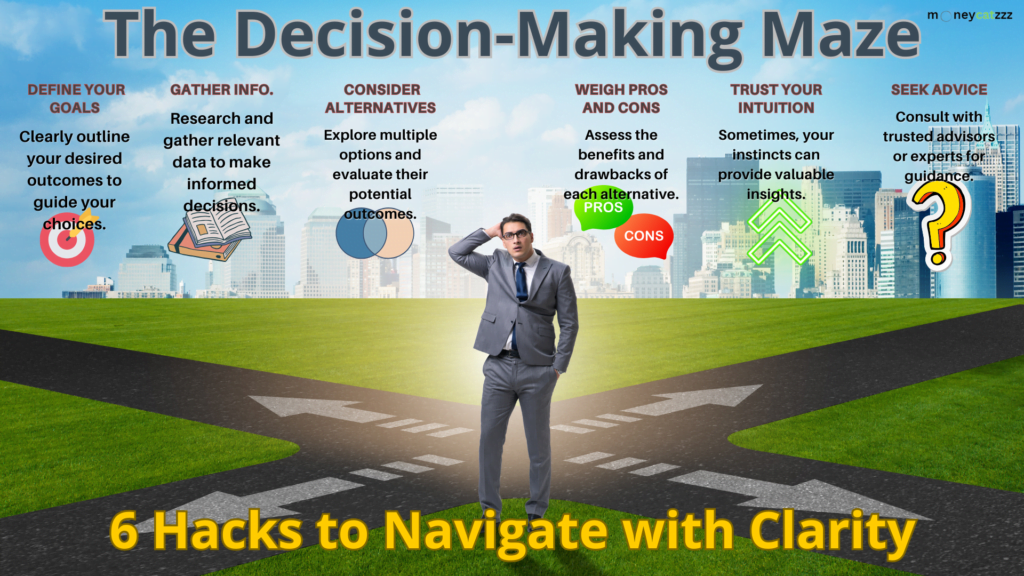
[“Hacking The Decision-Making Maze” -moneycatzzz.com]
Hack #3: Outsmart Your Brain by Embracing the Power of “No”
In a world that glorifies hustle culture and constant busyness, we often underestimate the psychological power of saying “no.“ Yet, smart psychology hacks suggest that setting firm boundaries is one of the most effective ways to stop overthinking and make better decisions.
Think of your time and energy as a limited resource—every “yes“ depletes it. If you want to train your brain to prioritize what truly matters, you need to master the art of strategic refusal. This isn’t about isolating yourself; it’s about making intentional choices that align with your personal and professional growth.
How to Train Your Brain to Say “No” Without Guilt
| Strategy | Why It Works |
|---|---|
| Clarify Your Priorities | Align decisions with your long-term goals to eliminate unnecessary commitments. |
| Accept That Disappointment is Inevitable | You can’t please everyone—safeguard your energy for what truly matters. |
| Use Polite But Firm Language | A simple “No, thank you” is enough. You don’t owe excessive explanations. |
| Offer Alternatives (If Appropriate) | If turning something down entirely feels uncomfortable, suggest a compromise. |
By embracing the power of “no,“ you reclaim control over your decisions and make space for what truly drives your success. This trains your brain to focus on high-impact choices while eliminating decision fatigue.
My Return to Terra Nova: Outsmarting My Brain by Saying “No”
At the start of my blogging journey, I was eager to seize every opportunity—guest posts, interviews, social media collaborations—you name it. But soon, I found myself drowning in obligations. My once-passionate project had become a chore, and I was overwhelmed by the sheer volume of commitments.
The Moment I Took Control
One day, completely burnt out and facing a looming deadline for a sponsored post that didn’t resonate with my audience, I did something radical: I said “no.“ It felt like a small act of defiance, but that single refusal became a turning point.
- I restructured my content strategy to align with my long-term goals.
- I politely declined opportunities that didn’t serve my vision.
- I focused on in-depth content and built meaningful relationships with other bloggers.
The Results? A Smarter, More Strategic Approach
| Before Saying “No” | After Saying “No” |
|---|---|
| Unfocused, overwhelmed, and reactive | Intentional, clear, and strategic |
| Chasing every opportunity | Selecting only those that aligned with my niche |
| Decreased engagement and creativity | Increased traffic, deeper audience connections |
Hack #4: Outsmart Your Brain—Gather Intel Like a Master Strategist
Imagine yourself as a military general preparing for a high-stakes mission. Would you charge into battle blindly? Of course not. You’d analyze the terrain, gather intelligence, and craft a strategy. The same approach applies to decision-making—especially when facing complex choices that impact your personal or professional success.
Smart Psychology Hacks for Smarter Decisions
Before making a choice, invest in strategic intelligence gathering:
| Method | Why It Matters |
|---|---|
| Online Research | Use credible websites, industry reports, and expert analyses to make data-driven choices. |
| Expert Consultations | Seek guidance from mentors, professionals, or advisors who have firsthand experience. |
| Customer Reviews | Real-world insights from other users can highlight potential pitfalls or hidden benefits. |
How to Trust Your Gut and Make Better Decisions
Optimism isn’t about ignoring obstacles but about facing them confidently. When you trust your ability to analyze, adapt, and move forward, you make sharper, more decisive choices. Instead of letting fear take control, envision yourself successfully navigating the challenge.
Your brain is a powerful tool—train it to work for you, not against you. The key is balance: Gather just enough intel to make an informed choice, then commit to action.

[“Making the Right Choice” – Picture by Unsplash]
Hack #5: Outsmart Your Brain—Know When to Trust Your Gut
We often underestimate intuition, that gut feeling steering us when facts are incomplete. In Blink: The Power of Thinking Without Thinking, Malcolm Gladwell reveals that split-second decisions can often be as—if not more—accurate than slow, deliberate analysis.
How to Train Your Brain to Recognize Intuition vs. Emotion
Not every instinct is reliable. Fear, excitement, or anxiety can masquerade as intuition, leading to rash decisions. So, how do you refine your gut instinct while avoiding emotional traps?
| Strategy | Why It Works |
|---|---|
| Practice mindfulness | Meditation and journaling help silence mental noise, making intuition clearer. |
| Tune into physical cues | A stomach knot or racing heart can signal discomfort with a choice. |
| Balance research with instinct | Gather essential facts, but avoid analysis paralysis—sometimes, your gut knows before your mind does. |
How to Stop Overthinking and Make Better Decisions
Curiosity is a secret weapon in decision-making. The more you explore, learn, and experiment, the sharper your intuition becomes. Expose yourself to new experiences, challenge assumptions, and let curiosity expand your mental toolkit.
Outsmart your brain by combining intuition, logic, and curiosity—a trio that leads to sharper, faster, and more confident choices.

Hack #6: Outsmart Your Brain—Learn from Your Moves Like a Grandmaster
Even the best decision-makers get it wrong sometimes. But what separates novices from masters isn’t perfection—it’s their ability to analyze, adapt, and improve.
How to Train Your Brain to Make Better Decisions
Every decision—good or bad—carries a lesson. Instead of fearing mistakes, use them to refine your strategy. Here’s how:
How to Stop Overthinking and Make Better Decisions
If you overanalyze past choices, you may hesitate to take future action. Decision-makers who grow embrace mistakes, adjust and move forward confidently.
| Strategy | Why It Works |
|---|---|
| Keep a decision journal | Tracking choices, reasoning, and outcomes reveals patterns and helps improve future decisions. |
| Reframe failure as feedback | Instead of dwelling on mistakes, analyze them for growth opportunities. |
| Seek outside perspectives | Trusted mentors or peers can provide objective insights into your decision-making process. |
Mastering decision-making isn’t about avoiding missteps but learning from them. When you outsmart your brain by turning every move into a lesson, you continuously improve your ability to make smarter, faster, and more effective choices.

[“Effective Decision Making” – Image from Pixabay]
Outsmart Your Brain: Master the Art of Smart Decision-Making
Becoming a skilled decision-maker isn’t about achieving perfection but continuous learning and refinement. Every choice you make, whether successful or not, is a lesson that sharpens your ability to make better decisions in the future.
The journey toward decision-making mastery is filled with triumphs and missteps, but each experience strengthens your ability to navigate life’s complexities. The key is to take decisive action rather than remain stuck in overthinking. A well-timed decision, even if imperfect, is always better than indecision.
Turn Insights into Action
To put these smart psychology hacks into practice, start with these actionable steps:
- Conduct “decision audits“ regularly – Reflect on a recent decision. What worked? What would you adjust next time?
- Reframe challenges positively – Take a current dilemma and shift your perspective. Does this change how you approach your choice?
- Listen to your gut instincts – Identify the physical sensations that signal a strong intuitive response.
- Set firm boundaries – Saying “no“ to unnecessary commitments clears space for better decision-making.
By applying these decision-making strategies, you’ll shift from being a passive observer to a decisive leader of your own life. Trust your ability, take control, and start outsmarting your brain today!
Disclosure: This post may contain affiliate links. We only recommend products we believe in, and We may receive a commission at no cost to you! Thanks for your support!”
Acknowledgement: Cover Photo by Andrea Piacquadio
Disclaimer: The information is provided for general information only – moneycatzzz.com makes no representations or warranties in relation to the information, including but not limited to any representation or warranty as to the fitness for any particular purpose of the information to the fullest extent permitted by law. While every effort has been made to ensure that the information provided in this article is accurate, reliable, and complete as of the time of writing, the information provided in this article should not be relied upon to make any financial, investment, real estate or legal decisions. Additionally, the information should not substitute advice from a trained professional who can take into account your personal facts and circumstances, and we accept no liability if you use the information to form decisions.