
 Reading Time: 8 mins #
 This post may contain affiliate links.
What Is The Acoustic Debt of Efficiency
My neighbor Ray is the kind of man who invoices his dreams. Not literally, though I wouldn’t put it past him: he tracks his REM cycles, optimizes his breakfast for “cognitive yield,” and once told me that walking his dog without a podcast was “leaving money on the table.” Ray believes in what he calls Temporal Capital, the idea that every hour has a dollar sign attached, and if you’re not maximizing that value, you’re committing financial suicide in slow motion.
I was thinking about Ray yesterday while sitting in my garden doing absolutely nothing productive, watching light move through birch leaves like it was auditioning for a part in a movie about patience. Four hours passed. I wrote zero words, answered zero emails, and generated zero revenue. By Ray’s calculation, I’d just burned $1,200 of potential billing. By my calculation, I’ve just remembered why I became a writer instead of an accountant.
This is about the acoustic debt of efficiency, the silent tax we pay when we compress our lives into spreadsheets. It’s what happens when you optimize so hard that you forget what you were optimizing for in the first place.
The Music Lesson Nobody Asked For
In college, I dated a sound engineer named Marcus who taught me about audio compression while we were both extremely high on mushrooms, which is not the ideal learning environment, but stick with me.
Compression, he explained while we watched his cat become geometric, makes quiet sounds louder and loud sounds quieter. Everything becomes more “consistent,” more “professional,” more suitable for radio play.
“But here’s the thing,” he said, playing two versions of the same song. “Listen to what’s missing.”
The compressed version sounded cleaner, tighter, definitely more “produced.” But the uncompressed version had something else: breath between words, the squeak of fingers on guitar strings, the barely audible sigh before the chorus. It had what Marcus called “air,” the space where humanity lives.
The acoustic debt of efficiency is what happens when we compress our lives the same way. We eliminate the squeaks, the sighs, the spaces between notes—we become professionally perfect and humanly vacant. Ray’s temporal bankruptcy mindset treats every unscheduled moment as waste, but what if those moments are where the actual music lives?

The Myth of Strategic Everything
Last month, I had coffee with a founder who’d read too many productivity books and spoke entirely in acronyms. She showed me her calendar, color-coded like a threat level advisory system, with something called strategic time allocation that divided her day into six-minute increments because, apparently, ten minutes was too generous.
“Even this coffee is ROI-negative,” she admitted, checking her Apple Watch for the third time in ten minutes. “But I’m experimenting with ‘relationship investment blocks.'”
I wanted to ask if she’d scheduled time to be human, but her phone buzzed with a reminder to “transition to next commitment,” and she left half her coffee untouched, which felt like a metaphor for everything wrong with how we live now.

[“The Observer in the Drift” – Image by moneycatzzz.com]
Cal Newport compounds the power of focused attention, and I agree, but he doesn’t talk about what happens when your entire life becomes deep work. When you’re so focused on productivity that you miss your kid’s weird question about whether fish get thirsty, or your partner’s slight pause before saying they’re “fine,” or the way afternoon light makes your living room look like somewhere you’d actually want to live.
The Sacred Drift Rebellion
Here’s what Ray doesn’t understand: some of my best ideas come from what I call sacred drift productivity, which sounds like an oxymoron but isn’t. It’s the three hours I spent last Tuesday following Wikipedia links from “Ottoman Empire” to “whether lobsters feel pain.” It’s the afternoon I walked seven miles in the wrong direction because I was thinking about mortality and forgot to turn around. It’s the evening I spent teaching my neighbor’s kid to make paper airplanes instead of writing the article that was due.
Resistance to productivity might be its own form of productivity, according to Jenny Odell, but I believe that inefficient beauty might be more valuable than efficient ugliness. Research on creativity and daydreaming shows that our brains need unstructured time to make unexpected connections, to solve problems we didn’t know we had.
But Ray would call this “leakage,” as if creativity were a plumbing problem that needed fixing. He’d want to optimize my drift, schedule my spontaneity, and measure my meandering. He’d miss the point entirely.
The Financial Cost of Being Interesting
Let’s talk money, since Ray loves talking about it. Yes, I bill less per hour than I could if I optimized every minute. My strategic time allocation is a disaster by any traditional metric. I spent six hours last week learning to make sourdough that tasted like disappointment. I spent an entire afternoon reading Mary Oliver’s poetry to my dying succulent. I regularly forget to invoice clients because I’m too busy having actual conversations with them.
But here’s what the acoustic debt of efficiency calculations misses: people don’t hire me for my efficiency. They hire me because I’m the kind of person who spends four hours watching light through birch leaves and then writes something that makes them cry at their desk. They hire me because I have stories from my sacred drift productivity sessions. After all, I can connect their business problem to Ottoman history, lobster neurology, and paper airplanes.
Studies on career success and creativity show that the most valuable employees aren’t the most efficient ones. They’re the ones who bring unexpected perspectives, who see patterns others miss, who have enough “air” in their lives to breathe something new into their work.
The Relational Equity of Wasted Time
Ray talks about relationships like they’re mutual funds, investments that should show predictable returns. But the best relationships in my life were built on inefficient beauty: the four-hour phone call about nothing, the afternoon spent helping someone move when I had deadlines, the evening teaching my father to text even though he still signs his messages “Love, Dad” like he’s writing a letter.
David Whyte writes in The Three Marriages about how we marry our work, our relationships, and ourselves, and how all three require inefficiency to thrive. You can’t optimize intimacy. You can’t schedule serendipity. You can’t measure the value of sitting in silence with someone as they figure out how to say what they need to say.
The temporal bankruptcy mindset treats time like a finite resource to be hoarded. But time spent “inefficiently” with people you love isn’t spent at all. It’s invested in something that doesn’t show up on spreadsheets but shows up when you’re falling apart at 2 AM and need someone to remind you who you are.

[“Sacred Drift: The ROI of the Unscheduled Life” _ Image by moneycatzzz.com]
The Mirror or the Echo Chamber
Ray sees the universe as a mirror: you project efficiency, and it reflects productivity. I see it as an echo chamber where the acoustic debt of efficiency creates a feedback loop of emptiness. You optimize and optimize until you’re perfectly efficient at producing nothing worth producing.
Research on burnout and productivity shows that hyper-efficient people don’t actually produce more meaningful work. They produce more work. They mistake motion for progress, busyness for purpose, optimization for actualization.
The sacred drift productivity I practice isn’t anti-work. It’s pro-human. It’s understanding that the best parts of life resist measurement, that inefficient beauty is still beauty, that some things need to be wasteful to be worthwhile.

Come Waste Time with Me
So here’s my rebuttal to Ray and his Temporal Capital and his optimized everything: What if the point isn’t to use time efficiently but to use it beautifully? What if the acoustic debt of efficiency is worth paying for the music of an uncompressed life?
Today, I’m going to waste three hours. Maybe I’ll sit in the garden again, watching light audition for roles it’ll never get. I’ll have a conversation with no agenda, read a book with no lesson, and take a walk with no destination. I’ll accumulate more acoustic debt of efficiency, and I’ll be richer for it.
Ray can keep his stopwatch, his ROI calculations, and his strategic time allocation systems. I’ll keep my sacred drift productivity, my inefficient relationships, my wasteful wonder at light through leaves.
Because when I die, I won’t regret the hours I “wasted” watching birch trees. I’ll regret the ones I spent being so efficient that I forgot to live.
What time are you going to waste today? What sacred drift is calling you away from your calendar?
Caution: These Books Can Make You Do Nothing
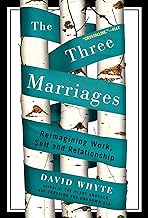
The Three Marriages

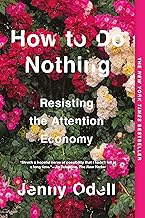
How to Do Nothing
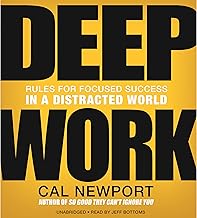
Deep Work
Disclosure: This post may contain affiliate links. We only recommend products we believe in, and we may receive a commission at no cost to you! Thank you for your support!
Acknowledgment: Cover Image by moneycatzzz.com
Disclaimer: The information is provided for general information only – moneycatzzz.com makes no representations or warranties in relation to the information, including but not limited to any representation or warranty as to the fitness for any particular purpose of the information to the fullest extent permitted by law. While every effort has been made to ensure that the information provided in this article is accurate, reliable, and complete as of the time of writing, the information provided in this article should not be relied upon to make any financial, investment, real estate or legal decisions. Additionally, the information should not substitute advice from a trained professional who can take into account your personal facts and circumstances, and we accept no liability if you use the information to form decisions.