 Reading Time: 7 mins #
 This post may contain affiliate links.
Professional Reinvention Mastery: Your Path to Career Success
Professional reinvention is no longer optional—it’s essential. In today’s fast-changing job market, most workers will need new skills within the next few years due to rapid technological advancements. It’s like being a knight in shining armor who suddenly has to learn how to fight dragons with a laser sword!
Those who embrace career transformation achieve greater fulfillment and enhance their chances of securing leadership roles. Reinventing yourself professionally is like the knight who not only adapts but rises to become the king of the castle!
This guide will equip you with the strategies and mindset shifts necessary to navigate the evolving workforce. Whether shifting industries, upskilling, or redefining your professional identity, mastering professional reinvention is the key to long-term success.
“Innovation is not about coming up with something completely new. It’s about looking at things differently.” – Steve Jobs.
Understanding Professional Reinvention
Shifting careers isn’t just about finding a new job—it’s about reinventing yourself professionally to align with evolving industries, personal growth, and emerging opportunities. Whether you’re transitioning to a new field, acquiring new skills, or redefining your career trajectory, professional reinvention is a dynamic process that requires both strategy and adaptability.
Herminia Ibarra explains in her groundbreaking book Working Identity: Unconventional Strategies for Reinventing Your Career that career shifts are “an iterative process of experimenting with possible selves.“ This means exploring different roles, testing new skills, and refining your professional identity over time.
How to Approach Professional Reinvention Successfully
A successful career transformation involves more than just ambition—it requires a blend of self-reflection, strategic planning, and bold action to navigate new professional landscapes. Key steps include:
- Assessing Your Strengths & Interests – Identify skills that can transfer into new roles.
- Exploring New Opportunities – Research industries with growth potential.
- Developing an Adaptable Mindset – Stay open to learning and pivoting as needed.
Rather than searching for a single “true calling,“ the secret to long-term career success is the ability to evolve, embrace change, and continuously refine your professional identity.
The Psychology of Career Transitions
Making a career shift isn’t just a professional challenge—it’s an emotional journey. Whether you’re pursuing professional reinvention by transitioning to a new industry, launching a business, or acquiring new skills, understanding the psychological impact of career change can help you navigate it more effectively.
In Transitions: Making Sense of Life’s Changes, William Bridges identifies three key stages of transition:
- Ending – Letting go of old identities, roles, and working methods.
- Neutral Zone – A period of uncertainty, self-discovery, and exploration.
- New Beginning – Embracing a new professional identity and direction.
Navigating Career Reinvention with Confidence
Successfully moving through these stages requires the following:
- Embracing change – Acknowledge and process the emotions that come with transition.
- Building resilience – View setbacks as opportunities for growth.
- Adopting a growth mindset – Stay open to continuous learning and new possibilities.
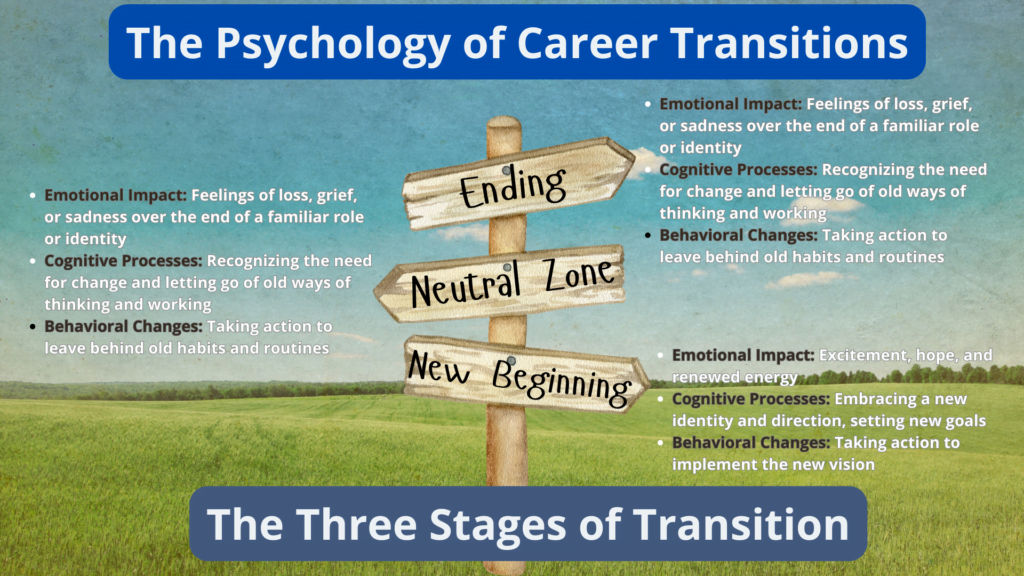
[“The Three Stages of Transition” – moneycatzzz.com]
Steps to Master Professional Reinvention
Successfully navigating professional reinvention requires a structured approach that balances self-discovery, strategic planning, and continuous learning. The following key steps will help you confidently and clearly transition into a new career path.
1. Self-Assessment: Identify Your Strengths and Goals
Conduct a thorough inventory of your skills, values, interests, and aspirations. Tools like the Myers-Briggs Type Indicator or Clifton StrengthsFinder can provide valuable insights into your natural strengths and potential career paths.
2. Market Research: Explore Emerging Opportunities
Investigate growing industries and evolving roles to identify where your skills align. Resources like the Bureau of Labor Statistics’ Occupational Outlook Handbook can help you understand job market trends and future demands.
3. Skill Gap Analysis: Upgrade Your Competencies
Identify the skills needed for your target role or industry and take proactive steps to bridge the gap. Platforms like LinkedIn Learning, Coursera, and Udemy offer courses to help you develop in-demand skills.
4. Network Expansion: Build Meaningful Connections
Establish relationships within your desired field. As Reid Hoffman suggests in The Start-up of You, a strong professional network is one of the most valuable assets in any career transition. Engage in industry events, LinkedIn discussions, and professional communities to expand your opportunities.
5. Personal Branding: Craft Your Career Narrative
A compelling personal brand communicates your professional evolution effectively. Update your LinkedIn profile, resume, and online presence to showcase your expertise and aspirations. Your brand should tell a cohesive story that connects your past experiences with your new direction.
6. Experimentation: Test Your New Path
Before committing to a new career, explore different opportunities through side projects, freelancing, volunteering, or part-time gigs. This “life design” approach, as Bill Burnett and Dave Evans advocate in Designing Your Life, allows for low-risk exploration of new roles.
7. Financial Planning: Secure Stability During Transition
Career shifts often come with financial uncertainty. Create a financial cushion, explore part-time consulting options, and assess ways to sustain your income while transitioning. A solid financial plan ensures you can pursue professional reinvention without unnecessary stress.
8. Continuous Learning: Commit to Ongoing Growth
The key to long-term career success is lifelong learning. As Alvin Toffler famously said, “The illiterate of the 21st century will not be those who cannot read and write, but those who cannot learn, unlearn, and relearn.” Stay adaptable, keep up with industry changes, and invest in personal and professional development.
By following these steps, you can confidently approach professional reinvention, positioning yourself for new opportunities, career fulfillment, and long-term success.
Overcoming Barriers to Professional Reinvention
While professional reinvention presents exciting new opportunities, it also comes with challenges. Many professionals hesitate to pivot due to fear of failure, the weight of past investments, or uncertainty about their new path. Letting go of a long-established identity can feel unsettling, and skepticism from colleagues, family, or even self-doubt can make the transition harder. Age bias in specific industries adds another layer of concern.
Breaking Through Obstacles in Career Reinvention
It’s essential to shift your mindset and strategy to navigate these barriers. Instead of seeing failure as an endpoint, reframe it as part of the learning process. Many successful professionals failed multiple times before finding their breakthrough. Experience isn’t wasted—it builds transferable skills that can be leveraged in new roles.
Reinventing your professional identity doesn’t mean discarding your past. It’s about evolving and using what you’ve learned differently. Surround yourself with mentors, industry peers, and career coaches who support your transition. If age bias is a concern, highlight your expertise, adaptability, and problem-solving skills—valuable qualities in any field.
The Mindset Shift for Successful Career Reinvention
As Carol Dweck explains in Mindset: The New Psychology of Success, professional success often depends on the ability to learn, adapt, and evolve. Developing a growth mindset allows you to confidently embrace new challenges, continuously develop your skills, and push past self-imposed limits.
Overcoming these barriers isn’t just about making a career change—it’s about adopting a new perspective. By addressing challenges head-on and focusing on continuous growth, you can successfully reinvent yourself and unlock new opportunities.
Practical Strategies for Professional Reinvention
These professional reinvention strategies go beyond theory—they provide actionable tools to help you transition into a fulfilling new career path.
Start by identifying your transferable skills, which can apply across industries. For instance, project management, communication, and leadership are valuable in almost any field. If your ideal role feels out of reach, consider taking a bridge job—an interim position that helps you build relevant experience while moving toward your ultimate goal.
Investing in continuous education is essential for professional reinvention. Whether through certifications, online courses, or self-directed learning, expanding your expertise ensures you stay competitive in an evolving job market. Alongside learning, cultivating a strong online presence—through LinkedIn, industry forums, and personal branding—can establish credibility and attract career opportunities.
Building a strong professional network is another critical step. Seeking mentorship from those who have successfully navigated career transitions can provide invaluable guidance, helping you overcome obstacles and refine your strategy.
Lastly, crafting a compelling career narrative is key to reinforcing your new direction. This storytelling approach strengthens your positioning in interviews and networking and aligns your past experiences with your future aspirations.
By embracing adaptability, resilience, and a growth mindset, you can master professional reinvention, unlock new career opportunities, and position yourself for long-term success.

[“Steps to Re-Invention”- Image on Pexels.com]
The Role of Technology in Professional Reinvention
Technology has become a driving force behind professional reinvention, offering opportunities and challenges.
On the one hand, emerging technologies act as a catalyst by creating new career paths, reshaping industries, and increasing demand for specialized digital skills. Fields such as AI, cybersecurity, and data science are expanding rapidly, providing opportunities for those willing to adapt.
On the other hand, technology serves as a powerful tool for career transformation. Online learning platforms, AI-driven career assessment tools, and digital networking spaces make it easier to acquire new skills, explore alternative career paths, and connect with industry leaders.
Despite these advantages, it’s essential to maintain focus and deep work habits. As Cal Newport emphasizes in Deep Work, concentrating on complex, high-value tasks remains one of today’s distracted world’s most valuable professional skills.
By strategically leveraging technology while cultivating focus, professionals can successfully navigate career reinvention, ensuring long-term adaptability and success in an evolving job market.
Case Studies in Successful Professional Reinvention
Real-world examples show that professional reinvention often involves unexpectedly leveraging past experiences. Here are two inspiring stories of career transformation:
- From Sales to CEO: Sara Blakely, founder of Spanx, started as a door-to-door fax machine salesperson before identifying a market gap in shapewear. Through persistence, innovation, and strategic branding, she built a billion-dollar company from the ground up.
- From Medicine to Mindfulness: Deepak Chopra transitioned from a successful medical career to becoming a global thought leader in wellness and alternative medicine. His ability to integrate scientific knowledge with holistic health principles helped him redefine his professional path.
These cases highlight how career reinvention isn’t about starting from scratch but reframing existing skills and experiences to create new opportunities. By staying open to change, recognizing market needs, and adapting strategically, professionals can successfully transform their careers in unexpected and fulfilling ways.
Measuring Success in Professional Reinvention
Determining the success of your professional reinvention goes beyond securing a new role—it’s about long-term fulfillment and growth. Key indicators include:
- Job Satisfaction & Engagement – Do you feel motivated and fulfilled in your new role?
- Work-Life Balance – Has your career shift improved your overall quality of life?
- Financial Stability & Growth – Are you meeting your financial goals and experiencing upward mobility?
- Impact & Contribution – Does your work create value and align with your passions?
- Personal Growth & Learning – Are you continuously developing new skills and evolving professionally?
Success looks different for everyone, so defining it on your terms is essential, as well as ensuring your career path aligns with your values, aspirations, and long-term goals.
The Future of Professional Reinvention
The landscape of career reinvention is evolving rapidly, driven by major shifts in the job market. Key trends shaping the future include:
- The Rise of the Gig Economy – More professionals are embracing portfolio careers and flexible work arrangements, redefining traditional employment structures.
- Longer Career Lifespans – With increased life expectancy, many individuals will undergo multiple career transitions.
- AI and Automation – As technology advances, continuous upskilling and reskilling becomes essential to stay competitive.
- Sustainability in Business – Organizations increasingly seek professionals who can drive sustainable practices, making this a growing career path.
- Global Career Mobility – Digital connectivity and remote work opportunities are expanding international career transitions, making it easier to work across borders.
To stay ahead, professionals must embrace adaptability, lifelong learning, and strategic career planning as they navigate an ever-changing workforce.

[“Reinvented” – Photo by Brooke Lark on Unsplash]
Preparing for Ongoing Professional Reinvention
In today’s fast-changing world, professional reinvention is not a one-time event but a continuous journey. As Yuval Noah Harari highlights in 21 Lessons for the 21st Century, the key to future success lies in adapting to change, learning new skills, and maintaining mental resilience in uncertain situations.
To stay ahead, professionals should:
- Develop a diverse skill set – Expanding your expertise across multiple areas increases career flexibility.
- Stay informed about industry trends – Keeping up with market shifts helps you anticipate opportunities.
- Build a strong professional network – Connections open doors to new roles and collaborations.
- Maintain financial flexibility – A financial cushion provides security during career transitions.
- Strengthen resilience and adaptability – Embracing change with a growth mindset fosters long-term success.
By prioritizing continuous learning and strategic career planning, you can confidently navigate ongoing reinvention and seize new opportunities as they arise.
Professional reinvention is about embracing change, continuous learning, and strategic risk-taking. It demands courage, self-reflection, and a willingness to step beyond your comfort zone. Herminia Ibarra wisely states, “You can’t think your way into a new way of acting; you have to act your way into a new way of thinking.”
Every great career is built on a series of reinventions. Your next transformation could unlock unprecedented success and fulfillment. The question is: Are you ready to leap?
Getting Started with Your Professional Reinvention
- Assess Your Skills – Conduct a self-evaluation to identify strengths and areas for growth.
- Explore Emerging Fields – Research industries that align with your passions and future opportunities.
- Leverage Learning Resources – Online courses, mentorship, and career assessment tools can accelerate your transition.
For expert guidance and curated career development resources, check out our recommended tools and insights. Your next great career adventure awaits!
Disclosure: This post may contain affiliate links. We only recommend products we believe in, and We may receive a commission at no cost to you! Thanks for your support!”
Acknowledgement: Cover Image by Unsplash.com
Signup to our Newsletter for regular updates:
Disclaimer: The information is provided for general information only – moneycatzzz.com makes no representations or warranties in relation to the information, including but not limited to any representation or warranty as to the fitness for any particular purpose of the information to the fullest extent permitted by law. While every effort has been made to ensure that the information provided in this article is accurate, reliable, and complete as of the time of writing, the information provided in this article should not be relied upon to make any financial, investment, real estate or legal decisions. Additionally, the information should not substitute advice from a trained professional who can take into account your personal facts and circumstances, and we accept no liability if you use the information to form decisions.