
 Reading Time: 8 mins #
 This post may contain affiliate links.
How to Grow Your Charisma: A 6-Step Guide to a Magnetic Personality
Charisma, that elusive quality that draws people in, is often perceived as an innate trait, a gift bestowed upon a select few. However, groundbreaking research and insights from renowned experts across diverse fields have unveiled a profound truth: charisma is not an immutable characteristic but a malleable skill nurtured through deliberate effort and practice.
You’re in the right place if you’ve ever wondered how to grow your charisma and develop a more magnetic personality. This article will serve as your roadmap to cultivating your charisma tree, transforming it from a sapling into a towering oak that commands attention and inspires admiration.
“The greatest compliment I can pay you is that you make me feel like a better person around you.” – Amy Poehler
Step 1: Understand the Essence of Charisma
Charisma is more than just being outgoing or talkative. It’s a complex interplay of factors, including body language, communication skills, emotional intelligence, and personal magnetism. At its core, charisma is about authenticity: being genuine, confident, and passionate. It’s about projecting positive energy and making others feel valued and appreciated. While some may possess a natural flair for it, charisma is a skill that can be developed and refined over time.
Step 2: Build a Strong Foundation: Self-Awareness and Communication
To cultivate a captivating personality, we must first understand its fundamental components. Self-awareness is the cornerstone. It involves recognizing your strengths, weaknesses, and how you come across to others. This knowledge empowers you to build on your positive attributes and address areas for improvement.
Effective communication is another essential pillar. It encompasses both verbal and nonverbal cues. Your choice of words, tone of voice, and body language all contribute to your overall charisma. Developing strong listening skills is equally important. You demonstrate empathy and respect by actively listening to others, fostering more profound connections.
Emotional intelligence, the ability to understand and manage your own emotions and recognize and respond to the feelings of others, is a powerful tool for cultivating charisma. You can create a positive and welcoming atmosphere by developing empathy and compassion.

Step 3: Ignite Your Inner Confidence: The Fertilizer for Your Charisma Tree
Confidence is the fertile soil in which charisma thrives. It’s the belief in your abilities and worthiness. To boost your confidence, focus on your strengths, set achievable goals, and celebrate your successes. Remember, confidence is not about being perfect but embracing your individuality.
One effective strategy for building confidence is to step outside your comfort zone. Challenge yourself to try new things, take risks, and learn from your experiences. This can help you overcome self-doubt and develop a stronger sense of self-belief.
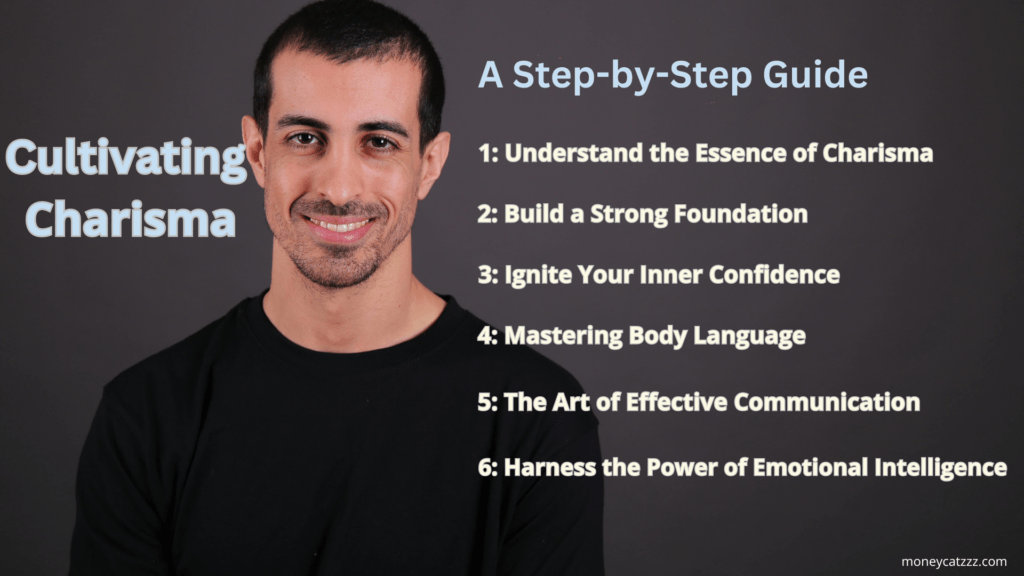
[“Cultivating Charisma: A Step-by-Step Guide” – moneycatzzz.com]
Step 4: Mastering Body Language: Your Silent Communicator
Your body language is a powerful tool for conveying confidence and charisma. Maintain good posture, make eye contact, and use open gestures to appear approachable and engaged. Your facial expressions should align with your words, reinforcing your message.
Practice active listening by maintaining an open posture, nodding, and offering verbal cues to show engagement. Mirroring the other person’s body language subtly can build rapport and create a sense of connection.
Step 5: The Art of Effective Communication
Communication is the lifeblood of charisma. Develop your ability to articulate your thoughts clearly and concisely. Use storytelling to engage your audience and make your message memorable. Practice public speaking to improve your delivery and confidence.
Active listening is equally important. Give your full attention to the speaker, avoid interrupting, and ask clarifying questions to demonstrate your engagement. By actively listening, you show respect and build trust.
Step 6: Harness the Power of Emotional Intelligence
Emotional intelligence is the cornerstone of strong relationships and effective leadership. Understanding and managing your emotions can build trust, resolve conflicts, and inspire others.
Practice empathy by putting yourself in others’ shoes and understanding their perspective. Develop active listening skills to demonstrate your care and concern.
Manage your own emotions by identifying triggers and developing healthy coping mechanisms. Practice self-awareness and emotional regulation to maintain composure in challenging situations.
Overcoming Common Charisma Challenges
While charisma is desirable, many people face challenges in developing it. Shyness, introversion, and social anxiety can hinder personal growth. However, with the right strategies, these obstacles can be overcome.
For introverts, focusing on building genuine connections rather than being the center of attention can be a more practical approach. Practice active listening and ask thoughtful questions to engage others.
If public speaking anxiety is a challenge, start with small steps, such as speaking in front of friends or family. Gradually increase the size of your audience as your confidence grows.

[Overcome Common Charisma Challenges – Shyness, Introversion, and Social Anxiety – moneycatzzz.com]
Building Your Brand: Your Unique Signature
Your brand is your reputation, the perception others have of you. Cultivating a strong and authentic personal brand that reflects your values and aspirations is essential. Define your unique selling proposition and communicate it clearly and consistently.
Networking is a vital component of building your brand. Attend industry events, connect with people online, and cultivate relationships with others in your field. Be genuine and interested in others, and you’ll build a strong network of supporters.
Case Study: Barack Obama – The Charismatic Leader
Barack Obama, the 44th President of the United States, is a prime example of exceptional charisma. His ability to connect with people deeply and inspire others has been a critical factor in his success. Obama’s charisma is evident in his speeches, body language, and overall demeanor.
Obama’s empathy, understanding, and practical communication skills enabled him to build a strong connection with the American people. His ability to articulate complex ideas in a relatable manner made him a robust and influential leader.
Case Study: Oprah Winfrey – The Queen of Talk
Oprah Winfrey is another iconic figure known for her charisma and influence. Her ability to connect with people personally has made her one of the world’s most influential and respected women. Oprah’s charisma is evident in her television show, where she creates a safe and supportive environment for her guests to share their stories.
Oprah’s empathy, authenticity, and positive energy have made her a beloved figure. Her ability to inspire and uplift others is a testament to the power of charisma.
Overcoming Challenges and Building Resilience
Developing charisma is a journey, not a destination. There will be setbacks and challenges along the way. It’s essential to learn from your mistakes and persist in your efforts. Building resilience is critical to overcoming obstacles and maintaining a positive outlook.
Remember, charisma is about being yourself, not trying to be someone else. Embrace your unique qualities and let your personality shine through.
Finding Balance and Fulfillment
Charisma is a powerful tool, but it’s essential to maintain balance in your life. Prioritize self-care, spend time with loved ones, and pursue your passions. A well-rounded individual is more likely to exude genuine charisma.
Remember, charisma is a journey, not a destination. Celebrate your progress and learn from your experiences. By cultivating a solid foundation of self-awareness, effective communication, and emotional intelligence, you can unlock your full potential and build a captivating personality.
The Importance of Self-Care
Self-care is essential for cultivating charisma. By prioritizing physical and mental well-being, you’ll have the energy and clarity to connect with others authentically.
Engage in regular physical activity, maintain a healthy diet, and ensure you get enough sleep. These practices will help reduce stress and improve your mood, making you more approachable and engaging.
Building a Strong Support Network
Surrounding yourself with supportive people is crucial for personal growth. Seek mentors, coaches, or friends who can offer guidance and encouragement. Join professional or social groups to expand your network and learn from others.
A robust support system can give you the confidence and motivation to develop your charisma. Sharing your experiences and goals with others can also help you stay accountable and on track.

[Building a Strong Support Network – Image by freepiks]
The Role of Gratitude
Cultivating gratitude can shift your focus from what’s lacking to what you already have. By practicing gratitude, you develop a more positive outlook and reduce the tendency to dwell on negative thoughts. This positive mindset is essential for building charisma.
Keep a gratitude journal, express gratitude to others, or take time each day to reflect on what you’re thankful for. This practice can help boost your mood, increase your overall happiness, and enhance your charisma.
Setting Realistic Expectations
Remember, charisma is a journey, not a destination. It takes time and effort to develop. Avoid comparing yourself to others and focus on your progress. Celebrate small victories and learn from setbacks.
Setting realistic expectations will help you stay motivated and avoid burnout. Break down your goals into smaller, achievable steps and track your progress. By taking consistent action, you’ll gradually build your charisma and confidence.
Charisma is a powerful tool that can open doors to new opportunities and enrich your life. You can develop your magnetic presence by understanding the building blocks of charisma, practicing effective communication, and cultivating a positive mindset. Remember, it’s about being authentic, confident, and connecting with others on a deeper level.
Embrace the journey of self-discovery and personal growth. Celebrate your successes, learn from your challenges, and continue to develop your charisma. With dedication and perseverance, you can unlock your full potential and create a lasting impact on the world.
Recommended Reading
To delve deeper into the art of charisma and interpersonal relationships, consider exploring these insightful works:
- How to Win Friends and Influence People by Dale Carnegie
- Quiet: The Power of Introverts in a World That Can’t Stop Talking by Susan Cain
- Crucial Conversations: Tools for Talking When Stakes Are High by Kerry Patterson, Joseph Grenny, Ron McMillan, and Al Switzler
- Drive: The Surprising Truth About What Motivates Us by Daniel H. Pink
These books offer valuable insights and practical strategies for developing your charisma and building solid relationships.
Practical Exercises for Enhancing Charisma
To accelerate your charisma development, incorporate these exercises into your daily routine:
Self-Awareness Exercises
- Personality Assessment: Take a personality assessment to gain insights into your strengths, weaknesses, and communication style.
- Video Analysis: Record yourself in conversations and analyze your body language, tone of voice, and facial expressions.
- Feedback Loop: Seek honest feedback from trusted friends or colleagues about your strengths and areas for improvement.
Communication Enhancement Exercises
- Active Listening Practice: Engage in deep conversations with friends or family, focusing on truly understanding their perspective.
- Public Speaking Challenge: Join a public speaking club or practice giving impromptu speeches on various topics.
- Storytelling Practice: Share personal stories to improve your storytelling abilities and connect with others on a deeper level.

Confidence Building Exercises
- Visualization: Imagine yourself confidently handling various social situations.
- Positive Affirmations: Create and repeat positive affirmations to boost self-esteem.
- Goal Setting: Set achievable goals and celebrate your accomplishments to build confidence.
Emotional Intelligence Exercises
- Empathy Building: Practice actively listening to others and trying to understand their perspective.
- Emotional Awareness: Identify your emotions and how they influence your behavior.
- Anger Management Techniques: Develop healthy coping mechanisms for managing anger and frustration.
Body Language Practice
Mirror Technique: Observe and mimic the body language of confident individuals.
Posture Improvement: Practice maintaining good posture to exude confidence.
Facial Expression Training: Practice expressing different emotions through facial expressions.
Networking and Relationship Building Exercises
- Attend Industry Events: Network with professionals in your field to expand your circle.
- Online Networking: Leverage social media platforms to connect with like-minded individuals.
- Volunteer: Engage in community service to build relationships and develop leadership skills.
You’ll gradually enhance your charisma and build a captivating personality by consistently practicing these exercises. Remember, progress takes time and persistence. Celebrate small victories and enjoy the journey of self-improvement.
Disclosure: This post may contain affiliate links. We only recommend products we believe in, and We may receive a commission at no cost to you! Thanks for your support!”
Acknowledgement: Cover Image by Unsplash.com
Signup to our Newsletter for regular updates:
Disclaimer: The information is provided for general information only – moneycatzzz.com makes no representations or warranties in relation to the information, including but not limited to any representation or warranty as to the fitness for any particular purpose of the information to the fullest extent permitted by law. While every effort has been made to ensure that the information provided in this article is accurate, reliable, and complete as of the time of writing, the information provided in this article should not be relied upon to make any financial, investment, real estate or legal decisions. Additionally, the information should not substitute advice from a trained professional who can take into account your personal facts and circumstances, and we accept no liability if you use the information to form decisions.